






 Portuguese
  Spanish
  7 min of reading
  0 comments


In 1973, horse breeder Peter Andrews bought the ruined Tarwyn Park in New South Wales and refused to remove the willows that everyone called a plague. For decades he was denounced and ignored until his Natural Sequence Farming replenished dry streams and became a reference.
Peter Andrews was denounced by neighbors for 30 years, lost the farm to the bank, and saw his marriage fall apart, but the landscape recovery method that the Australian government rejected for three decades was eventually recognized by the UN as one of the five examples of sustainable agriculture in the world. The turnaround crowned the journey of a racehorse breeder without a degree, who dared to defy all official science on water management.
The recognition came with an official honor. According to information from the ABC & climatewaterproject portal, on January 26, 2011, the same government that had rejected his work for decades awarded Peter Andrews the Medal of the Order of Australia, and in 2016, the United Nations recognized the Mulloon Creek farm, where Natural Sequence Farming was applied, as one of the only five examples of genuinely sustainable agriculture on the planet. It was the turnaround of an idea that, for years, yielded only inspections, denunciations, and losses.
The ruined farm of 1973 and the chains of ponds that Australia lost
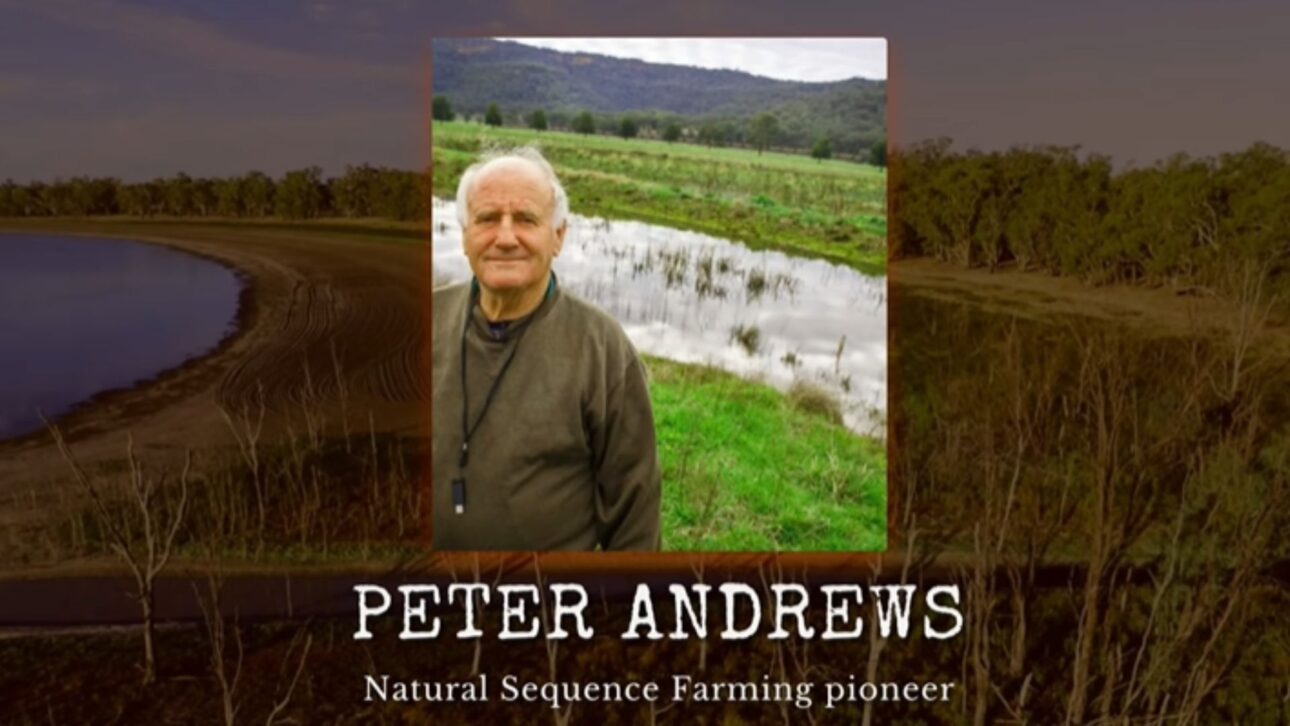
The story began with a piece of land that seemed lost. In 1973, Peter Andrews, a racehorse breeder, bought the 12,200-hectare property of Tarwyn Park in the Bylong Valley, New South Wales. The land was eroded and salinized, the central stream had turned into a 2-meter-deep ravine, and the waterways that once crossed the site drained everything instead of retaining.
-
A billionaire could buy a huge yacht, but chose a 17,000-acre farm in Australia for $10 million to transform former pastures into a nature reserve, save a historic forest, and provide shelter for endangered species.

-
While ships burn diesel even when docked, a floating platform with hydrogen promises to bring clean energy to the port without waiting years for construction.

-
Women farmers in Guatemala bring water to dry crops, create a plantain brand, and help restore mangroves.

-
Two helicopters, 41 people, and over 38 tons of bait were mobilized on a remote Pacific atoll to eliminate rats; five years later, native trees grew by 5,000%, seabirds gained habitat, and the rainforest began to regenerate.



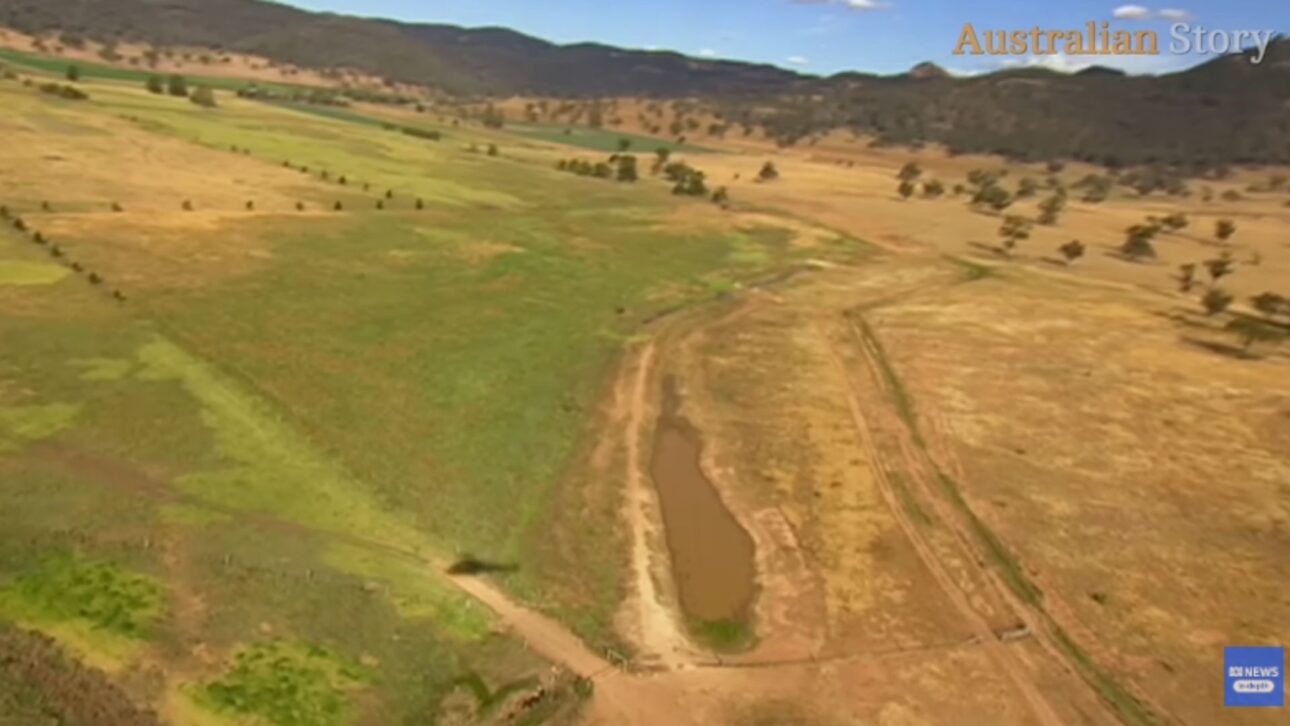
To understand the disaster, it is necessary to know what Australia had lost. Before European colonization, much of the southeast of the country did not have rivers as we imagine them today, but rather chains of lagoons, sequences of deep pools connected by swamps, surrounded by dense vegetation whose roots held the banks and whose reeds filtered the sediment, allowing the water to seep slowly and recharge the aquifers. When the colonizers cleared the vegetation, drained the swamps, and let cattle trample the banks, the lagoons turned into ravines, and the water that used to stay in the landscape for months began to drain in days.
Willows and barriers: the method that defied official policy
Peter Andrews saw what scientists did not. He studied the dry patterns where lagoons once existed and asked the question no one dared: what if there is water precisely where there are willows? Instead of treating willows as water thieves, he saw them as indicators, plants that only grow where water already exists, the last survivors of a disrupted hydrological cycle. The official Australian policy classified the willow as a national pest, to be removed from all watercourses, and the country spent millions removing the plant from more than 30,000 km of rivers.
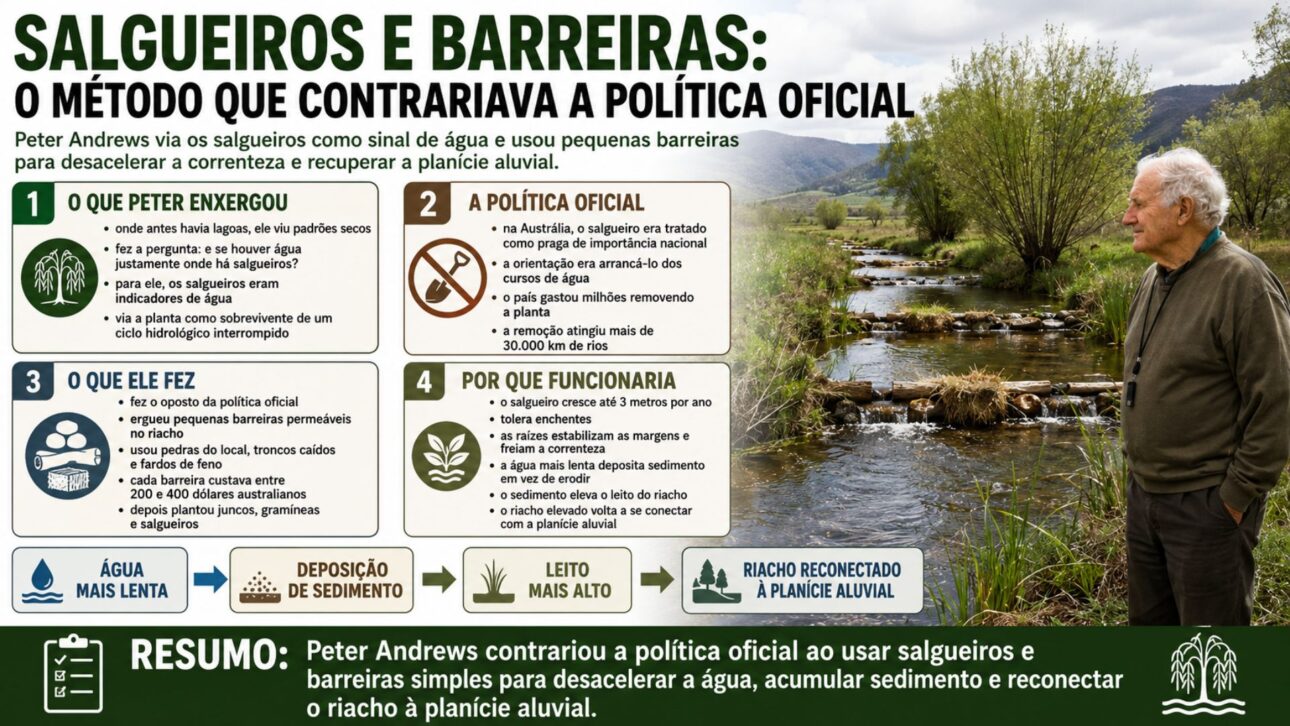
He did exactly the opposite. Peter built small permeable barriers in the stream, made of local stones, fallen logs, and even bales of hay, each costing between 200 and 400 Australian dollars, and then planted reeds, grasses, and willows, everything that grows quickly in water. The willow grows up to 3 meters per year, tolerates floods, and has roots that stabilize the banks and slow the current. The logic was simple: slower water deposits sediment instead of eroding, the sediment raises the bed, and the elevated stream reconnects with the floodplain.
Reported, bankrupt, and with a broken marriage
The resistance to Peter Andrews’ work lasted three decades. For 30 years, neighbors repeatedly reported him to watershed authorities, inspectors appeared demanding that he remove the vegetation considered invasive, and government scientists rejected his ideas. Every agency that evaluated the techniques dismissed them, and every request for official support was denied.
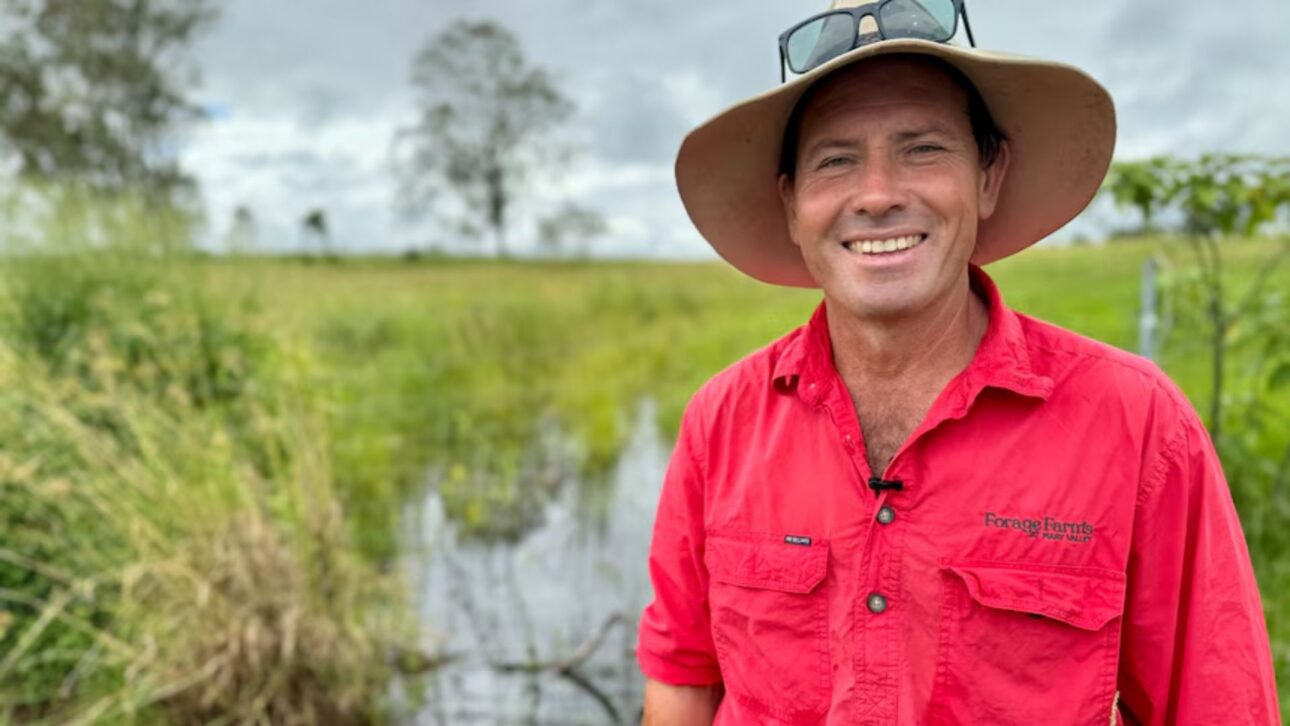
The price was also personal. Successive financial crises forced him to lose control of the property more than once, the bank foreclosed, and the marriage fell apart. But his son, Stuart Andrews, managed to buy back Tarwyn Park and continued applying his father’s method. Already in 1976, just three years after the original purchase, Peter had a working model, with tripled productivity, more carbon in the soil, and previously dry streams running with permanent water.
From field trials to UN recognition
The first crack in skepticism came from a billionaire. Jerry Harvey, founder of the retailer Harvey Norman, owned the degraded Baramul stud farm in the Widen Valley, and although skeptical, allowed Peter Andrews to rebuild part of the property. In two years, the results were undeniable. Then came Tony Coote, owner of a property on the Mulloon Creek, who in 2005 called Peter to treat a deeply eroded watercourse, with works starting in 2006 along 3 km, with barriers, fences to contain cattle, and thousands of plants.
The ultimate test came with the drought. Seven years later, amid the driest seven months ever recorded in the region, with less than 150 mm of rain, the Mulloon Creek was still running, with the floodplain functioning as a giant sponge returning the stored water. The carrying capacity increased by 60%, and the farm fed more cattle than ever during the drought. Coote founded the Mulloon Institute in 2011, and in 2016, the United Nations recognized Mulloon Creek Natural Farms as one of only five genuinely sustainable agriculture examples in the world.
The limits of the method and what published science shows
The story is also a lesson in prudence. The published scientific evidence is still limited. A 2018 analysis by the University of Melbourne pointed out many anecdotes and little peer-reviewed science, describing modest results, such as rehydration of the floodplain, little change in stream flow, and some sediment retention, encouraging but far from miraculous. A report from the University of Western Australia concluded that the method works best in low-salinity soils, flat landscapes, and near water sources, and warned that in very salty soils, flow structures can increase salinity rather than reduce the problem.
There is still an irony at the center of the method. Willows consume much more water than native vegetation, about 15 mm per day compared to less than 2 mm for native eucalyptus, and studies estimate that removing willows can save 5.5 megaliters per hectare of canopy per year. Peter Andrews’ response has always been that a stream so eroded that it no longer reaches the floodplain has no water to save, so the priority is to repair the hydrology with whatever is fastest and then migrate to native species. An ARC study showed that the casuarina, an Australian native, can match the willow in stabilizing banks, but it grows more slowly, and ecological succession, as the Encyclopedia Britannica reminds us, usually begins with pioneer species considered weeds before giving way to more resilient plants.
The coal mine that almost erased the legacy
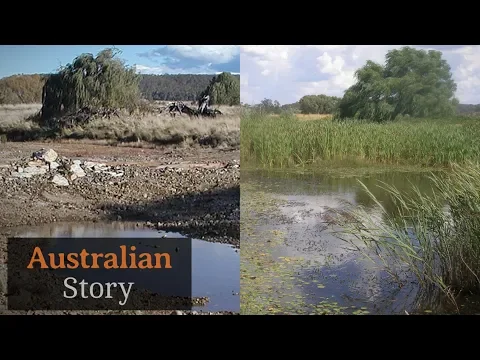

The outcome, however, was not entirely happy. In 2010, the Korean company Kepco acquired the license to operate a coal mine in the Bylong Valley for $43 million and began purchasing properties in the region, including Tarwyn Park. Stuart Andrews resisted for three years, but with neighbors already having sold and financial pressure mounting, the sale became inevitable in 2015, documented by the Australian Story program, from ABC, which returned to the Bylong Valley for the fourth time to cover Peter Andrews, a record in the show’s history.
The turnaround came from environmental policy itself. In September 2019, the New South Wales Independent Planning Commission rejected the mine project, considering that it did not serve the public interest, given the impacts on climate, groundwater, agricultural lands, and the valley’s heritage. Peter Andrews’ legacy, the method rejected for 30 years, ended up becoming part of the argument to block a mine valued at hundreds of millions of dollars.
Peter Andrews, a horse breeder from the dusty interior of Broken Hill with no degree in hydrology or environmental sciences, transformed the ruined Tarwyn Park by refusing to uproot the willows, and saw the method that cost him accusations, bankruptcy, and his marriage recognized by the UN as one of the five examples of sustainable agriculture in the world and awarded the Medal of the Order of Australia in 2011.
His book became a bestseller and the episode that told his story was the most popular of the decade on the program that followed him. Today, Tarwyn Park Training teaches the method to farmers across the country, with over a thousand people trained by the end of 2022, while the Mulloon Institute studies Natural Sequence Farming on a basin scale, over 23,000 hectares. At over 80 years old, he leaves a question in the air: how many other Peter Andrews are being ignored for not having the right credentials.
And you, do you know someone who was ignored for years before being proven right, whether in agriculture, medicine, or technology? Do you believe that field experience can be as valuable as institutional science? Share your story and exchange ideas with other readers about regenerative agriculture, respecting different viewpoints.






Be the first to react!