Portuguese
  Spanish


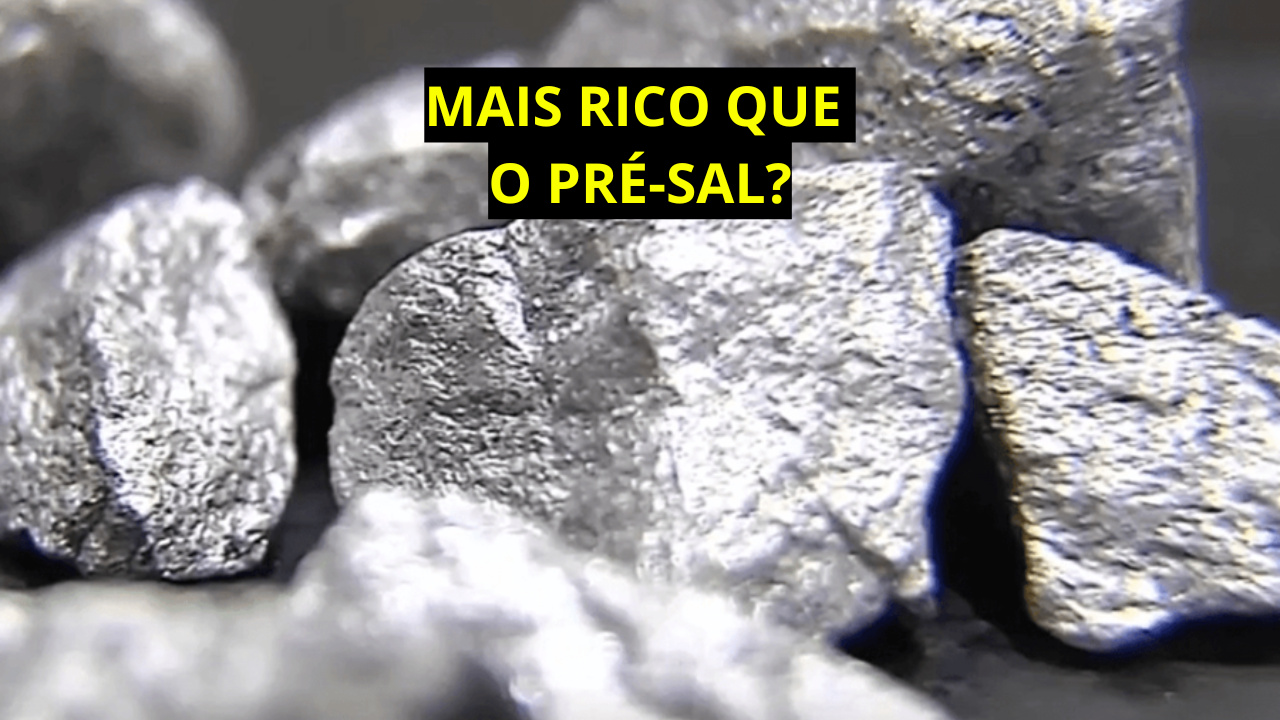


Brazil Has Nearly All the Niobium Reserves on the Planet, Rare Metal Essential for Strategic Sectors. Understand the Economic Importance, Industrial Applications, and Challenges of Exploration.
The niobium has gained prominence in the international scene, and Brazil is the main protagonist of this story, as highlighted by Correio do Estado this Friday, 19/09. With approximately 98% of global reserves, the country has become a key player in the worldwide distribution of the metal, which is already considered more valuable than the pre-salt itself in strategic terms.
Brazilian Reserves and Their Global Dimension
Minas Gerais and the Amazon house the largest niobium deposits in the country. Araxá (MG) stands out as one of the largest operational mines in the world, ensuring long-term supply.
Estimates indicate that Brazil has more than 800 billion tons of ore, an amount sufficient to supply the market for centuries. Goiás accounts for about 3% of national reserves, reinforcing Brazil’s leading role.
-
U.S. Invests $75 Million in Projects to Extract Rare Earths, Gallium, Germanium, and Aluminum from Coal Waste

-
Eni Acquires 25% Stake in Chilean Lithium Project, Plans to Invest Up to $225 Million in Eco-Friendly Extraction Method
-
Mexico’s Giant Crystal Cave: A Deadly 58°C Underground Palace with 11-Meter Crystals Formed Over Nearly a Million Years

-
China Dominates Over 90% of Rare Earth Refining, Prompting Global Concerns: Canada and Japan Launch Billion-Dollar Plan to Reduce Dependency and Safeguard Batteries, Semiconductors, and Defense


The resistance to corrosion and high temperatures makes niobium an indispensable resource for industrial sectors. Mainly used in steel alloys, it provides lightness, durability, and malleability to different products.
The versatility of the metal also extends to areas such as aerospace, electronics, medicine, and superconducting technology, making it irreplaceable in high-performance projects.
Comparison with Pre-salt and Other Producers
While the pre-salt is considered one of Brazil’s greatest energy riches, niobium emerges as an even more strategic resource for the future.
In addition to Brazil, countries such as Canada, Australia, Rwanda, Nigeria, Mozambique, and Ethiopia have reserves, but in much lower volumes. This disparity reinforces Brazil’s position as a global reference center.
Despite the economic potential, niobium mining faces obstacles. Many deposits are located in sensitive areas, such as indigenous territories and environmental preservation regions.
Therefore, companies need to meet legal requirements, such as impact reports, specific licenses, and compliance with tax regulations. Thus, the exploration of the resource demands a balance between economic development and socio-environmental responsibility.