Portuguese
  Spanish


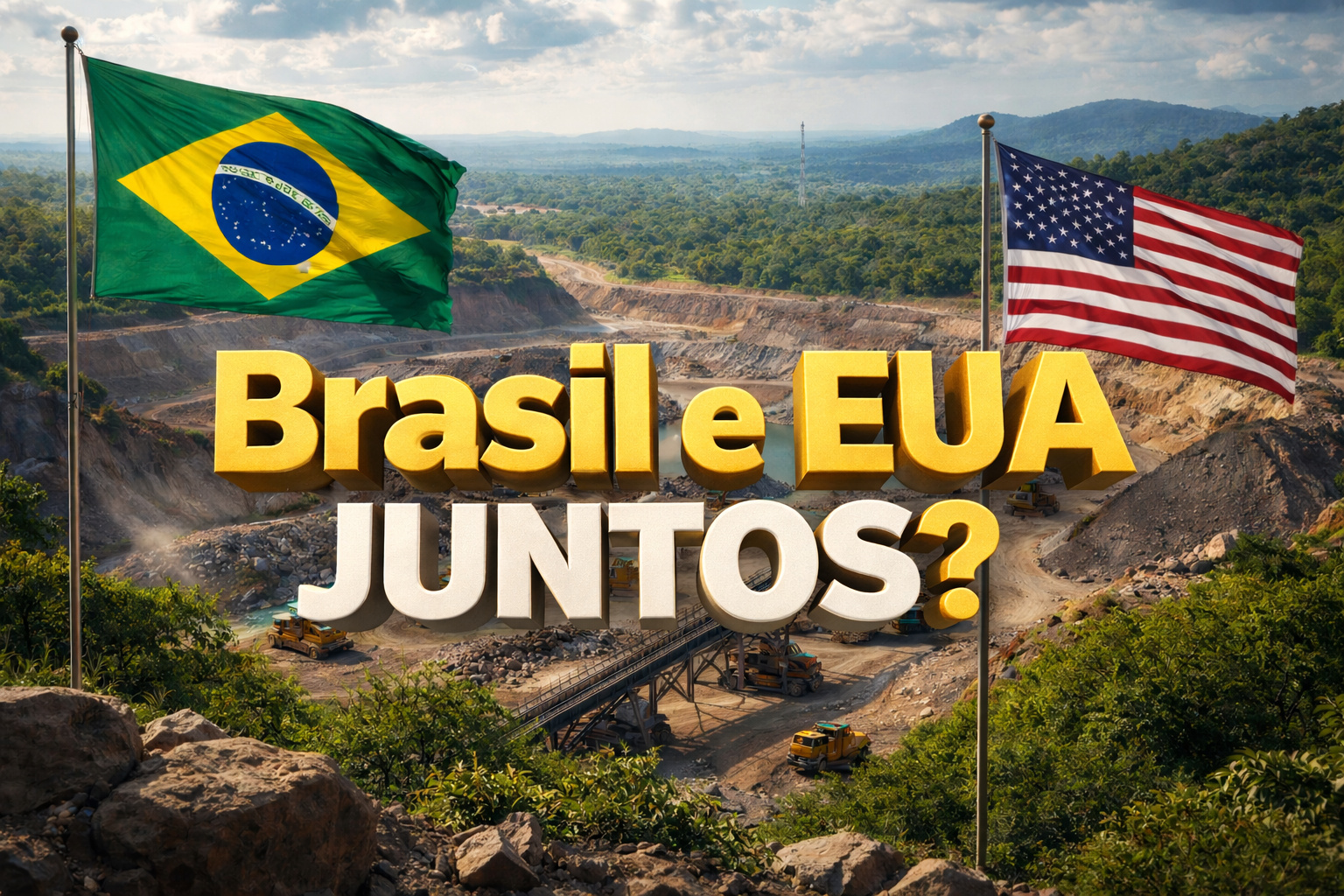


Invitation From The Donald Trump Government Places Brazil At The Center Of An International Arrangement Involving Critical Resources, Geopolitics And The Control Of Global Technology Chains
A high-impact diplomatic movement took shape on February 4, 2026, when the government of Donald Trump began to articulate an international front focused on trade and the control of rare earths. In this scenario, Brazil assumes a strategic role, even while historically maintaining a solid economic relationship with China.
The invitation came from the United States, which seeks to gather strategic allies to reduce Chinese influence over resources considered essential for advanced technology, defense, and energy transition. The U.S. government formally invited Brazil, although the country has not yet confirmed its participation in the initiative.

Meeting In Washington Expands Debate About The Rare Earth Market
The topic advanced after the confirmation of a meeting scheduled for this week at the White House in Washington. The meeting is expected to bring together about 20 countries and will be led by Marco Rubio, the current head of U.S. diplomacy.
-
U.S. Dismisses Brazilian Foreign Ministry’s Military Risk Warning as “Absurd,” Cites Brazilian Criminal Gangs Operating in the U.S. Since May 2026

-
Ukraine War Impacts Brazilian Fuel Supply: Russian Diesel Imports Drop 65% in June, Brazil Turns to US and India Amid Market Concerns

-
Chinese Nuclear Submarine Launches Simulated Warhead Missile in Pacific, Heightening Regional Tensions Amid Naval Drills with Russia Near Qingdao; New Zealand and Papua New Guinea Warn of Persistent Chinese Military Presence
-
Ayatollah Ali Khamenei’s Funeral Draws 15 to 20 Million in Tehran, Calls for Revenge Against Trump After Joint Israel-U.S. Attack



According to information released by ICL Notícias, the meeting will focus on creating a minimum import price mechanism for rare earths. In this way, the United States seeks to limit China’s ability to set global prices on its own for these strategic elements.
China Leads Global Reserves, While Brazil Expands Strategic Relevance
Currently, China holds the largest known reserve of rare earths on the planet, while Brazil ranks second globally, which enhances Brazil’s weight in international discussions about these resources.
As explained by the Brazilian Geological Service, rare earths form a set of 17 chemical elements found in specific minerals. These elements allow for efficiency gains in high-tech products, as well as direct applications in clean energy, satellites, rockets, and missiles, which reinforces their strategic value.
Brazilian Government Conducts Diplomatic Evaluation With Caution
Despite the relevance of the invitation, the Brazilian government is still assessing its official position. The Minister of Foreign Affairs, Mauro Vieira, will not participate in the meeting due to prior commitments. Nevertheless, President Lula‘s government is maintaining ongoing internal consultations.
In this context, Brazil has not ruled out participation, although it has not yet announced a formal decision. The debate, therefore, involves balancing established economic interests with China and growing geopolitical pressures led by Washington.
United States Intensify Mapping Of Rare Earths In Brazil
Alongside diplomatic efforts, the United States has intensified the mapping of rare earth reserves in Brazilian territory. As reported by ICL Notícias, U.S. authorities faced difficulties accessing decision-makers at the Ministry of Mines and Energy, which led to engagement with diplomats and state governments.
Furthermore, official documents indicate that, as early as 2025, the White House directed the CIA to map rare earth reserves throughout Latin America, reinforcing the strategic and long-term nature of the initiative.
Dispute Over Critical Resources Redefines The International Scenario
The growing movement surrounding rare earths reflects a global dispute over critical mineral resources, essential for the technological and energy security of major economies. In this scenario, Brazil occupies a central position, simultaneously observed by major powers.
Experts assess that any Brazilian decision will need to consider economic, diplomatic, and strategic impacts, in addition to preserving autonomy over its natural resources.
In light of this scenario, should Brazil prioritize immediate geopolitical alliances or maintain a balanced stance to protect its long-term interests?