






 Portuguese
  Spanish


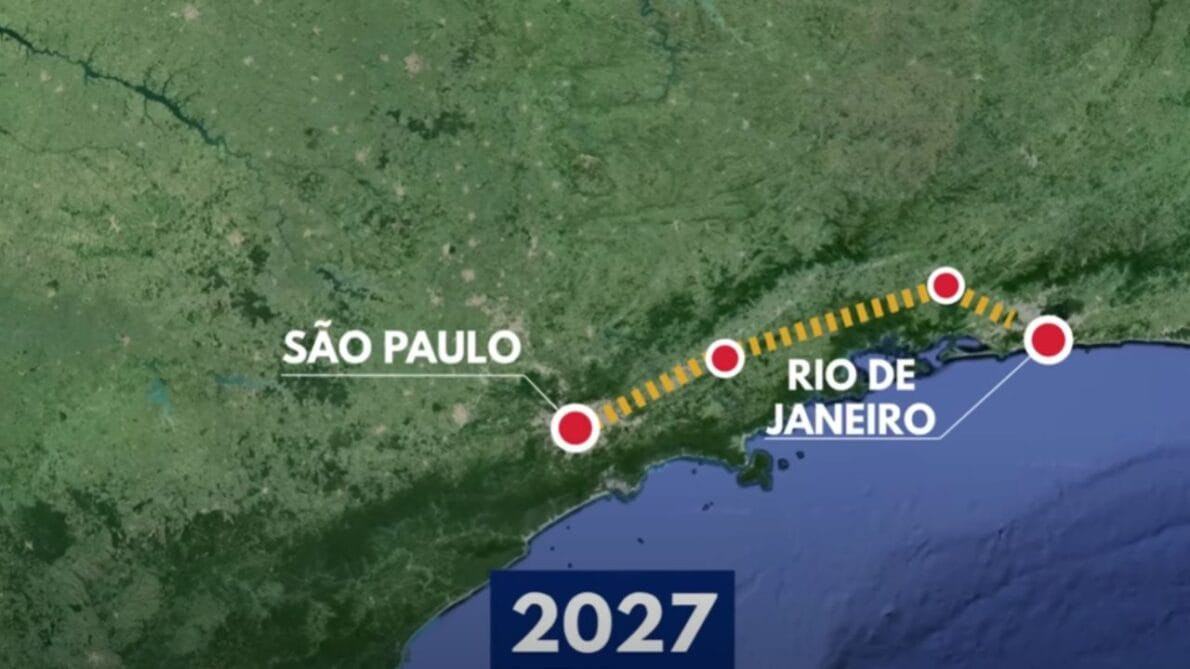


Brazil Is Preparing to Make a Significant Leap in Its Transportation Infrastructure with the Project of the First High-Speed Train in the Country, Representing an Investment of R$ 50 Billion. The Planned High-Speed Line to Connect Rio de Janeiro and São Paulo by 2032 Aims to Reach Speeds of Up to 300 km/h, Drastically Reducing Travel Time Between the Two Cities to Just 1 Hour and 30 Minutes.
Brazil is preparing for a revolution in transportation with the project of the first high-speed train, connecting Rio de Janeiro to São Paulo, promising to transform mobility between two of the country’s largest cities. With a projected investment of R$ 50 billion, this historic project seeks to recover Brazil’s lag in railway infrastructure and introduce an era of high-speed travel in the country.
Historically, until the mid-20th century, Brazil had one of the most advanced railway networks in South America. However, with the popularization of automobiles and the expansion of air transport, railways fell into decline. This high-speed train project, planned for over 30 years, aims not only to revitalize the Brazilian railway system but also to modernize it significantly.
Rio-São Paulo High-Speed Train Is Planned to Reach Speeds of Up to 300 km/h
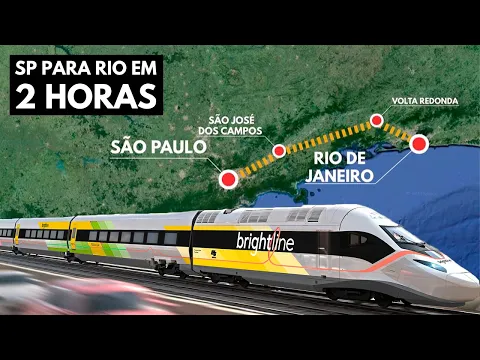

The Rio-São Paulo high-speed train is planned to reach speeds of up to 300 km/h, drastically reducing travel time between the two metropolises to approximately 1 hour and 30 minutes, a significant improvement compared to the current 5 to 6 hours by car. The line will feature four main stations: São Paulo, São José dos Campos, Volta Redonda, and Rio de Janeiro, promising efficiency and comfort for passengers.
-
28-meter, 156-ton titans traveled 20,000 km from China to the port of Santa Catarina: Portonave received 7 fully electric megacranes, part of a R$ 210 million package, to double container handling.

-
They exchanged the idea of a large house for a 35 m² warehouse, spent US$ 12,000 on the structure, and created a tiny house in Colorado with space to live and work.

-
A newly opened terminal in the middle of the Amazon has begun transporting soy and corn through Amapá, eyeing the queue of ships that is congesting the ports in the South.

-
Goodbye to old tiles: renovation technique without construction transforms bathrooms in a few hours, eliminates debris, and reduces costs with coverings using special paints, high-resistance adhesives, and modern finishes that completely renew the space.


Despite the enthusiasm, the project faces several challenges, such as land negotiations, high costs, and the need for detailed feasibility studies. The history of delays in railway projects in Brazil, such as the North-South Railway and Transnordestina, serves as a reminder of the obstacles that may arise. However, private financing, without reliance on federal funds, marks a new approach to this type of infrastructure in Brazil.
Project Promises to Put Brazil on the Map of Nations with High-Speed Rail Transportation
If successful, the high-speed train will not only improve connectivity between Rio and São Paulo but also serve as a catalyst for economic development and regional integration. The project promises to put Brazil on the map of nations with high-speed rail transportation, joining countries like Japan, France, and China, and establishing a new standard for future projects in the country.
The implementation of this high-speed train is proof of Brazil’s potential to overcome historical barriers and usher in a new era of innovations in transportation, crucial for sustainable development and modernization of the country. With construction expected to start in 2027 and operation in 2032, the Rio-São Paulo high-speed train is undoubtedly one of the most ambitious and promising projects in contemporary Brazil.








Tantas coisas para se fazer e ficam empolgados com esse trem bala. O Brasil precisa de hospitais moradias que nunca sai do papel
Presídios para acabar com esses assaltos em pleno dia. E o governo querendo abandonar o Palácio dos Bandeirantes. Haja dinheiro pra toda essa mudança e a população passando fome
Não vai sair do papel, com esse governo ****
Ótimo muito bom esse projeto tem que sair logo do papel já está passando da hora do Brasil pensar em ser um País progressista