Portuguese
  Spanish


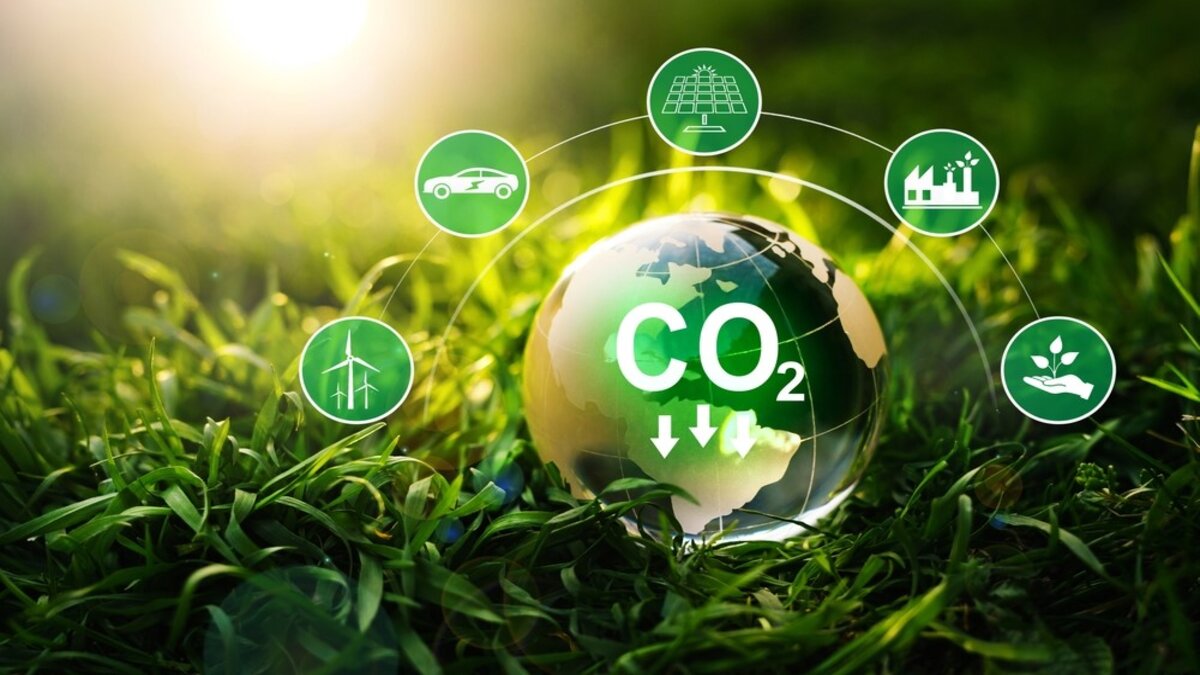

Brazil Predicts Shortage of Cbios After 2023, Decarbonization Credits Will Experience Deficit Starting in 2024, This Will Happen If the National Energy Policy Council Maintains the Annual Purchase Targets Already Indicated for Distributors in the Next Decade.
On Tuesday, (07/13), a study conducted by BrasilCom, which represents regional distributors and was prepared by the energy department of PUC — SP, found that there will be a shortage of Cbios in Brazil after 2023. The deficit worries the responsible entities because decarbonization credits are crucial for the environment.
Study Calculates Biocombustible Production in Brazil Until 2031
The calculations made by the BrasilCom research considered the projections of the Energy Research Company (EPE) for biocombustible production until 2031 and the maximum potential generation of Cbios if all the plants accredited by the National Agency of Petroleum, Natural Gas, and Biofuels (ANP) participate in RenovaBio. The study considers the current efficiency ratings of the plants, which determine that each company must generate Cbios from the same quantity of fuels.
“Even if efficiency ratings increase to the maximum, it would be difficult to meet the targets,” argues Antônio Márcio Tavares Thomé, a researcher at PUC-Rio, stating that the lack of Cbios is getting closer to happening. The study is already analyzing the possibility of shortages starting in 2023 if the central target of the CNE is maintained and if the production projections made by the EPE are met.
-
Brazilian scientists are simultaneously advancing two research projects on clean hydrogen and driving solutions that could transform the energy matrix, enhance industrial competitiveness, and accelerate large-scale emission reduction targets.

-
Advancement in renewable energy: A R$ 150 million project launched by Petrobras and Finep aims to create state-of-the-art electrolyzers for green hydrogen, strengthening national research and preparing Brazil to compete in a billion-dollar energy market.
-
Illiterate or semi-literate grandmothers were trained to repair solar systems, open rural workshops, and light up homes that still depended on kerosene.
-
The world has bet on green hydrogen as the fuel of the future, but now faces the side effect: producing 1 kilogram requires about 9 liters of ultrapure water, and the largest projects on the planet are precisely in the driest regions of the Earth, where water is already scarce for people.




In this sense, in the eventuality that all the plants are certified, there could still be a surplus, for example, generating up to 50 million Cbios. The target is 42.35 million. By 2024, even if all producers are issuing Cbios, the maximum number of certificates that should be generated is 52.2 million, and the central target set is 50.8 million. The expectation is that from 2024 onwards, this gap between generation and targets will only widen.
Flexibility to Set Different Targets
In this scenario, the CNPE, however, has the flexibility to establish different targets from those already indicated for the coming years. The CNPE council, in fact, establishes a tolerance range for each year, with minimum and maximum targets. Thus, for 2024, the minimum target is about 42.31 million Cbios, while the capacity to generate Cbios from the projected biocombustible production by the EPE is 42.8 million.
The calculations made also did not consider the impact of new financing in biomethane, which can be sold in the market and have linked Cbios, or the replacement of diesel in production processes with the reduction of the carbon footprint of current biocombustibles. It is evident that even with the deficit, Cbios generated in one year can be used to meet targets from previous years.
In this sense, this already happened in 2021, when 10.4 million Cbios were “carried over” to 2022. The other half remained with distributors. For this year, the Union of Sugarcane Industries (Unica) forecasts a surplus of 7 million, as its estimates indicate that ethanol sales in the second half are expected to generate 15.5 million Cbios.
Understand What Cbios Are
Cbios, also known as Decarbonization Credits, are assets issued by licensed companies. To do this, companies must be importers or producers of fuels that work to reduce carbon emissions in the environment. The authorization is issued only by the ANP, and the certificates are issued through an invoice.