Portuguese
  Spanish



Brazil Completes Unprecedented Operation in Belém with the Loading of 16 Barges Stacked Transversely on a Heavy Cargo Ship, Marking a Historic Advancement in River Logistics Between Brazil and Uruguay
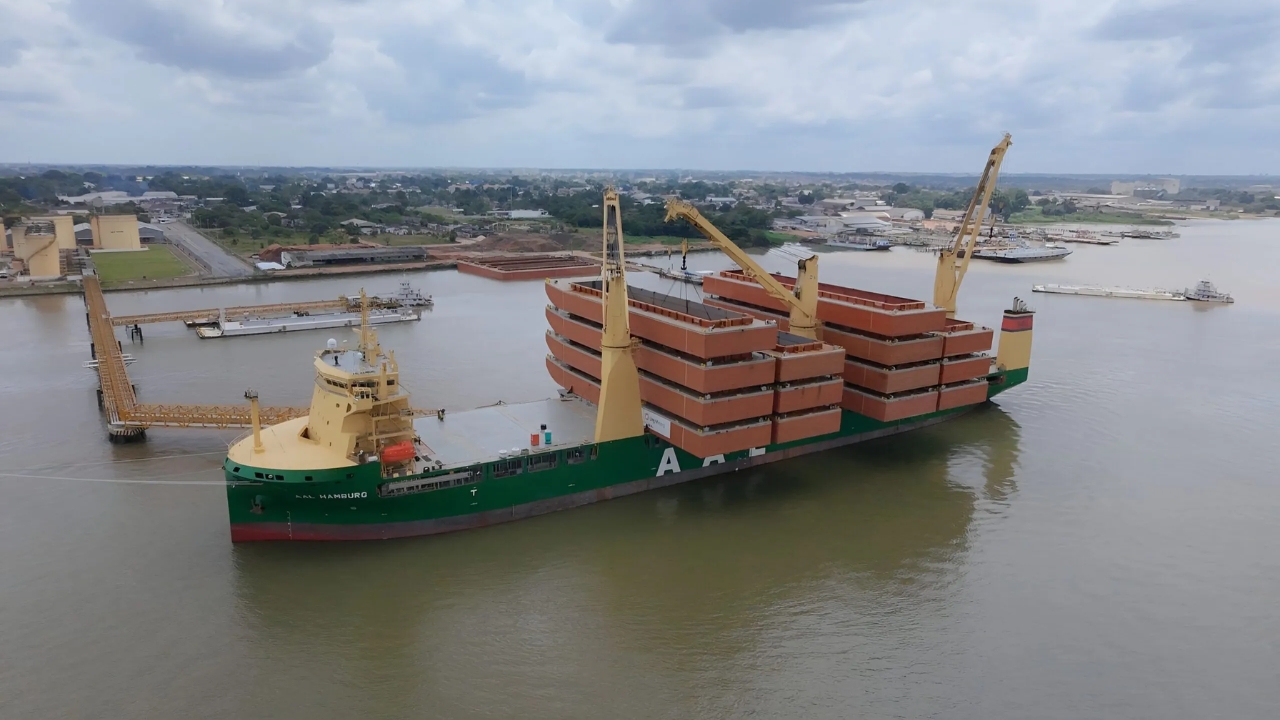
In a historic achievement for the continent’s river logistics, Brazil successfully completed the first operation of loading barges stacked transversely onto a heavy cargo ship, conducted at the Atem Tapanã Terminal in Belém (PA).
The maneuver, completed at the end of October 2025, was highlighted by the portal Transportes & Comércio Exterior as an unprecedented technical and operational milestone in regional navigation.
An Engineering Operation Without Precedents
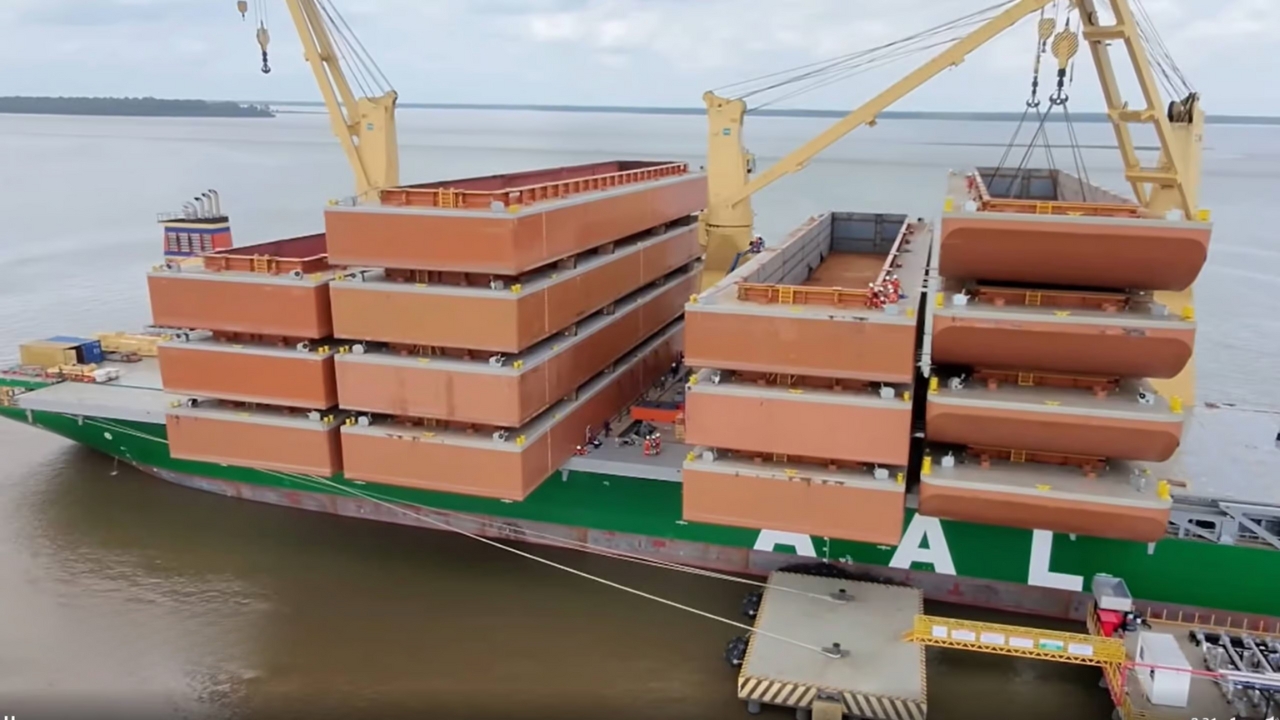
The operation consisted of the stowage of 16 barges, the first of a total of 400 units, onto the AAL Hamburg, specially chartered for this mission.
-
The Port of Itaqui closes the best first semester in history with over 17 million tons and takes off as the locomotive of the Northern Arc.

-
Brazil’s North-South Railway to Auction Two Grain Terminals in Central Tocantins

-
AI-powered traffic cameras in São Paulo now issue fines for cellphone use and seatbelt violations around the clock

-
Free Upgrade to Professional Driver’s License Categories in Over 130 Locations in Brazil, Including Exams and Courses



Instead of using the traditional method with semi-submersible vessels, the team opted for a tandem lifting technique, capable of precisely elevating each barge of 380 tons, requiring millimetric synchronization between the cranes and a strict stability control of the ship.
The process was preceded by extensive feasibility and engineering studies, involving multiple players from the Brazilian naval sector, including the Capitania dos Portos da Amazônia, the Atem terminal, teams of naval engineering and logistical consultants, as well as the marine inspectors and customs brokers who monitored the loading.
National Construction and Strategic Destination
The barges were built at the Rio Maguarí shipyards in Belém, and Juruá in Manaus — both recognized for the quality of their river vessels. The final destination is the Port of Nueva Palmira in Uruguay, managed by the National Port Administration (ANP).
There, the vessels will be integrated into the fleet of LHG Logística (formerly TBN), as part of a project funded by the Merchant Marine Fund (FMM).
This program aims to strengthen cargo transportation via the Paraguay-Paraná Waterway, a vital logistical axis connecting Brazil, Bolivia, Paraguay, Argentina, and Uruguay, reducing operational costs and increasing the commercial competitiveness of the Southern Cone.
With this operation, Brazil consolidates itself as a driving force in the river and port integration of South America.
Cooperation and Advancements for the River Sector
The complex operation involved one year of preparation and collaboration among dozens of professionals from different specialties. According to engineers involved, the success of the endeavor “reflects the advancement of the Brazilian naval industry and its ability to carry out operations of international standard”.
For LHG Logística, this first shipment represents a decisive step in the plan for modernization and expansion of regional river transport, reinforcing its operations on routes that connect the Amazon to the ports of the South Atlantic.
For both Brazil and Uruguay, the project reaffirms the commitment to developing a sustainable and interconnected logistics network, based on energy efficiency and reducing emissions from land transport.
With the loading completed, the AAL Hamburg now heads for Uruguay, carrying not only the 16 barges but also the symbol of a new phase of cooperation and innovation in navigation of the Southern Cone, which is likely to redefine commercial flows between the largest river economies in the region.