






 Portuguese
  Spanish
  4 min of reading
  0 comments


Despite dominating global niobium production, Brazil still faces challenges in transforming this mineral advantage into sustainable wealth. The country already carries out part of the processing but does not fully capture the value of the more advanced stages, such as technology, industrial innovation, and high-performance products.
Brazil is sitting on one of the planet’s most strategic resources: niobium, a mineral almost unknown to the general public but crucial for industries that move billions. According to the Geological Survey of Brazil, the country holds about 90% of the world’s production and approximately 95% of known reserves.
The biggest gem is in Araxá, Minas Gerais, where CBMM, considered the global leader in the sector, operates. There lies one of the largest deposits on the planet, a mine that puts Brazil in a rare position: controlling a critical resource for the new industrial economy.
The mineral that strengthens airplanes, electric cars, and the steel of the future
Niobium doesn’t shine like gold, but it can be worth much more in strategic terms. Small amounts of this metal make steel stronger, lighter, and more durable, something essential for airplanes, pipelines, automobiles, trains, turbines, and high-performance structures.
-
China could reduce iron ore imports from 80% to 50% of consumption by 2030, while its share in global steel production falls from 52% to 46%, in a shift that could reshape the global market, says CMRG.

-
Brazil is sitting on one of the largest lithium reserves in the world, in the Jequitinhonha Valley, but national mining has almost become an appendage of China: 97% of the metal’s export goes to a single country, which also dominates refining.
-
Iron ore falls to 762 yuan in China as real estate sales decline and steel production hits lowest level since 2018
-
Brazil has minerals, clean energy, and a waiting market, but it could miss a billion-dollar opportunity if it doesn’t speed up the race for green minerals, while the steel industry seeks to reduce emissions.


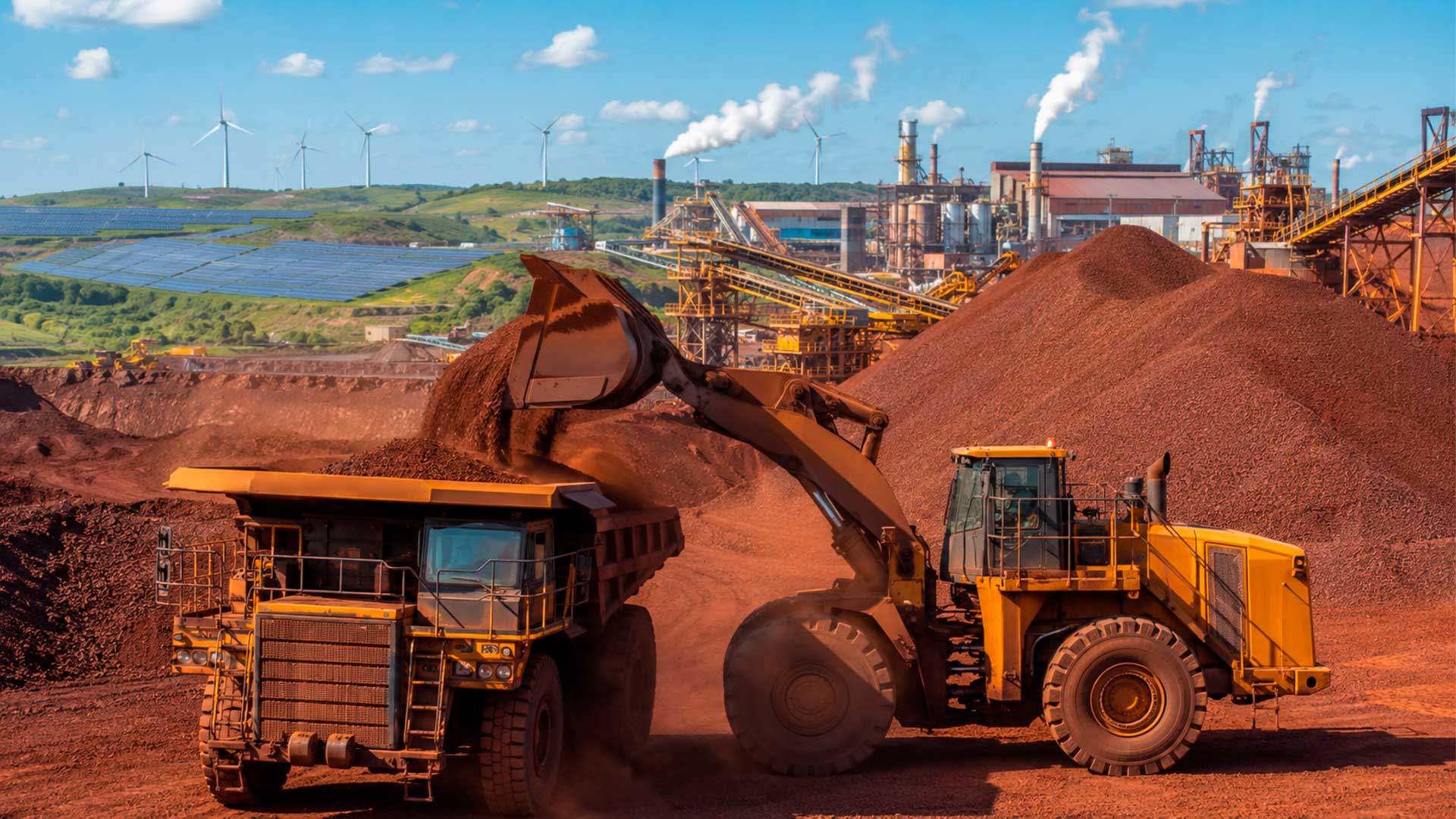
The USGS highlights that niobium is consumed mainly as ferroniobium by the steel industry, in addition to appearing in alloys used by the aerospace sector. In other words: it’s not just any mineral. It is a silent ingredient of modern infrastructure.

The explosive phrase: does Brazil export wealth and buy technology?
Here arises the most controversial point. Many narratives claim that Brazil exports niobium “in its raw state” and then imports processed products. The reality is more complex: Brazil already processes a good part of its niobium, mainly in the form of ferroniobium and oxides.
CBMM itself states that it sells industrialized niobium products to the entire world. Therefore, the problem is not simply selling a raw material without value. The real issue is different: Brazil dominates the resource, but still does not capture the full value of the more advanced stages.
The industrial leap that Brazil has not yet taken
Brazilian niobium already leaves with added value, but the country could go much further. The global dispute is not just about producing ferroniobium; it’s about manufacturing superalloys, advanced batteries, aerospace components, superconducting materials, and high-value-added technologies.
This is the key point: whoever controls the raw material has power, but whoever masters the technology profits much more. Brazil has the mine, the scale, and the mineral knowledge. What is missing is an industrial policy capable of transforming this advantage into a complete technological chain.
Niobium batteries: the next technological race
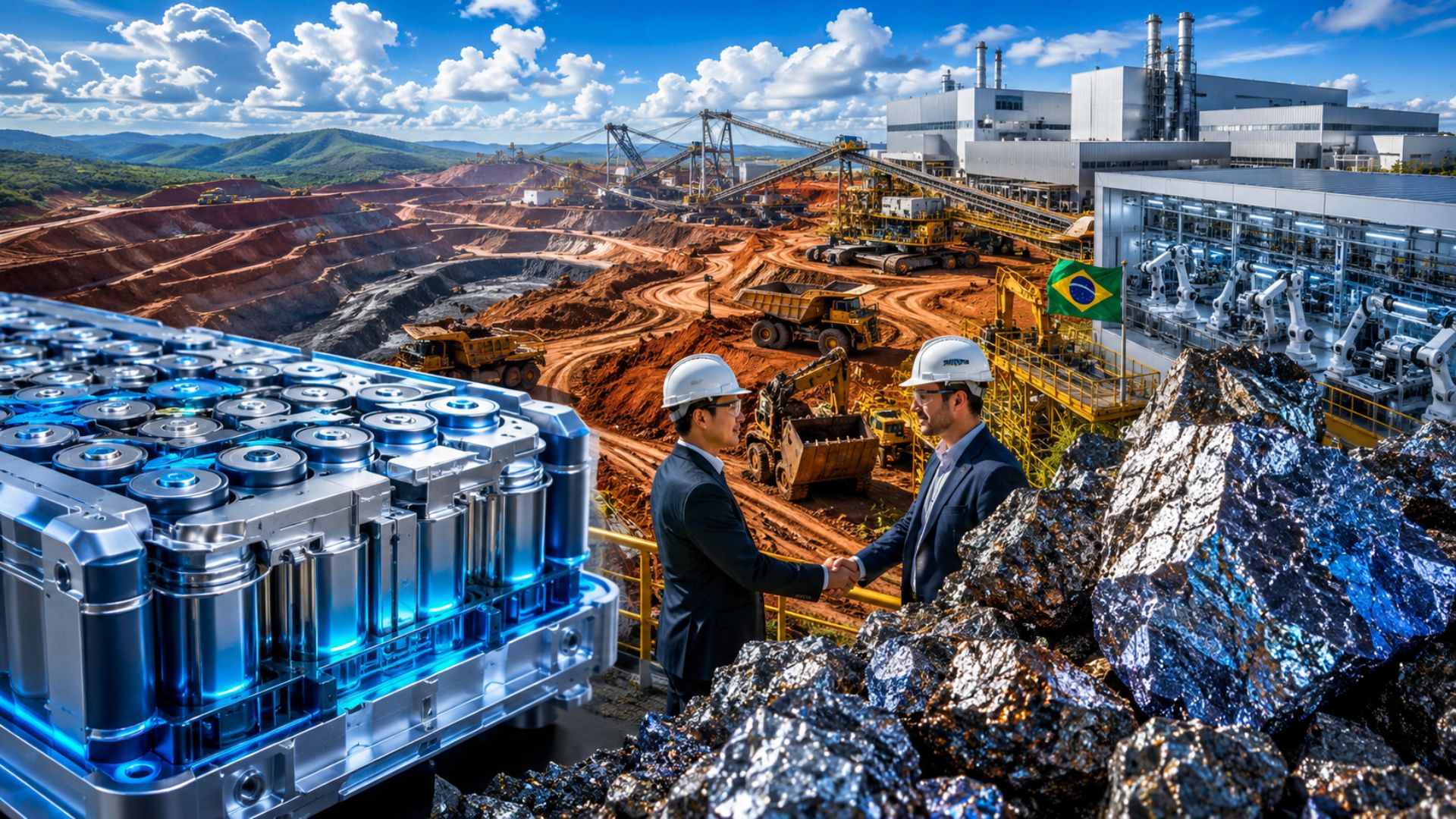
Niobium has also entered the radar for new-generation batteries. In 2024, Toshiba, Sojitz, and CBMM unveiled an electric bus with a niobium-based battery, promising ultra-fast charging and high efficiency.
This could be a game-changer for heavy vehicles, urban transport, and energy storage. If niobium establishes itself in this market, Brazil could hold a key piece of the global energy transition.
The Brazilian paradox
Brazil is not poor in resources. On the contrary: it is rich in minerals, water, biodiversity, and energy. Yet, it often exports the basis of wealth and imports back the more expensive final product. With niobium, there is a risk of repeating this historical pattern.
The country has an almost unique advantage in the world, but needs to transform it into industry, innovation, skilled jobs, and high-tech exports. Otherwise, it will continue to be the giant that owns the resource, while others capture most of the value.
The truth that no one wants to ignore
Niobium is not “more expensive than gold” per kilo — this idea is an exaggeration. But it can be more strategic than gold for certain industries. Gold is stored. Niobium transforms steel, batteries, engines, turbines, and infrastructure.
The final question is direct: if Brazil controls one of the most important raw materials of the 21st century, why doesn’t it yet lead in the final products that depend on it?
The answer involves investment, innovation, and a vision for the future. Because having 90% of the geological game is not enough. The real power lies in also dominating the industrial game.







Be the first to react!