Portuguese
  Spanish


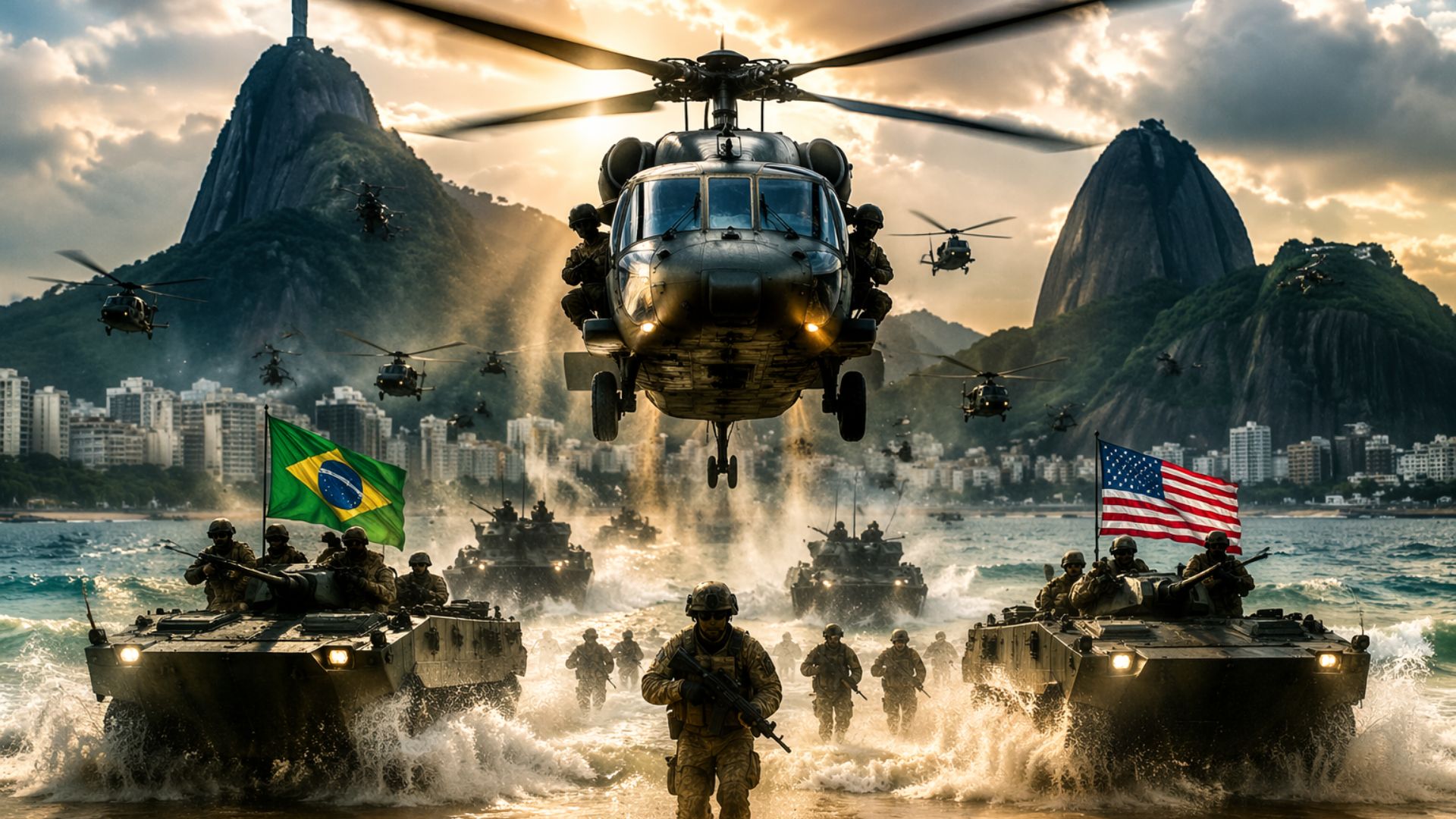

US movement increases pressure on Brazil by treating gangs as a global threat, with possible impact on the financial system and diplomatic relations.
The Brazilian government has once again been closely monitoring the United States’ efforts to classify the First Command of the Capital (PCC) and the Red Command (CV) as foreign terrorist organizations.
According to a report from Metrópoles published this Friday (17), American authorities informed the president of the Central Bank, Gabriel Galípolo, about the offensive under discussion in Washington, a move that increases diplomatic pressure on Brasília on a topic that has been sensitive since 2025.
Although the classification has not yet been publicly announced by the State Department, the possibility has stopped circulating only behind the scenes, as reported by the Metrópoles portal on the same date.
-
Mother discovers she may have won £12 million in the lottery but faces an agonizing wait after the shopkeeper threw the ticket in the trash.

-
A couple bought a house in Sheffield and, when removing the carpet from the hallway, found a trapdoor leading to a secret 23 m² basement with a 2-meter ceiling height, a discovery that eliminated the need for an expensive extension and, according to them, added £70,000 to the property’s value.

-
A nurse bought for 20,000 a 1955 house abandoned by a hoarder in Texas, and months later, rain revealed a buried pool in the backyard valued at $160,000, which he restored himself for about $10,000, a fraction of the cost of building a new one.
-
The United Kingdom is transforming dog feces left on trails into gas to light a streetlamp through an unlikely and surprising project that shows how even one of the most rejected wastes in cities can generate energy.




The report indicates that this movement is part of a broader strategy by Washington to treat Latin American criminal organizations as a transnational threat, subject to stricter sanctioning instruments.
Classification as terrorism and effects on the financial system
The eventual inclusion on the list of Foreign Terrorist Organizations (FTO) alters the scope of measures available to the American government.
According to the State Department, this type of designation serves to suffocate support networks, restrict funding, and increase penalties against those who provide material support to the group classified in this category.


In practice, this could affect assets under U.S. jurisdiction and increase the risk of blockages, operational barriers, and more severe filters in the international financial system.
This is the point that most concerns Brazilian authorities and the private sector.
When Washington toughens its approach against an organization with transnational operations, banks, payment companies, brokerages, financial platforms, and companies with exposure to the external market tend to reinforce compliance mechanisms to avoid any link, even if indirect, with suspicious operations.
The consequence may manifest in account closures, remittance holds, business interruptions, and reviews of contracts considered sensitive to reputational or regulatory risk.
This reading also appears in the report presented to the Brazilian government, according to the Metrópoles report.
Resistance of the Lula government to the classification of factions
The resistance of the Lula government did not start now. According to the report presented by Metrópoles, the Brazilian position has already been one of resistance to this type of framing by the United States.
The internal assessment considers that Brazilian legislation treats terrorism differently from organized crime, even though the latter operates with a high degree of violence and reach.
This legal divergence supports the position of the Planalto and the Ministry of Justice.
The prevailing assessment in the government is that the fight against factions should continue through police cooperation, financial intelligence, asset investigation, and criminal accountability, without automatically importing the legal framework adopted by the United States.
At the same time, there is concern that a unilateral classification by Washington could have indirect effects on financial operations, on Brazilian companies, and on the very decision-making margin of the Brazilian state on security and sovereignty issues.
Notice to Galípolo and impacts for the Central Bank
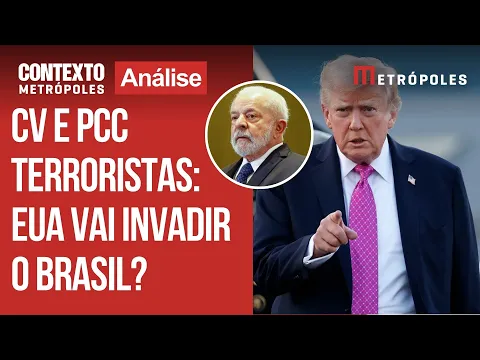
The information that Gabriel Galípolo was warned in advance reveals that the topic has already exceeded the police sphere and reached the core of monetary policy and financial stability.
The Central Bank does not classify factions nor conducts foreign policy, but supervises the financial system and monitors risks that may affect international flows, institutions authorized to operate in the country, and mechanisms for preventing money laundering.
In this context, a prior notice is relevant because it allows mapping possible effects on transactions, internal controls, and the exposure of Brazilian institutions to scrutiny by foreign authorities.
Still, the existence of the notice does not mean that the measure is already in effect.
Until April 17, 2026, there has been no announcement in an open official source from the U.S. government regarding the designation of PCC and CV as FTO.
What exists, based on reports, is the indication that Washington is moving in this direction, combined with the already documented history of pressure on Brazil to adopt a similar framework.
This difference is central because it separates a political intention in maturation from a formal act with immediate effects.
U.S. pressure and international action of the factions
The United States’ offensive is based on the understanding that these factions operate beyond Brazilian borders, move resources through money laundering, and maintain connections that would justify a more aggressive approach.
According to what was presented by American authorities in discussions with Brazil, the factions are seen as structures with international operations, linked to illicit financial flows and activities outside Brazilian territory.
This argument has been used to advocate for broader sanctions and additional tools for investigation and blocking.
The debate has gained momentum again with the indication of progress in this policy by the United States, as described in the report.
In this environment, PCC and CV have come to be seen in Washington not just as Brazilian factions, but as actors in a transnational illicit economy capable of crossing borders, infiltrating businesses, and demanding a response with geopolitical weight.
For Brazil, however, the shift is not merely semantic.
It could influence diplomatic relations, bilateral cooperation, banking protocols, and the perception of risk over entire sectors of the economy.
At the center of this discussion is a tension still without a clear resolution. On one side, the United States argues that terrorist classification would enhance the ability to financially strangle the factions.
On the other, the Brazilian government insists on separating organized crime from terrorism within the national legal framework and on preventing a foreign decision from producing systemic effects on the country’s institutions and businesses.
The advancement or not of this offensive will now depend on what Washington decides to formalize in the next steps and how Brasília will react to this new phase of pressure.