Portuguese
  Spanish


The dependence on foreign fertilizers exposes Brazilian agribusiness to exchange rate fluctuations, international crises, wars, and increased costs, while specialists point to structural obstacles, delays in public policies, and the need for long-term financing to develop national production.
Brazil imports over 80% of the fertilizers from abroad it consumes, maintaining a point of concern for national agribusiness amidst geopolitical risks, exchange rate fluctuations, and rising production costs. This dependence directly impacts agriculture and livestock, especially in scenarios of international crisis, when wars and instabilities tend to drive up the cost of inputs used in the field.
The issue involves high costs, structural obstacles, and the difficulty of strengthening national fertilizer production. Rural producers are already experiencing practical effects of this scenario, at a time when margins are tight and other items are also pressuring agricultural activity.
Dependence on foreign fertilizers exposes agribusiness fragility
The strong presence of fertilizers from abroad in Brazilian production leaves the country vulnerable to factors that do not depend solely on the domestic market. Exchange rate variations and international crises can raise input prices and affect the planning of rural producers in different regions.
-
Payment Infrastructure Expert Highlights Diverse Realities in Latin American E-commerce, with Card Usage Ranging from 89% in Ecuador to 50% in Colombia

-
Brazil’s Central Bank’s Tight Monetary Policy Risks Stifling Both Production and Demand Amid High Inflation and Fiscal Imbalance

-
Over a Century After the Sinking, US Takes Legal Action to Stop Auction of Over 100 Titanic Artifacts

-
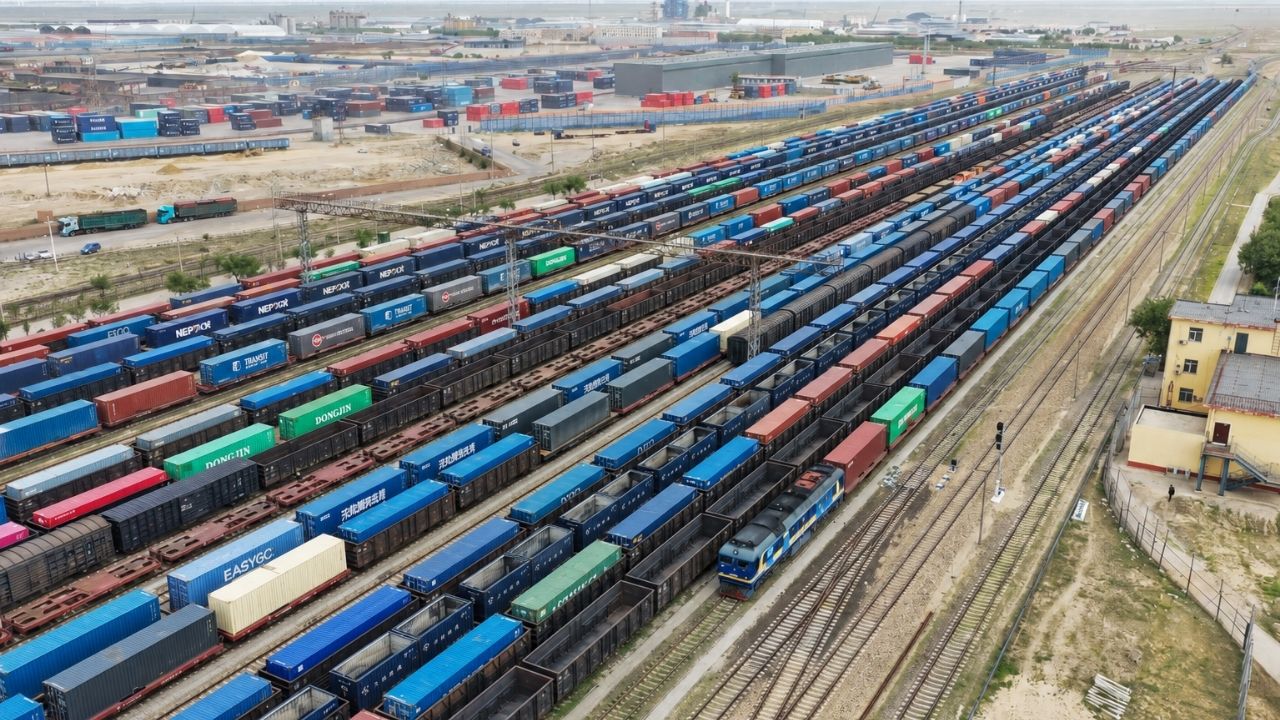
Chinese Rail Port in Inner Mongolia Surpasses 25,000 China-Europe Trains, Connecting 75 Routes Across Over 10 Countries, Showcasing Central Corridor as a Strong Land Alternative to Long Sea Routes


Marcelo Brito, academic director of FDC Agroambiental, believes that this situation is still far from a rapid change. For him, external dependence is linked to the so-called Brazil cost and the delay in building structural policies aimed at the sector.
The National Fertilizer Plan took about 15 years to be launched, although it was initially planned for 2010. Implementation only occurred in 2025, in a context where production units were closed even after the advancement of national policy.
Between 2024 and 2025, four plants were deactivated in Cubatão, with a considered significant impact on agribusiness. The closure of these units reinforces concern about the country’s ability to reduce dependence on foreign fertilizers in a strategic sector for agricultural production.
Projects aim to reduce national dependence
Brazil currently has at least six projects, including public and private initiatives, aimed at reducing dependence on foreign fertilizers. These actions appear as part of an effort to expand national production and decrease agribusiness’s exposure to external shocks.
Guilherme Rios, agricultural policy advisor for the Confederation of Agriculture and Livestock of Brazil, CNA, argues that these measures should be long-term. The construction of a national fertilizer industry requires time, planning, and attention to environmental issues related to resource exploration.
Progress also depends on specific financing for the sector’s development. For Rios, “it’s not a problem that will be solved in the 2026/2027 harvest,” because the industry demands years of construction and needs targeted credit.
Government participation in fostering these activities is pointed out as essential to enable expansion. Without adequate financing instruments, the reduction of dependence on foreign fertilizers tends to remain limited by high costs and structural barriers.
2026/2027 Harvest begins with pressured costs
The 2026/2027 harvest, expected to begin in July, arrives with various challenges for rural producers. In addition to foreign fertilizers, the field faces increased costs for diesel, machinery, and equipment.
Tight margins reduce producers’ decision-making space and make the cost of inputs an even more sensitive factor. The Selic rate of 14.75% also directly influences choices in the field, especially in a more expensive credit environment.
International crises continue to have a direct impact on Brazilian agricultural production. When inputs become more expensive, the pressure spreads through different stages of rural activity and affects the financial balance of producers.
This scenario reinforces the importance of policies aimed at national fertilizer production and the reduction of external vulnerability. The dependence on foreign fertilizers remains a central point for Brazilian agribusiness in 2026.
Producers feel the impact on the final price
The increase in costs is evident in the daily lives of rural producers. Maria Vitalina Soares, a banana producer in Jaíba, northern Minas Gerais, reports difficulties with high expenses and a selling price that does not keep up with the same pressure.
In the case of bananas, the period of highest production also affects the cost-to-sale ratio. With more expensive diesel, the final price of the fruit becomes even more pressured, increasing the challenges for those who depend on inputs and transport.
The fertilizer situation adds to this set of pressures faced by producers. The import of more than 80% of inputs keeps the agricultural sector exposed to external variables and reinforces the need for continuous actions to increase domestic production.
With public and private projects underway, demand for specific financing, and environmental challenges to consider, reducing dependence on foreign fertilizers emerges as a long-term agenda. The topic remains linked to costs in the field, production security, and the competitiveness of Brazilian agriculture.
With information from Itatiaia