






 Portuguese
  Spanish


A global report points to 2025 as the year when the turnaround became reality, but shows that Brazil may be heading in the opposite direction
Clean energy crossed a turning point in 2025 that experts had been expecting for years: for the first time in a century, renewable sources generated more electricity than coal worldwide. Add to that a dramatic drop in battery prices, and the old argument that coal was the cheapest option simply ceased to make sense.
Clean energy became more competitive because the cost of generating and storing plummeted. The price of battery packs fell 45% in a single year, and in real auctions, the combination of sun plus battery already beats new coal plants. The worrying news, however, is that Brazil seems to be rowing against this tide.
The year when renewables surpassed coal
The historical milestone is in the global numbers. According to the Global Electricity Review 2026 report, from the data platform Ember, cited by Canal Solar, renewables reached 33.8% of global electricity generation and surpassed coal, with 33.0%, for the first time in about 100 years.
-
Google’s Biotechnology Project Seeks EPA Approval to Release 64 Million Bacteria-Infected Male Mosquitoes to Curb Disease Transmission

-
China Tests New Urban Mobility in Hefei with Electric Aircraft and Drones, Eyeing a Trillion-Dollar Market to Transform Transportation

-
Xiaomi Unveils Smart Technology to Replace Air Conditioners: Promises 45% Less Energy Use, 1,760 m³/h Airflow, APF 5.31 Efficiency, and Annual Savings of 884 kWh.
-
After AI Failures, Ford Hires Hundreds of Veteran Engineers


It is not a statistical detail. Coal has dominated the planet’s electricity since the Industrial Revolution, and seeing it surpassed marks a change of era. When the oldest source loses the throne to sun, wind, and water, the global electrical system enters another phase, with long-term consequences for prices and emissions.
The battery that fell 45% in one year
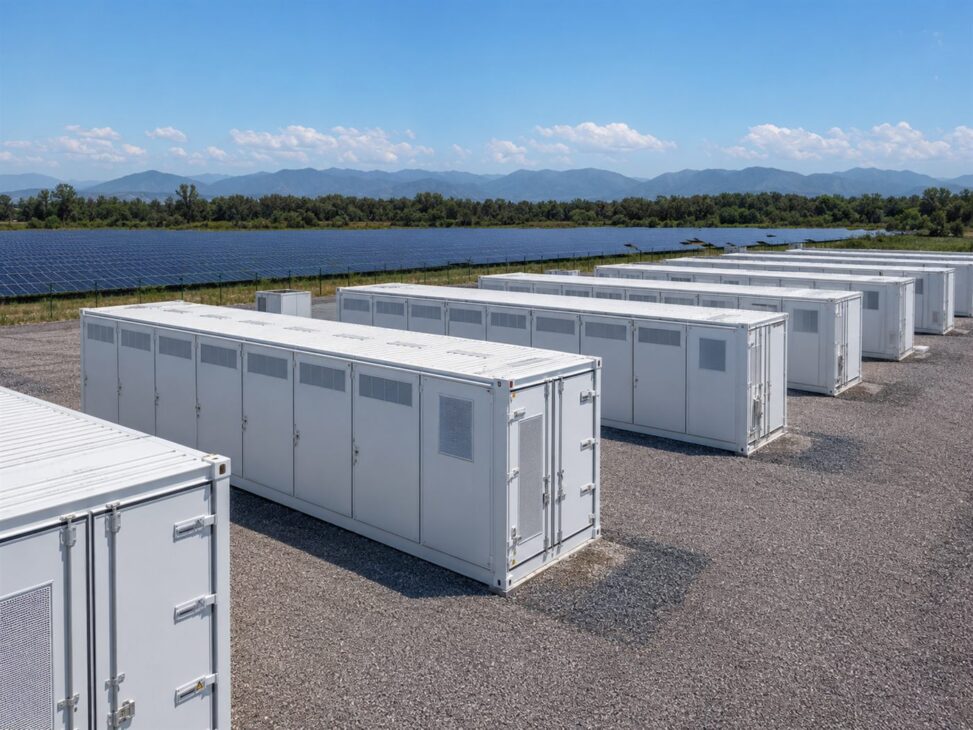
What unlocked this turnaround was storage. According to Canal Solar, the price of battery packs for stationary storage fell to US$ 70 per kilowatt-hour in 2025, a drop of 45% in just one year, after already having decreased 40% in the previous period. The globally installed capacity jumped about 46%, reaching close to 250 gigawatt-hours.
This cost reduction changes everything. The major criticism of renewables has always been intermittency: the sun doesn’t shine at night, and the wind varies. With cheap batteries, you can store the day’s energy and use it when needed. The drop in battery storage prices is the missing link for renewables to become the system’s base, not just a complement.
Solar plus battery already beats coal in India
The most concrete proof came from auctions. According to Canal Solar, in India, in 2025, solar plus battery proposals operating 24 hours a day were below the cost of new coal-fired plants in real market competitions, not in laboratory simulations.
The cost of so-called dispatchable solar, which delivers energy at any time thanks to the battery, reached about US$ 76 per megawatt-hour in October 2025. This means clean, continuous, and cheaper energy than the fossil alternative. When the market chooses renewables for price, not ideology, the energy transition stops being a promise and becomes pure economics.
Solar and wind met all the demand growth
Another data point shows the extent of the progress. According to the Climate Change Panel, also based on the Ember report, in 2025 solar and wind were sufficient to meet 100% of the world’s electricity demand growth.
In practice, all the planet’s consumption increase was covered by clean sources, without needing to burn more. Solar energy alone has led this expansion for three consecutive years. Meeting the entire demand growth with just sun and wind was unthinkable a decade ago, and today it is the picture of a single year.
Why clean energy marks a turning point
Putting the pieces together, it’s clear why 2025 made history in the sector. Canal Solar notes that clean energy alone absorbed 849 terawatt-hours of demand growth, and that solar and wind already account for about 15% of the world’s electricity, double that of 2019.
The inflection point is not just about volume; it’s about trend. Fossil generation tends towards a plateau and then a projected decline in the 2030s. The direction of the game has changed: the future of the electrical system is now being designed around renewable sources, not traditional thermal plants.
Brazil that could be going against the trend
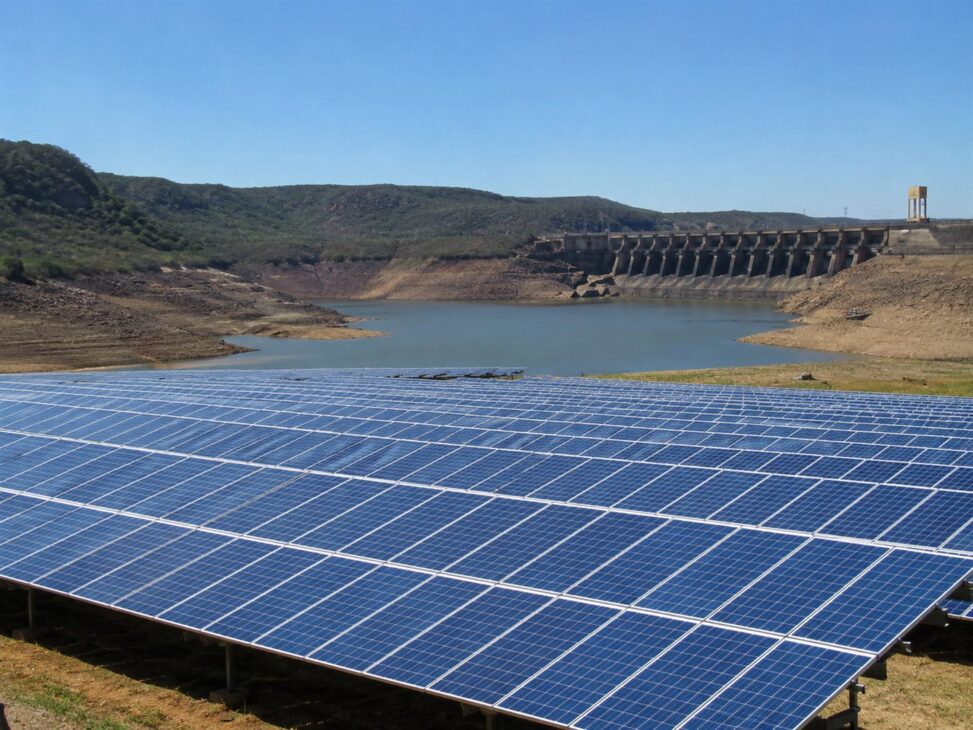
Here comes the warning. According to Canal Solar, Brazilian solar generation jumped from 17 terawatt-hours in 2021 to 89 terawatt-hours in 2025, five times more in four years, a remarkable advance. The problem appeared in hydroelectric, which retreated about 6% in the same year.
To fill this gap, the country did not resort to more renewables, but rather to more fossil plants: generation from these sources grew 7.6% in 2025. In other words, in the year the world turned the key, Brazil increased burning. Having one of the cleanest energy matrices on the planet does not prevent the country from moving backward in a bad rain year, and that’s what happened.
China and India cutting fossil in the opposite direction
The contrast with other giants is what bothers the most. While Brazil increased fossil generation, China cut about 56 terawatt-hours and India reduced about 52 terawatt-hours from these sources, according to Canal Solar. The two largest coal consumers in the world started to slow down, and Brazil accelerated.
This role reversal is symbolic. Countries that have always been villains of the transition began to take steps forward, while a nation with a historically clean matrix stumbled. The lesson is that leadership in clean energy is not an inheritance, it is a choice each year, and requires the decision to invest in sun, wind, and storage instead of thermal plants.
What still hinders the complete turnaround
Despite the optimism, the transition is not won. There is a lack of transmission network to distribute the energy from the new plants, a lack of regulation for storage and a lack of planning to not rely solely on rain. The drop in battery costs solves half the problem, but the other half is political and infrastructural.
The question that remains is whether Brazil will take advantage of the global turning point or watch from the sidelines, stuck with past solutions. Did you know that in the year clean energy surpassed coal worldwide, Brazil increased fossil fuel burning?


