Portuguese
  Spanish


In Tung Chung, Block 5 gathers 504 modules and 12 floors in a public work that still depends on precise assembly.
In Tung Chung, Hong Kong, Block 5 of a public housing project gathers 12 floors and 504 concrete modules in modular construction. The development is part of a complex with five residential blocks.
Construction Industry Council, a construction sector entity in Hong Kong, recorded on December 23, 2024 that the block remained as a work in progress. The record also indicated a cycle of 6 days per floor.
The page does not present a completion date for the development. Therefore, the project should not be treated as a delivered building or as housing ready to receive residents.
-
Brazilian City Innovates Waste Collection with Underground Vacuum System

-
Amsterdam Repurposes Retired Boats and Plants to Restore Contaminated Industrial Land Instead of Removing All Polluted Soil
-
Saudi Arabia to Build 33,000-Seat Desert Arena with Retractable Roof and Clay Courts for 2028 Masters 1000 Tournament

-
Copenhagen Builds 92 Homes Using Reclaimed Materials from Demolished Carlsberg Brewery, Highlighting Each Material’s Origin


How a modular building takes shape with pieces prepared before assembly
Modular construction concentrates part of the building’s preparation before installation on the site. Then, the modules arrive at the site and are joined to form floors, corridors, and living areas.
Each module needs to occupy the position planned in the project. The assembly requires care because doors, walls, installations, and passages need to be aligned when the pieces are connected.
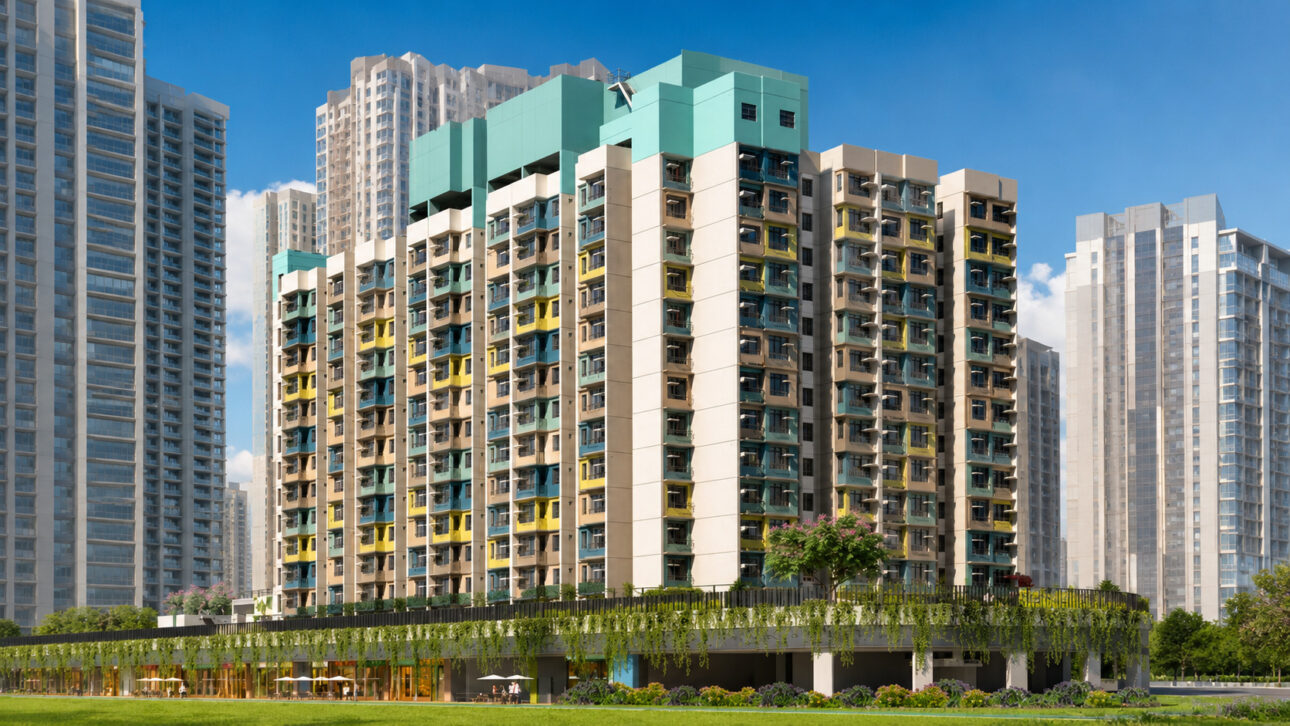
The cycle of 6 days per floor represents the pace reported for a typical assembly stage. This timeframe does not equate to the complete delivery of the building, as the project depends on the progress of all construction phases.
Logistics define the sequence of arrival and assembly of the modules
Concrete modules take up more space than materials delivered in small quantities. Therefore, the arrival of the pieces, the unloading area, and the hoisting operation need to follow a well-planned order.
A piece that arrives early may occupy space necessary for other activities. A piece that arrives late may delay assembly and leave workers and equipment waiting.
In locations with limited space, the sequence between manufacturing, transportation, and installation becomes even more important. Modular construction needs to maintain this organized flow to avoid adjustments and stoppages.
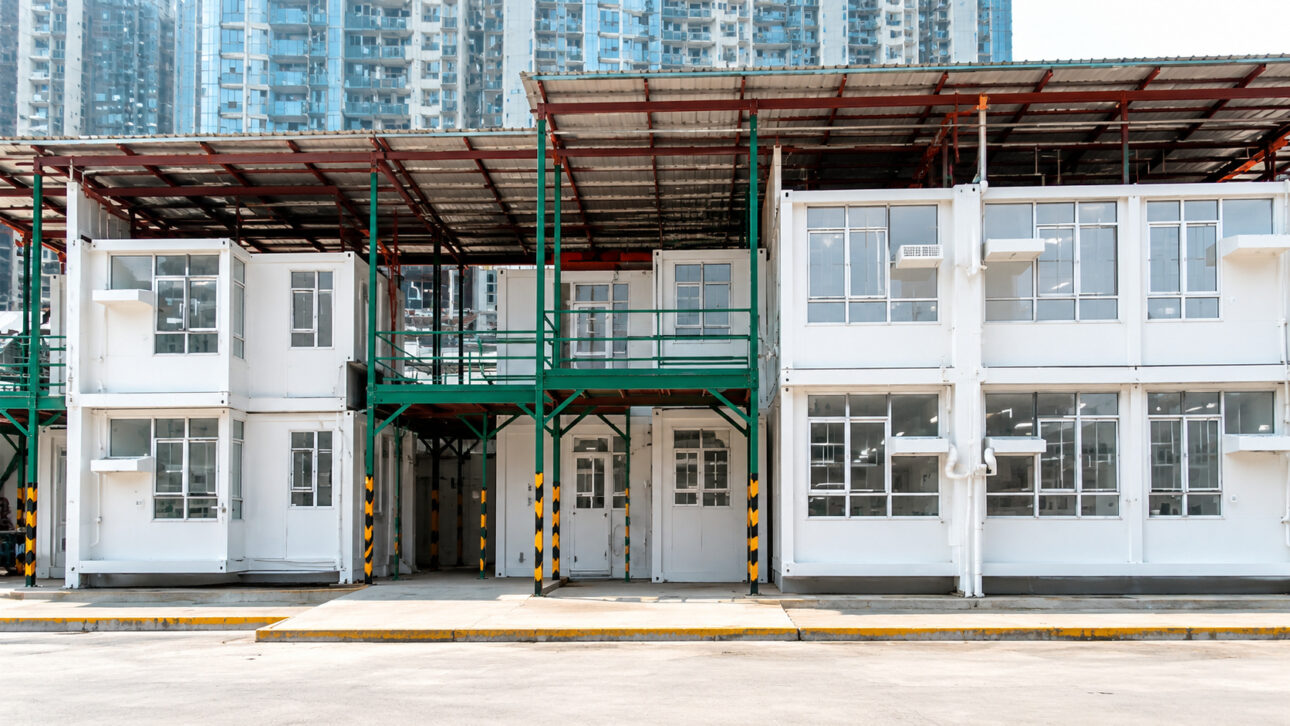
Updated technical sheet records 504 modules and 12 floors
The sheet for Block 5 records 504 concrete modules, concrete structure, and 12 floors. The document also shows that all planned floors use modular construction.
Construction Industry Council, a construction sector entity in Hong Kong, presents the development as the city’s first public housing project built with this method.
The page informs that the experience may expand the use of modular construction in other residential projects. The recorded intention is to accelerate the supply of housing and reduce some of the housing pressure in Hong Kong.
Construction began in March 2020 and completion date remains open
The technical sheet indicates that construction began on March 3, 2020. The foundation work was recorded between March 2020 and March 2023.
In the update of December 23, 2024, the status of Block 5 was still under construction. The final date appeared undefined.
This detail avoids a wrong interpretation. The 504 modules and 12 floors show the scale of the project but do not confirm that the housing has already been completed or delivered.
Sealing, fitting, and safety remain important stages
The assembly does not end when the modules are placed on top of each other. The joints need to be protected against water entry to reduce the risk of leaks between the pieces.
Compatibility also requires attention. This means aligning doors, walls, passages, and installations so that all parts function as a single building after assembly.
The lifting of the pieces requires an organized area and communication between teams. Heavy loads need to be moved carefully to reduce risks during installation.
Modular construction does not eliminate the challenges of a construction
The manufacturing of parts of the building off-site can change the order of work, but it does not eliminate the need for teams, equipment, transportation, and review of each assembly stage.
The outcome depends on planning, logistics, scale, and standardization. A problem in production, delivery, or fitting can affect the pace of the entire project.
The technical sheet does not present cost comparisons nor guarantee a delivery date. Therefore, it is not correct to claim that any modular building will always be cheaper or ready faster.
Block 5 of Tung Chung shows how concrete modules can be applied in large-scale public housing. The project also makes it clear that ready-made pieces depend on a detailed operation until the completion of the work.
The 504 concrete modules, the 12 floors, and the 6-day cycle per floor help to gauge the experience, but the open-ended final deadline reinforces that the work should not yet be considered complete.
In your city, would buildings assembled with concrete modules help increase the housing supply or create new challenges for traffic, space, and safety? Leave your opinion in the comments.