Portuguese
  Spanish


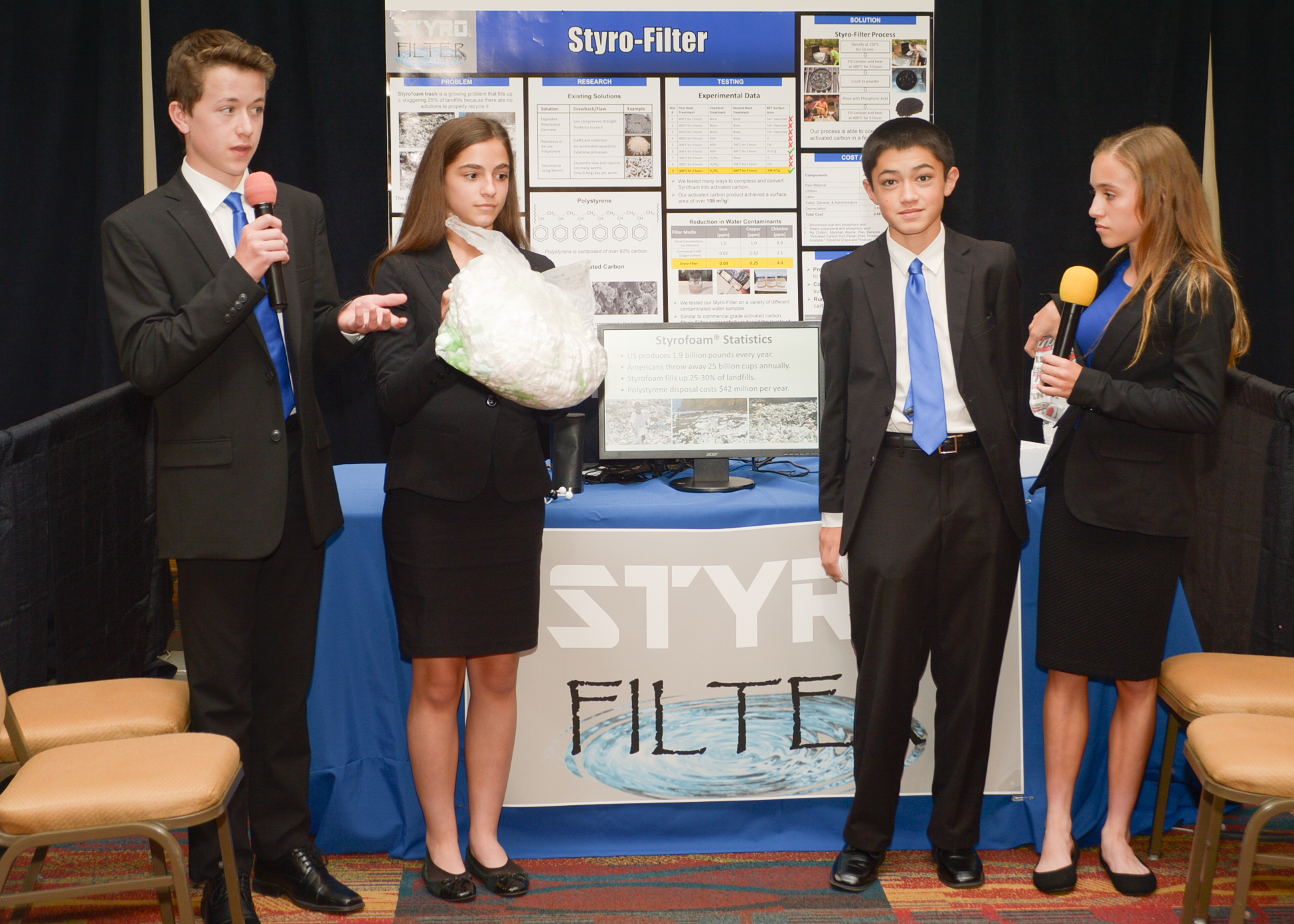

The Styro-Filter converts styrofoam into activated charcoal for water filters and brought Ohio students to awards and scientific prominence.
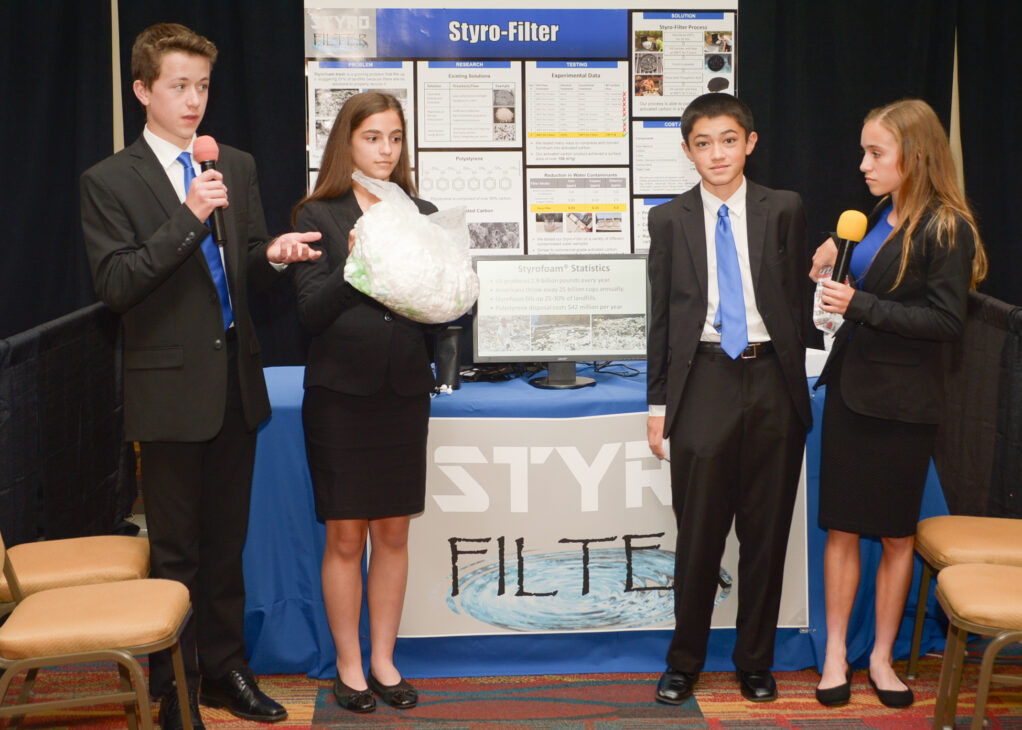
The Styro-Filter was born in Ohio, USA, from the work of the Incredibots, a group formed by Julia Bray, Luke Clay, Natalie Clay, and Ashton Cofer. The proposal was to convert styrofoam waste, technically called expanded polystyrene, into activated charcoal for use in water filters.
The invention gained prominence because it tackled two problems at once: the disposal of a difficult-to-recycle waste and the search for materials capable of helping in water purification. At the Google Science Fair stage where the project received the Scientific American Innovator Award, the award highlighted Julia Bray, Luke Clay, and Ashton Cofer, while the original school project team also included Natalie Clay.
How the Styro-Filter project by Ohio students turned styrofoam waste into a solution for water filters
The origin of the idea was concrete and visual. Team members were impressed by the amount of polystyrene waste scattered on Central America beaches and, after the trip, decided to investigate why that material continued to appear in large volumes in the environment.
-
Study Warns: Wi-Fi Routers Can Act as Invisible Radars, Identifying People with 99.5% Accuracy Without Cameras or Wearable Devices

-
Brazilian Researchers Develop Cost-Effective Method for Key Component of Green Hydrogen Electrolyzers, Enhancing Energy Efficiency and Equipment Longevity

-
1,700-Year-Old Roman Mosaic Discovered by Farmer Planting Cherry Trees in Turkey

-
Brazil launches $1.9 billion plan in response to El Niño, issuing national extreme heat alert and bolstering public health system




The research advanced when the group visited a local recycling facility and discovered that styrofoam was not accepted there. This impasse showed the students that the problem was not just improper disposal, but also the lack of economically viable solutions to reuse the material.
It was from this realization that the Styro-Filter was born. Instead of treating styrofoam merely as waste, the students began to see it as raw material for a new value-added product, with direct application in filtration systems.
Why styrofoam and expanded polystyrene are difficult-to-recycle waste and became the target of the Styro-Filter
Styrofoam is widely used in cups, packaging, thermal boxes, and product protection, but its recycling is often limited.
According to the osln, in the project presentation material at the Google Science Fair, the organizers themselves highlighted that expanded polystyrene is difficult and expensive to recycle, to the point that many communities do not even include it in their local systems.
This obstacle helps explain why the waste accumulates so easily. By studying the subject, the group also observed that the material is produced in large volumes and has slow degradation, which increases its presence in landfills and the environment when there is no efficient reuse chain.


The students’ differential was to reverse the logic of the problem. Instead of insisting on conventional recycling that is difficult to execute, they started from the chemical composition of polystyrene to create a transformation route capable of generating a useful input for water purification.
The chemistry of the Styro-Filter that converts Styrofoam into activated carbon to purify water
At the Scientific American Innovator Award, the project was described as a conversion of Styrofoam containers into a new water filter.
The scientific basis of the idea was the fact that the polystyrene analyzed by the team had more than 90% carbon, a characteristic that paved the way for the production of activated carbon.
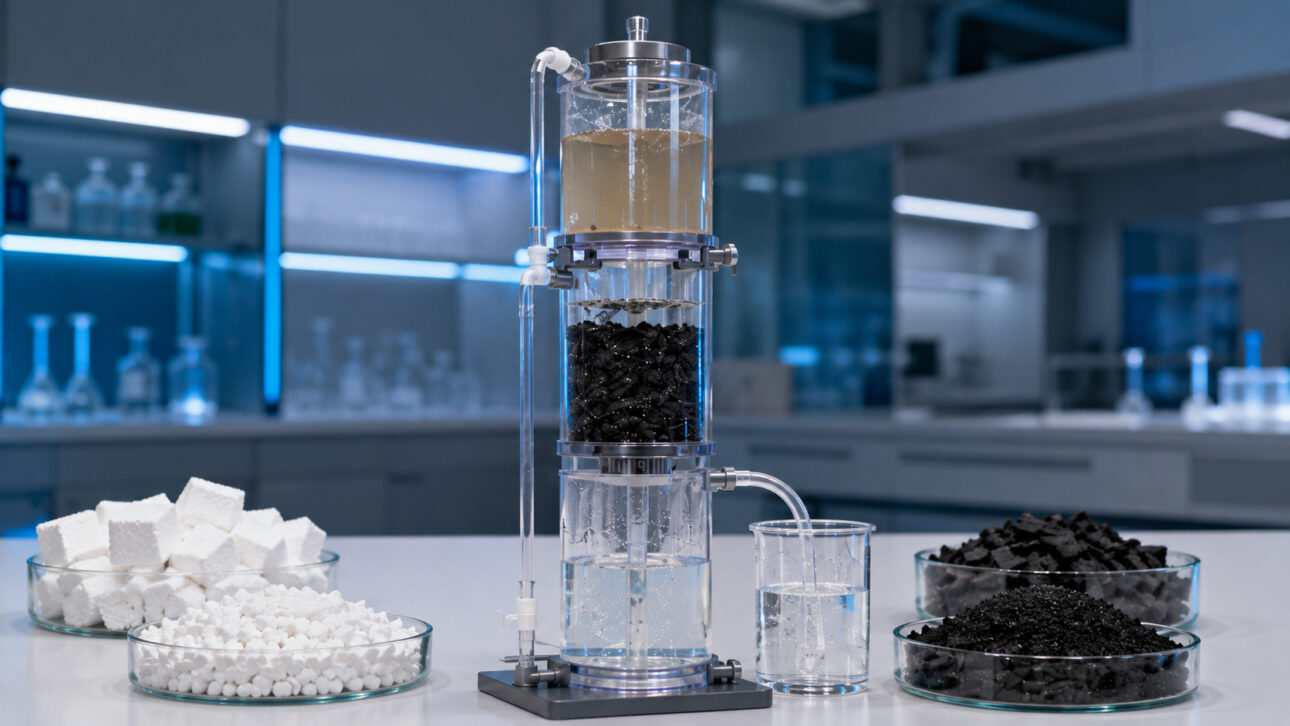
According to the description published by Scientific American, the students hypothesized that heat could transform the material into activated carbon. After about 50 hours of experimental work, they managed to convert the polystyrene into carbon with efficiency greater than 75%, by heating the material to 120 degrees Celsius.
The next step was to increase the surface area of the obtained product, using a set of chemicals to make it more suitable for adsorption.
In the tests reported by the publication, the material produced by the students managed to remove many of the same compounds filtered by commercial water filter models.
The tests, the failures, and the awards that took the Styro-Filter from a school project to a recognized invention
The path to a functional result was not linear. In an interview with the Ohio STEM Learning Network, Ashton Cofer reported that the group faced many failures at the beginning and that the difficulty almost led the team to give up before finally managing to create activated charcoal.

Persistence brought quick recognition. The project earned a $20,000 prize at the FIRST LEGO League Global Innovation Award and another $5,000 in a grant from eCYBERMISSION according to oosln, amounts that the students intended to direct towards new research, development, testing, and advancement of the intellectual protection of the process.
After that, the Styro-Filter also received the Scientific American Innovator Award at the Google Science Fair, consolidating the project as one of the most striking student proposals of that cycle. Scientific American itself recorded that the team had already submitted a provisional patent application for the filter manufacturing process.

The strength of the story lies in the reach of the solution. The project was not limited to the idea of recycling Styrofoam because it connected a problematic waste to an application of high social interest, the production of material for water filters.
More than a curiosity about a science fair, the case shows how a difficulty treated as unsolvable in many places can generate real innovation when someone decides to investigate the composition of the problem instead of just living with it.
In the case of the Styro-Filter, the waste that seemed to have no way out became the starting point for a solution with environmental and technological potential.