Portuguese
  Spanish


Billion-dollar project on BR-319 reignites debate on Amazon integration, driver safety, and environmental protection on one of the most cited highways by users due to traffic difficulties, with a promise of reinforced oversight, new reserves, and planned structures to reduce impacts on wildlife and the forest.
BR-319, the federal highway connecting Manaus to Porto Velho, has returned to the center of the country’s environmental and logistical agenda with the federal government’s promise to rebuild the so-called middle section under a model of greater environmental control.
The plan under discussion foresees an initial investment of nearly R$ 1.5 billion, more than 170 wildlife crossings, 50 bridges, and an environmental control area exceeding 40,000 km², according to information released by Folha de S.Paulo based on members of the Executive.
Officially called Álvaro Maia Highway, the road is about 885 kilometers long and represents the main land connection between Amazonas and Rondônia, connecting Manaus to the national road network via Porto Velho.
-
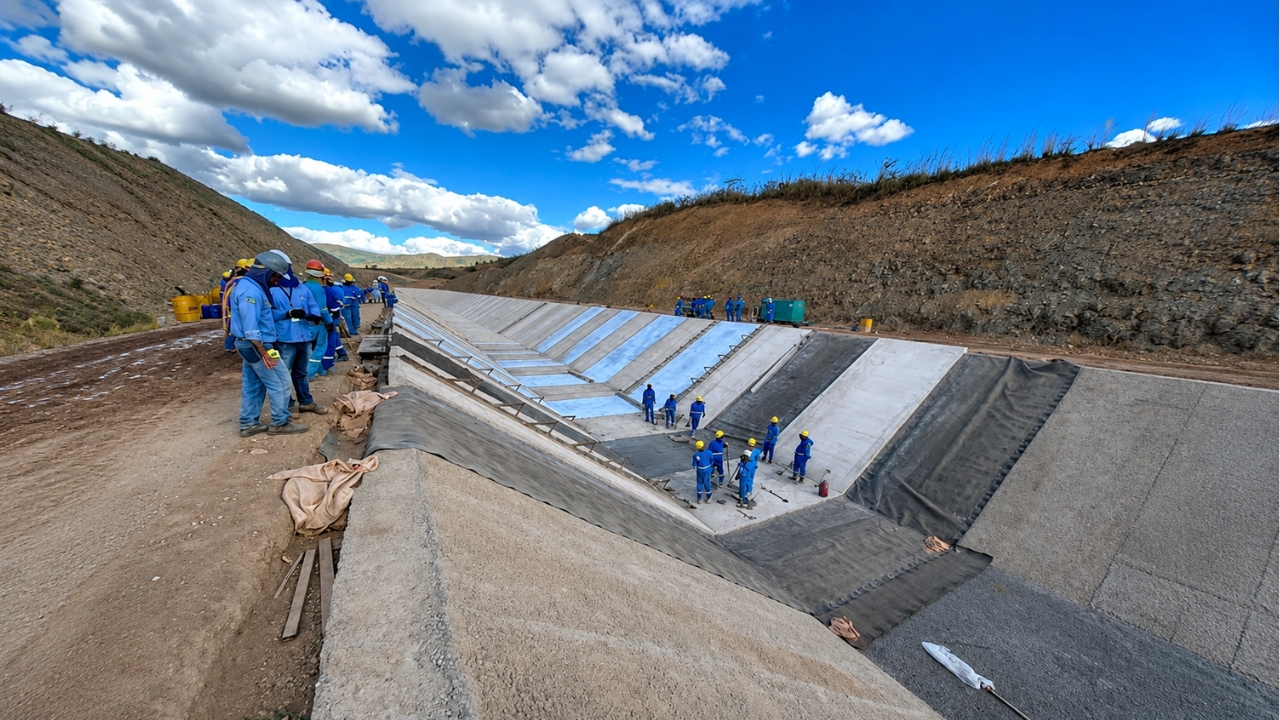
Brazil’s Sertão Region Nears Completion of Latin America’s Longest Artificial River, Transforming Water Access in Drought-Prone Ceará

-
Pre-mixed stabilized mortar set to revolutionize construction in 2026: extends usability to 36 or 72 hours, boosts productivity, and minimizes waste in building projects.

-
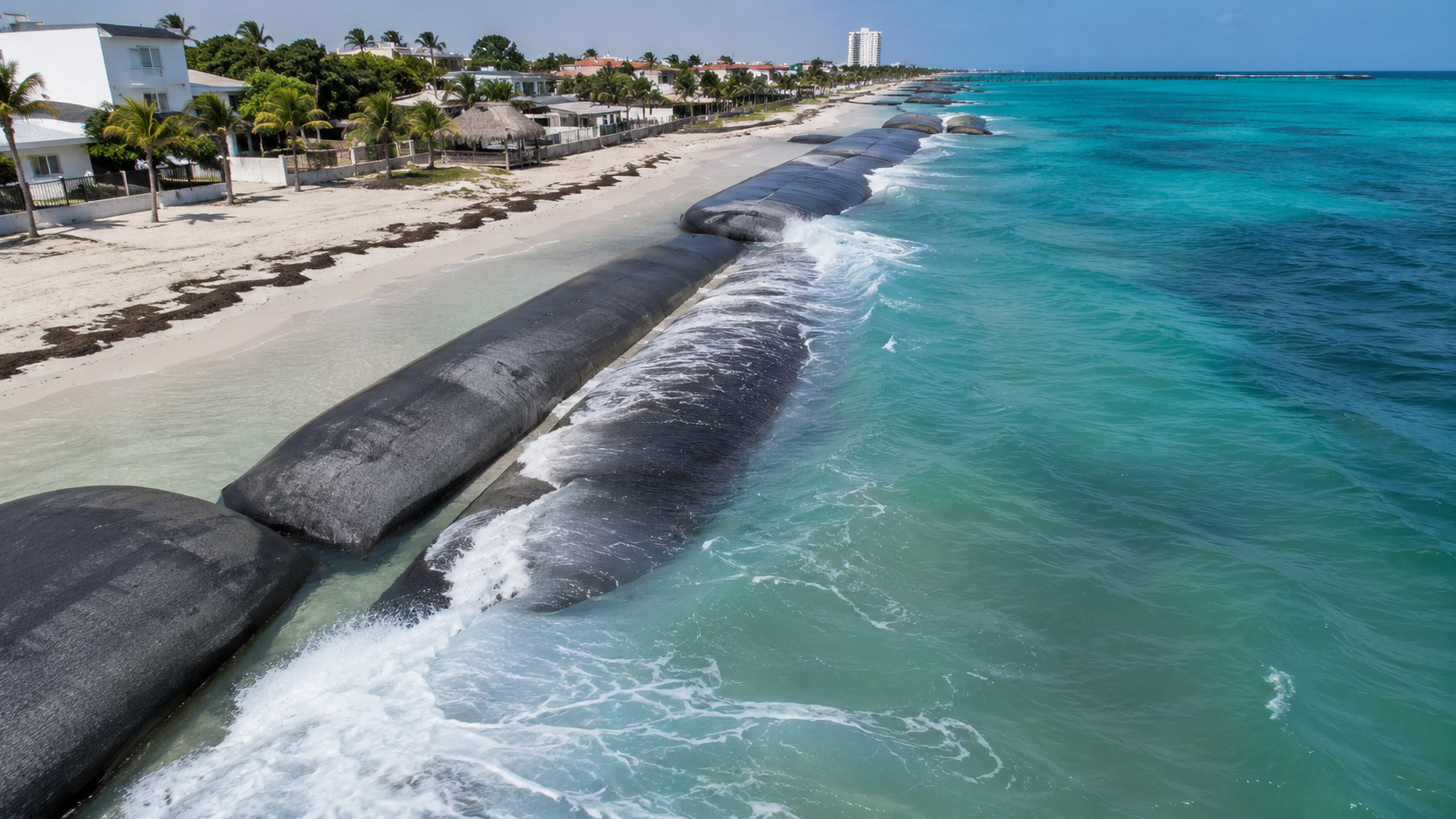
Mexico Sinks Giant Fabric Tubes Filled with Sand off Yucatán Coast to Create Invisible Barrier and Restore Hurricane-Damaged Beaches

-
Modern Liquid Porcelain Flooring Offers Seamless, High-Gloss Finish for Home Renovations Without Demolition


According to ICMBio, BR-319 also serves as a land connection for Amazonas and Roraima with Rondônia and, consequently, with other regions of the country.
During an agenda in Manaus, President Luiz Inácio Lula da Silva stated that the project will be treated by the government as a reference in environmental preservation.
“It may be the road that will be built with the greatest environmental care of any road ever built in any country in the world,” said the president, defending that the project should not encourage deforestation.
Middle section concentrates the biggest challenge of BR-319
Among the points analyzed in the project, the segment between kilometers 250 and 655.7 receives the most attention for crossing an area of continuous forest and for being part of the highway’s environmental licensing process.
Known as the middle section, this interval is under evaluation for paving and reconstruction works, according to DNIT information on the environmental licensing of BR-319.
The current traffic conditions help explain why the road is frequently described by drivers and residents as one of the most unstable federal routes in the country.
During the period of heavy rains, known in the region as the Amazonian winter, parts of the road accumulate deep mud, bogs, and limited circulation sections, which can delay trips and compromise the transport of cargo and passengers.
In the driest season, the problems change form but continue to affect traffic along the highway.
The dust reduces visibility, potholes increase the risk of vehicle damage, and old bridges require attention from drivers traveling long distances in areas with little nearby urban infrastructure.
This scenario supports the pressure from local governments, productive sectors, and residents for the recovery of BR-319, especially due to the logistical isolation of part of Western Amazonia.
On the other hand, environmental organizations claim that paving could increase the risks of land grabbing, invasions, illegal logging, and the opening of new fronts of deforestation in still sparsely occupied areas.
Government promises model road in the Amazon
The package discussed by the federal government combines engineering works, supervision, and the creation of protected areas along the highway.
In addition to the planned wildlife crossings and bridges, the plan includes control bases and a model of environmental monitoring associated with the concession, according to reports published by Folha.
The proposal was presented as a response to a recurring concern in the debate about BR-319: the risk that paving could encourage unregulated occupation around the road.
In this context, the creation of an environmental control strip over 40,000 km² appears among the planned measures to try to limit land and environmental pressures along the route.
The comparison with the territory of Rio de Janeiro sizes the area planned for environmental monitoring in the BR-319 region.
The state has about 43.7 thousand km², an area close to the size of the control strip mentioned in the plan discussed to monitor interventions on the Amazonian highway.
Despite the forecast of investments, the project remains subject to environmental and administrative stages that still define the pace of the work.
In a note published in October 2025, DNIT reported that it had presented the Basic Environmental Plan and the Participatory Socio-environmental Diagnosis Report to Ibama.
In the same statement, the agency stated that the analysis would depend on the joint fulfillment of conditions of the Preliminary License, a necessary step for the advancement of the licensing process.
New reserves enter the environmental protection strategy
The attempt to organize the territory around BR-319 also includes the proposal to create three Sustainable Development Reserves.
On May 14, 2026, ICMBio held a public consultation in Careiro, Amazonas, to present the proposals for the RDS Tupana Igapó-Açu I, Tupana Igapó-Açu II, and Canaã.
The audience gathered more than 220 people, including residents, representatives of traditional communities, agrarian reform settlers, civil society organizations, public agencies, and local leaders.
The proposed units cover areas in the municipalities of Borba, Autazes, Careiro, Tapauá, and Beruri, in a region described by ICMBio as important for biodiversity conservation.
According to the institute, the reserves were designed with community participation and overlap with areas of Legal Reserve of existing settlements.
The RDS category allows for the reconciliation of environmental conservation with the sustainable use of natural resources by traditional populations, provided that management, supervision, and protection rules are observed.
Representatives of the Mura people also participated in the consultation and delivered to ICMBio a map with the outline of the indigenous land and its proximity to the proposed conservation unit.
“We are in favor of the creation of the preservation area to help us further preserve this territory,” declared Gordiano Pereira de Souza Mura, Mura leader, according to the institute’s record.
Environmental licensing defines the pace of work on BR-319
The reconstruction of BR-319 depends on budget, political decision, and compliance with the stages provided for in the environmental licensing.
In the middle section, this analysis remains a determining phase because it involves studies, conditions, community consultations, impact assessments, and governance measures aimed at reducing environmental damage.
DNIT states that the highway’s environmental programs include environmental management, supervision, execution of mitigation actions, risk management plan, and emergency action plan.
These fronts aim to meet the licensing requirements and monitor maintenance, restoration, and remaining paving works on segments of BR-319.
For environmental organizations, the main concern is that the infrastructure facilitates the advancement of illegal activities in vulnerable areas, especially without permanent supervision and land use planning.
On the other hand, proponents of the work argue that the recovery of the highway is necessary to reduce the logistical isolation of Western Amazon, improve regional transport, and make travel between Amazonas and Rondônia more predictable.
BR-319 brings together two strategic themes for the country: territorial integration and Amazon protection.
The outcome of the project will depend on the execution of the works, maintenance of supervision, land use planning, deforestation control, and compliance with the environmental requirements provided for the highway.