Portuguese
  Spanish


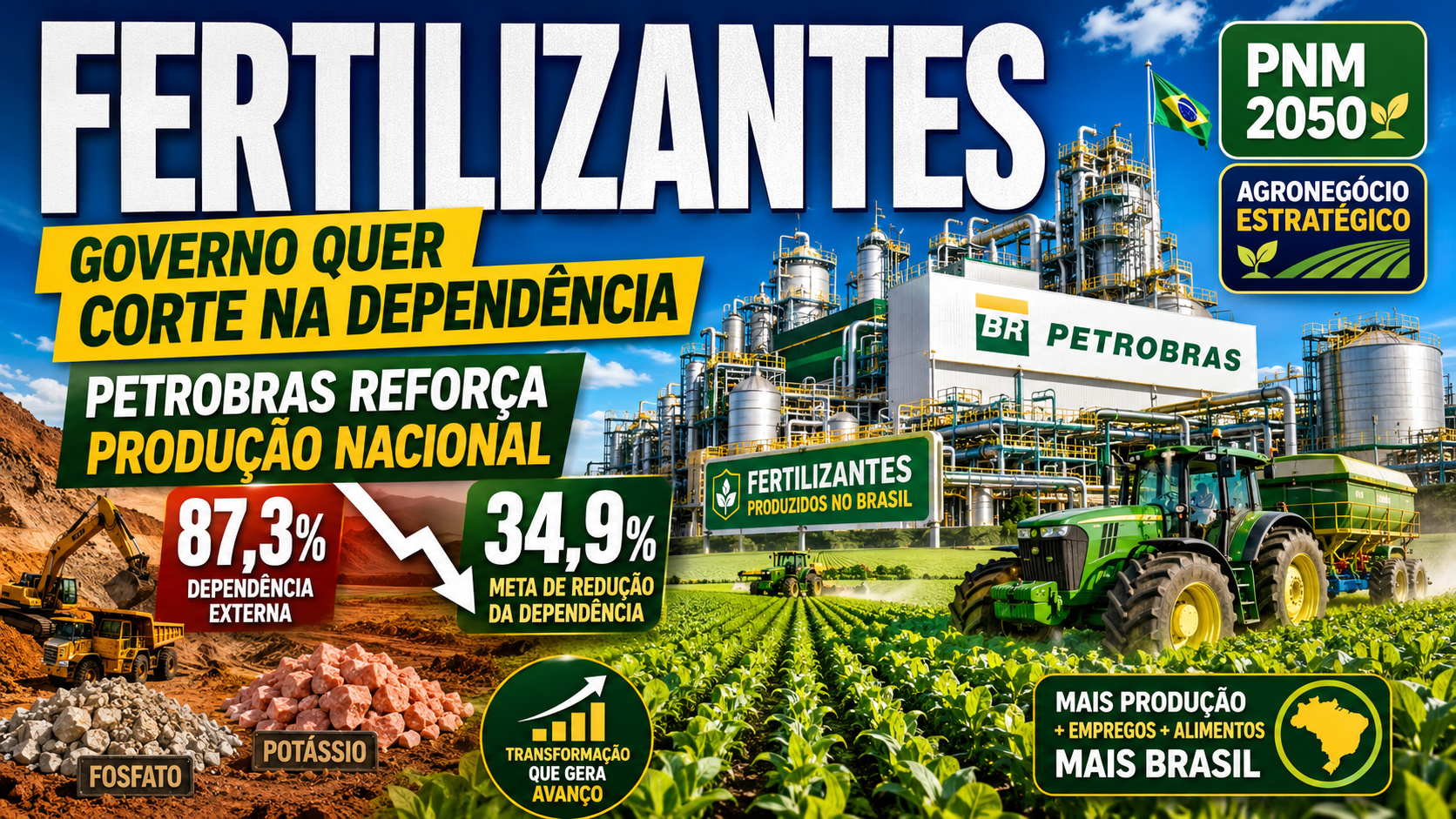

Cut in external dependency is not limited to the mineral plan. Petrobras has also advocated for the expansion of nitrogen fertilizer production, a front more connected to the oil industry than to mineral extraction.
Brazil can significantly reduce its external dependency on PK-type fertilizers, based on phosphate and potassium, in the next 25 years. The projection, cited by an official source with access to the new National Mining Plan, the PNM 2050, indicates a drop from the current level of 87.3% to 34.9% by 2050.
The document was presented on Thursday (2) to the ministers participating in the CNPM meeting, the National Mineral Policy Council. The change, if it progresses as expected, addresses one of the biggest pressure points of Brazilian agribusiness: the strong dependency on imports to ensure the supply of inputs used in food production.
According to agenciainfra.com, the goal appears in the new plan as one of the bets to expand national production and reduce the country’s vulnerability in a strategic market. A source from the agricultural sector interviewed by the report stated that the objective is “perfectly possible,” as long as Brazil better utilizes its mineral reserves with the presence of these substances.
-
Brazilian Government Plans to Auction Over 500 Road Bridges on São Paulo Stock Exchange in 2026, Promising New Wave of Concessions

-
Brazilian Workers and Instructors to Train in China on Electric Car Technology Ahead of New Factory Opening in Brazil

-
Viral Message Claiming Government Will Deposit Money for Registering CPF as Pix Key Debunked

-
Embraer Acquires Full Control of Mexican Aircraft Interiors Manufacturer EAI to Reduce Supplier Dependence and Protect Margins Amid Global Aviation Competition




Goal targets the most sensitive input for the field
The plan focuses on PK fertilizers, widely used in the field for combining phosphorus and potassium, two central components for agricultural productivity. Today, this external dependency is high and leaves Brazil exposed to price fluctuations, logistical bottlenecks, and international tensions that affect global supply.
In the assessment of the source heard by Agência iNFRA, phosphate-based fertilizer, linked to the element P, tends to drive the expansion of national production. The understanding is that the country has room to grow in this area, provided it can transform mineral potential into effective production.
Goals plan should be released within 180 days
The objectives of PNM 2050 should not remain just on paper. The government plans for them to be detailed in a Goals and Actions Plan, with publication expected within 180 days after the presentation of the main document.
This plan will also be reviewed every four years, indicating an attempt to keep the sector under continuous monitoring. In practice, this paves the way for periodic adjustments in the country’s mineral strategy, according to the progress of production and the understanding of internal demand.
Pressure on agribusiness reinforces the urgency of change
The pursuit of increased local fertilizer production is being treated as a priority by the federal government due to its direct impact on sustaining food production. The Brazilian rural sector depends on this input on a large scale, and any disruption in the external chain has immediate effects on agricultural activity.
The text from Agência iNFRA notes that national producers have already felt the effects of international conflicts on the flow of global production. In such a sensitive market, the cost quickly impacts those who produce in Brazil and also those who purchase food at the end of the chain.
Petrobras also enters the race for more national supply
The movement to reduce external dependency is not limited to the mineral plan. The leadership of Petrobras has also advocated for the expansion of nitrogen fertilizer production, a front more related to the oil industry than to mineral extraction.
The president of the state company, Magda Chambriard, expressed interest in doubling the capacity of the company’s four fertilizer factories. According to the estimate cited in the material, this expansion could meet up to 70% of the current demand, reinforcing the attempt to change the logic of a sector historically dependent on the external market.
If the PNM 2050 goal comes to fruition, Brazil could enter a new phase in fertilizer production and reduce a bottleneck that has weighed on agribusiness for years. The movement now involves presenting the plan and detailing the actions that will attempt to transform this projection into concrete results. We want to know: in your view, can this dependency actually decrease by 2050?