Portuguese
  Spanish


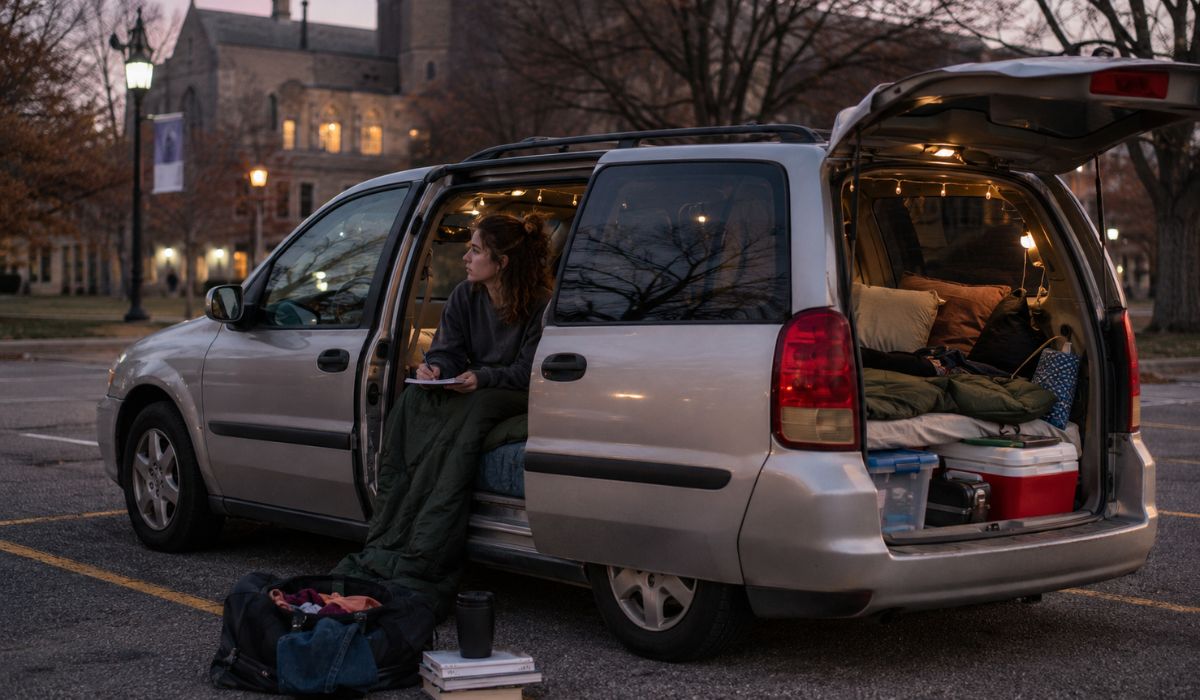

The account follows the routine of a university student who reorganized transportation, housing, and studies around a used minivan, in a choice marked by economy, improvisation, and changes caused by the pandemic.
Andrea Sadowski bought a used minivan for about 1,000 Canadian dollars, equivalent to approximately US$ 730, and spent almost two years living inside the vehicle while working full-time and attending university.
According to an account published in Business Insider on May 7, 2026, the measure reduced housing expenses and contributed to her graduating without student debt.
Used minivan became an alternative for university housing
The decision was made when Sadowski assessed that her income could only cover two of three main expenses at that time: university tuition, rent, or a vehicle.
-
Tokyo Scientists Create First 18cm Biohybrid Hand Using Human Muscle, Capable of Scissor Gesture and Holding a Pipette

-
Brazil Faces Norway in World Cup at Stadium Linked to Jimmy Hoffa’s Mysterious Disappearance

-
Retired Woman Leaves French Public Housing Due to Fear, Lives in Van for Weeks, Prompting Response from Local Authorities and a Priest
-
9-Year-Old Fabio Isaac Wins Gold at Copernicus Math Olympiad in Singapore, Representing Peru Against Global Young Talents


Since on-campus housing was expensive and rent would take up a significant part of the budget, she opted to buy a car that could also serve as a place to sleep.
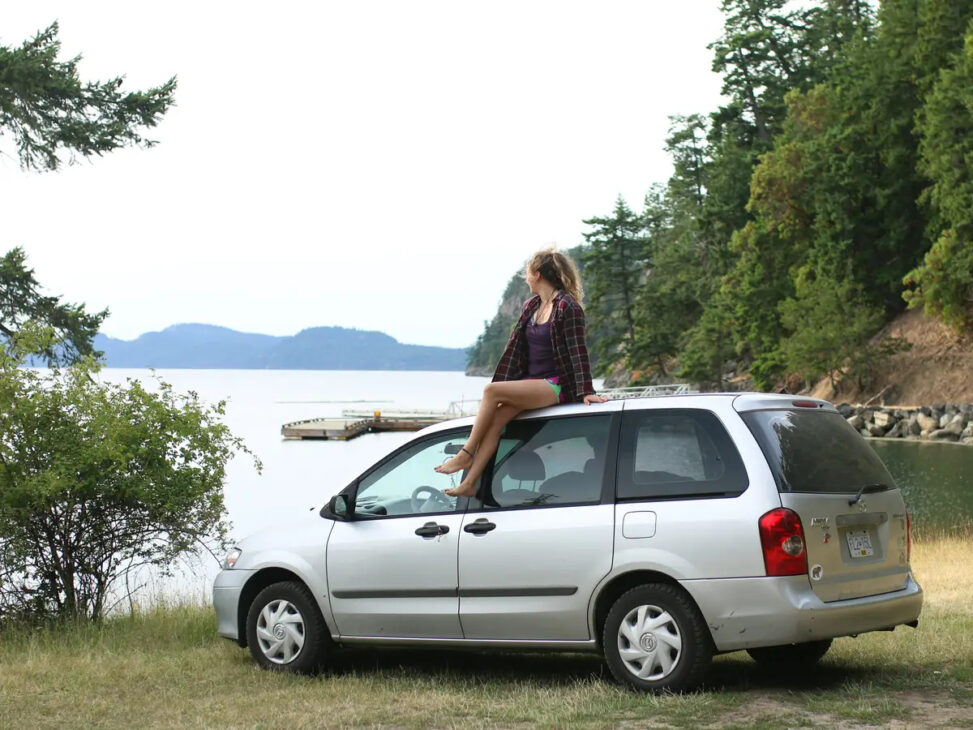
The vehicle found was a 2005 Mazda MPV, purchased on Facebook Marketplace after the student’s previous car failed.
The search, as the author reports, happened more quickly than she would recommend, because there was an immediate need for transportation.
Larger models used by people living in vans, like the Volkswagen Vanagon or Mercedes-Benz Sprinter, were out of the budget, as even used units usually cost five-figure amounts.
The minivan had limitations.
It had less than 300,000 kilometers driven, passed reasonably in the driving test, but the tires were completely worn out and useful vehicle documents were missing.
Still, according to Sadowski, the low price was one of the factors considered in the purchase.
For the student, the vehicle combined two necessary functions during that period: transportation and shelter.
Adaptation of the Mazda MPV required improvised solutions
The adaptation of the internal space went through improvised stages.
Initially, Sadowski set up a bed with wood and a plywood board, but later abandoned the structure.
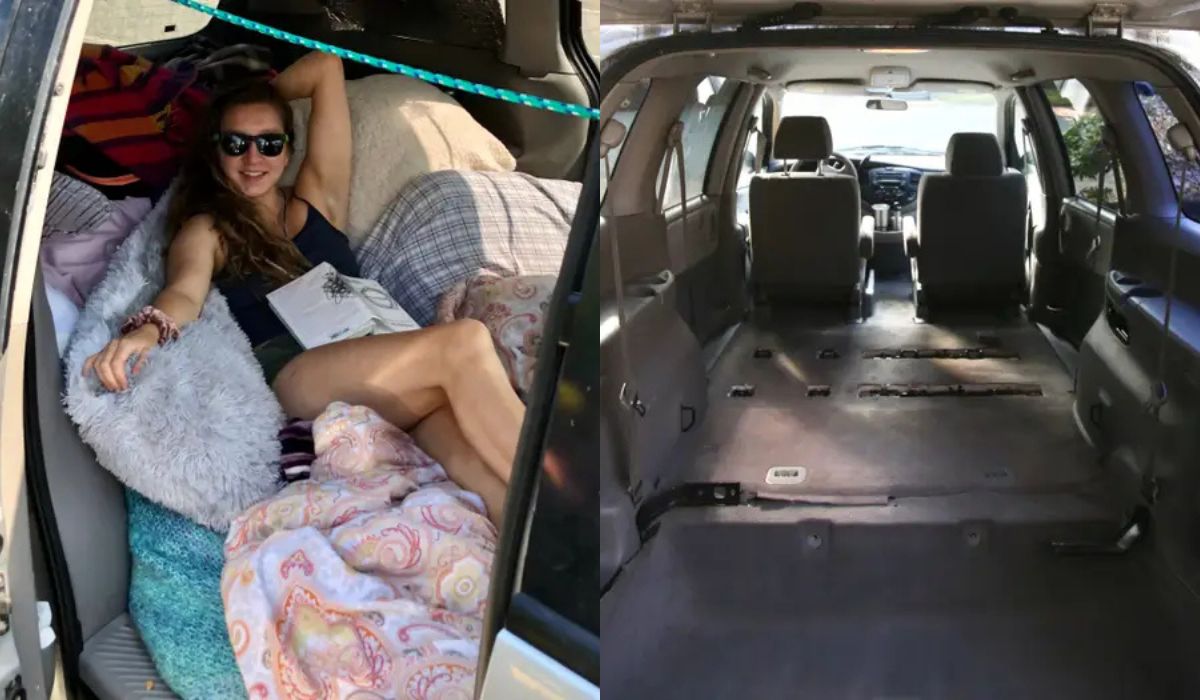
The definitive solution was to remove all the seats, except for the driver and front passenger seats, and use the free floor space with outdoor cushions, pillows, and several blankets.
The organization inside the minivan followed a functional logic.
Clothes were kept in a fabric suitcase, while food was stored in a large cooler and a plastic crate-type box.
Kitchen utensils and camping equipment occupied another container.
To have privacy at night, she made removable window covers with reflective insulation boards and velcro.
The size of the minivan also influenced the routine.
Having the appearance of a regular car, the model attracted less attention than larger vehicles adapted for living.
This allowed Sadowski to spend the night in various locations, such as quiet residential streets, recreational center parking lots, public park entrances, and darker areas of the university parking lot.
The routine, however, involved constant care.
According to the author, she was woken up once or twice by security or the police for parking in places she shouldn’t have.
During other times, she reported facing few incidents and stated that, in general, she felt safe living in the vehicle.
Choosing a spot to sleep required attention to the surroundings and discretion.
University campus helped in the daily routine
In daily life, the student began to intensely use the available facilities on campus.
She prepared coffee in a kitchen in the student association building, took showers in the athletics building, and studied in quiet areas of the library.
She also sought out less busy bathrooms to brush her teeth with more privacy.
Her meals depended on planning and access to spaces outside the vehicle.
On many weekends, Sadowski prepared large quantities of soup at her mother’s house, froze the portions in glass jars, and took everything in her cooler to consume throughout the week.
To heat the meals, she used microwaves scattered throughout the campus buildings.
Besides the soups, she relied on simple, cheap, and easy-to-store foods.
Fruits, peanut butter and jelly sandwiches, instant noodles, bagels with cream cheese, and boxed macaroni and cheese were on the menu.
In some cases, the meal was supplemented with cut sausages, a combination mentioned by the author in the original account with a humorous tone.
The support of friends was also part of the routine described by Sadowski.
Some allowed her to store extra groceries in refrigerators and freezers, while others offered sofas on the coldest nights.
These resources helped reduce the practical difficulties of living in a vehicle, especially when the temperature made staying in the minivan more uncomfortable.
Pandemic changed access to shared spaces
Although she spent thousands of dollars over the years on maintenance, repairs, and fuel, Sadowski stated that the cost was still below what would be needed to rent a property.
The reduction in housing expenses was pointed out by her as the main reason for being able to study, work, and not accumulate student debt.
The routine changed in 2020, with the coronavirus pandemic in Canada.
Resources that were previously part of daily life, such as friends’ sofas and communal showers, were no longer available.
During the summer, she still maintained part of the organization using a camping stove on picnic tables, bathing in a nearby lake, and using portable toilets in public parks.
With the arrival of November and the drop in temperatures, the student assessed that she would not be able to face a third winter in the minivan without regular access to indoor spaces.
It was during this period that she decided to rent a room near the university.
In the account, Sadowski states that she managed to pay for the new housing and emphasizes that living in the vehicle was a choice, not an absolute necessity.
Experience ended without student debt
After that, the Mazda MPV ceased to function as the main residence and returned to being used mainly for commuting.
The interior space was still used for some camping trips until the minivan had to be discarded.
According to Sadowski, the experience brought difficulties, but it also allowed her to finish university debt-free and with some savings in the bank.
Currently, the author lives in a small apartment with her boyfriend and dog.
After the period when she relied on external structures for basic tasks, she says she came to appreciate aspects of domestic life, such as using the bathroom during the night, keeping a bookshelf, and having friends over.
The experience did not end her relationship with vans.
Sadowski bought another old vehicle, equipped with a bed and camping supply boxes.
According to her, the model has enough space for trips with her boyfriend and dog, but can still be parked in front of the building where she lives.
In the account, Sadowski describes how the combination of full-time work, university expenses, and housing costs led a student to transform a used minivan into a temporary residence.
The routine depended on planning, support from acquaintances, and access to public and university structures.
The case also highlights the limits of a solution based on shared infrastructure, especially when the pandemic reduced access to these spaces.