






 Portuguese
  Spanish


The Cidade Madura program transformed housing in old age into public policy: 50 m² houses in gated communities with health, leisure, and gardens, delivered to low-income elderly in cities like João Pessoa, Campina Grande, and Sousa
A condominium for the elderly built and maintained by the public authorities, where the houses are already adapted and the health center is just steps from the door, seems like an idea from a Nordic country, but it exists in the hinterland and on the coast of Paraíba. On March 26, 2018, when the state delivered in Sousa the fifth unit of the Cidade Madura program, the formula had already become routine: 40 accessible houses per condominium, all within walls, with a hammock area, garden, and its own health assistance.
How did a state in the Northeast set up this structure? The answer combines a standardized project, public land, and serial execution. Cidade Madura repeats the same design in each city, which reduces construction costs and speeds up delivery, and reserves spots for low-income elderly who still live independently.
The idea that took old age out of improvisation
The logic of the program stems from a known problem: aging in Brazil usually means relying on relatives or competing for space in makeshift housing. Cidade Madura addresses this issue with its own design. According to the Portal do Envelhecimento, the first condominium was inaugurated in João Pessoa and the model spread throughout the state, reaching João Pessoa, Campina Grande, Cajazeiras, Sousa, Patos, and Guarabira. It is housing for old age treated as public infrastructure, not as occasional charity.
-
Brazilian Government Launches New ID System Using Tax Number as Unique Identifier, Reaching 870,000 People with 7,000 Free Issuance Slots Available

-
Giant Stone Spheres on New Zealand Beach Reveal Crystal Interiors Formed Over 4 Million Years
-
10 Lesser-Known Countries with Surprising Attractions That Even Seasoned Travelers Find Intriguing

-
Forklift Operator Salaries at Brazilian Retail Giants in 2026: Over R$2,200 in São Paulo, Market Ceiling Exceeds R$3,000, with Attractive Benefits Package


The format draws attention for its reversal of priorities. Instead of collective shelters, the program invests in individual houses within a gated community, preserving the autonomy of those who live there. The elderly have their own key, their own kitchen, and their own routine.
How the condominium for the elderly in Paraíba works
The heart of the project is the repetition of a tested pattern. According to the Portal do Envelhecimento, each elderly condominium of the program gathers 40 accessible houses, occupied individually or by couples, in buildings that house two residences of 50 square meters each. There are 40 complete homes per unit, designed from the ground up for those with reduced mobility.
Accessibility is not a later adaptation; it is the starting point of the design: ramps, dimensioned bathrooms, and circulation designed for wheelchairs. This detail changes the cost of aging at home because it eliminates the expensive renovations that a regular residence would require over the years.
What Exists Inside the Walls
The house is only half of the proposal; the other half is what surrounds it. According to A União, the condominium delivered in Sousa includes a Living Center, Health Assistance Center, guardhouse with administration, square, hammock area, gym equipment, integrated garden, artesian well, and solar panels. It is a miniature neighborhood designed for a single age group, with health, leisure, and social interaction just a few meters from each door.
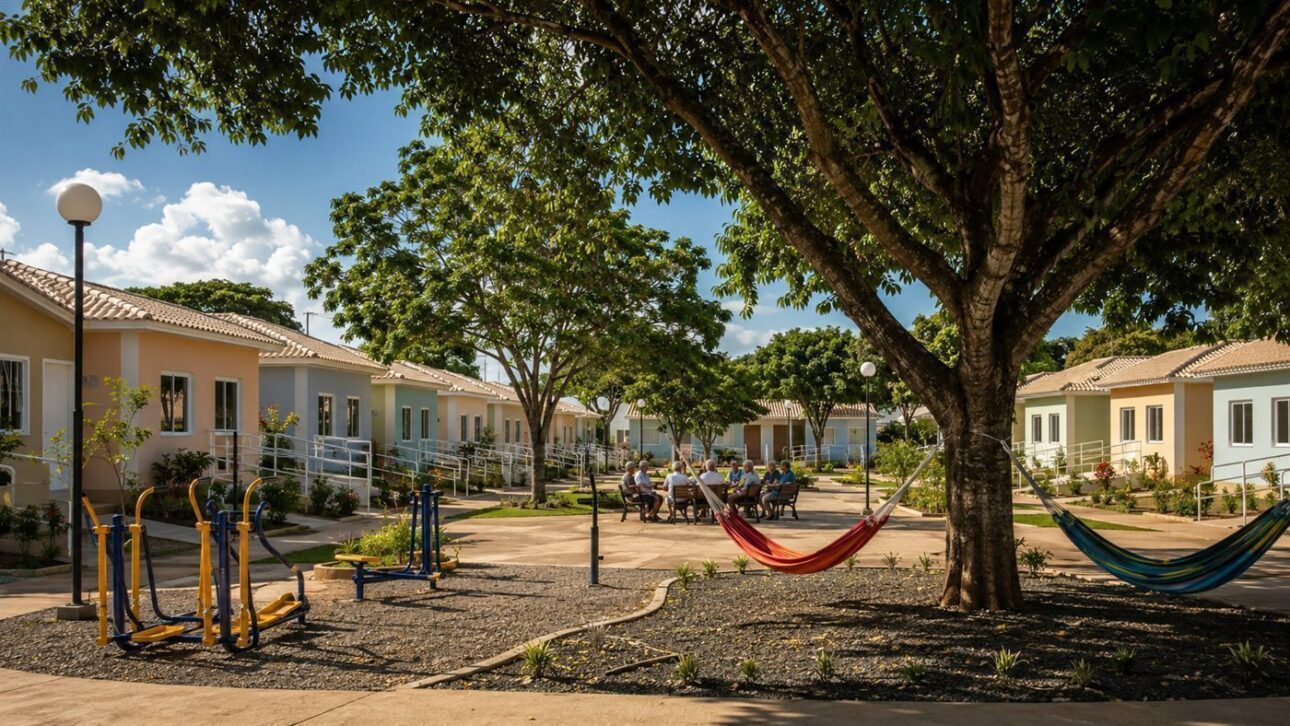
Each facility has a direct function in the routine. The hammock area and the square draw the resident out of the house and combat isolation, the garden occupies and feeds, and the health center shortens the distance between a symptom and the first care, which for this age group can be decisive.
Who Can Live and How to Enter
Access to the program has a clear social filter. According to the Portal do Envelhecimento, the spots are intended for low-income elderly, with income below 5 minimum wages, who are independent and do not live with relatives. The rule targets exactly those in limbo: people who still manage on their own but could not afford adapted housing in the market.
This selection prevents the condominium from becoming a disguised nursing home. The requirement for independence maintains the spirit of an active village, where residents take care of the house, the garden, and social life, with health support functioning as a backup rather than guardianship.
City by City, the Formula Became a Series
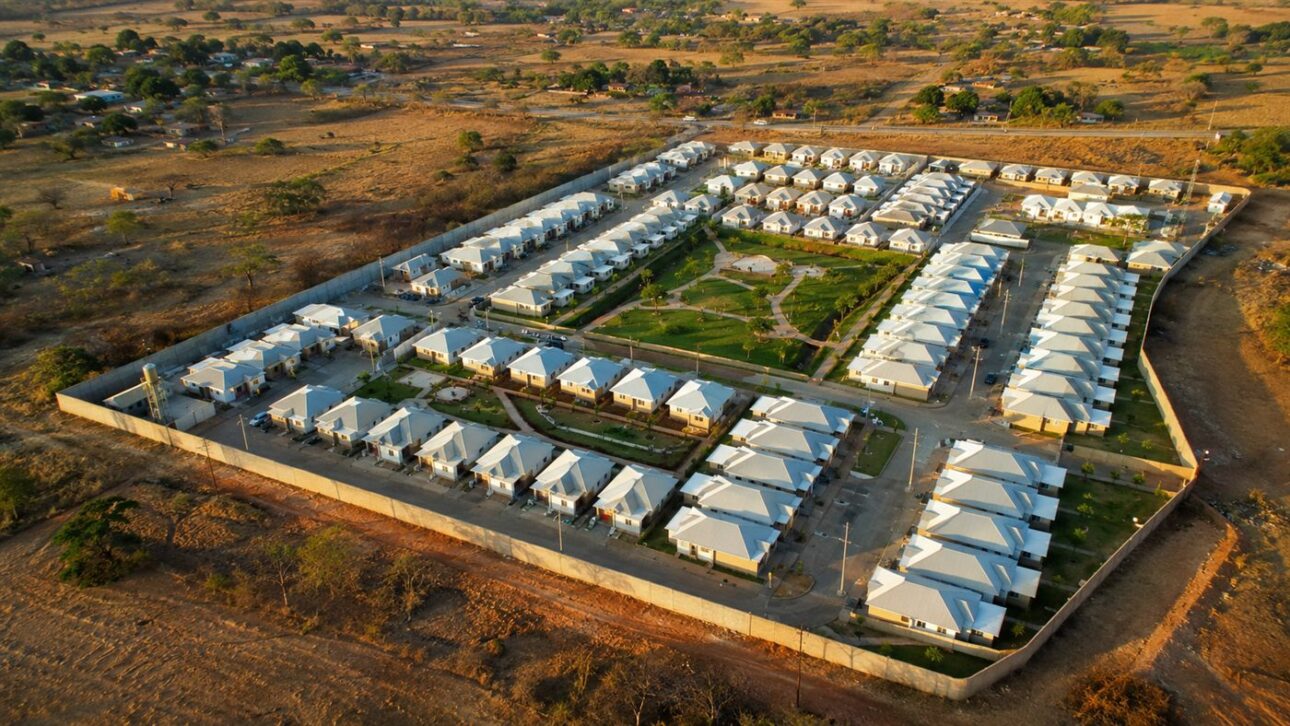
The program grew in a production line method. According to A União, the unit in Sousa, inaugurated on March 26, 2018, received an investment of R$ 5.6 million, and the five condominiums built up to that point totaled around R$ 23 million. Repeating the same project on different sites allowed the delivery of one condominium after another without redesigning anything from scratch.
(illustrative image)
The standardization also facilitates maintenance and management. A team that manages the Campina Grande unit knows how to operate the Cajazeiras one, because the layout, equipment, and flow are the same. It’s the kind of silent gain that makes a difference in the public account over the years.
The entire bill: R$ 38.6 million from the state treasury
The size of the financial commitment appears in the total of the program. According to the Portal do Envelhecimento, the accumulated investment of Cidade Madura reached the order of R$ 38,618,438.00, funded with the State of Paraíba’s own treasury resources. It’s state money, without relying on federal transfers, sustaining an entire housing policy for an audience that is almost never a priority.
Put into perspective, the amount bought six addresses spread across the Paraíba map and hundreds of adapted houses. In the mathematics of civil construction aimed at specific audiences, it is a cost per unit that competes equally with conventional housing programs, with the advantage of already delivering the complete surroundings.
The seal that put the program on display
External recognition came early. According to the Portal do Envelhecimento, Cidade Madura received the 2015 Merit Seal in the category of projects focused on serving specific groups. A state program from the Northeast won a national housing award even before completing the first batch of condominiums.
Awards of this type function as a technical stamp: they certify that the urban design, social criteria, and execution sustain each other. It was this stamp that transformed the Paraíba program into a reference cited by managers from other states facing the same problem with population aging.
Solar energy and own well: the electricity bill also aged well
An engineering detail differentiates the most recent units. According to A União, the Sousa condominium was delivered with its own solar energy panels and artesian well. Generating part of its own energy and water reduces the fixed operating cost and protects the condominium from ever-increasing tariffs.
For a public structure that needs to last decades, this choice changes the financial sustainability of the project. Every real saved on the electricity and water bill is a real that remains for maintenance, assistance, and activities, which helps explain why the model remains standing years after inauguration.
What the Entire Brazil Can Learn from Paraíba
The country is aging at an accelerated pace, and Brazilian public housing is still almost entirely designed for young families. Cidade Madura shows a tested path: standardize, adapt from the blueprint, and concentrate services in the immediate surroundings. Paraíba has proven that affordable housing for the elderly fits within a state’s budget, as long as it becomes a series project and not a showcase work.
With 50 square meter houses, complete condominiums, and R$ 38.6 million invested, the Paraíba program remains one of the most interesting housing experiments in the country. The question for mayors and governors is simple: if a condominium for the elderly has been working for years in the semi-arid region of Paraíba, what prevents the rest of Brazil from copying the blueprint?


