Portuguese
  Spanish


Tin ingots retrieved from shipwrecks in the Mediterranean help explain how mines in Great Britain supplied bronze production over thousands of kilometers, in a network that united rivers, land routes, and long sea voyages.
Sunken ships near Israel and southern France preserved tin ingots that today connect mines in Great Britain to bronze-producing areas in the Mediterranean. The route spanned over 4,000 kilometers and reveals the circulation of a rare raw material 3,300 years ago.
The cargoes recovered near Israel are about 3,300 years old. The shipwreck found in southern France is later. The connection between these findings does not prove a single direct journey from Great Britain to the eastern Mediterranean, but confirms the British origin of the metal transported by sea over great distances.
The information was published by Antiquity, an international academic journal dedicated to archaeology. The scientific article was published on May 7, 2025 and compared ores, objects, and ingots to identify the origin of the tin used in the Bronze Age.
-
Robots Tested in the Atlantic to Inspect Offshore Turbines Without Initial Human Deployment

-
CMA CGM Launches World’s Largest Clean-Fuel Container Ship: 400 Meters Long, 24,212 Containers, LNG-Powered

-
Norwegian Barge Transformed into Floating Structure in Copenhagen Highlights Technical Challenges of Retrofitting Vessels
-
At 28, a Female Shipbuilder Restores a 30-Meter Yacht from 1962, Highlighting Women’s Often Overlooked Contributions in Shipyards


Tin ingots in shipwrecks unite British mines and the Mediterranean
Bronze changed the production of weapons, tools, ornaments, and valuable objects in many ancient societies. This alloy was primarily made with copper and tin, two metals with very different availability in nature.
Copper appeared in various parts of Europe and Asia. Tin was rarer, which made it a decisive piece to maintain bronze manufacturing. Without this metal, copper did not gain the same characteristics of strength and ease of molding.
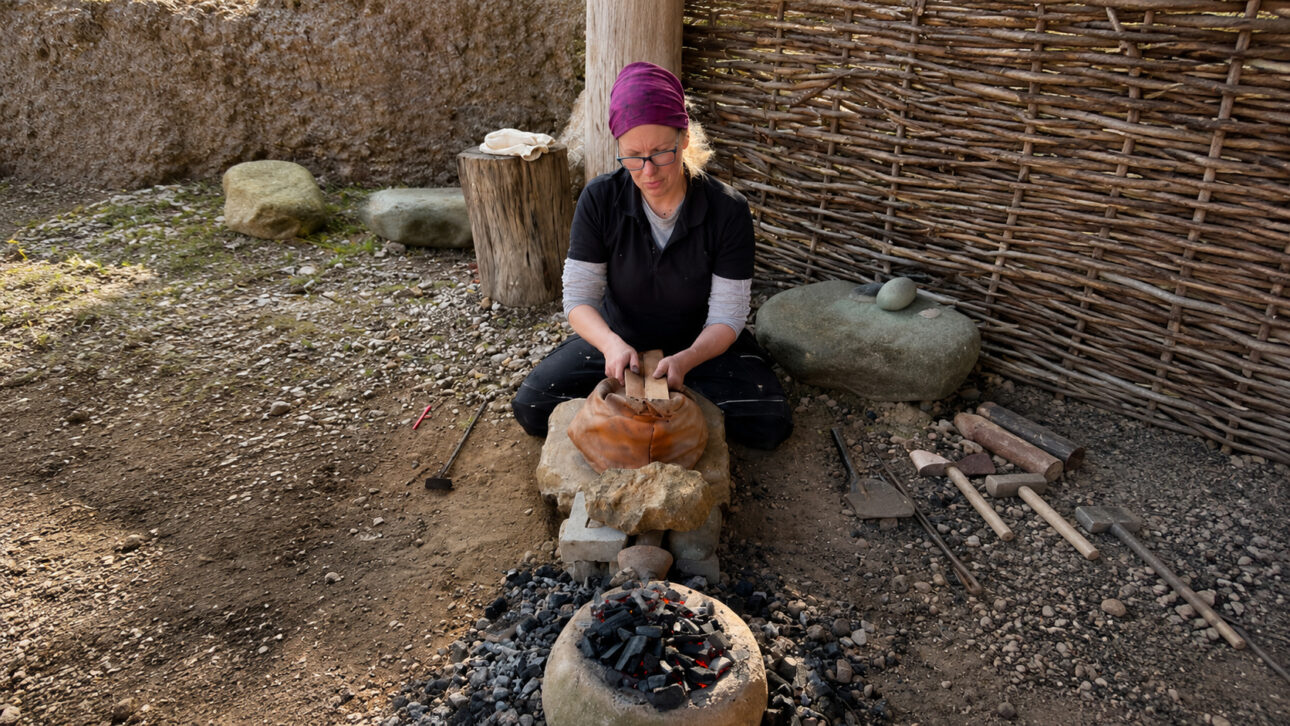
The mixture of copper with about 10% tin produced a harder metal, easier to pour into molds, and with a more golden appearance. Therefore, tin was important even when it represented a smaller part of the final metal.
Cornwall and Devon, in the southwest of Great Britain, had some of the most accessible tin sources in Europe. Small farming communities exploited this resource while distant regions needed the material to continue producing bronze.
Why Tin Was the Bottleneck of Bronze in the Bronze Age
The production of bronze depended on a chain that began with mining and only ended when the metal reached workshops and trade centers. Finding copper did not solve the problem for those who could not obtain tin.
This detail turned the metal into a strategic raw material. A community could have craftsmen, tools, and available copper, but still needed to seek tin in very distant areas to produce a complete bronze alloy.
Antiquity, an international academic journal dedicated to archaeology, detailed that the team used three forms of comparison to analyze the materials. They observed chemical elements present in small quantities and natural variations of lead and tin, known as isotopes.
These signals act as marks left on the metal since its origin. The comparison linked the ingots recovered from Mediterranean shipwrecks to the deposits of Cornwall and Devon, ruling out origin in areas of the Iberian Peninsula and France.
The Route of More Than 4 Thousand Kilometers Was Not a Direct Crossing
The origin of the tin was identified, but the research found no evidence of a ship leaving Great Britain and arriving directly in the eastern Mediterranean. The cargo may have passed through many communities before reaching its destination.
The network could include exchange points on the coast, river routes, land stretches, and new sea voyages. Each stage allowed the tin to change vessel, trader, and even storage location.
This type of circulation helps explain why a cargo extracted in the far west of Europe could reach very distant regions. The goods did not need to make the entire journey with the same people or on the same ship.
The shipwrecks also show the risks of this trade. Storms, navigation failures, and accidents at sea could interrupt a transport chain that depended on many stages and a product difficult to substitute.
Shipwrecks in the Mediterranean Held Clues That Do Not Appear on Land
An ingot is a block of metal molded to facilitate transport, exchange, and later use. When this material sinks, it can remain protected for centuries at the bottom of the sea and retain signs of its manufacture.


Four shipwrecks in the Mediterranean provided ingots analyzed by the team. Three are near the coast of Israel and one was found in southern France, allowing for the comparison of maritime cargoes discovered in regions far apart from each other.
The chemical marks found on the ingots near Israel are similar to those observed in ingots found in southwest Great Britain. The similarity reinforces the connection between British mines and the metal transported through the Mediterranean.
In one of the ingots, there were parts of a lead bar. This detail suggests that the tin may have been remelted and gathered into larger blocks at some point along the trade route.
The tin chain reveals a Europe connected long before the great empires
The discovery does not mean that all Mediterranean bronze came from Great Britain. It shows that the tin extracted in the British southwest reached very distant areas and was part of a continental network of metal exchange.
The comparison with modern chains of critical minerals helps only to understand the dependence on a rare raw material. In the Bronze Age, there were no railways, industrial ports, or containers, but there were organized routes to carry goods over long distances.
The journey required mining, metal preparation, transportation, negotiation, and navigation. Each part needed to function for the tin to reach the places where bronze was produced.
The ingots retrieved from the seabed show that the ancient economy had broader connections than a simple exchange between neighboring communities. British tin crossed territories, rivers, and seas before being transformed into bronze in the Mediterranean.
The route of more than 4,000 kilometers reveals that small communities involved in mining could sustain a continental trade chain. The value of tin came from both its rarity and the difficulty of getting it to those who needed it.
Does this discovery change the way you imagine the peoples of the Bronze Age? Tell us in the comments which detail of this route of more than 4,000 kilometers surprised you the most and share the article.