Portuguese
  Spanish


With asphalt prepared for cold, the United Kingdom sees roads suffer in heatwaves, while India bets on harder bitumen to face summers above 45°C, showing how climate, traffic, and material define pavement durability before the bill reaches drivers in cities and highways.
The asphalt used on some UK roads drew attention during heatwaves nearing 40°C, when road surfaces can soften, deform, and suffer damage under heavy traffic. The case was explained by NDTV on June 30, 2026, and compared to the reality in India, where highways face summers above 45°C.
The difference is not simply that one country builds better roads than the other. The central point involves engineering, climate, and material choice: each pavement is designed to withstand the type of temperature that most threatens its durability, whether it’s the harsh European cold or the intense Indian heat.
British asphalt was designed to face the cold before facing the heat
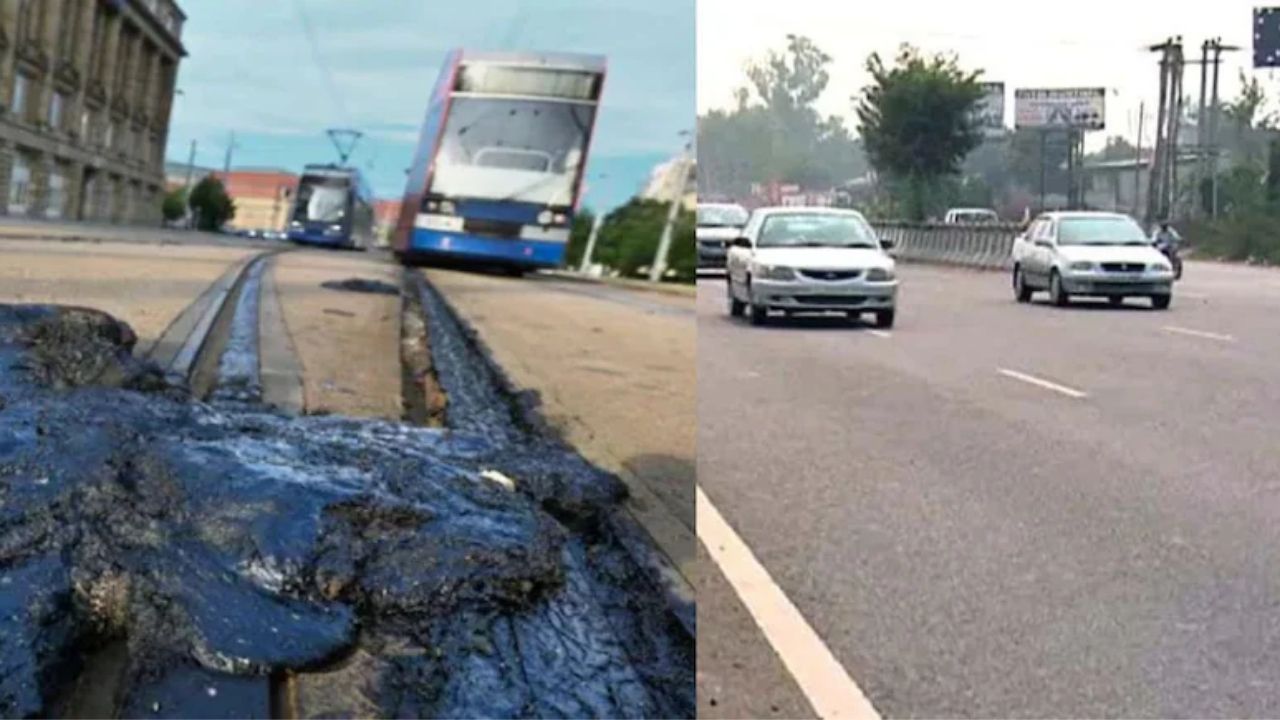
In the UK, road construction has historically been shaped by cold winters, humidity, and freeze-thaw cycles. Therefore, many mixtures used in the country prioritize flexibility, allowing the surface to withstand contractions and expansions without easily cracking when the temperature drops.
-
World’s Tallest Bridge Opens in China, Cutting Travel Time from 2 Hours to 2 Minutes

-
Proper Cement Mix Extends Plaster Durability, Prevents Early Detachment, and Reduces Home Structural Risks

-
Brazilian Researchers Develop Plant Fiber Cement Absorbing 100 kg of CO2 per Cubic Meter, Aiming for Low-Carbon Construction

-
Brazil’s Largest Sewage Plant Boosts Capacity with New High-Performance Pumps, Treating Over 1 Billion Liters Daily



This type of asphalt can work well in cold weather, but becomes a sensitive point when heatwaves approach 40°C. The material that helps the road withstand winter may lose performance when summer imposes pressure beyond the expected standard.
Softer bitumen helps in winter but can become a weakness under 40°C
Some European roads use mixtures like hot rolled asphalt and dense asphalt concrete, with a higher presence of bitumen and finer aggregates. This composition makes the pavement more flexible, a useful feature to reduce cracks in regions exposed to intense cold.
The problem arises when extreme heat warms the surface for an extended period. Softer bitumen may begin to lose rigidity, and under the repeated weight of cars, buses, and trucks, the road can form ruts, depressions, and deformed areas. It is not just the heat alone that damages the road, but the combination of high temperature, heavy traffic, and more flexible material.
Indian roads follow a different logic because heat is part of the routine
In India, the climate challenge is different. Instead of prioritizing long freezing periods, the paving needs to deal with strong sun, high temperatures, and heavy traffic during summer months. Therefore, the mixes used on many Indian roads tend to seek greater heat resistance.
The report mentions the use of harder bitumens, such as VG-30 and VG-40, which have higher viscosity and can maintain stability at elevated temperatures. The logic is not to make a road simply stronger, but to choose an asphalt compatible with an environment where extreme heat is not an exception.
Larger aggregates help keep the road stable in the heat
Besides the type of bitumen, Indian mixes also often use larger aggregates in certain paving compositions. These materials help form a firmer structure, reducing the chance of permanent deformations when the road is subjected to intense heat and constant traffic.
This technical choice helps explain why Indian roads can withstand temperatures above 45°C without showing the same type of softening observed in some British sections during rare heatwaves. The stability comes from the combination of harder bitumen, suitable aggregates, and design focused on high temperatures.
The difference reveals how climate defines road engineering
Comparing the United Kingdom and India without considering the climate can lead to a mistaken understanding. British asphalt was designed to respond better to cold, while Indian asphalt needs to withstand severe summers. Each solution carries advantages and weaknesses according to the environment in which it will be used.
The warning arises because the climate used as a reference in engineering may be changing faster than the infrastructure. If stronger heatwaves become frequent in regions accustomed to cold, roads once considered adequate may require new mixes, new maintenance standards, and materials better prepared for thermal extremes. In your opinion, should Brazil also rethink the type of asphalt used in cities before extreme heat starts to take its toll?