





 English
  5 min of reading
  0 comments


Mantis, created by Matt Denton, weighs 1.9 tons, has six hydraulic legs, and entered the Guinness as the world’s largest rideable hexapod robot.
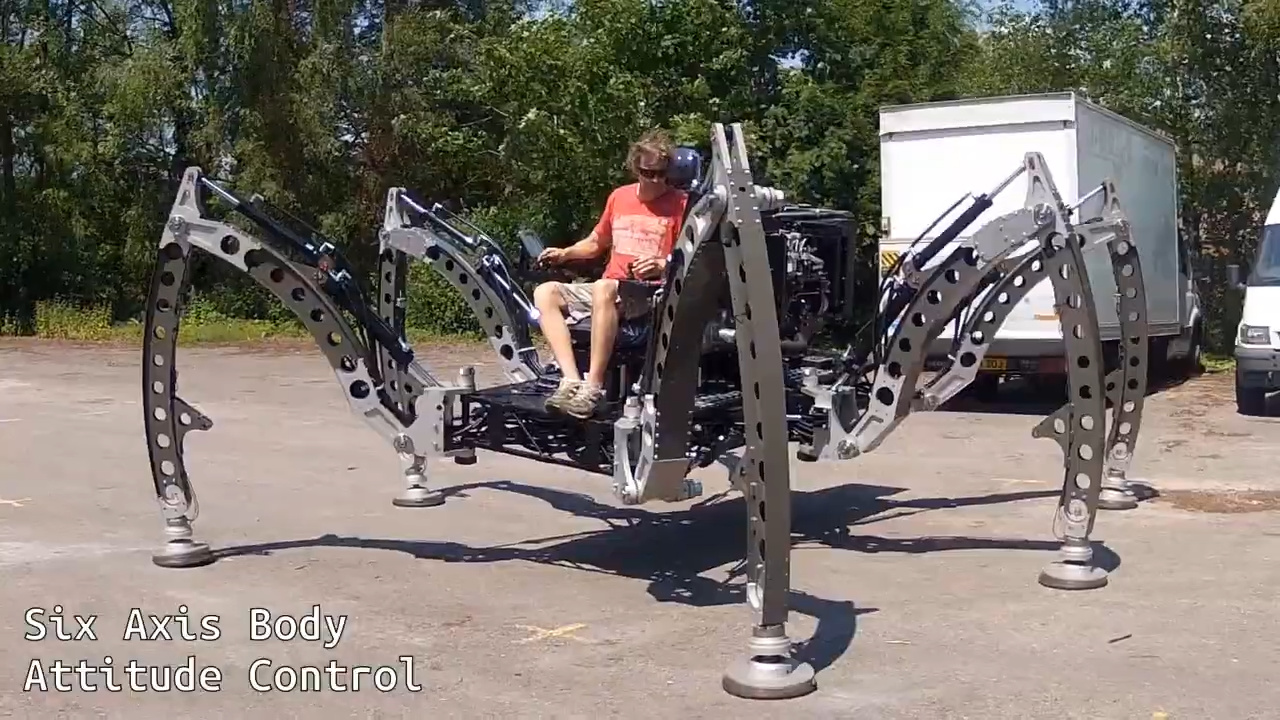
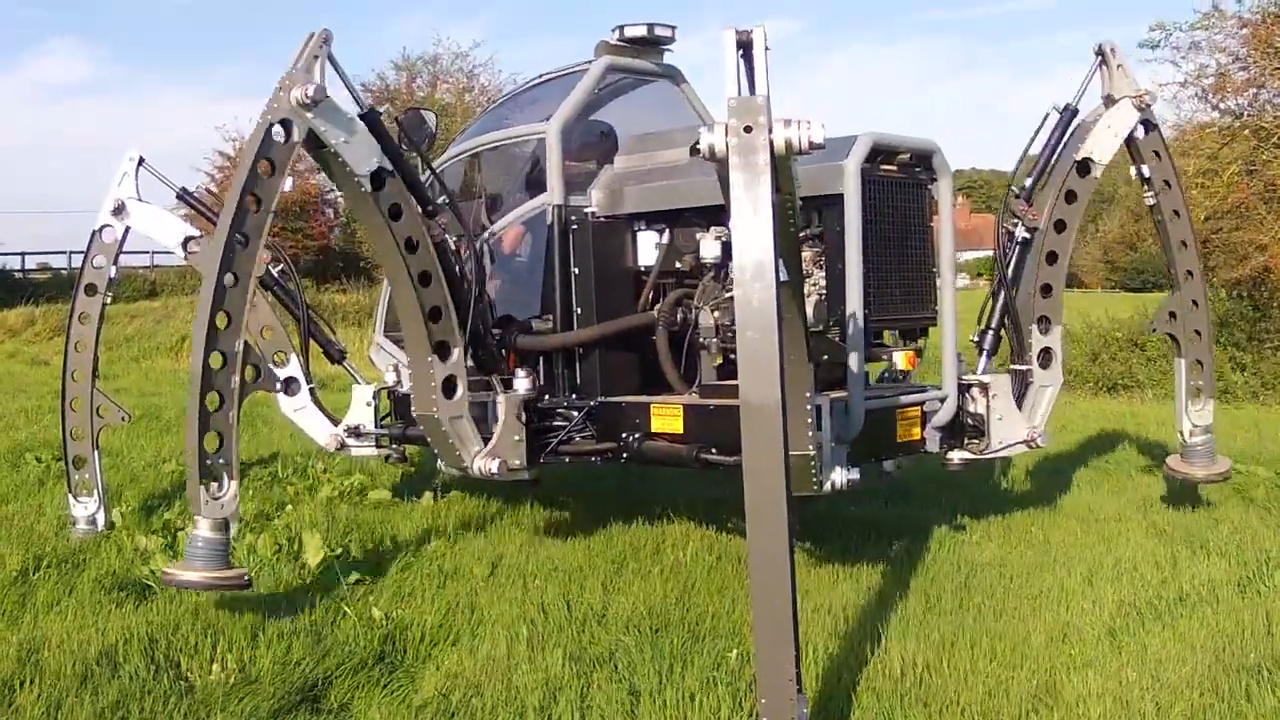
When he was seven years old, British engineer Matt Denton left the cinema impressed by the giant vehicles seen in Star Wars. Decades later, this fascination turned into a real machine. The result was the Mantis, a giant hexapod robot capable of carrying a human pilot and walking on six independent legs. According to the Guinness World Records, the Mantis is the largest rideable hexapod robot in the world, with 2.8 meters in height, 5 meters in diameter, and about 1.9 tons.
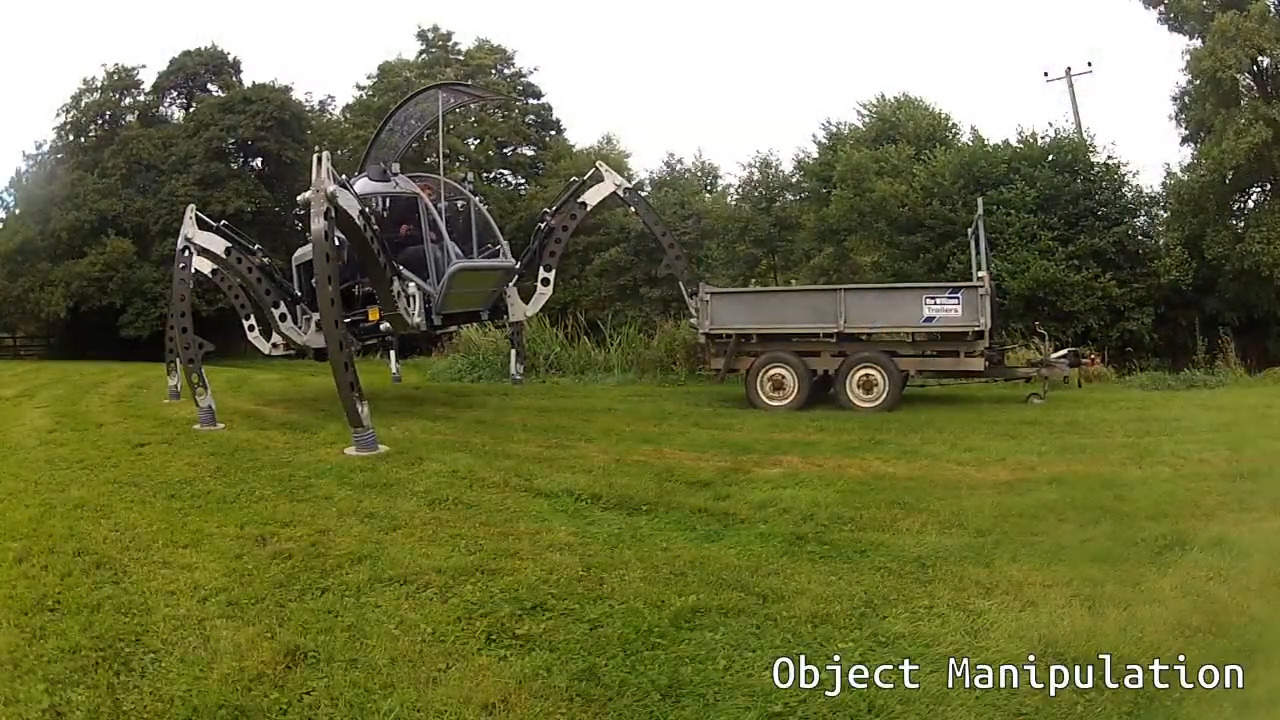
The project attracted attention because it combines heavy mechanical engineering, hydraulics, control software, and an appearance reminiscent of a metallic spider from science fiction. More than just a scenic robot, the Mantis was built as a functional machine, capable of being piloted from inside the cockpit or operated remotely via Wi-Fi.
Matt Denton took years to turn the idea of the Mantis into a functional robot
According to the Guinness World Records, Matt Denton began building the Mantis in 2009 and the project has been receiving improvements since then. Before that, Denton had already developed several smaller robots, which helped form the technical foundation needed to create a giant-scale hexapod.
-
Brazil filled the Northeast with wind turbines but now faces the side effect of 705 giant blades reaching the end of their lifespan by 2032 just in Rio Grande do Norte, while the world projects 43 million tons of waste by 2050.

-
Brazil has filled the Northeast with wind turbines, but now it faces the side effect of 705 giant blades reaching the end of their useful life by 2032 just in Rio Grande do Norte, while the world projects 43 million tons of waste by 2050.
-
Three astronauts launch towards the Chinese space station Tiangong, and for the first time, one of them will spend an entire year in orbit on a mission that includes the first astronaut from Hong Kong and prepares for a manned landing on the Moon by 2030.
-
Two teenage sisters from Vietnam transform denim scraps into premium bags, make it to the global top 35 of the $100,000 Earth Prize, and help disabled artisans exchange waste for income, dignity, and a real future.




Matt Denton
The construction required years of research, testing, and corrections. The challenge was not just to make the machine walk, but to coordinate weight, balance, joints, hydraulic flow, and response to the operator’s commands in a structure of almost two tons. The Mantis was not born ready. It was refined over time until it reached the level that placed it in the record book.
This process also reflects the professional trajectory of the creator. According to the official page of Matt Denton at Micromagic Systems, he spent about 30 years working in the British film and television industry, specializing in animatronic control systems and robotics for large-scale productions.
Six hydraulic legs and 18 degrees of freedom allow Mantis to walk without wheels
What sets Mantis apart from a conventional vehicle is the total absence of wheels. According to the Guinness World Records, the machine uses six hydraulic legs with 18 degrees of freedom, controlled by two three-axis joysticks and 28 buttons. This architecture allows each leg to move in a coordinated manner, maintaining stability while walking.
This type of locomotion is much more complex than driving a vehicle with tires or tracks. Instead of simply rotating wheels, the system needs to calculate the position and movement of each leg in sequence, ensuring the robot does not lose balance or overload a specific joint.
It is precisely this complexity that makes Mantis such an unusual project within pilotable robotics.


The advantage of this configuration lies in the ability to move over uneven surfaces and maintain a visual and mechanical presence very different from any common vehicle. Mantis was not designed for speed, but to demonstrate how a large walking robot can be controlled on a real scale.
Perkins turbo diesel engine moves nearly two tons of robotic structure
According to the Guinness World Records, Mantis is powered by a 2.2-liter Perkins turbo diesel engine. This setup powers the hydraulic system responsible for actuating the legs and keeping the robot operational.

Despite the impressive size, the maximum speed is just over 1 km/h, around 0.6 mph. This number may seem modest, but it makes sense within the machine’s purpose. The goal was never to build a fast robot, but rather a giant hexapod that is stable, controllable, and structurally viable.
The reduced speed also helps preserve the safety and integrity of the system, as coordinating six hydraulic legs in a 1.9-ton machine requires fine control, precision, and reliable response from the software and actuators.
Computer with Linux functions as the brain of Mantis
According to the Guinness World Records, the brain of the Mantis is a PC with Linux, responsible for interpreting the operator’s commands and continuously coordinating the machine’s movements. The system connects the cockpit, joysticks, sensors, and hydraulic actuators in a single control logic.
This software layer is essential because a large hexapod robot cannot rely solely on direct mechanical command.
Matt Denton
Each step requires synchronization of multiple movement points, posture correction, and proper load distribution. Linux enters this context as a stable base for the embedded computational system.
Besides internal piloting, the Mantis can also be operated remotely via wireless connection, enhancing its value as a technical demonstration, display vehicle, and experimental robotic platform.
Creator of Mantis worked on Star Wars, Harry Potter, and Jurassic World
The Mantis was not created by an unknown engineer. According to the official page of Matt Denton at Micromagic Systems, he built a career in animatronics and robotic systems for film and television, with participation in franchises like Star Wars, Harry Potter, and Jurassic World.
Matt Denton
The same page also highlights that Denton received significant recognition for his work on the droid BB-8 from Star Wars, and directly mentions his Guinness record with the Mantis. This helps explain why the project so well blends visual impact, functional engineering, and cinematic appeal.
In other words, the Mantis was not born solely from maker culture or technical curiosity. It also carries the experience of decades of a professional accustomed to building machines that need to look impressive but also work for real.
Mantis became proof that a childhood obsession can turn into real robotics
What makes the Mantis so remarkable is not just its size. It’s the fact that it managed to combine scale, human piloting, hexapod locomotion, and extreme visual presence into a single machine. According to the Guinness World Records, this was enough to officially place it at the top of the category of world’s largest rideable hexapod robot.
At the same time, the project helps to show how great engineering ideas don’t always originate solely in government or multinational laboratories.
Sometimes, they start with a childhood obsession, go through decades of professional experience, and end up materialized in steel, hydraulics, software, and diesel.
In the case of the Mantis, the child who left the cinema imagining a giant machine ended up building a real one. And this machine was not limited to the realm of science fiction. It walked into the record books.





Be the first to react!