Portuguese
  Spanish


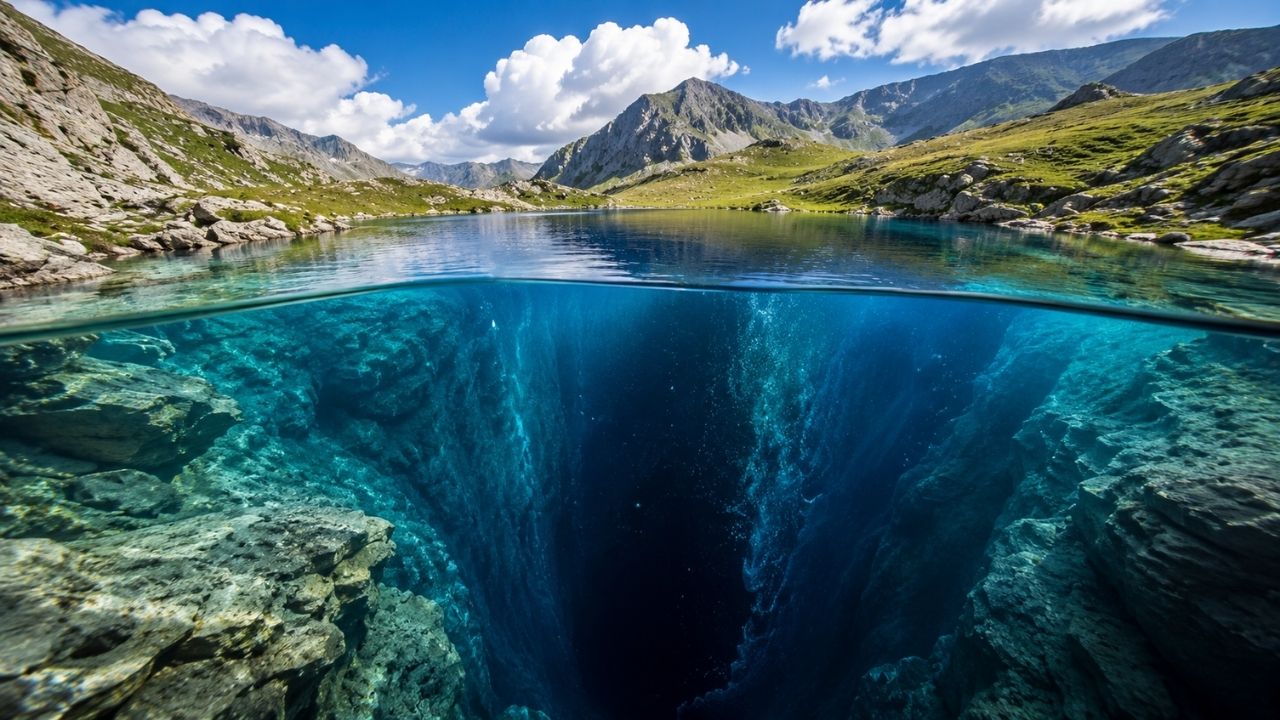

Called bottomless lakes, they mix legends, extreme depth, and geology in the Caucasus, where underground currents can divert ancient measurements. A small lake exceeds 270 meters, drains 70 million liters per day, and shows why blue water, limestone, and invisible tunnels still fuel fear and curiosity in modern science.
Bottomless lakes have always mixed fear, legends, poetry, and science, but the explanation behind their depth usually lies in geology. In regions like the Caucasus and karst areas of Ukraine and Russia, small, deep, and difficult-to-measure lakes have led residents, travelers, and researchers to believe, for a long time, that some of them had no real bottom.
According to the PIPA channel on YouTube, published on May 19, 2026, the video shows that, in practice, these lakes are not infinite. What exists are natural abysses, karst holes, layers of viscous mud, almost vertical walls, and underground currents capable of deceiving ancient measurements. The result is a landscape that seems out of legend but is born from physical processes related to water, limestone, and time.
Legends were born when measuring the bottom was almost impossible
The expression bottomless lakes emerged long before modern equipment. For centuries, measuring the depth of a lake depended on simple methods, such as ropes, weights, and lines. When the weight did not reach a solid base or was dragged by the current, the popular conclusion seemed obvious: there was no bottom.
-
Desalination Program Transforms Brackish Water into Drinking Water in Brazil’s Semi-Arid Region, Benefiting 26,000 Residents with $2 Million Investment

-
Man Attempts to Measure Brazilian Sinkhole with Fishing Line, Loses Camera, Captures Mysterious Footage, Rekindling Debate on Hidden Underground Labyrinths

-
Brazilian Company Sells Portable Manual Press That Produces Eco-Friendly Bricks Every 10 Seconds
-
Dairy Farm Prevents Manure Lagoon Overflow with High-Powered Tractors and Industrial Pumps, Turning 100,000 Gallons of Waste into Fertilizer



This type of impression fueled stories about underground portals, sunken cities, infinite abysses, and mysterious connections with other worlds. The fear of dark waters turned a technical difficulty into a collective myth.
Today, science can explain much of these phenomena. Many lakes considered “bottomless” are in karst areas, where soluble rocks, such as limestone and gypsum, are dissolved by water over thousands of years. This process opens caves, tunnels, crevices, and underground channels.
Even so, some cases remain intriguing. Even when the general explanation is known, measuring certain depths accurately can be difficult due to thick mud, underground circulation, and irregular formations at the bottom.
In the Caucasus, small lake can exceed 270 meters
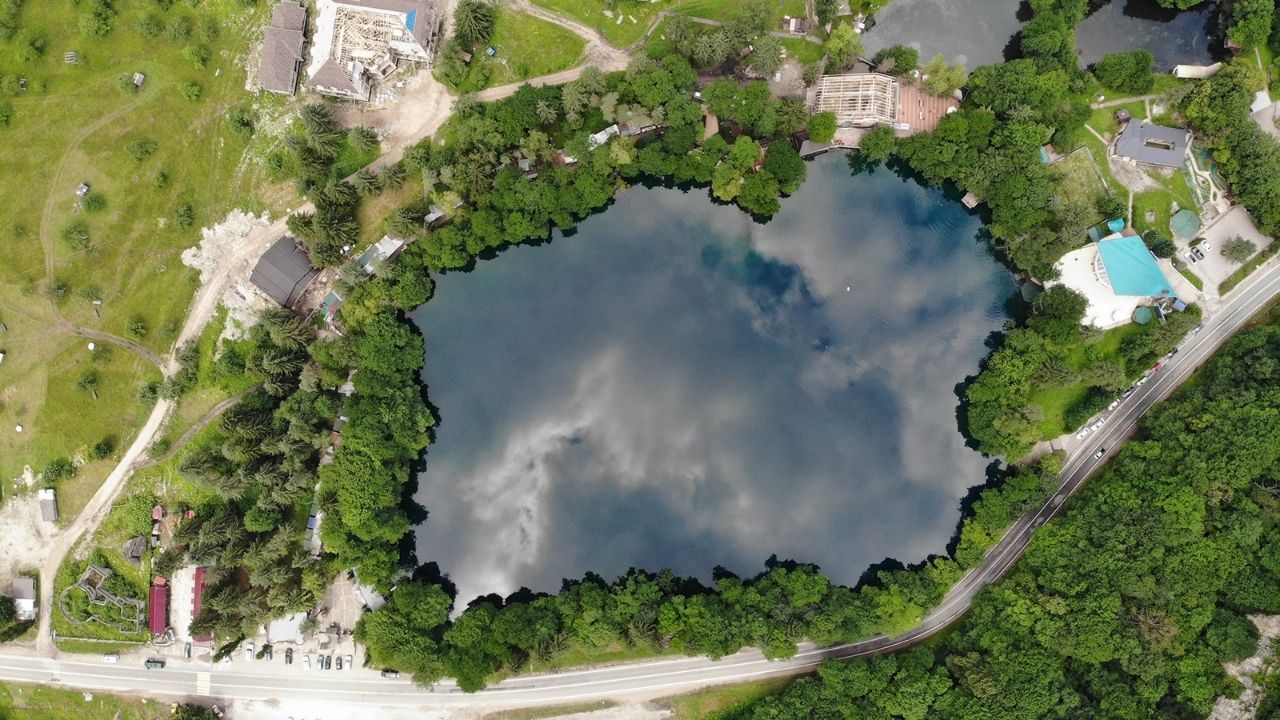
One of the most impressive examples cited in the source is located in the Caucasus, in the Republic of Kabardino-Balkaria. Despite occupying a small area of about 2 hectares, Lake Tserik-Kel is described as a body of water capable of reaching an estimated depth between 270 and 300 meters.
This difference of up to 30 meters between estimates already shows the difficulty of measurement. In many common lakes, the total depth does not even reach 20 meters. In this case, however, an apparently small lake hides a vertical abyss that helps explain why it entered the imagination of bottomless lakes.
Another detail draws attention: the color of the water. In the shallow edges, it may appear transparent; seen from above, it gains an intense blue hue, close to turquoise. According to the report, this occurs due to the presence of dissolved hydrogen sulfide.
The visual beauty, in this case, reinforces the mystery. The blue water, steep banks, and extreme depth create the sensation that the lake does not end, even when science indicates that there are known geological processes behind it.
Underground currents explain the constant water level
The lake in the Caucasus also draws attention for maintaining a constant water level, even without receiving visible streams on the surface. At the same time, it has a flow capable of draining about 70 million liters of water per day, according to the source.
For residents, this may seem contradictory. How can a small lake lose so much water daily without drying up? For hydrologists, the answer lies in the underground water circulation system. The lake functions as a karst window connected to deep aquifers.
Rainwater and meltwater penetrate the limestone, dissolve the rock, and circulate through invisible cavities. Part of this flow enters from beneath the lake, rises by pressure, and maintains continuous supply. It’s as if the lake were the visible mouth of a much larger underground network.
This system also helps explain why ropes with weights could fail in ancient measurements. Instead of descending to a solid base, they could be diverted by currents and channels, feeding the idea of bottomless lakes.
Constant temperature increases the sense of mystery
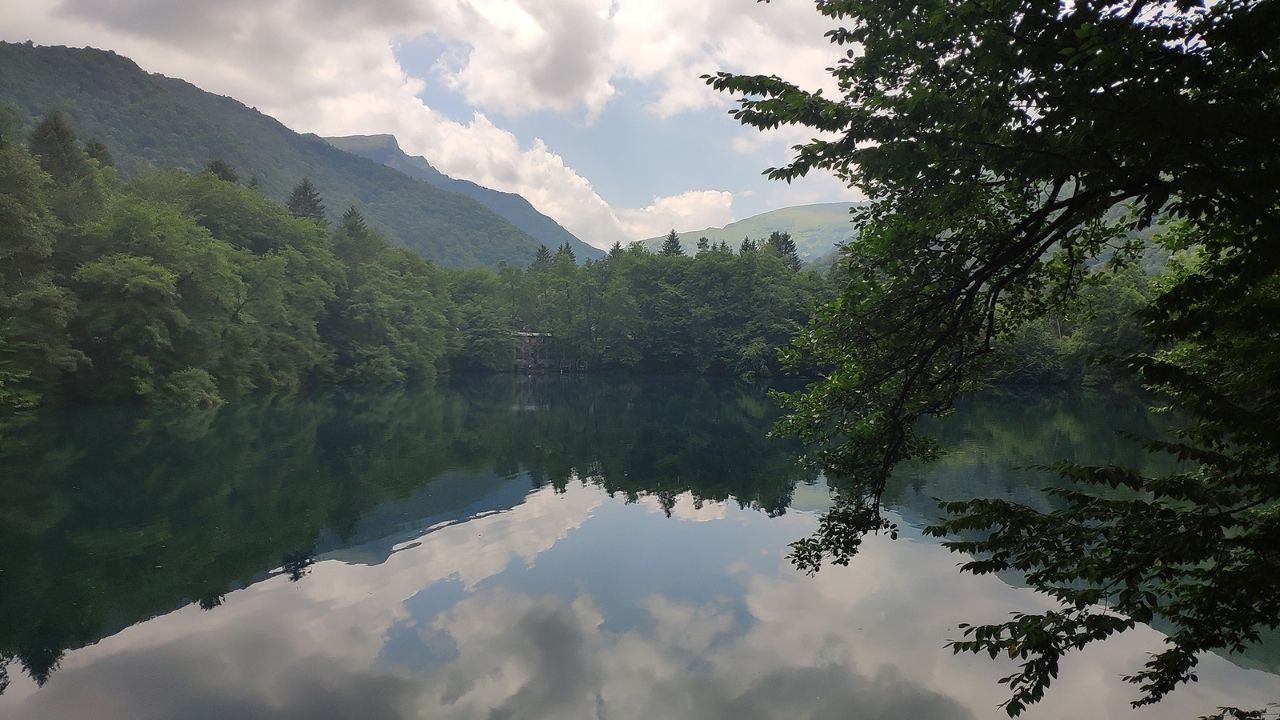
Another curious point is the water temperature. The source reports that the Caucasus lake remains around 9 °C both in summer and winter. This stability reinforces the connection with deep underground waters, less affected by surface climate variations.
For those observing the lake just for the landscape, the combination is strange: blue water, extreme depth, almost vertical banks, absence of apparent rivers, and constant temperature. The sum of these elements creates a perfect atmosphere for legends.
Divers who explored the site in past decades also faced unusual conditions. Metal parts of equipment were reportedly covered by a film caused by the concentration of hydrogen sulfide, which helped fuel stories about the water’s corrosiveness.
But the most likely explanation is less supernatural and more chemical. The deep, mineralized environment, poor in visual references, can be intimidating, especially in a lake where there are almost no footholds on the walls during the descent.
In Ukraine, lesser depth also created legends
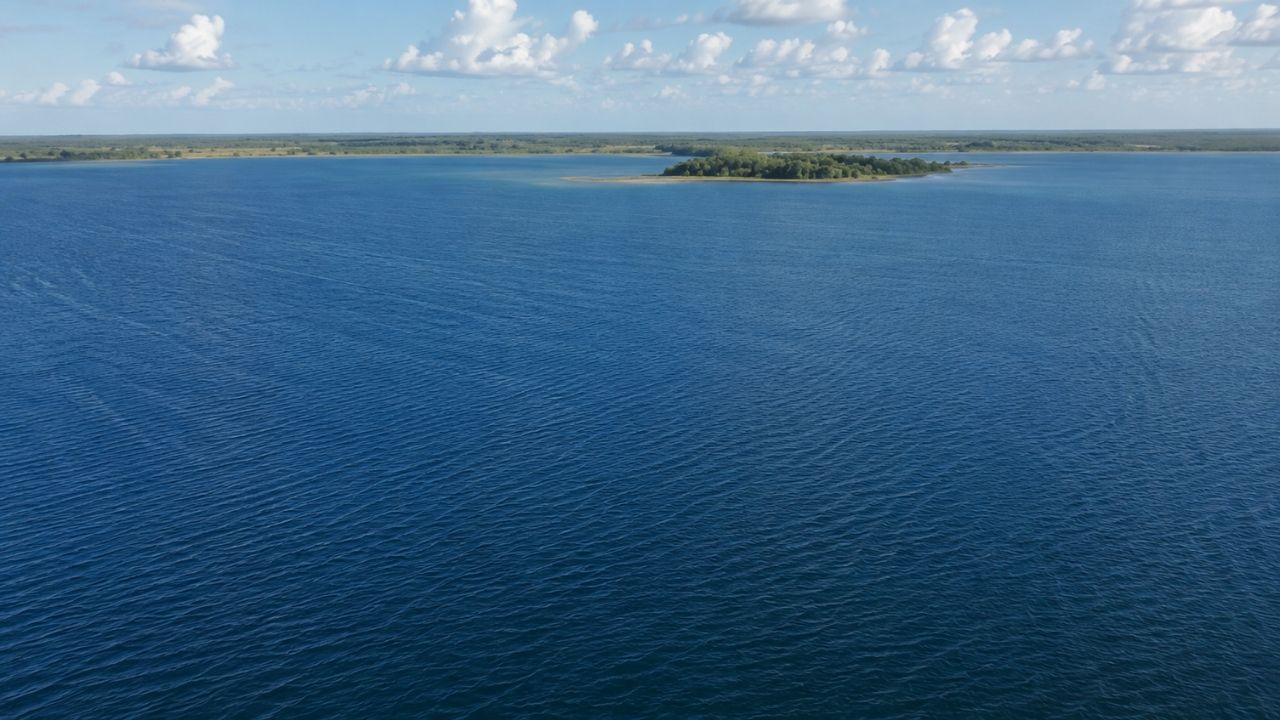
Not all bottomless lakes need to be hundreds of meters deep. Lake Svityaz in Ukraine reaches about 58 meters in depth, according to the source, but became surrounded by legends because it is located in a flat region and has an irregular bottom.
The problem lies in the karstic relief. In some spots, the water seems shallow, just a few meters. In others, the bottom quickly drops to dozens of meters. This abrupt change creates a visual sensation of a hidden abyss.
The transparency of the water enhances the effect. Boats can seem suspended over a chasm, as if floating above an endless void. The human mind, faced with sudden and difficult-to-interpret depth, completes the scene with mystery.
Thus, stories were born about a submerged city, wishes reflected in the lake, and doors to another world. Geology created the setting; popular imagination wrote the legend.
Lake with Viscous Mud Challenges the Idea of a Bottom
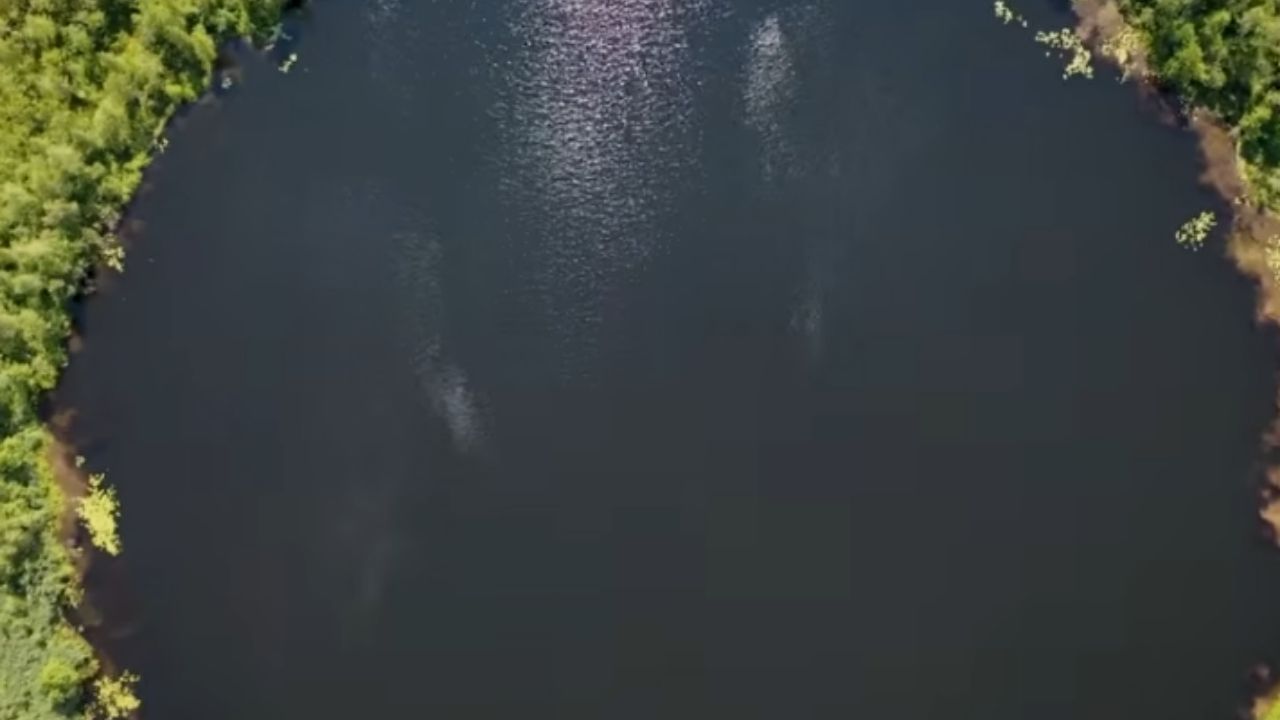
Another case mentioned is Lake Besdonnoye, whose very name refers to the idea of “bottomless.” Its peculiarity lies not only in its apparent depth but in the difficulty of defining what should be considered the bottom.
The surface may indicate a small, circular lake, about 180 meters in diameter with relatively low visible depth. The problem begins when reaching the sapropel layer, a thick mud formed by the decomposition of algae, leaves, branches, and other organic debris.
This mass can be dense, viscous, and unstable. It does not support weight like a solid base and can swallow equipment or make the recovery of instruments difficult. In this type of environment, the “bottom” ceases to be a clear line and becomes a confusing zone between water, mud, and rock.
According to the source, drilling attempts in 2015 faced repeated lockups without reaching a solid layer beneath the lake. Researchers cautiously suggested that the sapropel layer could be between 15 and 20 meters.
Science Reduces the Myth, but Does Not Erase the Fascination


The bottomless lakes show how science can dismantle legends without destroying the charm of the phenomenon. Knowing that underground currents, dissolved limestone, organic mud, and karst collapses are behind these stories does not make the lakes any less impressive.
On the contrary, the explanation reveals a complex natural engineering. Each lake is the result of the interaction between rock, water, pressure, erosion, time, and geological accidents. What seemed supernatural becomes an extreme demonstration of Earth’s dynamics.
It is also important to separate mystery from exaggeration. Stories about direct connections to oceans, disappearing objects, and impossible measurements may be part of local folklore but should not be treated as fact without evidence.
Even so, the core of these narratives has a real basis: some lakes are so deep, unstable, or connected to underground systems that they have long challenged the understanding of those who tried to measure them.
The bottom exists, but it’s not always easy to find
The idea that a lake has no bottom, in the literal sense, does not hold up. Every body of water occupies a depression, cavity, or geological system with physical limits. The problem is that these limits are not always easy to measure.
In karst lakes, water can circulate through tunnels, cracks, and caves. In lakes with sapropel, instruments can sink into the mud without finding a firm layer. In collapse areas, the terrain can vary abruptly, creating holes and almost vertical walls.
Therefore, the expression bottomless lakes remains useful as a popular metaphor. It does not describe real infinity, but translates a human experience in the face of depths that seem to escape control.
Nature doesn’t need to be supernatural to seem impossible. Sometimes, all it takes is a small lake, an intense blue color, an invisible current, and a bottom that refuses to appear as expected.
Do you think these scientific explanations make lakes more interesting or take away some of the charm of ancient legends? Leave your opinion in the comments.