Portuguese
  Spanish


In Vietnam, teenage sisters created Fern, a project that transforms industrial jeans into premium bags, supports artisans with disabilities, and entered the Earth Prize 2026. The initiative combines textile recycling, circular design, income, and inclusion, while trying to prove that waste can become a desired product with real social impact for young people.
Two teenage sisters from Vietnam, Nguyễn Phương Anh and Nguyễn Lan Anh, also known as Patricia and Adelaide, were selected among the top 35 global teams of the Earth Prize 2026. The announcement was published on April 10, 2026, in Geneva, Switzerland, highlighting the Fern project, which transforms industrial jeans waste into premium bags.
According to a statement from The Earth Prize 2026, the initiative was born in Vietnam and combines textile recycling, circular design, and social inclusion. The duo repurposes denim scraps from local factories to create higher value-added products while seeking to generate job opportunities for artisans with disabilities.
Denim scraps became raw material for an international project
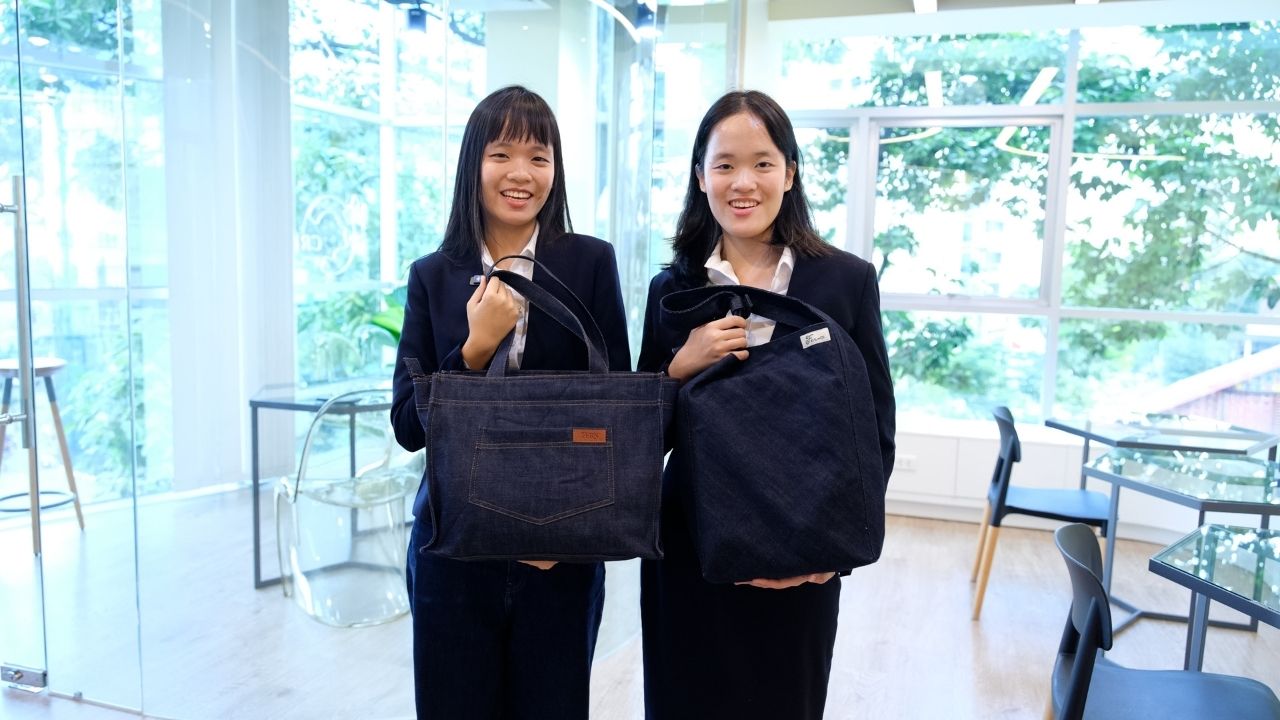
Fern started after the two sisters encountered the magnitude of the textile waste problem. According to the source, 92 million tons of this type of waste are generated globally each year, a number that helped guide the creation of an environmentally scalable solution.
-
South Korea to Sink 20 Massive Concrete Coffers Off Busan Coast to Build 1.4 km Breakwater at Jinhae New Port, Part of $9.4 Billion Expansion to Rank Among World’s Top 3 Ports

-
Venice Deploys 78 Massive Steel Gates to Shield City from Extreme Adriatic Tides

-
China Uses 432 Robots to Move a 7,500-Ton Historic Building in Shanghai, Preserving Architecture While Creating Space for Underground Center
-
World Cup Ball Chip Uses Technology to Detect Invisible Touches, Confirms Offside, Secures Portugal’s Victory Over Croatia





The duo’s first idea was to repurpose baby clothes, but irregular supply hindered the project’s growth. Instead of abandoning the proposal, they sought a more consistent material and found in denim a viable, durable, and abundant alternative within the industrial chain.
Denim also drew attention for being a resource-intensive fabric and capable of generating waste even before reaching the consumer. The source reports that this material can produce up to 15% pre-consumer waste, especially in cuts, leftovers, and industrial scraps.
The project’s turning point was in transforming a disposal problem into raw material for premium bags. Instead of treating the excess fabric as trash, Fern began to see denim as a base for products with design, utility, and environmental narrative.
Project entered the top 35 global of the Terra Prize
The recognition came with the selection of the sisters among the 35 global teams of the Terra Prize 2026. The environmental competition gathers young people from 13 to 19 years old and also functions as an incubator, offering mentorship, resources, and funding for ideas aimed at ecological challenges.
Fern was chosen to represent the Oceania and Southeast Asia region. The stage placed the Vietnamese project alongside other young solutions from various parts of the world, in a list that includes initiatives on oceans, drinking water, droughts, and other environmental fronts.
According to the organization, the Terra Prize has already reached more than 21,000 students in 169 countries and territories since 2021. The award has also granted over $500,000 to support ideas with real impact.
The 2026 edition has a total prize of $100,000. Between May 11 and 17, seven regional winners would be announced, each with $12,500 to boost their innovation, before the public vote and the selection of the global winner scheduled for May 29.
Social inclusion became a central part of Fern
The proposal of the sisters is not limited to recycling denim. Fern was also built to support artisans with disabilities, creating job opportunities linked to the production of the bags and the reuse of discarded material.
This decision was inspired by the community sense of the teenagers’ mother, according to the source. From this influence, the duo incorporated inclusion as a structural part of the project, not just as a complementary detail.
The result is an idea that combines sustainability and dignity. While reducing industrial fabric waste, Fern tries to create space for people who often face barriers in the job market.
It is this intersection between environmental impact and social impact that strengthens the story. The final bag not only carries reused denim but also a work chain that seeks to generate income, recognition, and belonging.
Premium bags help change the image of reuse
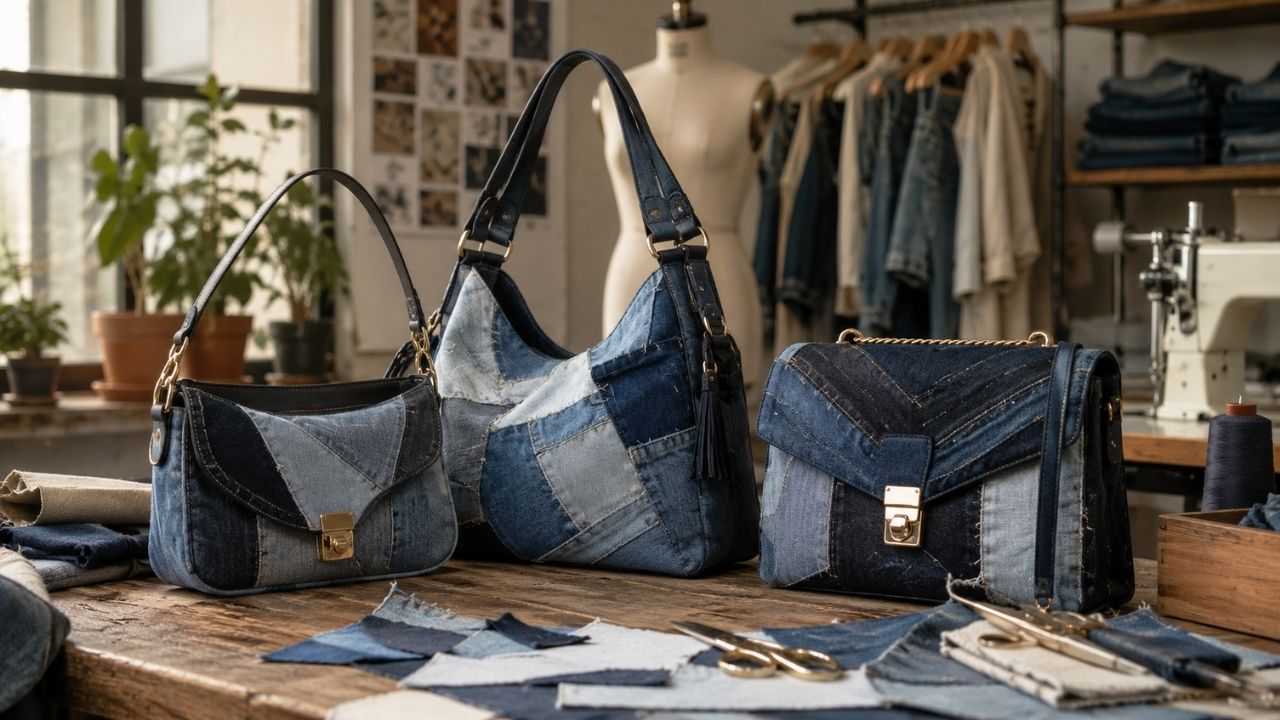
One of Fern’s strongest points is the choice of premium bags. In many cases, recycled products are still seen as makeshift, simple, or of lesser value. The sisters’ proposal takes a different path: transforming industrial leftovers into items with finish, identity, and design appeal.
This strategy helps reposition textile reuse. When waste becomes a desirable product, recycling is no longer seen only as an environmental obligation and starts to compete also for aesthetics, functionality, and perceived value.
The use of high-quality denim scraps reinforces this logic. As part of the material comes from pre-consumer industrial waste, there is a chance to work with fabric still in good condition before it reaches final disposal.
Fern shows that sustainability doesn’t have to appear as a loss of quality. On the contrary, the project tries to prove that circular design can generate beautiful, useful products connected to a concrete social cause.
Next step is to utilize smaller pieces of fabric
Although Fern is currently focused on denim bags, the team is already planning an expansion. According to the source, the teenagers intend to launch the Mini Fern line in 2027, using smaller scraps to create items like keychains and pouches.
The idea is to further reduce waste. If larger pieces become bags, smaller fragments can also find a productive destination, preventing parts of the fabric from being discarded due to lack of use.
This stage reinforces the concept of circular design. Instead of thinking only about the main product, the sisters seek to create a system where each piece of material has a possibility of reuse.
The smaller the waste, the greater the environmental potential of the project. The Mini Fern line can expand the variety of products and make the use of scraps more complete within the production chain.
Young people turn climate anxiety into concrete action
The Terra Prize was created to support young people facing global environmental challenges. The organization highlights that many teenagers experience intense concern for the planet’s future, and the competition aims to turn this unease into practical solutions.
In Fern’s case, this transition from concern to action is clearly evident. The sisters identified a problem, tested an initial idea, adjusted the model, and found a material with greater scaling potential.
This journey is important because it shows that innovation doesn’t come ready-made. The project had to change course when the initial proposal, with baby clothes, did not prove easy to expand. The choice of jeans came precisely from this search for a more consistent solution.
The maturity of the project lies in this ability to adapt. Instead of insisting on a limited idea, the duo redesigned the path until they found a more stable raw material connected to the reality of the textile industry.
Competition brings together young solutions from various regions
The 2026 edition of the Terra Prize brings together teams from seven global regions: Africa, Asia, Europe, North America, Central and South America, the Middle East, and Oceania and Southeast Asia. Each region participates with projects led by young people aimed at concrete environmental problems.
The selected solutions cover different areas, from robots for ocean cleaning to potable water generated by fog and drought prediction systems based on artificial intelligence. In this scenario, Fern stands out for its focus on fashion, industrial waste, and productive inclusion.
The presence of the Vietnamese sisters among the finalists shows how the environmental agenda can go beyond energy, forests, or oceans. The fashion industry is also part of the climate and consumption debate, especially when it involves large-scale disposal.
The project enters this conversation with an approach that is simple to understand and strong in visual impact. Denim scraps, once seen as leftovers, become bags and job opportunities.
A story about income, dignity, and future
Fern’s strength lies in combining three elements that usually appear separately: recycling, income generation, and inclusion. The solution arises from an industrial problem but also targets people who need opportunity and recognition.
For artisans with disabilities, the project can represent more than occasional work. It creates a bridge between manual skill, design, and market, transforming artisanal production into part of an environmentally oriented chain.
For the sisters, the selection in the Terra Prize expands visibility, mentorship, and growth possibilities. Even without a guarantee of global victory, being among the 35 selected teams already places Fern on an international stage.
The story shows how teenagers can participate in debates that often seem restricted to governments, companies, and experts. With denim scraps and a well-structured idea, two young women managed to connect disposal, income, and future in a concrete proposal.
Do you think that young projects like Fern should receive more support from fashion brands and textile factories, or is there still a lack of market confidence in solutions created by teenagers? Leave your opinion in the comments.