Portuguese
  Spanish


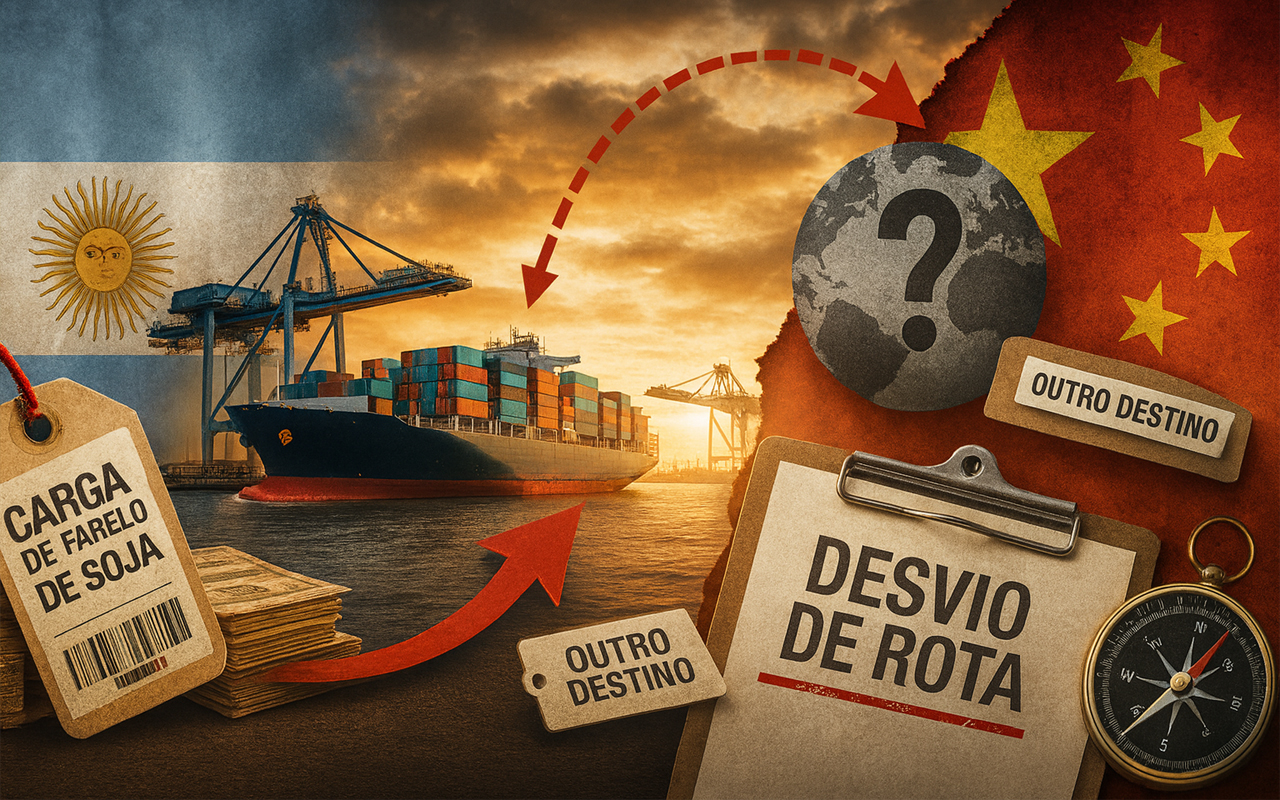


Bunge Diverted, For Commercial Reasons, The 1st Shipment Of Argentine Soybean Meal That Was Going To China — 30 Thousand Tons. The Shipment Was Redirected To Vietnam At The Request Of The Importer, And The Sector Treats The Case As A Temporary Adjustment, Not A Retreat.
Bunge confirmed that a shipment of 30 thousand tons of Argentine soybean meal that was originally scheduled for China has been redirected to Vietnam. The company attributed the decision to commercial reasons, a term that usually indicates a combination of price, immediate demand, and contractual clauses that allow for changes to the unloading port.
This shipment drew attention for being treated as the first shipment of Argentine meal to China since Beijing’s approval in 2019. The change, therefore, raised market alarms as it could signal practical limits to this opening or simply a tactical adjustment in response to the needs of a buyer in Southeast Asia.
According to Gustavo Idígoras, president of the CIARA-CEC exporter’s chamber, the importer’s request was the trigger for the change and was outlined in the contract. This explanation corroborates the version that this was a logistics and demand operation, and not a unilateral veto.
-
Family Quietly Transforms Old Sawmill into $700 Million Business, Opens 25 Stores in Two Years Across 22 Brazilian States

-
Couple Sold Their Home to Save Business, Now Run Platform Handling $180 Million Monthly and Managing Over 51 Million Listings
-
Brazil’s 2026 Tax Refund: Record 9.58 Million Filers in Largest Payout Ever, But a Key Detail on Priority Recipients Draws Nationwide Attention

-
Itaú Alters Hybrid Work Model, Increasing Office Days from 2028, Prompting Employees to Adjust to New Routine




Company Claims Commercial Reasons vs Quality Rumors
Shortly after Bunge’s confirmation, reports attributed to unidentified sources circulated that the change occurred due to possible non-compliance with Chinese quality specifications. This interpretation appeared in international press reports, but was not confirmed by Bunge in official communications, which maintained the justification of “commercial reasons”.
In this type of operation, quality means meeting parameters such as protein content, moisture, fiber, and absence of contaminants within the standards required by the destination country. China is considered demanding in these regards, however, recent history shows that Beijing has been testing origins and suppliers to balance price, risk, and supply security.
The prevailing view in the sector is that the change of destination does not, by itself, invalidate the plan for Argentine meal to enter the Chinese market. The fact is the diversion for commercial reasons, confirmed by the company and sector representatives. The hypothesis is non-compliance with specifications, reported as an attribution to sources and still without public confirmation.
How China Resumed Purchasing Argentine Meal In 2025
Although China approved the import of Argentine soybean meal in 2019, the effective flow did not immediately take off. On June 26, 2025, trading companies and Chinese feed manufacturers closed a test agreement for 30 thousand tons with shipment in July. This was the first concrete step to open the logistics corridor for finished meal, and not just whole soybeans.
Following that, on July 7, 2025, Bunge chartered the inaugural load of 30 thousand tons for China, consolidating the operational milestone. The goal was to test costs, timelines, and inspections upon arrival, as well as to compare purchasing finished meal with the traditional strategy of importing whole soybeans for local processing.
Between late July and early August, there were reports of two new purchases of Argentine meal by China totaling 60 thousand tons, an indication that Beijing is evaluating expanding alternatives amid changing prices in the South American market and risk diversification strategies. These movements help to explain why the sector treated the diversion as a temporary adjustment and not as a structural retreat.
Argentina Maintains Leadership And Vietnam Remains A Key Destination For Meal
For Argentina, the world’s largest exporter of soybean meal, this episode occurs in the context of scale and reach. In 2024, the country shipped 27.2 million tons, generating US$ 10.55 billion, with Vietnam as the primary destination, accounting for about 15% of sales. The diversion of a shipment to Vietnam, therefore, fits into an already established trade flow.
In the very short term, the most visible effect tends to be logistical. By changing the unloading port, trading companies recalibrate arrival timelines, freight, and docking windows. In markets sensitive to price basis and availability, such as the animal feed sector, small route changes can create temporary fluctuations but are unlikely to alter the trend unless there is a structural factor.
For China, the strategic assessment continues. Purchasing finished meal reduces the need for domestic processing and can minimize local bottlenecks, although it limits value capture within the country. Meanwhile, Brazil and the United States remain major suppliers of whole soybeans, maintaining a competitive landscape where price, exchange rates, and sanity determine the mix between beans and meal.
Chinese Opening Expands Suppliers And Pressures Argentina To Maintain Standards
The first signal to watch is the progress of the next shipments of Argentine meal to China. If they are maintained and approved without reservations, the interpretation will be one of normalization. If new route changes occur, the market may reprice the risk.
It is also worth monitoring the qualification policy of origins by Beijing. In 2025, China expanded the list of countries authorized to sell meal, including Uruguay and Ethiopia, in line with the strategy of diversifying suppliers and reducing supply vulnerabilities. The more origins authorized, the greater the competition for price and quality.
Finally, attention to technical standards is crucial. Requirements for protein, moisture, fibers, and impurities define the classification of soybean meal for use in feed. For exporters and manufacturers, investing in quality control and traceability remains a critical factor for competitiveness, especially when the buyer is large, demanding, and looking to diversify risks.