Portuguese
  Spanish


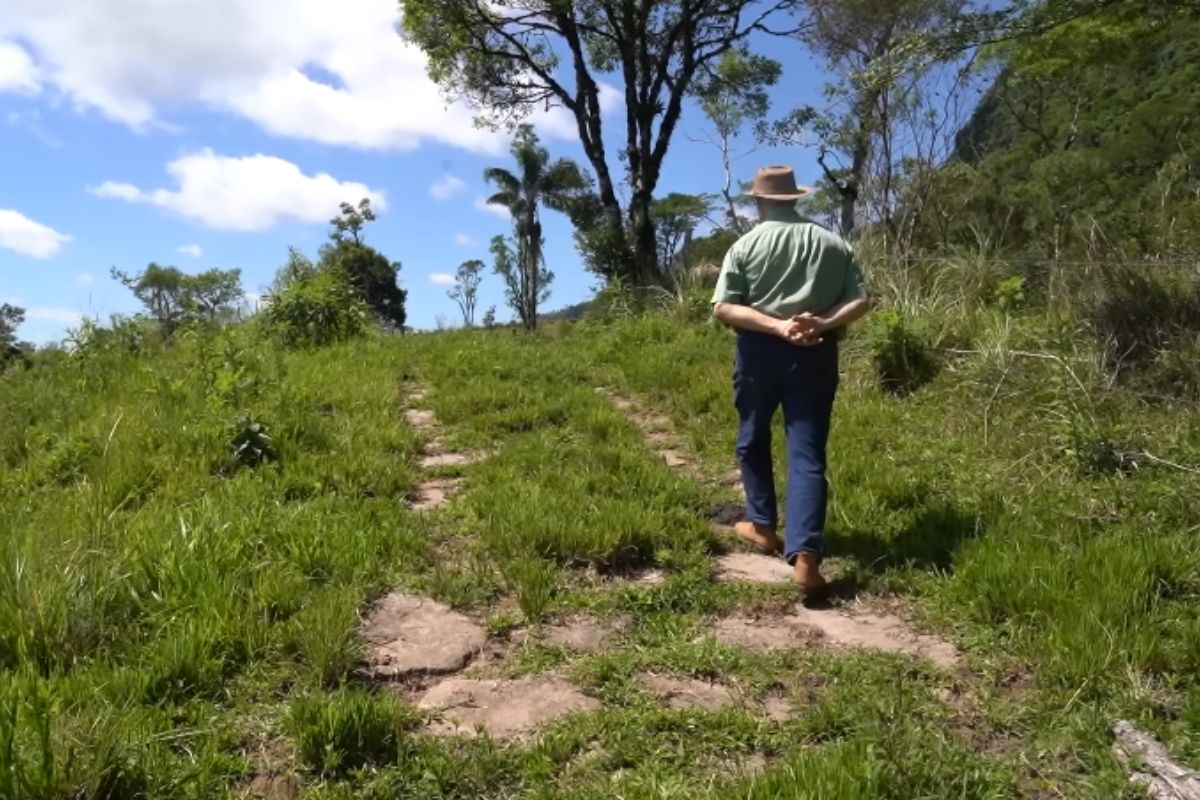


200-Year-Old Stone Pavement Built by Slaves and Indigenous People Is 6 Km in the Middle of the Catarinense Mountains and Saved Troops from the Marsh Linking Lages to Florianópolis
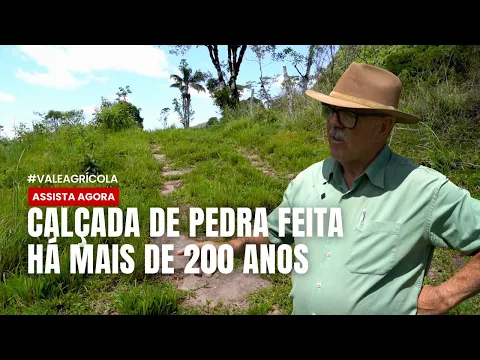
A few meters from the dense forest and cattle pastures in the Catarinense Mountains, a 200-year-old stone pavement remains silent beneath the hooves, tires, and feet that still pass by. Almost hidden within rural properties, it was for decades the main route between the mountains and the coast, linking the old Serra Nossa Senhora das Lajes, now Lages, to the city of Desterro, now Florianópolis. The path, 6 km long and 3 m wide, is a living chapter of the Empire’s history in Southern Brazil.
Our guide on this journey is Seu Ivan, the former mayor of Alfredo Wagner and a passionate local historian. He recalls that the first trail was opened in 1797, when troops, immigrants, slaves, and indigenous people needed a way to descend and ascend the mountains. Over time, the mud, slime, and marauding in the marsh compelled the government to intervene. That’s when the 200-year-old stone pavement was born, paving a critical stretch of the royal road and changing the routine of the troops.
A 6 Km Path in the Mountain to Escape the Marsh

Before the pavement, the connection between Lages and Florianópolis was just a trail cleared through sheer effort. Almost everyone walked, a few traveled on horseback or in pack mules, on expeditions of people seeking lands and opportunities.
-
Man Builds Stone Bed with Granite Rocks and Hand-Sawn Cedar Beams, Home Extension Garners Over 437,000 Views on Bonus Bolts Channel

-
Brazilian Researcher Develops Color-Changing Roof Tile to Reduce Air Conditioning Use by Up to 15%

-
21-Year-Old Moves Back to Parents’ Home in Arizona, Finds New Private Apartment in Converted Garage as Families Tackle U.S. Housing Pressures

-
Innovative Container Studio in Brazilian Beach Town Thrives with High Demand and Plans for Expansion



The region mainly received Germans and later Italians, spreading throughout the valleys and slopes of the mountain.
The problem was the marsh. The mules sank into the mud, the packs touched the ground and the animals were almost suspended, trapped and vulnerable. In this scenario, the indigenous people would raid the loads, taking advantage of the troops’ difficulties.
To resolve the situation, there came an imperial decision: rather than just moving the trail a few meters to the side, it was decided to cobble the problematic stretch with stone. Thus was born the 200-year-old stone pavement, a solid corridor through the soggy ground.
Slaves, Indigenous People and the Brute Force Behind the Stones
According to records cited by Seu Ivan, the 200-year-old stone pavement was constructed by slaves, indigenous people considered “domesticated” at the time, and individuals who exchanged labor for food.
It started with dozens of slaves and reached hundreds to complete the project, which likely took more than five years, finished between the first and second decade of the 1800s.
The stones still impress today. There are blocks weighing over 500 kg that were dragged over cowhide, wet when dried to facilitate sliding.
Another important tool was the bimbarra, a kind of wooden lever used to move the stones with less effort.
Each meter of the 200-year-old stone pavement carries the mark of forced labor, rustic technique, and adaptation to the difficult relief of the mountains.
Guards, Troops and the Protection of Cargo on the Royal Road

With the paving complete, the Empire decided to reinforce the security of the region. Six soldiers were sent to a location that is still called Guarda Velha.
They were to protect the transit of troops and goods, but the intense cold caused them to abandon the post just a few days later.
The response was to reorganize the defense. The government ordered the military to leave from another point, follow the water courses, and establish a military colony in a more strategic area.
Thus arose the village of Catuíra, on land donated by Empress Teresa Cristina, with about 100 hectares for the community.
From there, the soldiers began to escort the troops traveling from Florianópolis to Lages and those descending from the mountains to the coast, effectively eliminating the raiding of cargoes.
The 200-year-old stone pavement was a fundamental link in this royal road that crossed valleys, rivers, and mountains.
Padlock, Tropeiros in No Hurry and the Time of Travel
One of the most curious points along the way is the Cadeado Hill. There is a field of about 50 hectares, uphill and downhill, with a single entrance and a single exit, hence the name.
There, the troop leader would surround the bottom and the rear of the troop would surround the top while the animals rested, fattened, and waited out storms that delayed travel.
Seu Ivan describes the rhythm of the tropeiros as a life without hurry. A tropeiro would sleep today at one point, have lunch there the next day, and if necessary, sleep again, always obeying the timing, the condition of the animals, and the safety of the road.
The 200-year-old stone pavement was one of the few guarantees of stability underfoot amidst a path full of slopes, rivers, and mud.
Fences, Trucks, and the Almost Disappearance of the Pavement
As a child, Seu Ivan saw the 200-year-old stone pavement completely exposed, being used by those who lived in the Catuíra region and needed to go to Bom Retiro. There was no other way; everyone passed through there.
Over time, however, large areas were divided into smaller properties, fences appeared, and “progress” changed the landscape.
Logging trucks passed over the old route and, in some stretches, sank the stones and left tracks over the pavement, while in other areas, grass nearly covered everything.
The route began to lose importance with the arrival of carts, and new roads were opened. One example is Seu Ivan’s grandfather, who bought an F8 truck in 1949.
To reach his home in Rio do Engano, he literally had to build part of the road, clearing a path between beaches, rivers, and mountains.
The most decisive change came in the 1980s, with the construction of BR-282. The modern highway took on the role of the main axis between the coast and the mountains, and the old royal road, with its 200-year-old stone pavement, became restricted to scarcely visible segments within farms.
Rides, Memory, and the Challenge of Keeping Access Open
When BR-282 began to take shape, Seu Ivan received the suggestion to organize the “last ride” between Florianópolis and Lages, symbolically marking the farewell to the old route.
He liked the idea and mobilized neighboring mayors and groups of horse riders. People from newly formed CTGs, and others from the coast, mountains, and the Itajaí Valley came.
The ride arrived at the exhibition park like a procession of memory, retracing part of the historical path.
It wasn’t exactly the end. Other rides took place later, primarily using the paved sections of the royal road. There is just one obstacle: the route passes through private properties, most of which are closed to the public.
To cross, it is necessary to request permission, open gates, and convince the owners to participate. The next day, the fences close again, as the cattle need to be contained.
Even so, the 200-year-old stone pavement remains, in more visible fragments or almost swallowed by vegetation.
Each stone is a vestige of a time when tropeiros were unhurried, living at nature’s pace, with the rain, the cold of the mountains, and the strength of the mules, relying on this stone corridor to traverse the landscape.
And you, would you have the courage to traverse today the 200-year-old stone pavement in the middle of the Catarinense mountains, imagining the slow pace of the tropeiros and troops that passed through there?