





 Portuguese
  English
  Spanish
  3 min of reading
  3 comments


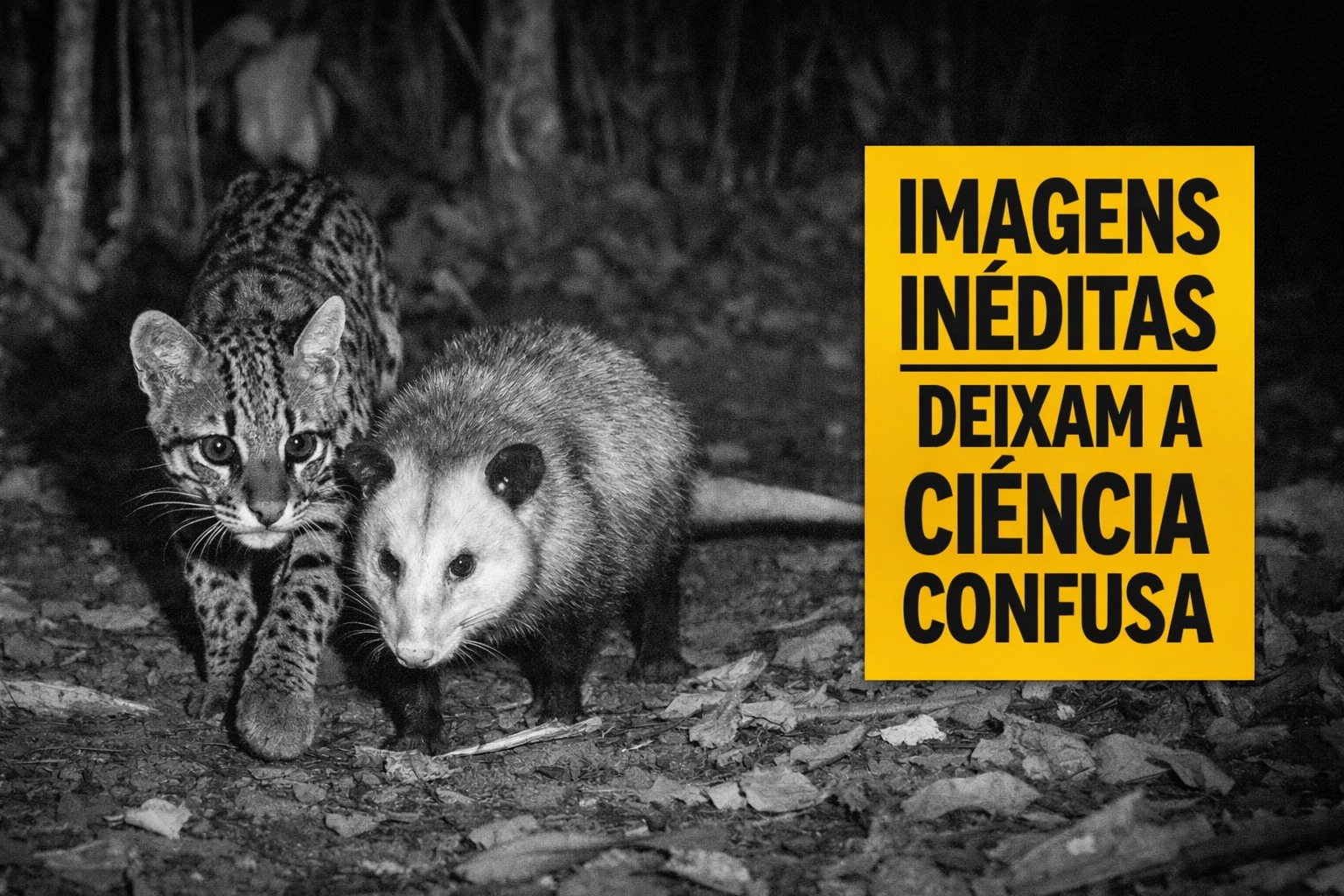


Records Over Several Years Show Predatory Feline and Opossum Walking Together, Without Aggression, in Different Areas of the Amazon Forest, Raising Hypotheses About Mutualism, Olfactory Camouflage and Ecological Dynamics
In the Peruvian Amazon, records obtained from camera traps revealed repeated encounters between jaguarundi and common opossums, behavior observed in different locations, over several years, challenging known patterns of interaction between predators and prey.
The images show solitary and nocturnal jaguarundi walking side by side with common opossums, with no apparent signs of stress, escape, or aggression between the species.
On four distinct occasions, the animals were seen following together through the forest and, in some cases, returning along the same path minutes later, maintaining an unusual synchrony.
-
The coastal El Niño is not the classic El Niño, but it already raises a question in Brazil: can the phenomenon alter rain, heat, and winter?

-
In China, even those who beg on the street already have a QR Code, paper money has practically disappeared from daily life in just ten years, and the entire country has come to live on invisible payments via mobile phones.

-
Scientists considered detonating 213 nuclear bombs in the Sahara to create an artificial sea the size of El Salvador, with each explosion being a hundred times more powerful than the Hiroshima bomb, and the goal was to generate more energy than Egypt’s largest hydroelectric plant.
-
A new 3D printing technology promises to give robots muscles similar to humans.





This fact draws attention because the jaguarundi is a predatory feline, while the opossum could be part of its diet, making the close coexistence something unexpected.
Unprecedented Records in the Tropical Forest
Biologists highlight that associations between solitary carnivores and omnivores are extremely rare, especially when there is a potential predation relationship between them.
The recorded encounters did not occur at a single point, but in distinct areas of the Amazon forest, suggesting that the behavior was not isolated.
The repetition over several years reinforces the hypothesis that the interaction may follow an ecological pattern that is still poorly understood.
Even so, researchers avoid drawing definitive conclusions and treat the records as initial observations, still surrounded by uncertainties.
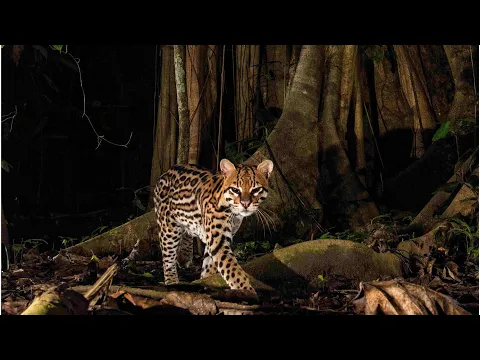

Field Tests with Odors
To investigate the phenomenon, scientists conducted field experiments assessing the reaction of opossums to different odors present in the environment.
The results indicated a clear preference for the smell of jaguarundi compared to the odor of pumas or odorless fabrics.
The opossums remained close, sniffing and rubbing against materials impregnated with the feline’s scent, in behavior that suggests active searching.
This response was considered surprising, as it contradicts the expectation of avoidance of a potential predator, according to the researchers themselves.
Hypotheses Raised by Researchers
The authors of the study, published in the journal Ecosphere, suggest two main explanations for the observed association between the species.
One possibility is increased efficiency in the search for food, with the opossum indirectly benefiting from the hunting activity of the jaguarundi.
Another hypothesis involves olfactory camouflage, where the opossum’s strong scent could mask the feline’s odor in the presence of potential prey.
There are similar examples in the animal kingdom, such as cooperative hunting between coyotes and badgers, cited as behavioral parallels.
Statements and Scientific Context
“Opossums have a strong scent, and this proximity may mask the odors of both,” said Ettore Camerlenghi from ETH Zurich in a statement to the New York Times.
According to him, the opossum’s odor may help conceal the presence of the jaguarundi, while the feline may reduce risks to the opossum from larger predators.
It is still unclear whether the relationship represents mutualism, manipulation, or mere behavioral curiosity among wild species.
The case reinforces how little is understood about tropical forests, revealing subtle interactions that go unnoticed, even in environments already studied through constant field research.
In the end, researchers emphasize that new records and analyses will be necessary to understand whether the association is frequent, functional, or merely a rare event observed under specific circumstances of Amazonian dynamics, keeping the question open and still synchronized with many scientific uncertainties.
With information from News.mongabay.






Possums are tick magnets and clean the ocelot while feeding themselves.
.Helping each other out.
Acabei de ver o gato atacar o rato 😂😂😂😂😂
Es extremadamente raro éste comportamiento, recién acabo de ver un vídeo de una cámara trampa en Yucatán, México en dónde se aprecia la caza de una zarigueya o tlacuache por parte de un ocelote.