






 Portuguese
  Spanish


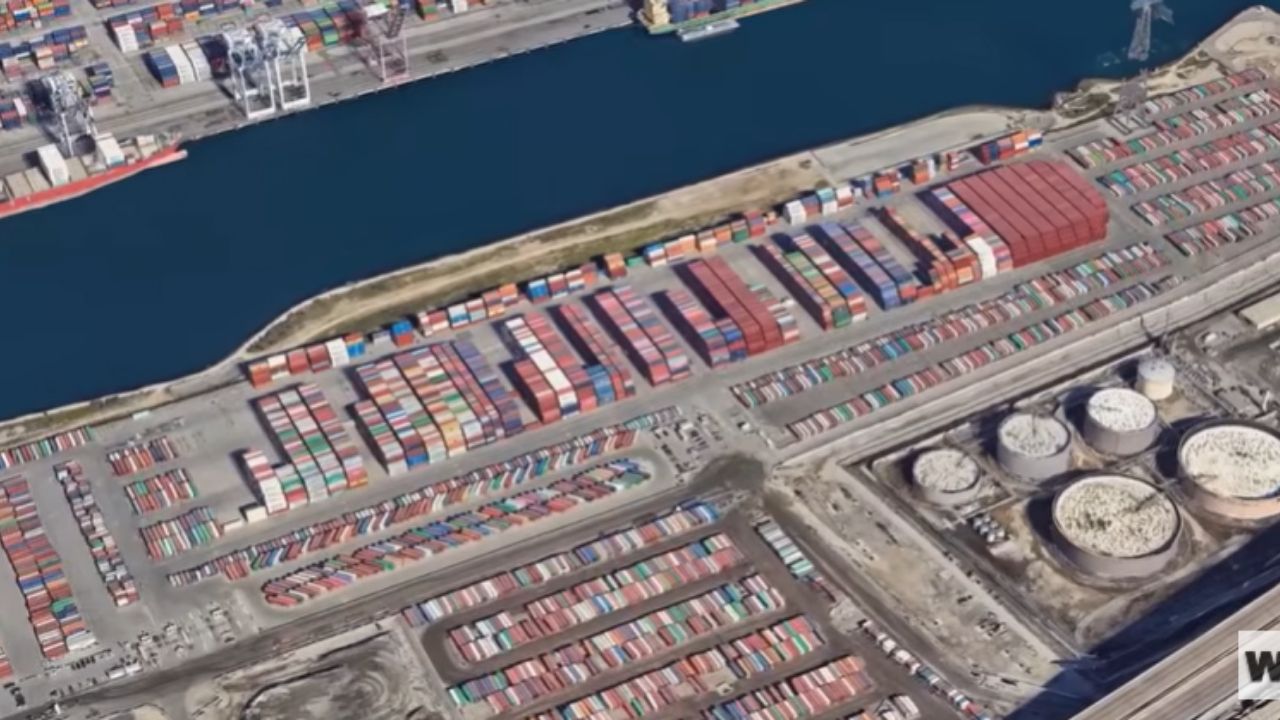


In the United States, empty containers from China accumulate in ports like Los Angeles and Savannah, taking up yards, tying up chassis, and hindering the entry of new cargo. At the same time, farmers need boxes to ship products, but some of them return empty to Asia without effective local use.
The empty containers arriving in the United States after bringing goods from China are creating a difficult logistical paradox to resolve. They occupy yards, reduce space for new cargo, and leave ports congested, even without transporting anything.
The situation exposes an old imbalance in maritime trade: far more goods arrive from Asia to the US than return in the opposite direction. The result is thousands of metal boxes stopped near the sea, while producers inland face difficulty obtaining containers for export.
Empty containers occupy space where new cargo should enter

In the yards near the Port of Los Angeles, aerial images show large areas taken up by rows of colorful containers. From a distance, they look like organized pieces of a construction game, but they represent a real problem for port operations.
-
Brazil’s Port of Santos to Receive New $1.1 Billion Container Terminal, Tecon Santos 10, Set to Begin Operations in 2029

-
Ports without drivers and cabins already move containers like automated factories: robotic cranes, autonomous electric vehicles, and software transform giant terminals into 24-hour logistics machines.
-
About 300 American ports still breathe diesel from trucks, cranes, and locomotives, but they are now trying to electrify heavy machinery to clean the air for 31 million nearby residents.

-
A 220-meter giant powered in part by solar energy and lithium batteries has just unloaded nearly 5,000 Chinese cars at the Port of Itajaí. It is the first of ten Grimaldi super ships and the first in the world prepared to run on ammonia as fuel.




In January alone, the ports of Los Angeles counted about 710,000 empty containers stopped. These boxes arrived loaded with products, were emptied, and began to occupy space while awaiting a new destination.
The problem is that a port is not an infinite warehouse. When empty containers accumulate, there is less area to receive units loaded with new products, organize cargo, move trucks, and release goods.
This creates a domino effect. Delays increase, workers need to maneuver in more congested areas, and terminal efficiency drops precisely where speed should be a priority.
Commercial imbalance helps explain the accumulation
Containers do not appear at ports by chance. They mainly arrive from China, carrying electronics, consumer goods, and a wide variety of products destined for the American market.
The problem begins after these goods are removed. In an ideal scenario, the containers would be reloaded with American products and sent back to Asia. But real trade does not work with perfect balance between going and coming.
As many more Chinese products enter the United States than American goods leave in the same proportion, many boxes are left without an immediate return load. Thus, empty containers begin to accumulate at the ports.
The logic seems simple, but the impact is enormous. An empty box occupies the same physical space as a full box, requires movement, depends on equipment, and consumes operational capacity.
Ports like Savannah also feel the effect

The problem is not limited to the West Coast. The Port of Savannah, in Georgia, on the opposite side of the country, is another example of logistical pressure caused by stationary containers.
According to the report, about 8,000 containers were already accumulated there, a volume described as 50% above what the port normally handles. This shows that the bottleneck spreads across different routes and regions.
When warehouses and yards are full, the port loses flexibility. Each new load that arrives needs to compete for space with containers that are not generating immediate revenue and have no clear destination.
This accumulation also interferes with the flow of trucks and the use of equipment. Port logistics depend on space, sequence, and predictability; when everything is full, even simple operations become slower.
Trapped chassis become another invisible bottleneck

Besides the physical space, there is another less visible problem: the chassis. These pieces of equipment are used to transport containers by truck in and out of the terminals.
When empty containers remain on chassis, these pieces of equipment stop circulating. The result is an artificial shortage: there is cargo to move, trucks to operate, but a lack of available chassis.
This hinders both the removal of cargo and the repositioning of the boxes. Instead of solving the accumulation, the system starts to jam at several points simultaneously.
In practice, the empty container ceases to be just an unused box. It starts to occupy yard space, equipment, and operation time, creating a barrier for goods that really need to circulate.
Farmers need boxes, but don’t always receive them
The paradox becomes more evident when looking at the interior of the United States. While thousands of empty containers remain near the ports, farmers need these boxes to send products to market.
The logic would seem simple: take the empty containers to producers, load food or agricultural commodities, and reinsert the boxes into the logistics chain. But this option is not always considered more profitable by shipping companies.
According to Watop, some carriers have started to prefer sending empty containers back to Asia instead of taking them inland for agricultural use. This affects producers who relied on this availability to ship their cargo.
During periods of higher demand, especially after the logistical shocks of the pandemic, returning boxes to Asia could be more advantageous than waiting for loading inland. The producer was caught in the middle of the impasse.
Sending empty containers is also costly

Sending an empty container back to another country seems wasteful, but many companies end up doing this due to lack of alternatives. The empty box takes up the same space on the ship as a full one, even without generating the same revenue.
There are costs with the ship, fuel, operators, terminal handling, scheduling, and handling. Even when empty, the container continues to consume resources from the logistics chain.
On the other hand, leaving it idle also costs. It occupies yard space, ties up equipment, and hinders the arrival of new cargo. That’s why the decision is not simple.
The system is stuck between two bad options: spending to reposition empty boxes or keeping thousands of them in ports until the congestion worsens.
Recycling the containers is not a simple solution
An imaginable solution would be to recycle the metal boxes. After all, containers are made of steel and could be dismantled, cleaned, and reused as material.
But the process is expensive and complex. Many containers have wooden floors treated with chemicals, as well as residues accumulated over years of international transport.
Before melting the metal, it would be necessary to dismantle, clean, remove contaminated parts, and deal with safe disposal. This requires inspection, equipment, specific areas, and protected workers.
As a container can circulate for 15 to 20 years, its interior can accumulate oils, chemicals, and other residues. In the end, recycling may cost more than the value obtained from the material.
Refrigerated containers receive different treatment
Not all containers are treated the same way. The refrigerated units, used to transport fruits, vegetables, medicines, and perishable goods, have a different logistical value.
These boxes function like large mobile refrigerators, with insulation, electronics, temperature control, and internal systems. Therefore, they need to be inspected, maintained, and put back into use more frequently.
While common containers may sit rusting, refrigerated ones tend to circulate with more priority. They are expensive and essential equipment for sensitive cargo.
This contrast shows that the problem is not just the existence of empty boxes, but the type of box, its value, its demand, and the urgency of repositioning within the global chain.
Reuse in construction, urban farms, and reefs appears as an alternative
Watop also cites alternative uses for empty containers. They can become urban greenhouses, modular structures, houses, temporary buildings, and even part of artificial reef projects.
In urban farms, a container can be adapted with insulation, water, energy, and cultivation trays. In construction, it can function as a modular block, reducing waste and speeding up projects.
The problem is that these alternatives do not absorb the massive volume accumulated in ports. Transforming some boxes into houses or greenhouses helps, but it does not solve a global trade imbalance on its own.
Even so, these uses show that the empty container does not need to be just a logistical waste. It can gain a new function when there is planning, proper cleaning, and economic viability.
Container paradox shows fragility of global trade
The accumulation of empty containers in the United States shows that global logistics depends on balance. When one side of trade sends much more than it receives, the boxes start to pile up where they shouldn’t.
At the same time, farmers and other exporters may find themselves without units to load their products. It is the portrait of an efficient chain for importing, but not always prepared to redistribute empty resources.
Congested ports, stuck chassis, pressured freights, and producers without boxes reveal that the problem is not just at sea, but in the connection between terminals, warehouses, trucks, railways, and the productive interior.
And you, do you think the United States should mandate the local reuse of empty containers before sending them back to Asia, or should the market decide on its own where these boxes go? Share your opinion.

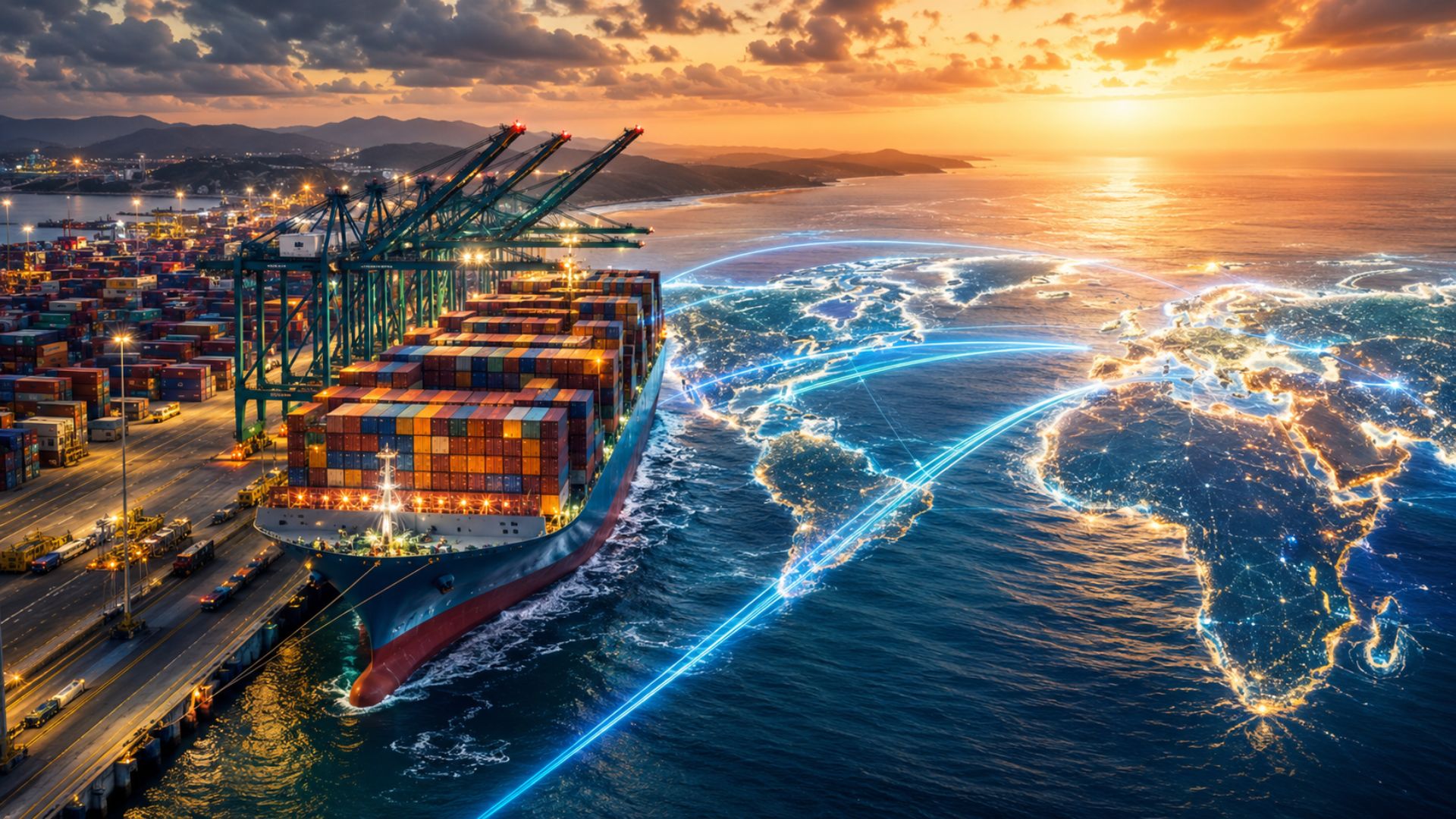


As the box ships get bigger, so the need for ‘near port’ storage rises. The container lines need ‘near’ storage so they can load empties fast for distant shippers prepared to pay more freight per box than say local farmers. Containers are a fast ‘cargo handling system’ not an efficient freight system.