Portuguese
  Spanish


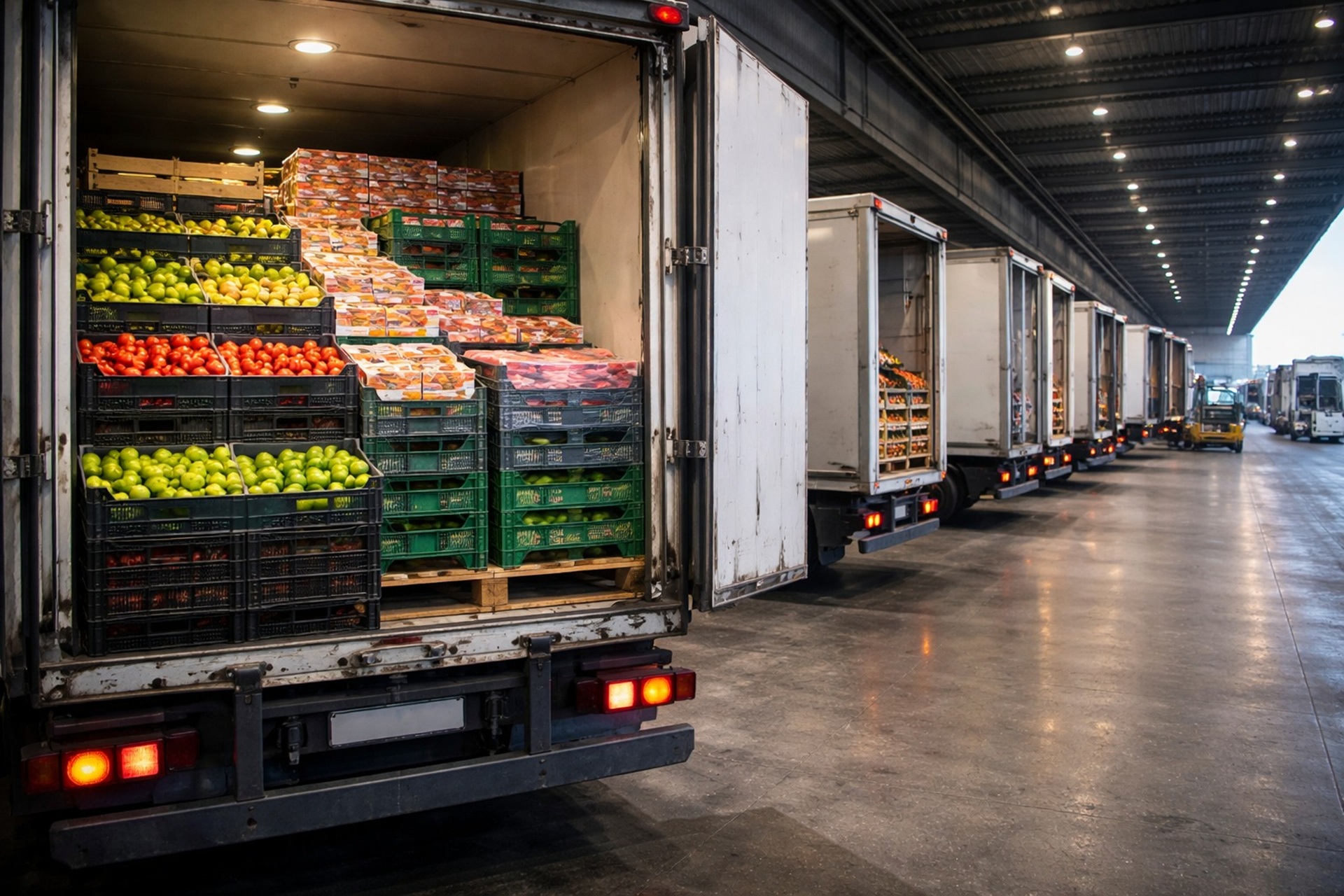


The Replacement of Humans by Machines Advances in the UK Food Supply Chains, Transfers Decisions to Automated Systems, and Exposes Organizational Vulnerabilities That Can Block Shipments, Interrupt Digital Authorizations, and Compromise Logistical Resilience Even with Physical Stocks Available
The replacement of humans by machines is leaving trucks loaded with food idle and unusable in the UK, where digital systems determine the legal release of shipments, and failures can prevent distribution, insurance, and sales, even with physical stock available.
Supermarket shelves may appear full, with stacked fruits and chilled meat in place. The appearance suggests normality. However, the underlying food systems are overloaded and rely on digital authorizations for products to circulate legally.
Today, food travels through supply chains only when recognized by databases, platforms, and automated approval systems. If a digital system does not confirm a shipment, the food cannot be released, insured, sold, or distributed.
-
Amateur Detectorist Discovers 3,400-Year-Old Bronze Age Gold Treasure with 121 Pieces in Transylvania, Including a Unique Ring

-
Italian Designer Develops Solar-Powered Terracotta Water Purifier Producing Up to 5 Liters of Drinking Water Daily Without Electricity

-
New Hydrogel Made from Algae and Shrimp Shells Absorbs 60 Times Its Weight in Water to Combat Drought in Spanish Agriculture
-
Scientists Discover Unexpected Intelligence in Solitary Octopus During Jar-Opening Challenge


In practice, products that cannot be digitally seen become unusable. This technological dependency affects the resilience of the UK’s food system and is increasingly identified as a critical vulnerability.
Replacement of Humans by Machines and Dependency on Digital Authorization
The replacement of humans by machines has shifted crucial decisions to automated or opaque systems. These systems cannot be easily explained or questioned, while manual backups are eliminated in the name of efficiency.
This digital transformation takes place in supermarkets and agriculture worldwide. While it has generated efficiency gains, it has also intensified structural pressures in logistics and transportation, especially in supply chains set up for last-minute deliveries.
Food security does not rely solely on physical supply. There is also the issue of authorization. If a digital manifest is corrupted, shipments may not be released, even if they are ready for distribution.
In a country like the UK, which heavily relies on imports and complex logistics, resilience involves data governance and digital decision-making. The vulnerability is organizational and not just agricultural.
AI Shapes Decisions and Amplifies Operational Risks
Artificial intelligence and data-driven systems shape decisions across agriculture and food distribution. They are used to forecast demand, optimize planting, prioritize shipments, and manage inventories.
Official assessments indicate that AI tools are embedded in most stages of the UK’s food system. However, there are risks when decisions about distribution cannot be explained or reviewed.
When authority shifts from human judgment to software rules, companies opt for automation to save time and reduce costs. The replacement of humans by machines means that decisions about the movement and access to food are made by systems that are difficult to question.
This process has already produced disruptions. During the 2021 JBS Foods ransomware attack, meat processing facilities halted operations, despite animals, employees, and infrastructure being present.
Although some Australian farmers have circumvented systems, problems were widespread. Recent disruptions affecting major distributors showed how digital failures can delay deliveries to stores, even with goods available.
Staff Shortages and Abandonment of Manual Procedures
A significant issue is the shortage of people to manage these issues and the lack of proper training. Manual procedures are deemed costly and are being gradually abandoned.
Employees are not receiving training for actions they will rarely need to perform. When a failure occurs, the skills required to intervene may no longer exist. The replacement of humans by machines reduces responsiveness.
The vulnerability is exacerbated by the persistent shortage of labor and skills, affecting transportation, storage, and sanitary inspection. Even after the recovery of digital systems, the human capacity to resume flows may be limited.
The risk is not just in the initial failure, but in the rapid spread of disruption. Trucks are loaded, but release codes fail. Drivers wait. There is food available, but movement is not authorized.
Based on previous incidents, within a few days digital records and physical reality begin to diverge. Inventory systems cease to match what is on the shelves.
After about 72 hours, manual intervention becomes necessary. However, paper procedures have often been eliminated, and staff are not trained to use them. The lack of redundancy makes the system fragile.
Stress Test Reveals Organizational Fragility
These patterns are consistent with vulnerability analyses of the UK’s food system. Resilience failures are often organizational, not agricultural.
The scenario can be understood as a stress test. Authorization systems may freeze. Records fail to reflect actual stocks. The replacement of humans by machines amplifies the gap between data and physical reality.
Food security is often treated as a supply issue. However, it also depends on the ability to digitally validate each step of the process. Without valid authorization, shipments remain blocked.
This technological dependency explains why full warehouses can become inaccessible or overlooked. The failure is not necessarily in production, but in the inability to release the flow by digital means.
Who Monitors and Who Controls the Systems
AI can strengthen food security. Precision agriculture and early warning systems have reduced losses and increased productivity. The central debate involves who monitors and manages these systems.
Food systems need human participation, with trained personnel and regular training to circumvent failures. Algorithms used in distribution must be sufficiently transparent for auditing.
Commercial confidentiality cannot supersede public safety. Communities and farmers must maintain control over their data and knowledge. Digital governance integrates the resilience of the system.
The issue is not whether digital systems will fail, but whether the system will be able to survive the failure. The replacement of humans by machines has redefined food logistics, creating efficiency but also new points of vulnerability.