






 Portuguese
  Spanish


The initiative in Fredericton combines housing, social support, and work in a model that gained attention in Canada by transforming small houses into part of a local response to the housing crisis.
Canadian entrepreneur Marcel LeBrun used part of the resources obtained in the technology sector to create 12 Neighbours, a community of small houses aimed at vulnerable people in Fredericton, in the province of New Brunswick, Canada.
The project was initially presented with the proposal to build 99 units, but updated information from the organization and Canadian media indicates that the permanent community was completed with 96 houses.
LeBrun is co-founder of Radian6, a Canadian social media monitoring company sold to Salesforce in 2011.
-
Isolated Residents in Brazil’s Pantanal Create 8 km Road After Waterway Blocked by Aquatic Vegetation

-
Over 60,000 People Displaced in Brazil’s Maceió After Sinkholes Expose 35 Underground Salt Mines Linked to Braskem Disaster
-
Brazil Sets Record with 9.3 Million Foreign Tourists in 2025, a 37% Increase

-
Brazil’s Grupo Boticário Earned $7.5 Billion in 2025, Now World’s Largest Beauty Retail Network


At the time, Salesforce reported that the deal involved about US$ 276 million in cash and US$ 50 million in stock, in addition to additional amounts provided under certain conditions.
After the sale, the entrepreneur began working on initiatives related to housing, training, and poverty reduction in New Brunswick.
Housing project was born after the sale of a technology company
12 Neighbours was created in Fredericton with the proposal to offer stable housing to homeless people and include, in the same space, support services and job opportunities.
The initiative operates as a non-profit organization and received private resources linked to LeBrun’s family, as well as support from public housing programs.
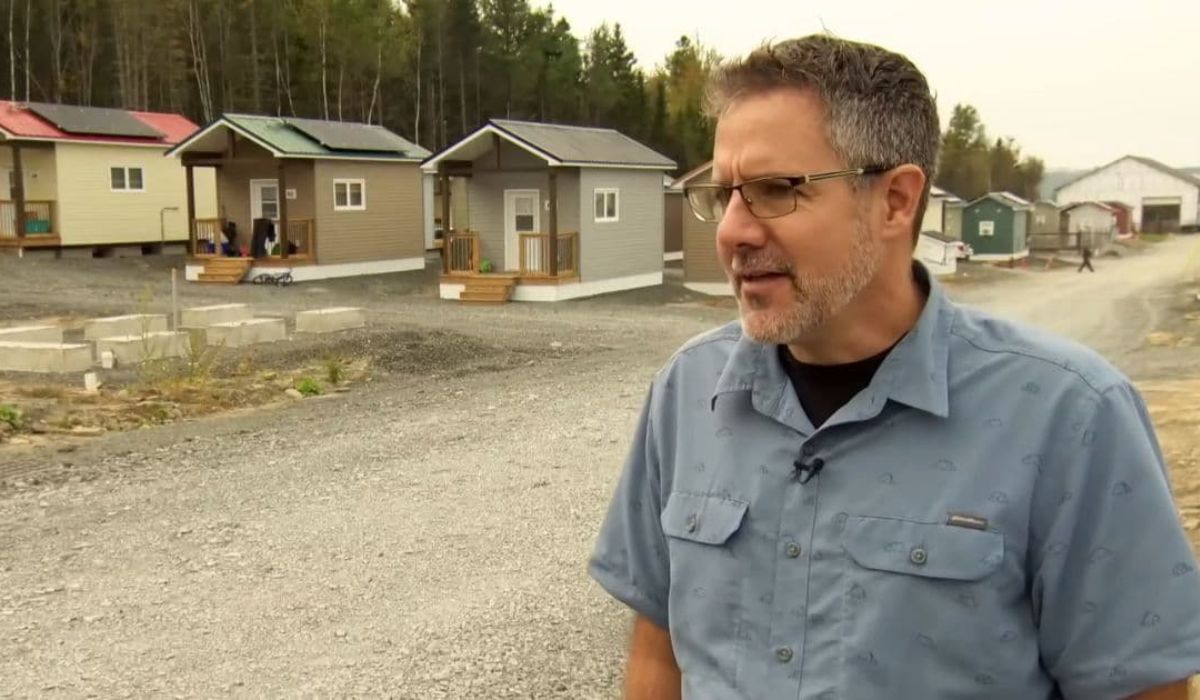
According to the Canada Mortgage and Housing Corporation, Canada’s national housing agency, the LeBrun Family Foundation provided US$ 2 million in seed capital for the development of the community.
The project also received public support, including federal resources and rental subsidies for the first units.
The community is located in the Two Nations Crossing area in Fredericton and was organized into residential blocks.
Each house has a kitchen, full bathroom, living area, storage space, and private outdoor area.
According to Global News, the units are about 23 square meters and were designed for affordable rent, not exceeding 30% of the residents’ household income.
Construction began with the installation of the first homes and progressed over two years.
In April 2024, Global News reported that the last unit of the permanent community had been placed on the site, totaling 96 houses.
The completion updates the initial information that the project was still underway and three-quarters of the way to the goal.
“We’ve been building a new home every week for two years… so it’s an exciting milestone for us,” LeBrun told Global News in April 2024.
In another statement to the same outlet, he said that “The houses, they say, is just an excuse for building community.”
Small houses combine permanent housing and social support
The 12 Neighbours houses were presented as permanent housing, not as temporary shelter.
The organization’s stated proposal is to offer a stable address and, from there, connect residents to follow-up, training, and recovery services.
On the official website, 12 Neighbours states it works on three fronts: housing, personal development, and purposeful employment.
The entity reports that it offers counseling, education, health and recovery support, as well as training opportunities for residents and participants in its programs.
The organization’s 2025 impact report states that 28 new people were welcomed into the Fredericton community that year.
The document also reports that 80% of residents achieved housing stability, according to the criteria adopted by the entity itself, and that the team provided more than 885 hours of counseling, coaching, and wellness support.
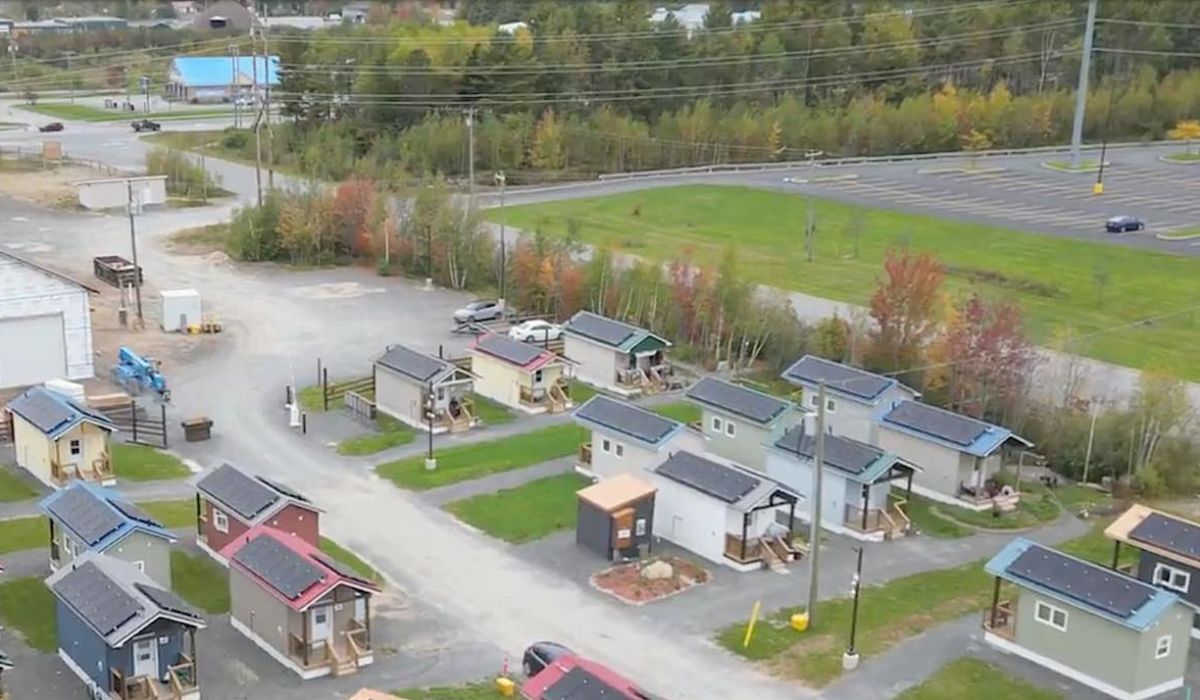
The organization also started working on transitional housing.
According to the 2025 report, two new areas in Saint John were opened to offer supported temporary housing to 56 people.
The same document states that a first area in Fredericton was planned to open in January 2026 with capacity for 28 people who were living without shelter in the city.
This expansion model appears in the organization’s materials under the name Neighbourly Homes.
The proposal is to set up areas with private units, controlled access, shared services, and on-site monitoring.
The city of Saint John reported, in May 2025, that it partnered with 12 Neighbours to develop and operate such communities in areas designated by the city.
Work within the community expands 12 Neighbours’ proposal
In addition to the houses, 12 Neighbours incorporated social businesses into the project.
The community includes activities related to a café, kitchen, store, construction, and printing of t-shirts and other products.
The organization states that these spaces are used for training, income generation, and regaining professional experience.
The printing area, presented as Neighbourly Print, offers screen printing and customization services for clothing and products.
According to the organization itself, orders made to the operation support jobs for people participating in 12 Neighbours’ programs.
The café and other social businesses follow the same operational line described by the entity.
In an interview with Global News, LeBrun summarized the project’s logic by stating: “We’re not hiring people to build homes, we’re building homes to hire people”.
The Canada Mortgage and Housing Corporation recorded, in 2023, the journey of Al Smith, a resident and employee of the community.
Before joining the project, he and his partner, Chanda Woodworth, lived in a tent on the outskirts of Fredericton.
After moving to 12 Neighbours, Smith began working in the community’s printing lab.
“He made it so that I wasn’t invisible anymore”, Smith told the Canadian federal agency, speaking about LeBrun and the change that occurred after joining the project.
The statement was published in material by the Canada Mortgage and Housing Corporation about the community.


Lack of housing pressures cities in New Brunswick
The creation of 12 Neighbours occurred during a period of increased pressure on affordable housing in New Brunswick.
Local reports and surveys have recorded a growth in the homeless population in the province’s main cities over recent years.
In 2024, Global News published, based on data from the Human Development Council, that the homeless population in the three largest cities of New Brunswick had more than doubled in two years.
This data helps to contextualize the environment in which the Fredericton initiative gained traction in Canada.
Although the project was presented by its leaders as a practical response to the lack of housing, the small house model does not end the discussion on housing policies.
Researchers, social entities, and public managers usually treat the topic as part of a broader agenda, which involves affordable rent, mental health, income, social assistance, harm reduction, and the provision of permanent housing on a large scale.
In the case of 12 Neighbours, the difference compared to conventional shelters lies in the combination of individual units, support, and work activities on-site.
This formulation is advocated by the organization as a way to reduce barriers faced by people leaving homelessness or unstable housing situations.
The structure has also begun to be observed by other cities in the province.
In Saint John, the city hall reported that areas called Green Zones were defined to offer legally authorized transitional housing, with essential services exclusively for residents.
The operation of these communities was entrusted to 12 Neighbours, according to a municipal statement.
Security and coexistence appear in the debate about the model
The original text mentions that the community is enclosed by gates and has access control.
The structure was presented by residents as a way to establish boundaries for visitor traffic, especially during the night.
Resident Samantha Seymour stated that there were cars entering the area at night and that the gates helped to set boundaries.
The existence of access control also appears in materials about the transitional units, which highlight doors with locks, private spaces, and on-site support.
These elements are described by the organization as part of the attempt to offer security and predictability to people who have experienced housing instability.
However, there is debate about the concentration of vulnerable people in the same community.
The original text mentions criticisms of the model, arguing that it would be preferable to reintegrate residents directly into already established neighborhoods.
As this criticism was not attributed by name to a specific source in the original material, the formulation was cautiously maintained without identifying authors.
12 Neighbours presents housing as a starting point for other stages of social and economic reintegration.
In official materials, the entity states that its programs connect housing, personal support, recovery, and progressive employment.
The experience in Fredericton, therefore, has been used by the organization itself as a basis for new projects in New Brunswick.


