






 Portuguese
  Spanish
  5 min of reading
  0 comments



Despite The Lower Price, Beef Tongue Still Faces Cultural Barriers To Consumption, Even Though It Is Rich In Proteins, Vitamins And Minerals That Can Surpass Traditional Cuts Of Beef In Nutritional Value.
Amidst the variety of cuts available in the country, beef tongue remains underutilized, although experts point out that it may surpass the nutritional density of traditional steaks.
Rich in proteins and high-quality fats, it concentrates relevant vitamins and minerals for the body’s functioning, has 70% water in its composition, and nevertheless remains undervalued in consumption and image.
Even with a price generally lower than premium cuts, it encounters cultural barriers and a lack of knowledge about its nutritional value.
-
Avocado Boom for European and U.S. Markets Fuels Water Crisis in Drought-Stricken Chilean Region

-
Capixaba farmer created in 14 years the first registered ginger cultivar in Brazil, with a productivity of 145 tons per hectare, more than double the state average, and is already receiving orders from South Africa and Peru.
-
In Virginia, a family of small-scale farmers refused to swap the countryside for the city and transformed their milk production into award-winning artisanal cheese from Mantiqueira de Minas.
-
The alligator that was once illegal game has become a business in the Pantanal: Caimasul, the largest alligator slaughterhouse in the world, slaughters nearly 100,000 per year and exports alligator leather and alligator meat.


Nutritional Value Of Beef Tongue
Technical reports describe beef tongue as a source of complete proteins, with all essential amino acids, positioning it among high biological value proteins.
This profile favors processes such as muscle mass maintenance and tissue repair.
In addition to proteins, the food provides fats in proportions considered balanced between saturated and monounsaturated fractions, a combination present in valued cuts of beef.
Regarding cholesterol, the assessment by nutritionists places tongue at an intermediate level.
It does not reach the highest levels observed in some fatty beef cuts, but it tends to exceed the average values of chicken. This variation depends on the portion size and, above all, the preparation method.
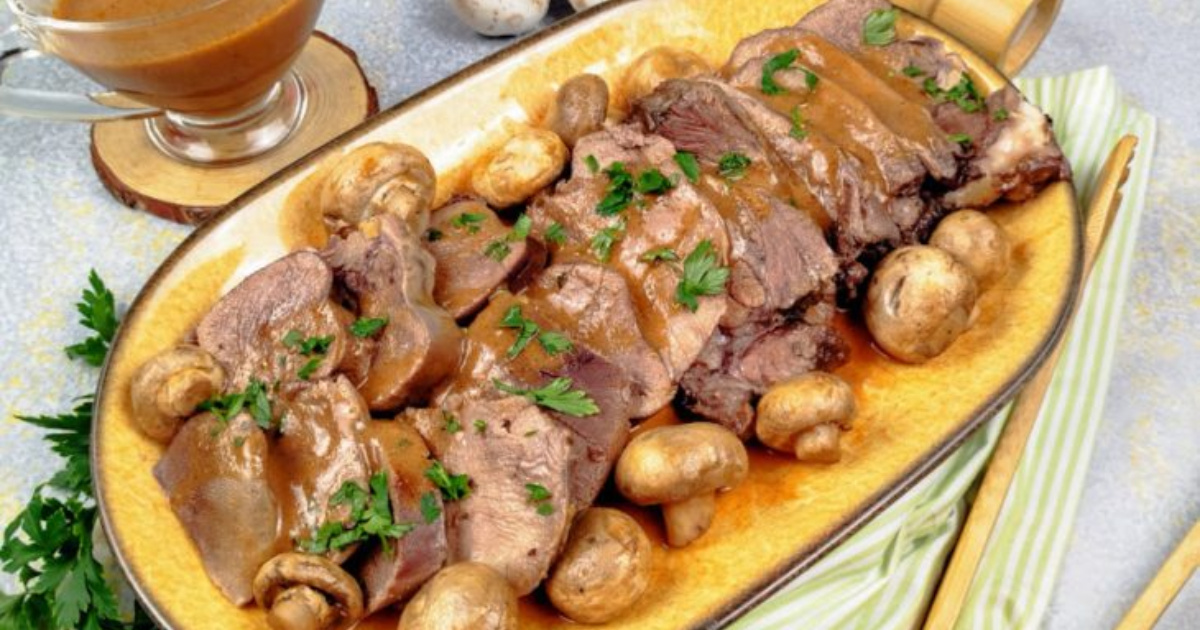
Vitamins And Minerals Present
Another differentiator lies in the density of micronutrients.
Beef tongue contains iron, zinc, phosphorus, magnesium, potassium, and selenium, minerals linked to oxygen transport, immunity, and enzymatic balance.
In terms of vitamins, the B complex stands out, with the presence of vitamin B12, B1 (thiamine), B2 (riboflavin), B3 (niacin), and B6 (pyridoxine).
There are also small amounts of folic acid, vitamin E, and traces of A and D.
Vitamin C appears in modest proportion and loses part of its potential during cooking, a process sensitive to heat.
Despite this, the set of B vitamins remains robust after usual culinary preparations.
That is why tongue stands as an efficient alternative to diversify the intake of these nutrients.
Composition: Water, Protein, And Energy
The water base accounts for about 70% of the weight of the food, a fact that is not always clearly apparent in summary tables.
This fact helps explain texture and juiciness. The energy provided comes almost exclusively from proteins and fats.
Beef tongue does not contain carbohydrates in its natural composition.
This profile interests dietary strategies focused on satiety and calorie intake control, provided the portion and the recipe are appropriate.
What Scientific Studies Say
A publication from the Journal of Food Composition and Analysis noted that “beef tongue has the potential to become a high-quality product and improve the consumption of proteins, fats, and nutrients.”
The authors pointed out, however, that “despite its potential as nutritious and affordable meat, few studies have been conducted to assess the physicochemical composition of beef tongue.”
The indication is clear: there is room to consolidate comparative and standardized data. But current evidence already points to consistent nutritional value.
Preparation Influences Nutritional Value
Culinary technique directly influences final fat, calories, and vitamin stability.
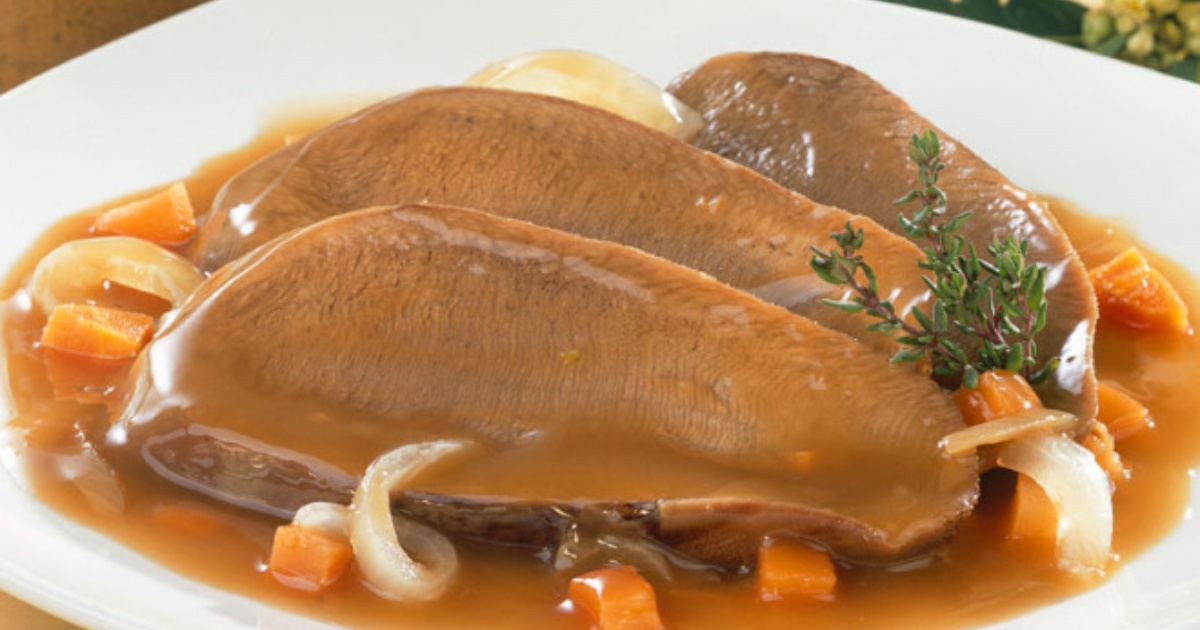
Moist methods, such as cooking or boiling the piece with vegetables and herbs, better preserve the energy balance of the dish and limit the addition of fats.
On the other hand, frying in oil increases the calorie content of the result. Additionally, it may raise the total fat fraction absorbed.
In practice, the choice of preparation can make tongue leaner, without loss of flavor.
As long as the recipe avoids excess fatty sauces and sides rich in saturated fat.
Quality Proteins And Fat Profile
The availability of essential amino acids, absent in the body’s endogenous synthesis, positions tongue as an efficient option for those seeking to diversify protein sources.
This combined presence of saturated fatty acids and monounsaturated contributes to texture and palatability.
The monounsaturated fraction is generally associated with more favorable lipid profiles when included in a balanced dietary context.
Even so, attention to quantities and frequency of consumption is recommended. Just as with any beef cuts.
Low Price And Restricted Consumption
Despite its competitive cost compared to premium cuts, consumption remains restricted due to cultural factors. The perception of being “second-rate meat” still weighs heavily.
This prejudice does not find support in the nutritional content described by specialists.
In regions where tongue is part of culinary traditions, greater acceptance and use in recipes such as stews and cold cuts is observed.
In other areas, ignorance about preparation and cleaning still keeps consumers away. This reinforces the need for practical and clear information.
How To Include It In The Diet With Balance
Nutritionists recommend moderating portions when the preparation increases the presence of saturated fats and cholesterol. This is the case for frying and heavy sauces.
On the contrary, long cooking in aromatic broth, with vegetables and herbs, tends to preserve proteins and reduce the addition of fats.
It is worth remembering that tongue itself delivers quality proteins and strategic micronutrients.
The final impact on the dish will depend on the set of ingredients and portion size.
Points To Consider In Consumption
When opting for beef tongue, three elements come into play: nutritional profile, preparation technique, and frequency in the menu.
The food contains complete proteins, good doses of B vitamins, and key minerals. It also offers a fat profile balanced between saturated and monounsaturated fats.
The absence of carbohydrates simplifies the energy calculation for specific diets. Provided no hypercaloric sides are incorporated.
Finally, culinary handling can enhance qualities or, conversely, add unnecessary calories.
If beef tongue combines nutritional density, accessible price, and possibilities for lighter preparation, what else is needed for it to stop being viewed with suspicion and gain space on Brazilian tables?






-

1 person reacted to this.