






 Portuguese
  Spanish
  5 min of reading
  0 comments


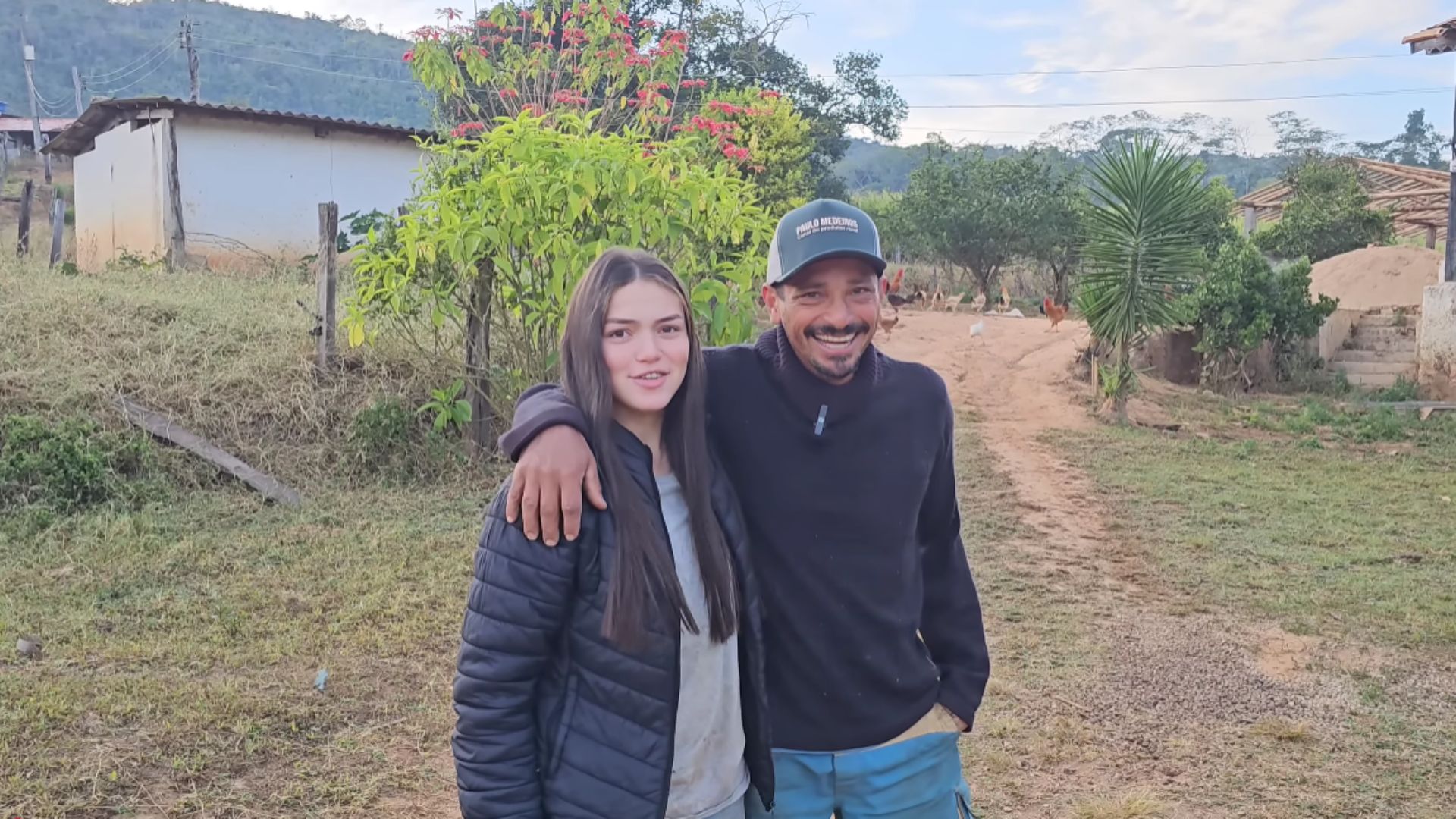
A video that went viral on YouTube shows Hervécio and his 17-year-old daughter Andressa living life on a farm in the countryside of Minas Gerais. Among 13 dairy cows and about 15,000 fish in aquaculture, the young woman went against the trend of rural exodus: she left the city to stay with her father among the animals and the forest.
Contrary to millions of young people who dream of leaving the countryside for the big city, a 17-year-old teenager did exactly the opposite. Andressa decided to live permanently in the countryside, alongside her father, Hervécio, on a farm surrounded by native forest and animals everywhere in Minas Gerais. Their story gained national attention after being featured in a video that went viral on YouTube on the Paulo Medeiros channel, which shows the simple and hard-working routine of the duo.
What moves viewers is not just the beautiful landscape. It’s the contrast between the delicacy of life in the countryside and the hard work it demands every day. Behind the paradise of animals and nature, there is a farm that operates like a small business, with milk production, aquaculture, and planting, run almost entirely by father and daughter. It’s worth knowing this story that goes beyond the cliché of life in the countryside.
Andressa’s choice: from the city to the countryside
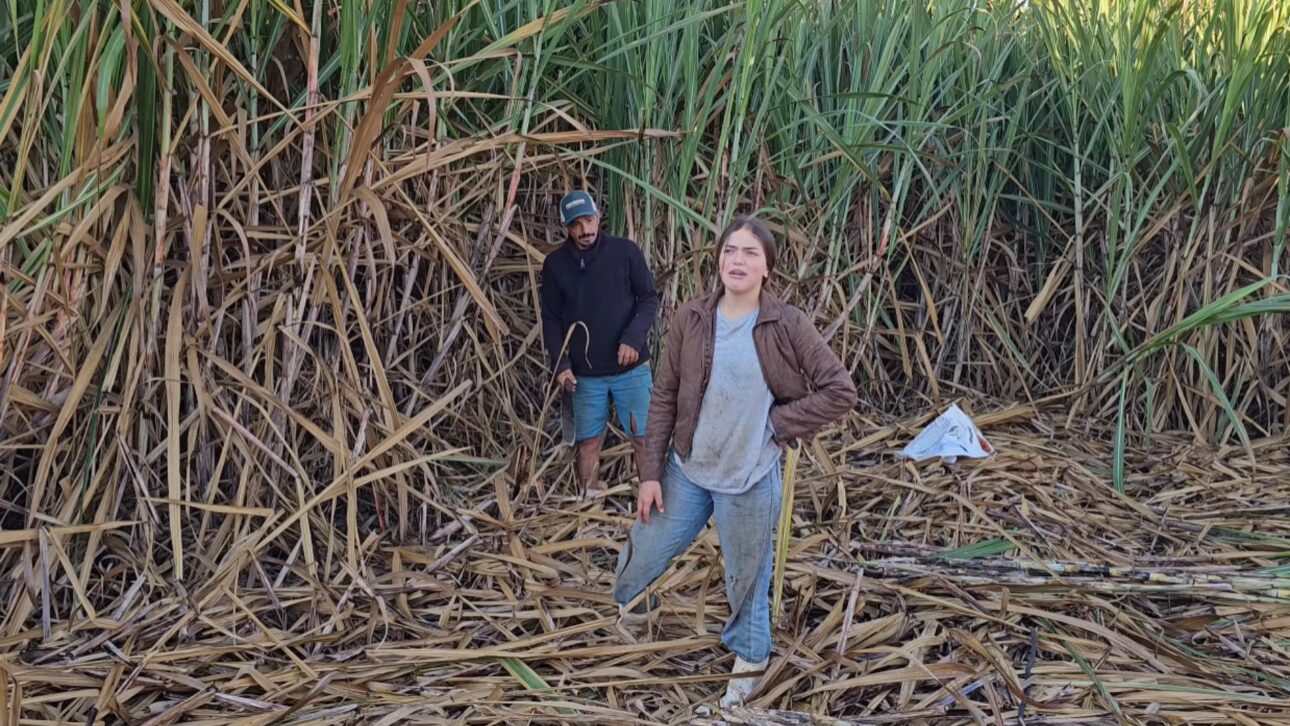
The point that makes the case special is the daughter’s decision. Andressa lived in the city with her mother to study, separated from her father’s routine in the countryside. When the pandemic closed schools, she spent the isolation period on the farm, and that’s where something changed. At the end of the restrictions, instead of returning to the city, the young woman asked to stay permanently in the countryside, alongside Hervécio.
-
Organic grape juice from São Roque surprises experts, scores over 90 points in a blind test, and wins a national award after six years of agroecological research.

-
In Matopiba, soybeans have replaced rice and beans, and traditional Cerrado communities that used to grow their own food now have to buy it, while pesticides from neighboring farms reach the springs.

-
Foreign tree planted to combat drought invades more than 1 million hectares of the Caatinga, encroaches on riparian forests, and turns an old solution for the semi-arid region into a silent threat to biodiversity.
-
Invasive weed that withstands extreme heat advances with climate change, threatens crops on several continents, and raises a global alert about a silent plant capable of dominating soils, suffocating native species, and reshaping entire ecosystems.


This choice goes against a historical trend in Brazil, the so-called rural exodus, where entire generations leave the countryside in search of employment and education in urban centers. Andressa made the opposite move, trading the comfort of the city for life in the countryside with all its difficulties and beauty. It wasn’t a romantic weekend getaway, but rather a choice for a way of life that requires waking up early, getting your hands dirty, and facing real farm work.
The farm that is a work paradise
Contrary to what the title of paradise might suggest, Hervécio’s farm is not a place of rest. On a property of about nine acres, just over three hectares, in the interior of Minas Gerais, the 51-year-old father runs a complete rural operation alone, with the help of his daughter. There are 13 dairy cows, sugarcane plantation, pastures, fish tanks, and a large open-air chicken coop, all surrounded by native forest that gives a paradise-like tone to life in the countryside.
This structure shows that the farm is, in practice, a small business of subsistence and income. The milk from the cows, the fish from the fish farming, and what is planted on the land sustain the household and give meaning to the routine. Hervécio, described as a happy man and storyteller of old tales, transformed the old farm into a hub of production, memory, and affection, proving that it is possible to live with dignity away from the city, as long as one is willing to do the hard work that animals and the land demand.
15 thousand fish: fish farming in the backyard
The productive highlight of the property is in the water. Hervécio estimates caring for about 15 thousand fish in the farm’s tanks, a number that makes fish farming the flagship of the place. Among the species raised are tambaqui, tambacu, tilapia, and carp, common fish in Brazilian fish farming and sought after both for consumption and sale.
Maintaining a farm of this size is not simple and requires daily care with water quality, feeding, and fish health. Fish farming has thus become one of the main activities of the family’s rural life, showing how a small farm in the interior of Minas Gerais can generate significant production when well cared for. For Andressa, learning to handle the tanks and other animals is part of an education that no city school would offer.
The teenager’s double routine
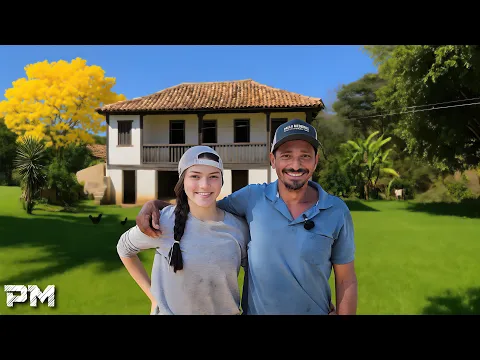

Andressa’s life dismantles the idea that living in the countryside is synonymous with laziness or backwardness. The young woman studies during the day, leaving for school in the middle of the morning and returning at the beginning of the night, which forces her to fit in farm tasks in the remaining hours. Before leaving, she participates in milking, helps organize the corral, and still prepares lunch for her father.
When returning from school, the routine doesn’t stop. Andressa takes care of the house, does the laundry, organizes the kitchen, and, when there’s time, goes back to the corral to help Hervécio with the animals. It’s a double journey, as a student and a rural worker, that few city teenagers could imagine. This discipline is precisely what gives strength to the story and explains why so many people were moved by their life in the countryside.
Why this story touches so many people
The case of Hervécio and Andressa went viral because it resonates with a silent desire of many people tired of the urban rush: the wish for a simpler life, close to nature and animals. At a time when Brazil is discussing mental health, the cost of living in cities, and quality of life, seeing a teenager choose the countryside seems almost like an act of courage, not backwardness.
At the same time, the story avoids easy romanticism because it shows the hard work behind the beautiful scenery. The farm in Minas Gerais, with its fish farming, its cows, and its forest, is a reminder that the countryside can indeed be a place of the future, not just nostalgia. For Andressa, paradise is not a place without effort, but a place where effort makes sense, alongside her father and the animals she helped care for.
The story of Andressa and Hervécio enchants because it is rare and true: a young woman who, having the option to stay in the city, chose life in the countryside and work on the farm alongside her father. On one side, the dream of nature, animals, and fresh air. On the other, the reality of waking up early, milking cows, taking care of 15,000 fish in the fish farm, and still managing school.
And you, would you have the courage to trade the city for such a routine in Minas Gerais, or do you think it’s only beautiful from afar? Tell us in the comments what you would do.







Be the first to react!