






 Portuguese
  Spanish


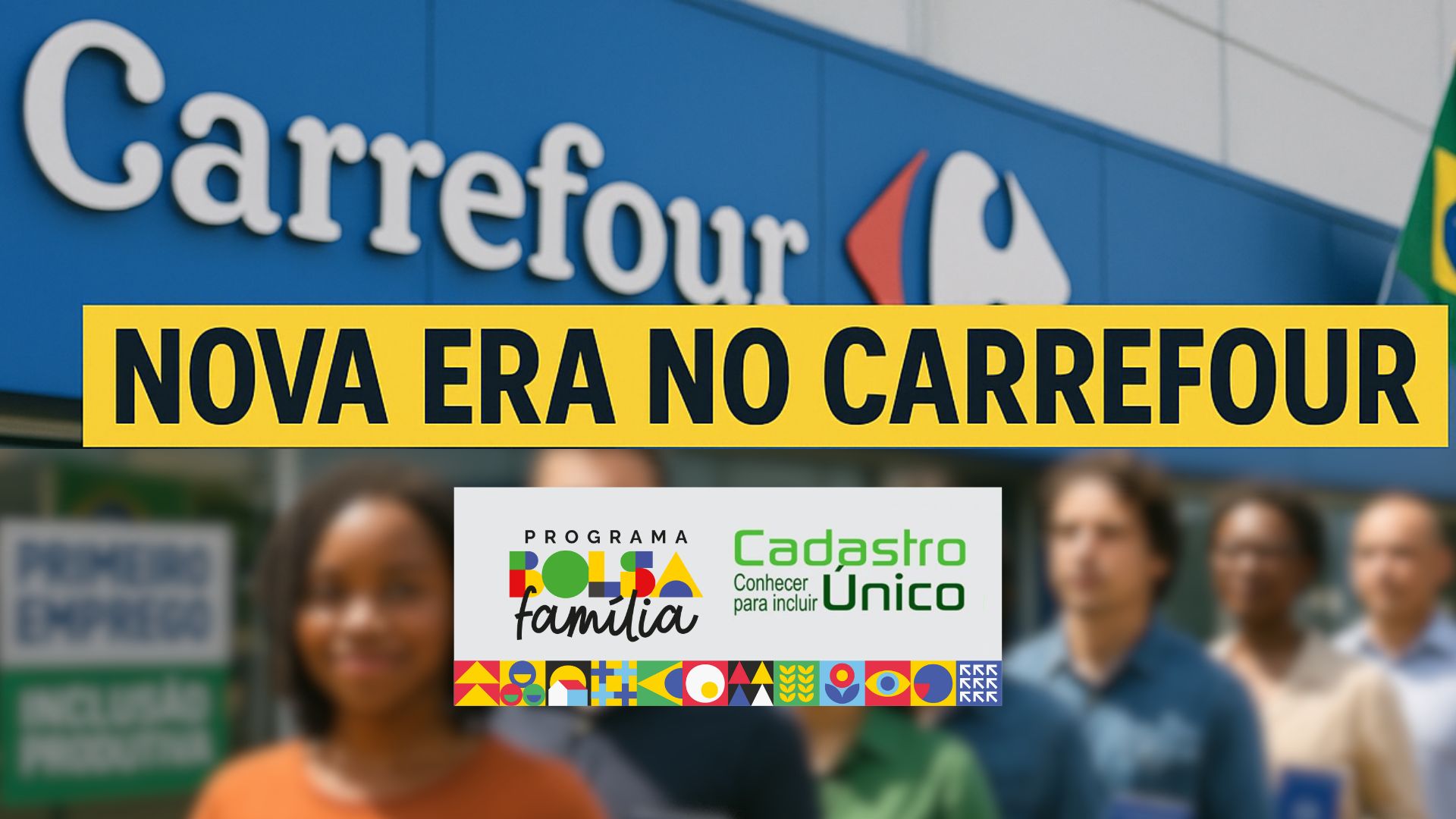


Grupo Carrefour Brasil Surpassed Ten Times the Initial Hiring Goal, Integrating Registrants from CadÚnico into the Formal Labor Market Nationwide and Receiving National Recognition for the Initiative.
The Carrefour Brazil established a dedicated structure to recruit registrants from CadÚnico and achieved around 100,000 formal hires since 2023, surpassing the initial goal of 10,000 positions set for three years by more than ten times.
The milestone was reached in August 2025 and solidifies the network as the main private employer of this demographic in the country, with opportunities distributed across all 26 states and the Federal District.
Partnership with the MDS Boosts Social Inclusion
Established in March 2023, the partnership with the Ministry of Development and Social Assistance, Family and Fight Against Hunger (MDS) connects the CadÚnico database with the hiring needs of the group’s units.
-
Half of Brazilians Prefer Lower Taxes with Private Health and Education, While 44% Opt for Higher Taxes for State-Provided Services, Datafolha Survey Reveals

-
Brazil’s Most Expensive Toll Rises to R$ 40.60 on Route from São Paulo to the Coast, Nearly Matching Bus Fare to Santos

-
As Brazil Expands Social Welfare, Survey Reveals 40% Blame Poverty on Laziness, While 58% Cite Lack of Opportunities

-
China Tightens Control on Antimony, Driving Prices from $22,000 to Nearly $40,000 per Ton as U.S. Rushes to Bolster Strategic Reserves




The initiative prioritizes entry into the formal labor market and the qualification of vulnerable individuals, many of whom are beneficiaries of Bolsa Família.
According to the company, the model allowed for greater scale and reach, with active candidate screening and support from local social assistance teams.
Thus, the network expanded vacancies in stores and distribution centers of Atacadão, Sam’s Club, and Carrefour, in addition to corporate areas, focusing on profiles for first jobs, young apprentices, and professional retraining.

Hiring Goal Surpassed in Two Years
By 2024, the program had already totaled 53,000 hires by December.
Maintaining the hiring pace, the number reached around 100,000 in August 2025, with job distribution across the five regions of the country.
The national scope derives from the company’s presence in hundreds of municipalities and collaborative work with city halls and social assistance fronts, which aid in documentation, guidance, and monitoring of new hires.
The company reports that, by prioritizing entry-level positions and training tracks, it increases the chances of retention and career progression.
For some selected individuals, it is their first job record.
For others, it represents a return to income after periods of informality.
Public Recognition and National Award
For its social impact and volume of admissions, Carrefour Brasil received, in April 2025, the Social Inclusion Award from the MDS in the “Labor Market Insertion” category.
The distinction is part of the Believing in the First Step program, focused on the productive inclusion of CadÚnico families.
In a public statement, Nelcina Tropardi, vice president of Legal Affairs, ESG, and Corporate Affairs at Carrefour Brasil, emphasized the institutional commitment to the social agenda.
“One of our pillars of action is combating hunger and inequalities,” she stated.
In a converging tone, the company attributes the result to collaboration between public and private spheres and the use of social data to guide selection processes.
Employment Grows and Poverty Declines in Brazil
The increase in hiring occurs during an improving labor market.
According to the IBGE Continuous PNAD, the unemployment rate was 5.8% in the quarter ending in June 2025, the lowest level in the historical series that began in 2012.
The number of unemployed people stood at 6.3 million during the period, reflecting the expansion of both formal and informal job opportunities and recovery of income levels.
Meanwhile, the MDS has recorded a decrease in poverty as measured by CadÚnico.
Between January and July 2025, it is estimated that 3.5 million people escaped poverty, a movement associated with job creation, formalization, and expansion of entrepreneurship support programs.
In parallel, the number of families below the poverty line in the registry decreased compared to 2023, reinforcing the income recovery environment.
How Active Search Works in CadÚnico
The task force created by Carrefour operates on two fronts.
On one hand, there is the identification of suitable job vacancies for recurring profiles in CadÚnico, with compatible requirements and flexible hours for young people, women, and heads of families.
On the other hand, recruitment teams seek candidates through public databases, social assistance reference centers, and local partnerships, prioritizing regions with a higher concentration of beneficiaries.
After pre-selection, participants go through simplified interview stages and, when necessary, quick training courses.
The formalization of the bond is accompanied by welcome and integration actions in the stores, a practice that, according to the company, helps reduce turnover.
With each cycle, the results feed back into the process, adjusting vacancies to the availability of regional profiles.
Program Inspires New Adoptions in the Private Sector
The agreement served as a reference for new letters of intent signed by the MDS with other companies, broadening the range of opportunities for CadÚnico registrants.
The experience, by integrating social data and retail demands on a large scale, demonstrated operational viability and reduced implementation costs for companies, especially for entry-level positions.
In addition to increasing family incomes, the initiative brings the private sector closer to the productive inclusion policy, a central axis in combating inequalities.
In practical terms, a formal position means registered employment, access to labor rights, and a trajectory of continued qualification, factors considered crucial for social mobility.

Future Challenges and Need for Scale
The continuation of the program depends on maintaining the partnership with public authorities and finely tuning the hiring pipeline, with attention to regional particularities.
In states with lower qualified labor supply, enhancing short-term training can accelerate insertion.
On the other hand, in large centers, the challenge lies in competing with informality and offering work schedules compatible with domestic care and commuting.
Measuring impacts also gains relevance.
Monitoring indicators such as retention rate, salary progression, and permanence in the formal market helps calibrate policies and sustain focus on reducing inequalities.
Transparency in this data tends to stimulate new company adoptions and guide private social investments.
Company Statement Reinforces Inequality Combat Agenda
By mentioning “the fight against hunger and inequalities” as a pillar of action, the group’s ESG vice presidency reinforces that the national operation of the retail network is a differential for absorbing candidates on a large scale.
In a territory with continental dimensions and distinct realities, the capillary presence facilitates the opening of vacancies in historically less served regions by corporate employability programs.
While official indicators show improvement in employment and a decrease in poverty, experiences like that of CadÚnico integrated with recruitment fit into a broader social development agenda.
Ultimately, it is about transforming the registry into a gateway to formal employment.
In this scenario of progress, what new strategies can broaden the reach of productive inclusion and accelerate the definitive exit of families from vulnerability?







Alexandra
Talita