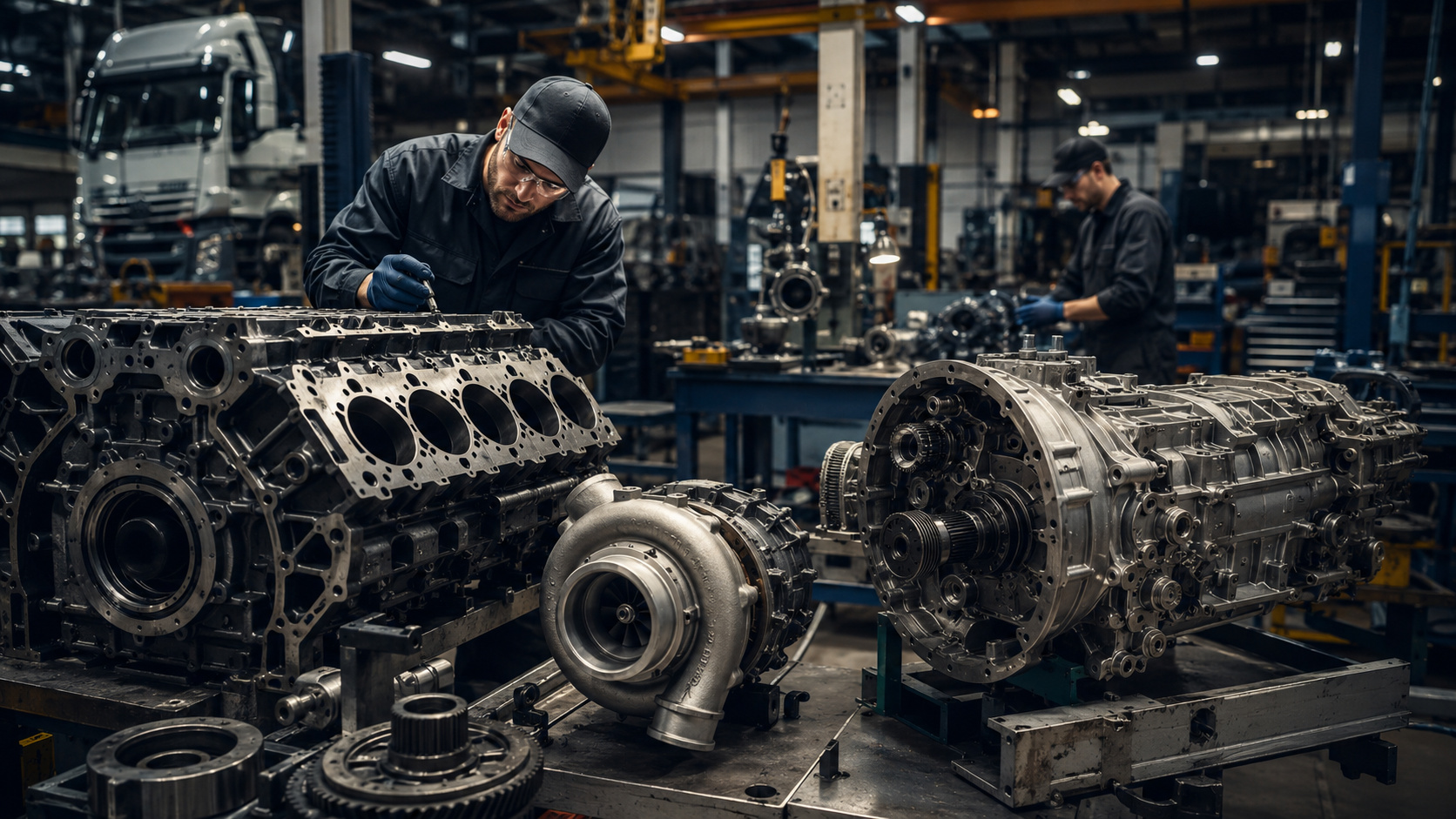

The remanufacturing of truck parts recovers engines, transmissions, and turbochargers with inspection, replacement of worn items, and testing, reducing the use of raw materials and energy in production while fleets seek to keep heavy vehicles in circulation with more control and less waste.
An industrial operation of remanufacturing truck parts completed 80 years in 2025 recovering expensive components that help keep trucks, buses, heavy machinery, and marine equipment operational.
The information was released by Volvo Group, a company that offers transport and infrastructure solutions. The statement published on September 10, 2025 marked the 80 years of the industrial recovery program.
For a fleet, remanufacturing can prevent an engine, transmission, or turbocharger from being discarded shortly after showing wear. The part is disassembled, analyzed, recovered, and tested before returning to use.
-
British Marines Set Record by Changing Ford Escort Engine in 42 Seconds, Unbroken for 40 Years

-
BYD Owners in Brazil Raise Concerns Over Warranty After 87,000 km, Two Repairs in Three Days, and Over $500 in Costs

-
Classic Volkswagen Beetles of Brazilian Presidents to Swap Museums in Historic Partnership

-
British Factory Transitions from Mechanical Parts to Producing 420,000 Electric Power Units Annually, Supplying 70% of Ford’s Electric Cars Sold in Europe


The remanufacturing operation began in 1945, in Sweden
The program began in 1945, in the city of Köping, Sweden. The first recovered components were transmissions, parts responsible for transmitting engine power to the wheels.
The 80-year milestone was celebrated in 2025. The statement also highlighted operations in Middletown, Pennsylvania, and Charlotte, North Carolina, to serve road, off-road, and marine applications.


The detail is noteworthy because trucks and heavy machinery can operate for many years. Even so, internal parts suffer wear and may require repair or replacement over time.
Remanufacturing of engines and transmissions is not just a simple repair
The remanufacturing of engines begins with inspection and technical evaluation. The goal is to discover what can still be used and what has lost the necessary conditions to return to work.
The operation includes crack detection, a technique used to find small cracks, as well as recovery, welding, and measurement corrections. This prevents a part with a hidden flaw from moving to the next stage.
There is also precision machining, a process that adjusts metal parts, and dynamic tests, conducted to evaluate the component’s performance. The part does not return to use just because it looks new.
Remanufacturing can use up to 85% less raw material and 80% less energy
Volvo Group, a company that offers transport and infrastructure solutions, announced that industrial recovery uses up to 85% less raw material and 80% less energy compared to the production of a new part.
These percentages refer to the production process of the component. They do not indicate a direct reduction in fuel consumption of the truck or machine after installation.
The difference arises because remanufacturing utilizes the structure of the existing part, recovers what meets the requirements, and replaces items that cannot continue in service.
Engines, gearboxes, cylinder heads, and turbochargers enter the process
The operation covers more than a dozen categories of parts. The list includes engines, gearboxes, cooling system pumps, cylinder heads, and turbochargers.
The cylinder head is an important part of the upper region of the engine. The turbocharger helps send more air to the engine, while the gearbox works on distributing power to the vehicle.
These components tend to have high value and require technical control. A failure in any of them can stop a truck, delay deliveries, or leave a heavy machine out of service.
Warranty and cost weigh on the decision of fleet managers
The statement reported 100% warranty for parts and resulting damages. Labor also receives 100% coverage when installation occurs at an authorized dealership.
Industrial recovery was also presented as a lower cost alternative compared to purchasing a new part. No percentage of savings was provided for the final amount charged to the customer.
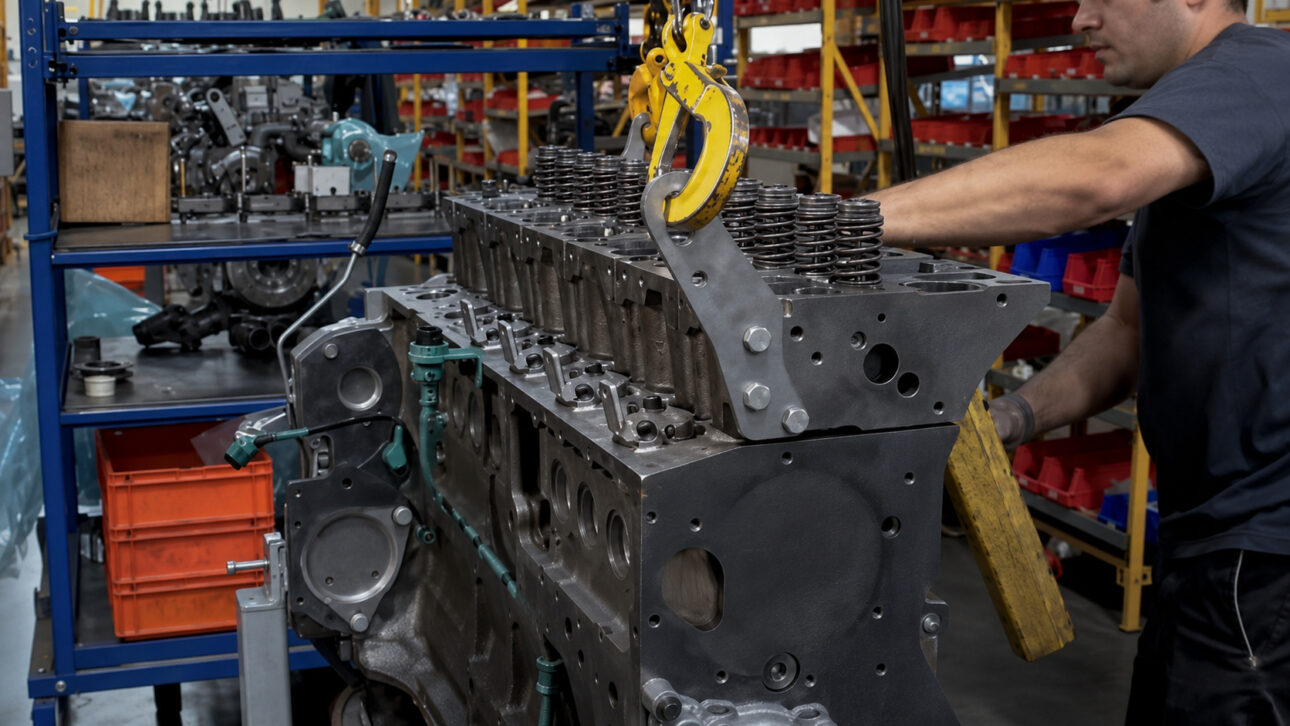
The warranty needs to be observed carefully. It may depend on the origin of the part, the place of installation, and the conditions defined for each service.
What the remanufacturing of parts teaches workshops and companies in Brazil
Remanufacturing of parts shows that recovering a component goes far beyond cleaning, painting, or replacing a small part. The result depends on measurement, inspection, recovery, and testing.
For those working with fleet maintenance, this model helps differentiate a used part from a recovered part within an industrial process. The external appearance alone does not reveal the component’s condition.
Before choosing a recovered engine, gearbox, or turbocharger, it’s worth checking the origin, the warranty, and the installation conditions. These points help reduce the risk of loss and unexpected downtime.
The operation that completed 80 years shows that expensive parts do not need to be discarded immediately after wear. With technical evaluation and appropriate recovery, engines, gearboxes, and turbochargers can gain a new stage of use.
The data of 85% less raw material and 80% less energy reinforce the importance of remanufacturing in reducing materials used in the production of new components and prolonging the lifespan of heavy equipment.
Would you trust a remanufactured engine or gearbox with tests and warranty to reduce fleet maintenance costs? Leave your opinion in the comments and share this publication.