Portuguese
  Spanish


Banned Electric Car Received Motorcycle Engine With 200 HP: The Fusion of Power and Eccentricity Made the Model Titled ‘Solo’ Reach Over 300 km/h and Surprise the Automotive Market!
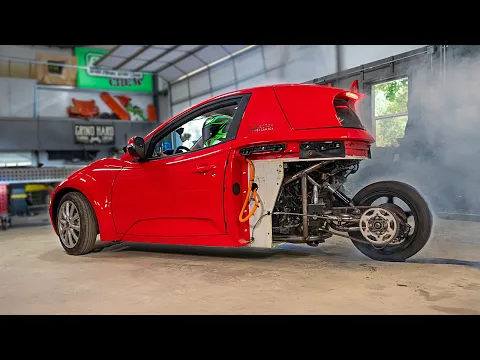
The automotive market is a fertile ground for creativity and innovation, where limits are constantly tested and surpassed. A fascinating example of this daring is the recent project by the Grind Hard Plumbing channel, which took a banned electric car from the market, the Electrameccanica Solo, and transformed it into a high-performance machine by equipping it with a Suzuki Hayabusa motorcycle engine, capable of generating 200 horsepower. This unusual and radical combination drew the attention of car and motorcycle enthusiasts around the world, highlighting the capacity to reinvent technologies that, at first glance, might be destined for oblivion.

The Story of Electrameccanica Solo: From Innovation to Problem in the Automotive Market
The Electrameccanica Solo was introduced to the market in 2018 as a compact urban alternative aimed at consumers looking for a practical and sustainable electric vehicle. The Solo was a three-wheeled car designed to be energy-efficient and easy to maneuver in congested urban environments. With a futuristic design and the promise of a different driving experience in the automotive market, the Solo caught the attention of a specific market niche.
However, not everything went as planned for the Canadian manufacturer. Reports of propulsion loss while the vehicle was in motion began to arise, causing concern among owners and leading to a voluntary recall.
-
Thinking of Installing LED Headlights? Why Replacing Halogen Bulbs is Still Banned, the Glare Risks Authorities Worry About, and How a New Proposal Could Allow Certified, Safe Installations

-
2027 Toyota Corolla Cross Unveiled: New Design, Enhanced Fuel Efficiency, Reduced Maintenance Costs, Advanced Technology, Connected Services, and Up to 10-Year Warranty

-
Fiat Cronos Precision 2018: Affordable Sedan with Spacious Trunk and Reliable Maintenance
-
Volkswagen to Cut Production by 1 Million Cars by 2030, Reducing Jobs and Platforms, Focusing on More Profitable Models


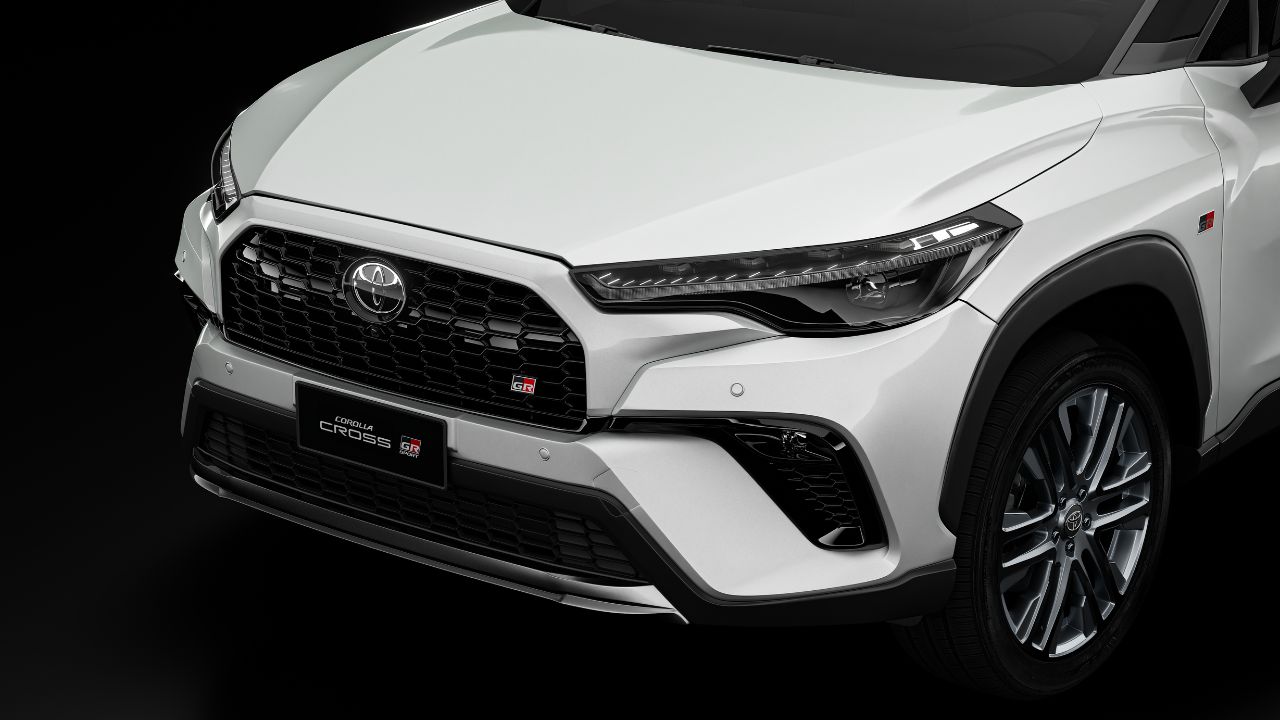


In 2021, practically all models sold between 2019 and 2023 were recalled for investigation and defect correction. The production, which initially took place in Canada, was transferred to China in an attempt to reduce costs and resolve the problems. However, even with the production shift, the problems persisted, leading to the closure of the production line and the repurchase of the vehicles by the manufacturers.
The fate of these vehicles, originally destined for scrapping, changed when the Grind Hard Plumbing channel decided to acquire a unit of the Solo for one of its eccentric projects. What was supposed to be an obsolete electric car transformed into a new basis for automotive creativity.
The Rebirth of the Electric Car With a Motorcycle Engine: Suzuki Hayabusa
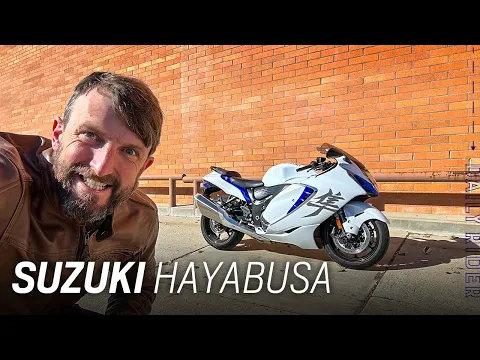
The Suzuki Hayabusa is widely known in the motorcycle world as one of the fastest and most powerful mass-produced motorcycles ever made. With 200 horsepower, this engine has the ability to propel a motorcycle to speeds in excess of 300 km/h.
By installing this engine in a three-wheeled electric vehicle, the engineers at Grind Hard Plumbing not only elevated the performance of the Solo to new heights but also created a combination that unites the best of both worlds: the efficiency of an electric car and the brutal power of a high-performance sport motorcycle.
Technical Challenges and Innovation: Overcoming Barriers in the Automotive Sector With the Custom
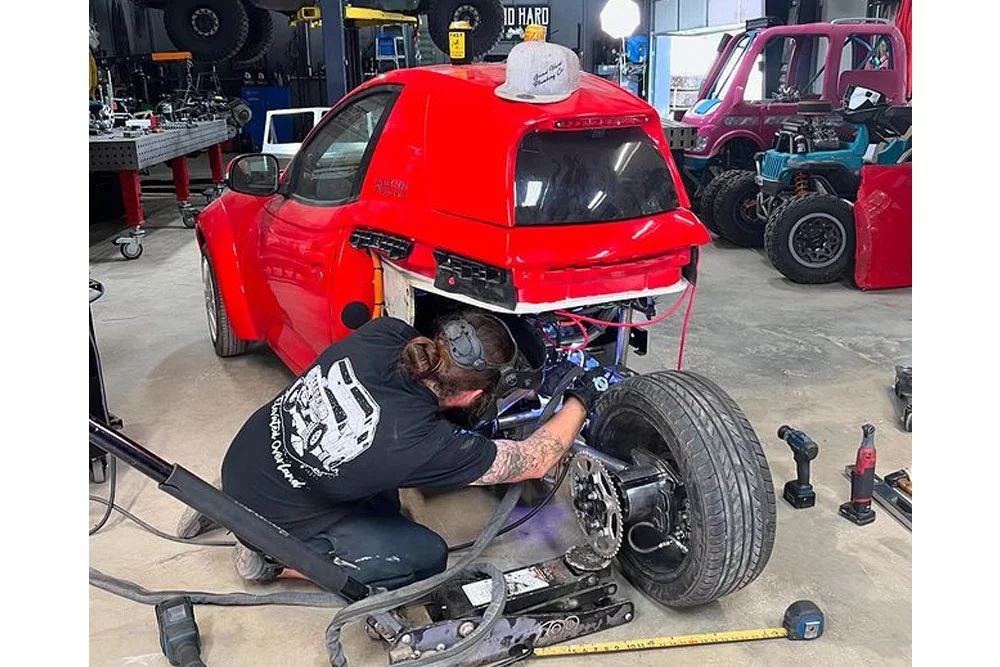
Adapting the Hayabusa engine to the Solo was not a simple task. One of the main challenges faced by the team was adjusting the vehicle’s suspension geometry.
The original design of the Solo already had stability issues, especially considering the three-wheeled configuration. This type of design, while efficient in terms of energy consumption and space, presents unique challenges regarding weight distribution and traction control.
With the introduction of an engine much more powerful than originally planned for the Solo, these problems were exacerbated. The additional power required the Grind Hard team to reimagine the vehicle’s suspension and traction to ensure it could handle the new load without compromising safety.
The challenge of transferring 200 horsepower to a single rear wheel required meticulous work in recalibrating the traction and suspension systems, ensuring the vehicle could deliver all the power in a controlled manner.
The Result: An Unmatched Three-Wheeled Machine
After overcoming all the technical challenges, the final result was a vehicle that defies traditional categorization. The new Solo, now equipped with the Hayabusa engine, is not just a curiosity; it is a statement that innovation knows no bounds. This electric car, which was previously destined for scrapping, can now compete in terms of acceleration and speed with high-performance sports cars.
The new Solo boasts a top speed far exceeding the original 120 km/h, and its acceleration from 0 to 100 km/h is now impressive, far surpassing the 8 seconds of the original electric version. This makes the Solo a true performance machine, capable of surprising even the most experienced drivers.
Implications and Reflections: The Future of Mobility
This project goes beyond being merely a technical curiosity or automotive eccentricity. It raises important questions about the future of mobility and the role of innovation in repurposing technologies. As the world moves toward more sustainable vehicles, the fusion of different automotive technologies may become increasingly common.
The case of the modified Solo suggests that, with creativity and technical skill, it is possible to create vehicles that combine sustainability with performance, challenging expectations of what is possible with electric vehicles.
This project highlights the importance of adaptive engineering. At a time when sustainability is a global priority, the ability to repurpose obsolete vehicles and components to create something new and functional is a valuable skill. This not only reduces waste but also opens new possibilities for automotive design.
The story of the Electrameccanica Solo, transformed by the engine of a Suzuki Hayabusa, is a testament to human ingenuity. The project by Grind Hard Plumbing is not only an example of how technology can be repurposed in unexpected ways but also a celebration of the creativity that drives innovation in the automotive world.
Ultimately, this project reminds us that innovation often comes from where we least expect it. Even vehicles destined for scrapping can gain new life, becoming symbols of boldness and ingenuity.
For car and motorcycle enthusiasts, the modified Solo is proof that, with the right tools and a good dose of creativity, it is possible to create something truly extraordinary.