Portuguese
  Spanish




Find in New Orleans Reveals Roman Tombstone 1,900 Years Old Linked to Lost Collection from World War II. FBI and Italian Authorities Collaborate on Repatriation.
Residents of New Orleans, United States, found a marble plaque with a mysterious inscription in Latin in their backyard. The object was identified as the tombstone of Sectus Congenius Vero, dated to the 2nd century A.D.
The artifact coincides with a piece reported as missing from the Archaeological Museum of Civitavecchia, Italy, since World War II.
The case mobilized archaeologists from Tulane and Innsbruck universities and even the FBI Art Crime Team, which was responsible for the return process. The discovery occurred in March 2025 and has since undergone analyses and cross-checks.
-
Tokyo Scientists Create First 18cm Biohybrid Hand Using Human Muscle, Capable of Scissor Gesture and Holding a Pipette

-
Brazil Faces Norway in World Cup at Stadium Linked to Jimmy Hoffa’s Mysterious Disappearance

-
Retired Woman Leaves French Public Housing Due to Fear, Lives in Van for Weeks, Prompting Response from Local Authorities and a Priest
-
9-Year-Old Fabio Isaac Wins Gold at Copernicus Math Olympiad in Singapore, Representing Peru Against Global Young Talents



Domestic Find Becomes International Cultural Heritage Case
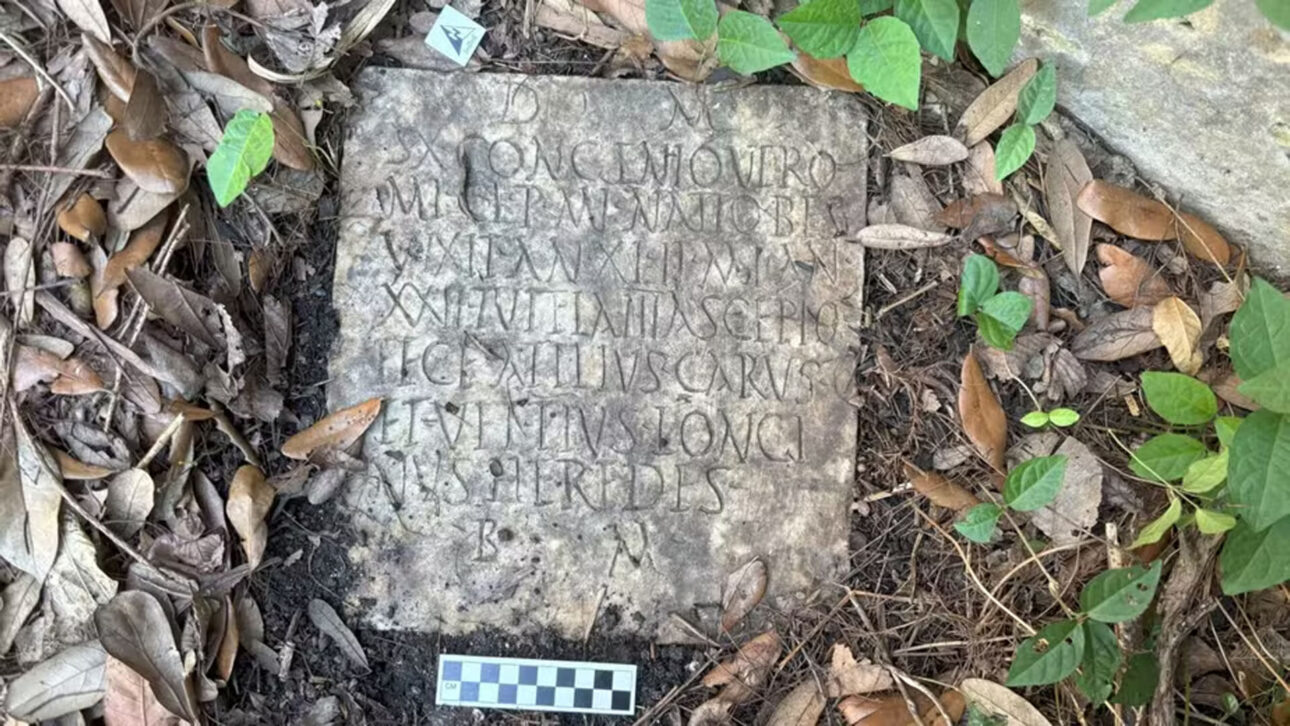
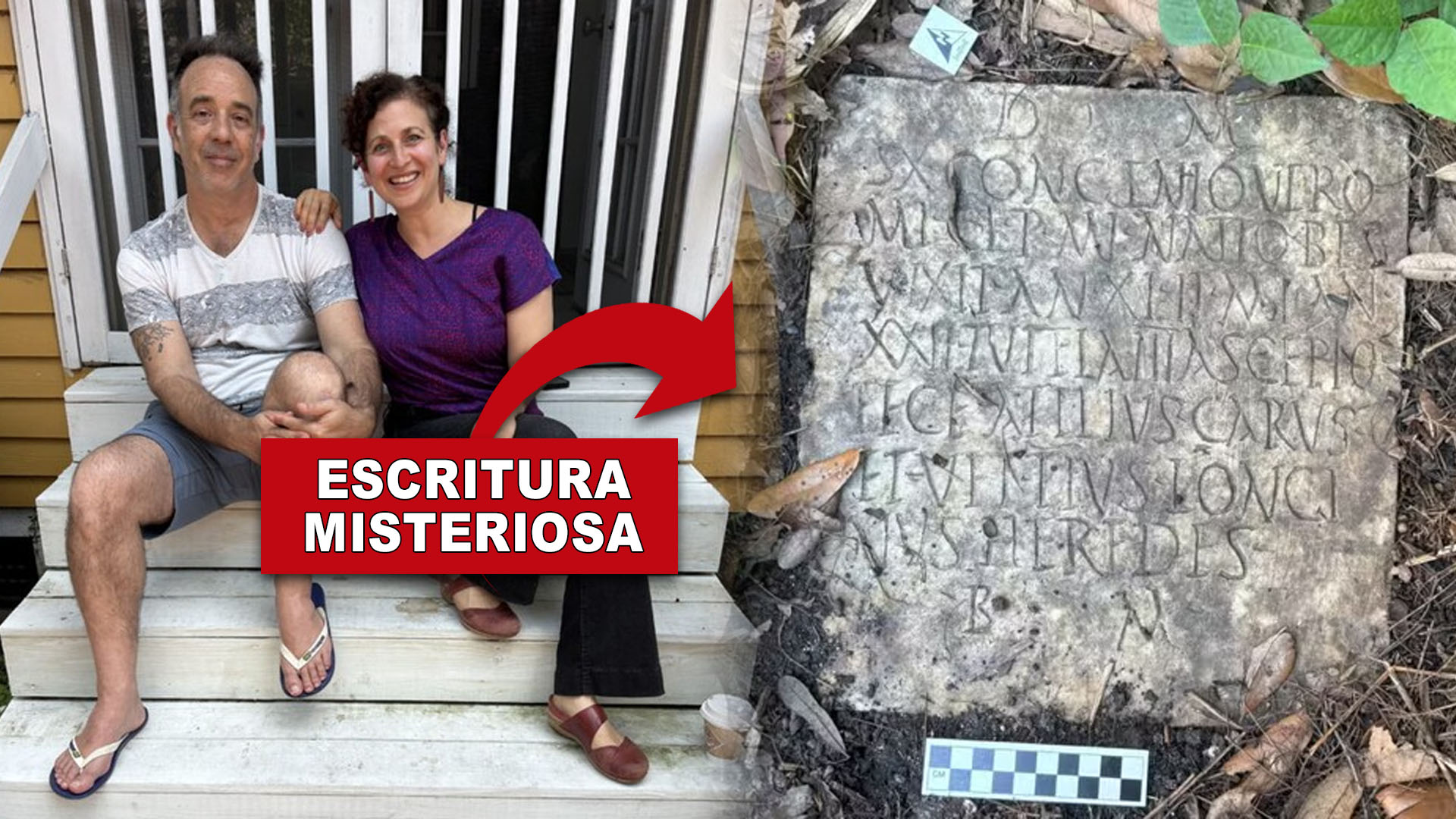
Anthropologist Daniella Santoro and her husband Aaron Lorenz were cleaning the backyard when they noticed a heavy stone slab under the vegetation. Upon seeing the writing in Latin, Santoro contacted archaeologist D. Ryan Gray, who brought in specialists to translate and compare the inscription. The text referred to Sectus Congenius Vero, a Roman sailor, and matched records of a tombstone that had gone missing in Civitavecchia.
According to the Preservation Resource Center of New Orleans (PRC), the photos were sent to Harald Stadler (University of Innsbruck) and Professor Susann Lusnia (Tulane), who confirmed the reading and the likely Italian origin.
With this lead, the team handed the stone over to the FBI to initiate repatriation. “Team Tomb” was the nickname given to the group that began tracing the origin.
Roman Tombstone, Civitavecchia, and the Path from World War II
Civitavecchia, a port near Rome, suffered bombings between 1943 and 1944, during which its museum lost part of its collection.
Post-war documents listed missing artifacts; the tombstone of Sectus Congenius Vero appears on that list. The strongest hypothesis is that the object left Italy in the context of the war, arriving in the U.S. decades ago.
Reports from specialized media, such as Smithsonian and Live Science, reinforce the timeline: a piece from the 2nd century, an inscription in Latin, a sailor’s registration, and convergence with the catalog from the Italian museum. The repatriation follows the protocol of international cooperation for cultural property, under the custody of the FBI Art Crime Team.
Niece of U.S. Soldier Explains How the Stone Ended Up in the Backyard
On October 10, 2025, a report from The Guardian identified the recent chain of possession; the tombstone was with soldier Charles Paddock Jr., who served in Italy during World War II.
According to granddaughter Erin Scott O’Brien, the piece was displayed at home until her grandfather’s death in 1986 and was used as a garden ornament afterward.
When moving in 2018, she left the stone in the backyard, unaware of its historical value—the same property purchased by Santoro in 2025.
The confirmation does not eliminate questions about the original acquisition in the 1940s but narrows down the timeline of the piece’s journey from the Italian museum to the U.S. For authorities, the family connection helps formalize the repatriation based on good faith and documentation.
What the Inscription Says and Why the Piece Is Valuable for Archaeology
The epigraphy indicates a funerary stele dedicated to a Roman sailor from the 2nd century A.D., a period of naval expansion in the Mediterranean. The reading of the inscription, conducted by Latinists consulted by Tulane and Innsbruck, allowed linking the text to the lost record from Civitavecchia.
For archaeology, the piece contextualizes routes, hierarchies, and funerary rituals of the Roman Empire, as well as serving as material proof of loss of collections in conflicts.
Experts consulted by outlets such as ARTnews and Jerusalem Post highlight that similar finds help close gaps in catalogs and train repatriation methods, which is now a priority for museums and governments.
The case also reinforces the role of residents who, by reporting unusual objects, prevent the illicit market.
Do you agree with the immediate repatriation or think that the American family should have some right to temporary custody in good faith? Should such cases prioritize the historical origin or the recent history of the object? Leave your comment and explain how you would resolve the case.