






 Portuguese
  Spanish
  3 min of reading
  0 comments


In The Middle Of The Desert, Qatar Is Printing The Largest 3D Building In The World. The Bold Project Uses Giant Printers The Size Of Planes To Build Public Schools With Curved Shapes Inspired By Local Dunes. The Initiative Promises To Change The Way Large Structures Are Erected And Reinforces The Country As A Pole Of Engineering Innovation.
Qatar has embarked on an ambitious project that promises to change the course of construction worldwide. In the heart of the desert, the construction of the largest 3D printed building has begun.
The initiative is led by UCC Holding in partnership with the country’s Public Works Authority, Ashghal.
Using giant printers from the Danish company COBOD, the country aims to erect two public schools with a total of 40,000 square meters. And the process is just beginning.
-
To halt the advance of the Sahara, the 8,000 km Great Green Wall in the Sahel relies on reforestation to combat desertification, but by 2026 it remains far behind the goal of 100 million hectares.

-
Long before sustainable construction became a trend, China built earthen fortresses with multiple floors, a central courtyard, and the capacity to house up to 800 people living in a community.

-
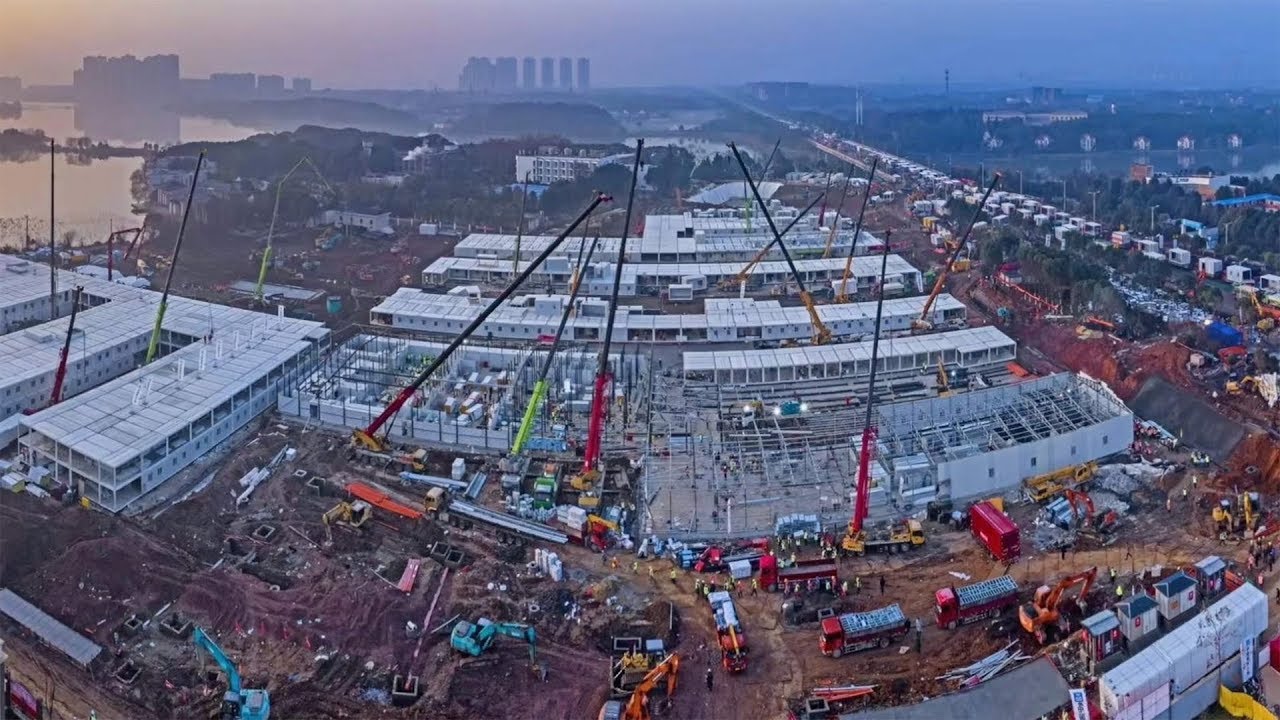
While in the rest of the world building a hospital takes years from design to inauguration, China erected the Huoshenshan Hospital from scratch in just 10 days, with 1,000 beds, foundation, structure, electrical installations, plumbing, and oxygen system ready to receive patients, mobilizing 7,000 workers.

-
Without mortar, grout, or traditional construction: the ClickBrick system assembles brick facades with ceramic pieces held by metal clips, eliminating the need for glue, speeding up installation, and even allowing everything to be dismantled later without turning the construction into expensive permanent debris.



Printers The Size Of A Boeing
To achieve this feat, two customized BODXL printers have been ordered. They are the size of a Boeing 737 hangar, measuring 50 meters in length, 30 meters in width, and 15 meters in height.
These machines are capable of extruding concrete in layers, shaping the walls like dunes.
3D printing follows a constant and precise rhythm, creating structures with curves and organic shapes that are impossible—or extremely costly—to achieve with traditional methods.
The two schools will each cover 20,000 square meters.
They are part of a larger plan to construct 14 schools, totaling 40,000 square meters. This is a gigantic leap compared to the previous record.
The Previous Record Was 40 Times Smaller
Prior to Qatar, the largest 3D printed building was an equestrian center in Florida, measuring just over 10,000 square feet, or around 930 square meters. This structure was made by Printed Farms using the BOD2 printer, also from COBOD.
The new project is 40 times larger. This completely changes the benchmark for large-scale 3D construction and shows how far this technology can go.
It’s no longer about printing small houses, but about erecting school buildings with bold geometries in extreme environments.
Months Of Testing And Training
None of this was done overnight. In the eight months leading up to the construction, a dedicated team conducted over 100 real-scale tests in Doha. Architects, engineers, materials scientists, and printing technicians participated.
They had to adapt the concrete mix to withstand the heat of the desert. A custom extrusion nozzle was also created to ensure precision even in the most challenging curves.
In May 2025, the team underwent intensive training with engineers from COBOD. They learned to manage the sequencing of the printers, control the layers, and monitor quality in real time.
Printing Occurs At Night
To avoid the extreme heat, the printers mainly operate at night. This improves concrete performance and increases the structural integrity of the layers.
Another positive aspect is the reduction of noise, dust, and energy consumption—essential factors in the country’s effort for more sustainable construction methods.
Besides efficiency, the design also draws attention. The schools were designed to reflect Qatar’s natural landscape. The shapes resemble the wind shaping the dunes. This geometric freedom is only possible with 3D printing.
A New Landmark By The End Of 2025
With delivery expected by the end of 2025, the project aims for more than just establishing a new record. It seeks to consolidate Qatar as a reference in innovation, engineering, and sustainable construction.
The 3D printed schools in the desert will be the largest example yet of what 3D construction can achieve at real scale. And according to those involved, this is only the beginning.




Be the first to react!