






 Portuguese
  Spanish
  3 min of reading
  0 comments


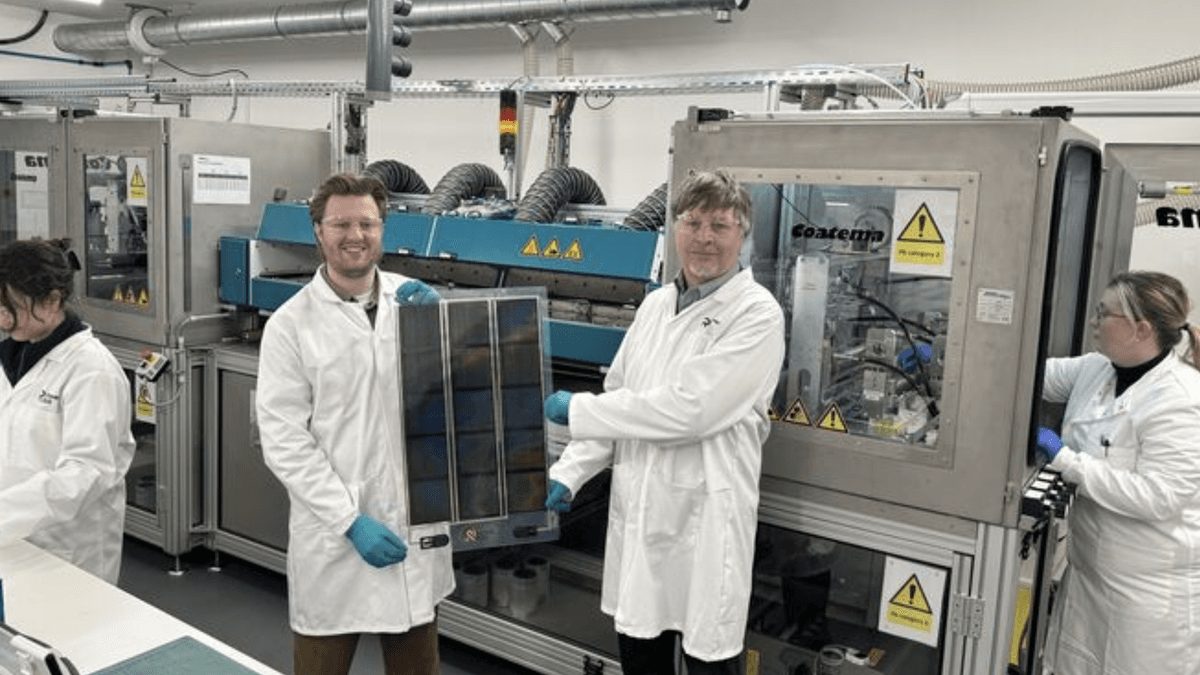
Advances In The United Kingdom Bring Cheaper Solar Cells Without Rare Earth Elements, Strengthening Technological And Energy Independence
Researchers from Sheffield University have developed a new design for solar cells that could revolutionize access to solar energy. The innovation uses perovskite and small grooves etched into plastic film.
The result is a flexible, lightweight, and low-cost solar cell. Furthermore, the process eliminates the use of expensive and scarce materials, such as the chemical element indium (In). This makes manufacturing more sustainable and accessible, especially for developing countries.
Applications Of Solar Cells On Unconventional Surfaces
The new design eliminates a major obstacle: weight. Flexible solar films can be applied to surfaces that would normally not support the weight of traditional panels. Fragile warehouse rooftops, for example, could accommodate this type of solar cell without structural issues.
-
Solar energy can increase property value by up to 10% and become a selling point.

-
Solar and wind energy surpass natural gas for the first time in the world and accelerate energy revolution

-
Africa has about 500,000 cell towers and most still burn diesel to operate, while companies rush to cover antennas with solar energy and avoid signal blackouts.
-
Farmers swapped diesel for solar panels in Pakistan, powered irrigation pumps almost cost-free, expanded rice fields, and now groundwater has become a red alert in the countryside.




According to Professor David Lidzey, co-author of the study, “with this lightweight solar technology, you could essentially attach it anywhere. This could change the game for solar energy in low and middle-income countries.”
Back Contact Structure: More Efficiency And Lower Costs
The operation of the new solar cells is also innovative. Unlike traditional cells, which are made up of multiple layers in a sandwich structure, this back contact model has all the electrical contacts on the back of the device.
This change reduces costs and simplifies manufacturing. The process involves etching grooves of 1.5 μm in plastic film.
Then, these small grooves are coated with perovskite, a material that captures solar energy. The opposite sides receive two different types of electrical contacts, called n and p.
This simple and economical process allows for the creation of individual solar cells that can generate energy efficiently.
In addition to the technical innovation, the project also emphasizes the strength of collaboration between university and industry. Sheffield University has been working with Power Roll for over a decade.
This partnership combines materials science and advanced imaging techniques with a focus on manufacturing. For Dr. Nathan Hill, research scientist at Power Roll and lead author of the study, “this partnership demonstrates the potential of combining cutting-edge research with industrial innovation to provide transformative solutions in renewable energy.”
Potential To Transform Access To Solar Energy
Hill adds that the technology could play a key role in meeting global net-zero emission targets. The combination of academic research and industrial innovation, according to him, further proves the possibilities of Power Roll technology.
The research was published in the journal ACS Applied Energy Materials, consolidating the advance as a milestone in solar technology. The flexible solar films provided by the researchers could indeed represent a practical solution for expanding access to renewable energy.
The promise of sustainable, levelized, and low-cost solar energy could make a real difference in replacing fossil fuels, especially in regions that are most relevant to affordable energy solutions.
With information from Interesting Engineering.




-

1 person reacted to this.