Portuguese
  Spanish




Historical Record Reveals How a Mercedes-Benz Gifted by Hitler to the King of Nepal Was Manually Transported by Dozens of Men to Kathmandu
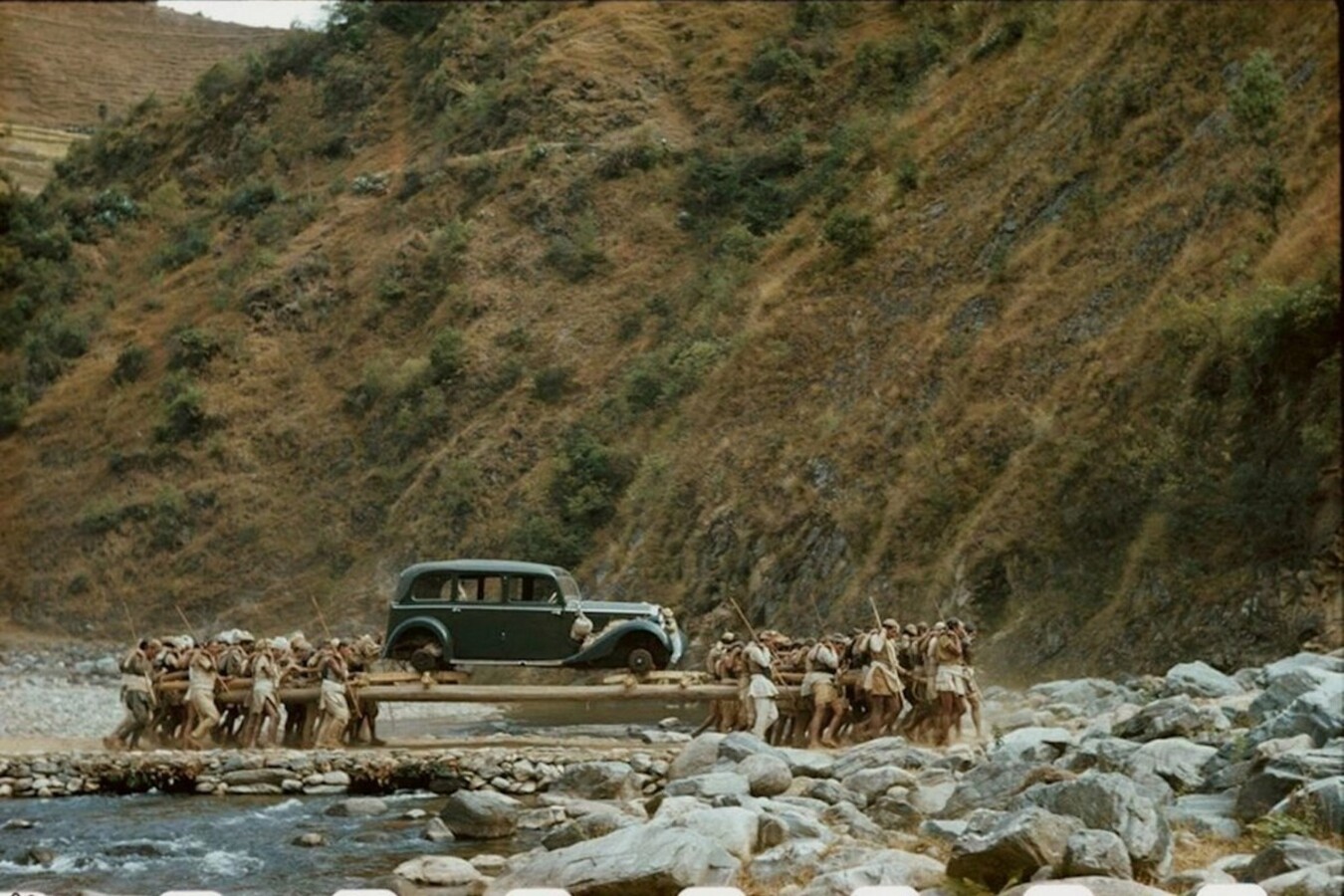
The photograph capturing Nepali men carrying a car on their shoulders is real. The scene took place in the Chitlang valley, along the old route known as the “Rolls Royce Path”. The route, in the past, represented human ingenuity and resilience in the face of Nepal’s limitations.
What’s most curious is not just the collective transport of a car by dozens of people. What makes the record even more striking is the identity of the car’s original owner, linked to a unique chapter in world history.
The Path Before the Roads
For decades, this route was the main link between the Kathmandu valley and the Terai plains. Without modern roads, vehicles were disassembled and carried on bamboo poles, supported on the shoulders of porters.
-
College Dropout Turned Window Cleaner Builds $1 Million Cleaning Business with Subscription Model After 18 Years of Door-to-Door Work

-
North Korean Soldier Risks Crossing One of the World’s Most Dangerous Borders, Detained in South Korea

-
Stingless Bee Honey from Brazil Can Cost Up to $120 a Liter, Surprises with Flavors of Wood, Citrus, and Even Cheese
-
Woman Claims to Have Spotted a Technical Pattern in Recent FIFA Tournaments, Predicts Possible World Cup Winner


The route was used by merchants, pilgrims, dignitaries, and local residents. Until 1956, it was the only paved connection between Kathmandu and India.
To reach the destination, one had to cross hills, forests, and villages like Chitlang, Markhu, and Kulekhani.
The construction of the Tribhuvan Highway changed the region’s dynamics. The path fell into disuse, leaving isolated villages that became silent reminders of a different era.
Hitler and the Gifted Car
The most famous image of this route dates back, possibly, to the 1940s. The best-known version states that Adolf Hitler gifted King Tribhuvan, grandfather of the last king of Nepal, a Mercedes-Benz 230 Pullman Landaulet, manufactured between 1937 and 1939.
This was the first automobile seen in the country. As there were no roads, the only way to get it to Kathmandu was to carry it manually over steep and uneven terrain.
Another version suggests that the recipient was Juddha Shumsher, Prime Minister of India. The aim was to gain support from Gurkha soldiers during World War II.
The Work of the Porters
The human transport of goods is an ancient practice, predating the domestication of animals and the invention of the wheel. Over time, the practice has diminished due to technological advancements, but it is still common in hard-to-reach areas.
In Nepal, this work gained prominence with the Sherpas, globally known for their role in Himalayan expeditions.
Although the name originally refers to an ethnic group, it has become synonymous with porter and experienced guide in extreme altitudes.
Today, Sherpas serve as essential professionals for climbers, ensuring that equipment and supplies reach places that vehicles cannot access.
Tradition and Ingenuity
The transportation of the Mercedes-Benz to Kathmandu symbolizes more than an unusual episode. It demonstrates the resilience of mountain communities that, even amid the transformations of the modern world, continue to adapt traditional methods to present needs.
The most important aspect is that the event reveals the ability to overcome physical and logistical obstacles with creativity and collective effort. This combination of ingenuity and human strength was crucial for the car to reach its destination.
The Return of the Automobile
Years later, the revelation came: the car still existed. It was restored and began transporting visitors on the grounds of a Nepali palace museum.
Before that, it had been kept for over five years in an old garage at the palace, after being abandoned by an engineering school that used it for practical classes.
The vehicle’s trajectory is peculiar. From the means of transport of one of history’s most controversial leaders, it became a piece of study and cultural memory.
From the European scene of the 1930s to the mountain trails of Nepal, its story intertwines politics, geography, and human resistance.
With information from Xataka.