





 Portuguese
  English
  Spanish
  6 min of reading
  0 comments



At The Peak Of Winter, A Simple Wooden Fence And Snow Containment Fences Keep The Snow Off The Road, Keep Roads In Wyoming Open, And Still Feed A Circular Economy Model With A Thousand To One Return
In Wyoming, snow doesn’t just fall from the sky. It flies horizontally as if shot from a cannon, blanketing the road in seconds and defeating any fleet of snow removal machines. Even with billions invested in modern equipment, the wind covers the asphalt faster than any plow can clear it. It is in this brutal scenario that a simple wooden fence, full of holes and without any sensors, emerges as an unexpected solution.
At first glance, this simple wooden fence seems too rustic to withstand the harshest winter. But behind its rough planks lies a refined design of aerodynamics, topography, and snow behavior. With a very low cost, this passive structure acts like a silent physical machine, capable of transforming 1 dollar of rough wood into 1,000 dollars in safety for drivers and the transportation system.
The Real Enemy Is Not The Snow, It Is The Wind
For decades, the standard response to winter was always the same: clean up after the disaster. Snow would accumulate on the roadway, machines were activated, fuel burned continuously, and teams spent entire nights trying to regain visibility. In Wyoming, this routine became almost a theater of an announced defeat because the problem is not just the amount of snow, it’s the wind that pushes it back onto the road as soon as the plow passes.
-
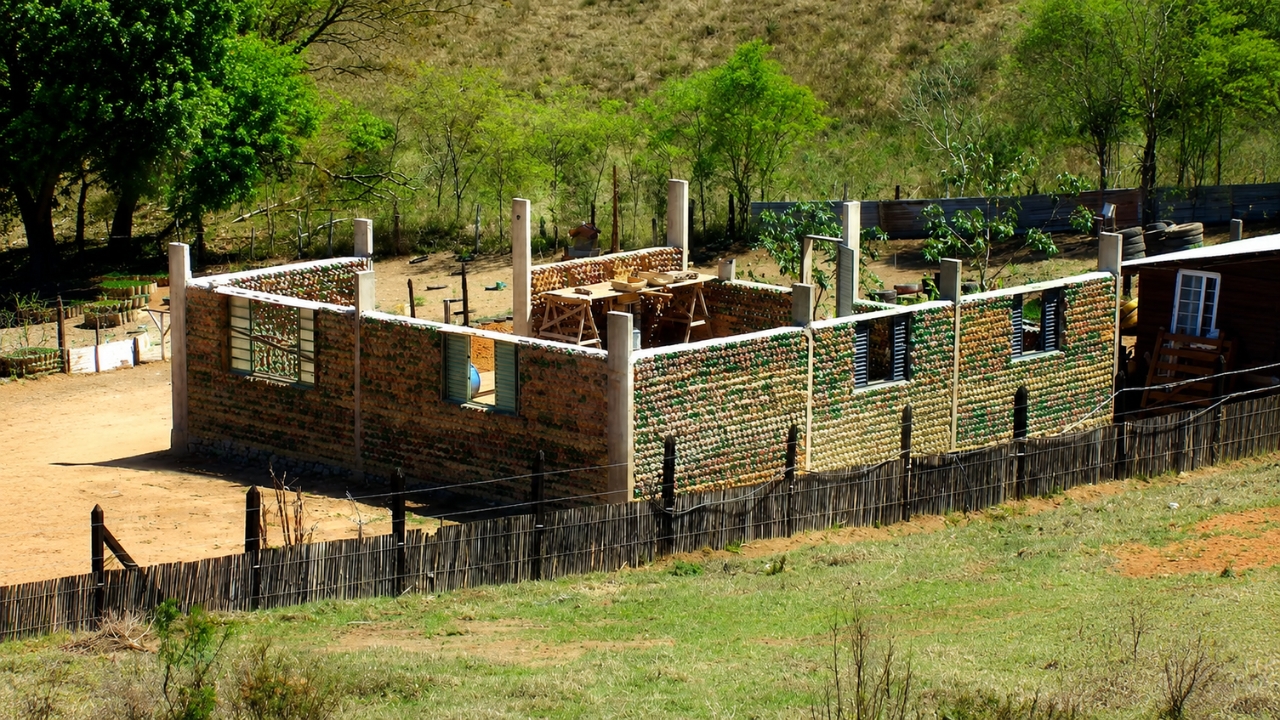
Man builds a 100 m² house with 11,000 PET bottles in Minas Gerais and moves people by revealing that his father collected almost all the material around the city before it became common trash.

-
50-meter tunnel below the seabed could retire old ferries in the Shetland Islands: £400 million project promises to connect communities, reduce isolation, and transform the future of transportation in Scotland
-
Brazil delivers a giant dam worth R$ 365.7 million in Rio Grande do Sul, capable of forming an artificial lake with 138 million m³ of water, equivalent to 55,300 Olympic swimming pools and an area larger than 2,500 football fields.

-
Most people use a tape measure their whole lives without ever understanding why some numbers are painted red; the explanation lies in a 16-inch spacing that is invaluable for those who work with walls and wood.




The elevated and open plain terrain creates natural corridors where the wind accelerates unobstructed. With no dense forests or large cities to divert the flow, the air sweeps the ground like a continuous jet. When the sky is clear and the snow is already on the ground, the so-called ground blizzard emerges. In it, no new flakes fall, but billions of old crystals are ripped from the ground and launched sideways onto the asphalt, forming a white wall up to 3 meters high in seconds. For the driver, it’s as if the world simply shuts off before the windshield.
How The Simple Wooden Fence Tames The Snow

The turning point comes when engineers stop asking how to clean the road afterwards and start questioning how to prevent the snow from reaching it. The answer begins with a structure that any 17th-century farmer would recognize: a simple wooden fence, with porosity around 50 percent, installed at a certain distance from the highway.
The secret is not to block the snow as if it were a wall. This simple wooden fence acts as a filter for kinetic energy, removing speed from the low wind that carries the snow crystals. It doesn’t try to fight the storm up high; it attacks the layer of snow transportation near the ground, where the crystals slide horizontally within a thin film of air.
When the wind encounters this fence, the pressure increases slightly in front and smoothly decreases behind, creating a stable transition zone. In this area, the speed drops below the threshold necessary to keep the snow in motion. The result is that the snow ceases to be supported by the wind and starts to settle on the right side, away from the highway. Gradually, a pile of snow forms behind the fence, and it itself becomes part of the aerodynamic system, helping the wind to glide over it without pulling the crystals back onto the roadway.
Details That Make The Difference Between Failure And Success


An unintuitive aspect is that the fence is never installed flush to the ground. There is always a gap at the bottom. This gap allows the layer of wind close to the ground to continue flowing, preventing reverse vortices that could dislodge the snow accumulation or even compromise the stability of the structure. It is not a solid wall holding snow; it is a precise arrangement that draws energy from the system without blocking everything at once.
Therefore, engineers treat the simple wooden fence as a passive self-stabilizing machine. Once installed in the right position relative to the prevailing wind and terrain, it doesn’t need adjustments with every storm. It adapts itself from the first flake of winter to the most intense storm, always reshaping the wind flow near the ground. What seems like a low-tech solution is, in practice, the extreme distillation of decades of study in aerodynamics applied to transportation.
An Ecosystem Among Sensors, Snow, And Wood
These fences do not work alone in a vacuum. In parallel, transportation engineering teams roam with vehicles equipped with pavement reading radars, friction sensors, and precise positioning systems. They measure traction, snow accumulation shape, wind direction change, and compare everything with data from weather stations.
The question shifts from how many snowplows are needed to whether the fence is well aligned, if the terrain has changed, or if the airflow has altered in any specific section. The simple wooden fence, seen from afar as something static, is actually part of a continuous feedback system between nature, data, and engineering. When something doesn’t work as expected, repositioning or complementing the fences is more effective than adding more machines on the road.
When The Simple Wooden Fence Becomes A Living Fence

In a second stage, an even more sophisticated evolution comes into play: living snow containment fences. Instead of using only lumber, engineers and the forestry service start planting cold-resistant species, such as shrubs and trees with naturally spaced canopies, which achieve porosity similar to that of the ideal simple wooden fence.
These living fences take 10 to 20 years to reach designed performance, but once they get there, they offer something no rigid structure can deliver. In addition to holding snow away from the road, they convert melting snow into infiltrated water in the soil, improve soil moisture, help livestock, and create a healthier microenvironment around highways. The same barrier that protects truck drivers also strengthens the rural landscape and increases the value of neighboring properties.
Initially, many farmers saw these strips of vegetation as a loss of usable land. Over time, they began to see them as silent guardians, responsible for more stable water, less erosion, and safer roads in an increasingly unpredictable climate.
A Thousand To One Return And Circular Economy In Action
From a financial perspective, the simple wooden fence holds another trump card. After 15 or 20 years facing arctic winds and successive freezing and thawing cycles, the pine boards do not become waste. They gain value. Time creates a unique patina, with cracks, tones, and textures that no factory can reproduce.
Instead of spending public money to dismantle and dispose of these old fences, the government enters into contracts with private companies. These companies bear the cost of removing the fences and installing new ones. The reward is access to the aged wood, which is minimally treated and later sold for high-end interior projects, such as flooring, handcrafted tables, and decorative panels that showcase the very marks of time as a luxurious element.
The systemic result is impressive. One dollar invested back then in a simple wooden fence can yield up to 1,000 dollars in return when considering safety, reduced operational costs, material reuse, and environmental benefits. The Department of Transportation gains new fences, taxpayers save money, businesses obtain a valuable input, and the environment benefits from reduced waste.
Between Chaos And Winter Safety
In the end, the greatest lesson from Wyoming’s snow containment fences is conceptual. Instead of relying solely on expensive, noisy, and energy-hungry solutions, engineers chose to deeply understand the laws of nature and work with them, not against them. The simple wooden fence demonstrates that true sophistication often lies in extreme simplicity, applied with precision.
As truck drivers drive peacefully amidst storms and families manage to return home safely, these discreet structures continue their mission without fanfare. They don’t appear in technology commercials, but they are the ones that, day after day, maintain the boundary between open roads and closed roads.
And you, after learning the story of this simple wooden fence, do you think we should invest more in simple, intelligent solutions instead of relying solely on big machines and expensive technology?





-

1 person reacted to this.