






 Portuguese
  Spanish
  4 min of reading
  0 comments


Superconducting equipment installed at Huairou Science City enhances China’s capacity in research with intense magnetic fields, advanced materials, quantum phenomena, and strategic industrial technologies
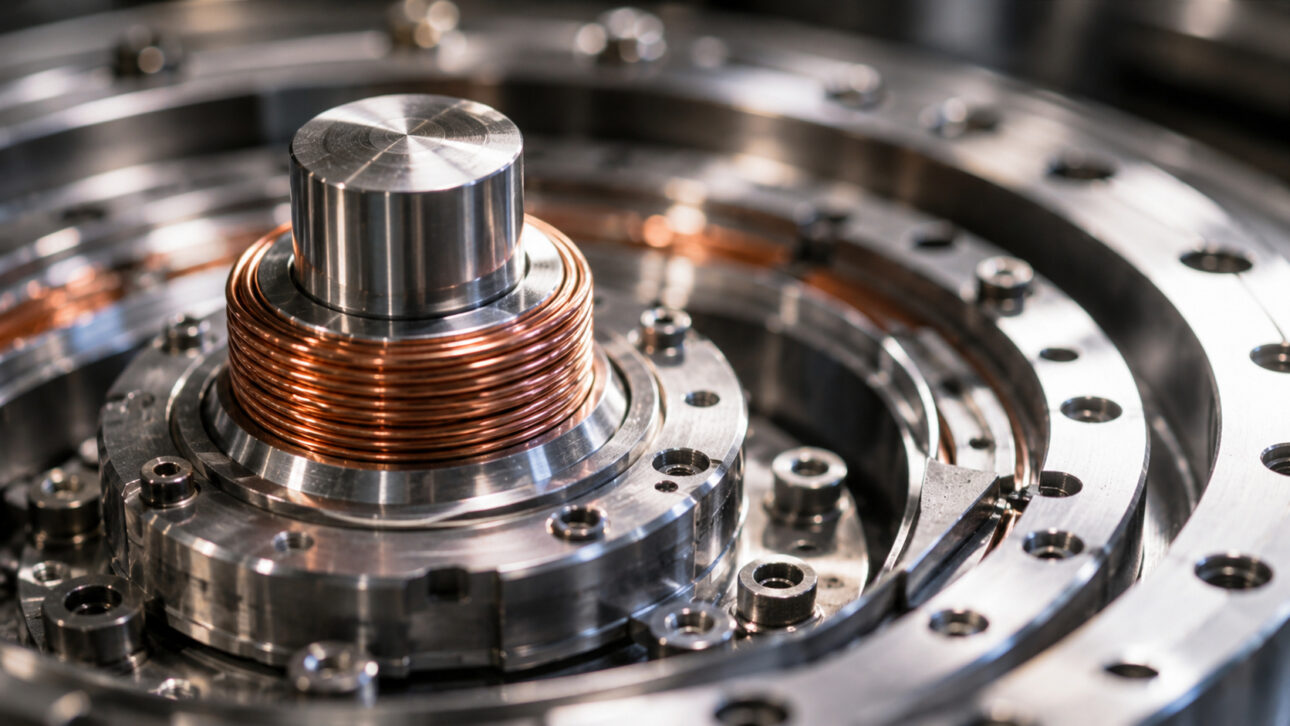
China has activated a 35.6-tesla supermagnet in Beijing, equipment capable of generating a magnetic field more than 700,000 times stronger than the Earth’s natural field. The milestone was announced in January 2026 by official Chinese sources, including the Chinese Academy of Sciences, Xinhua Agency, CCTV News, and China Daily.
The advancement places China’s scientific infrastructure in a prominent position in the global race for high-precision technologies. Moreover, the equipment is expected to support research in semiconductors, clean energy, diagnostic medicine, advanced sensors, and new materials.
Installed at the Synergetic Extreme Condition User Facility within the Huairou Science City, the system was developed to create extreme conditions for matter analysis. Therefore, its relevance lies in its ability to sustain complex experiments for long periods.
-
Scientists create an artificial womb capable of keeping premature babies alive outside the human body, and now the question arises that no one wants to answer: who will control the future of reproduction?

-
Satellite images show that Brazil has shrunk by more than 2.5 million hectares of rivers and lakes in 40 years, and the Pantanal, which depends almost 100% on rain due to the lack of dams, was 56% below the historical average of water in 2025.
-
Scientist creates mini-universe with 24,000 ultracold atoms and shows that time can emerge from the internal changes of the system, without relying on an external clock.
-
A CIA manual that remained classified as secret for decades describes the five cognitive traps that led to the greatest intelligence failures in history, and anyone can make the same mistakes.




Chinese supermagnet uses superconducting technology to reduce energy losses
The equipment operates with advanced superconducting materials and a high-temperature superconducting wafer integrated into the main system. In this way, the structure reduces electrical resistance in cryogenic conditions.
This feature allows for less energy waste during operation. Consequently, the supermagnet becomes more efficient than hybrid models used in intense magnetic field research.
The installation also features a useful aperture of 35 millimeters, designed for specific scientific tests. This allows researchers to insert samples and conduct detailed measurements in controlled environments.
The main technical points of the equipment include:
- central field of 35.6 tesla;
- force over 700,000 times Earth’s magnetism;
- use of high-temperature superconductors;
- useful aperture of 35 millimeters;
- operation with greater energy efficiency;
- capacity to sustain prolonged scientific tests.
Technology can accelerate research in semiconductors and new materials
Intense magnetic fields function as tools to reveal hidden behaviors of matter. Thus, particles, electrons, and quantum phenomena can be observed with more precision.
Furthermore, the super magnet allows for the separation of subtle signals from the common noise of traditional measurements. This capability is essential for studies of electron transport, phases of matter, and advanced materials.
The practical application also reaches strategic sectors of the economy. More efficient semiconductors, next-generation sensors, new metal alloys, and energy storage technologies are among the possible paths.
The structure is expected to host research in different areas, such as:
- nuclear magnetic resonance in high fields;
- quantum oscillation experiments;
- tunneling microscopy at ultra-low temperatures;
- tests with ultra-high pressure;
- analyses of materials under extreme cold.

Stability for more than 200 hours transforms power into a scientific tool
The great differential of the Chinese super magnet lies in its stability. According to the information released, the equipment can maintain the maximum field for more than 200 consecutive hours.
This period exceeds eight days of continuous operation. Therefore, researchers can perform slow, repeated, and highly precise measurements.
Stability is fundamental to proving theories, observing phase transitions, and analyzing complex physical properties. Moreover, it allows for the combination of the magnetic field with high pressure and extremely low temperatures.
Unlike quick demonstrations in the laboratory, the Chinese structure was designed for recurring scientific use. In this way, the equipment enhances the capacity to produce reliable data.
Beijing strengthens its position in the global race for scientific infrastructure
The race for high-power magnetic fields involves major international research centers. For years, laboratories in other countries led projects focused on superconducting and hybrid systems.
Now, China is expanding its presence in this sector with infrastructure aimed at long-term experiments. Additionally, the country seeks to attract scientists, stimulate international publications, and strengthen technologies for industrial application.
The advancement also impacts the production chain. The manufacture of superconducting tapes, refined sensors, electronic components, and cryogenic systems can generate gains for high-tech sectors.
The Chinese installation is expected to follow three main paths:
- extend usage time for researchers;
- stimulate discoveries in scientific journals;
- bring extreme science closer to industrial applications.
The future of the super magnet will depend on discoveries made in the laboratory
The real impact of the super magnet will not be measured only by the number of teslas. In practice, its importance will depend on the research conducted in Beijing in the coming years.
New phases of matter, advances in data centers, improvements in energy storage, and more efficient electronic components are among the expected results. Even so, these applications depend on the conversion of scientific data into industrial solutions.
The Chinese achievement shows that the global technological race also involves large laboratories. In this scenario, the 35.6 tesla super magnet represents a strategic tool to transform extreme science into concrete innovation.





Be the first to react!