






 Portuguese
  5 min of reading
  0 comments


Mousa Broch is located in the Shetland Islands, was built around 300 BC, is about 13 meters tall, and helps explain how dry-fitted stones continue to endure without mortar on a remote Scottish island
A stone tower in Scotland has stood for more than 2,000 years, even though it was erected without mortar on a remote island. The monument is the Mousa Broch, located on the island of Mousa, in the Shetland Islands.
Historic Environment Scotland, the public body for Scotland’s historic heritage, identifies the construction as the most well-preserved broch in Scotland. The structure is believed to have been built around 300 BC and measures about 13 meters in height.
What is impressive is not just the age. The tower was made with dry-fitted stones, a technique where the pieces remain firm due to weight, balance, and the way they are placed on top of each other.
-
Far beyond the melting ice in the Arctic, a study reveals that carbon hidden in deep layers of permafrost may escape sooner than expected and turn frozen soils into a new source of CO₂.

-
63 years ago, a Soviet worker left the factory, entered Vostok 6 alone, and became the first woman in space, but the achievement still highlights the slow opening of missions to women.
-
Brazilian students may be expelled from Portugal: Parliament closes the last door for regularization without a visa, threatening thousands of students and affecting the largest foreign community in Portuguese schools.
-
Get your coat ready: Brazil already has a date set for its coldest day of the year, with warnings for 333 cities and lows of up to -6°C.




What is a broch and why this ancient Scottish tower became such a rare construction
A broch is an ancient circular stone construction in Scotland. It belongs to the Iron Age, a period when communities already mastered construction techniques but did not yet use the modern resources of a current building.
In the case of the Mousa Broch, the image draws attention because the structure does not appear just as a pile of ruins. The tower still retains an impressive height, about 13 meters, which allows for a better understanding of its original grandeur.
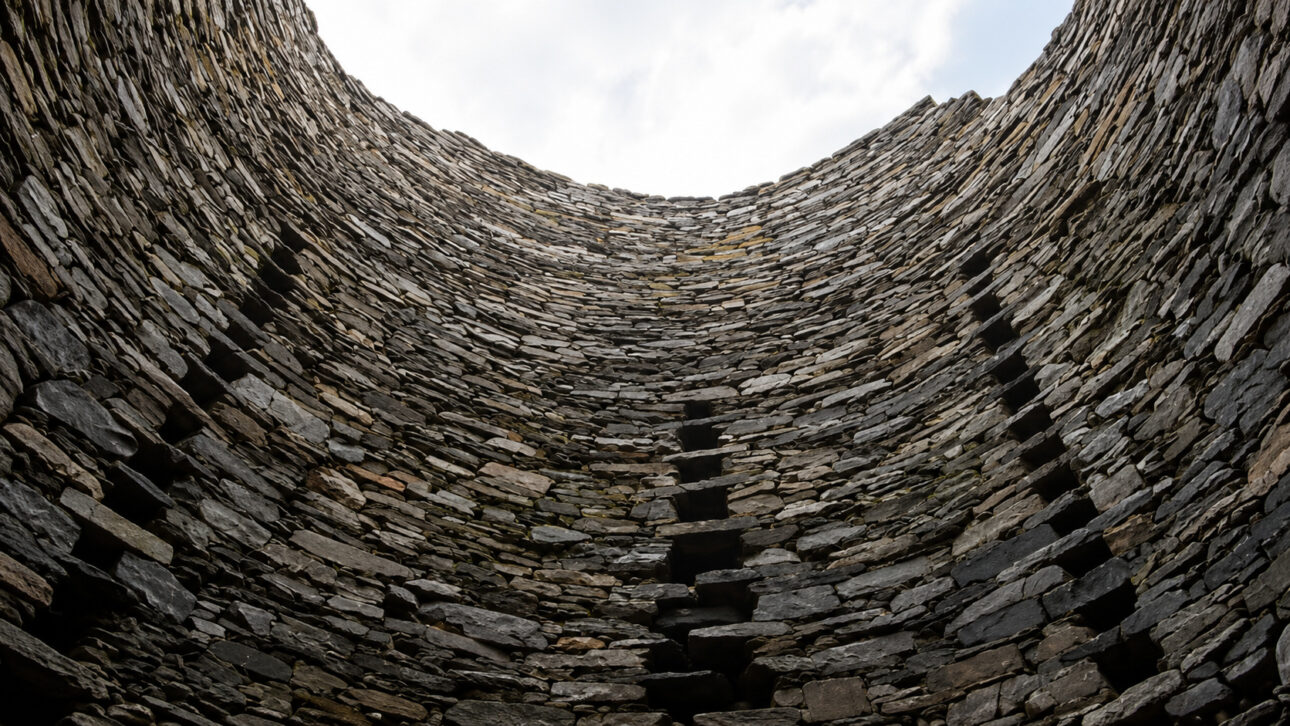
To an outside observer, the construction seems simple. However, a circular stone tower, without mortar and on an isolated island, requires practical knowledge. Each layer needed to support the next without losing balance.
This combination of age, height, and resilience makes the site one of the most curious ancient works in Scotland. The monument shows that ancient peoples were able to create durable constructions using only materials available in the environment itself.
How stones without mortar can support a tower of almost 13 meters
The dry stone technique dispenses with mortar between the pieces. This means that the stones are not glued by cement or mortar. They remain firm because they were carefully chosen, positioned, and supported.
In simple words, the construction works like a large interlocking puzzle. One stone helps to hold the other. The weight descends through the walls and the circular shape helps to distribute the force around the tower.
This type of construction requires patience and precision. A poorly placed stone can create gaps, unevenness, or weaken the wall. Therefore, the resistance of the Mousa Broch reveals a much more sophisticated technique than it seems at first glance.
In Brazil, a possible comparison is with the dry stone walls found in rural areas. The logic is similar, but the Mousa Broch took this idea to another level, with a tall, circular tower made to withstand a harsh island climate.
The remote island helps to make the Mousa Broch even more impressive
The Mousa Broch is located on an island in the Shetlands, north of Scotland. The landscape is marked by isolation, wind, cold, and the constant presence of the sea. This setting reinforces the visual strength of the tower.
Building in such a place was not a simple task. The transportation of materials, manual labor, and exposure to the climate made any construction more difficult. Yet, the tower has stood for centuries.
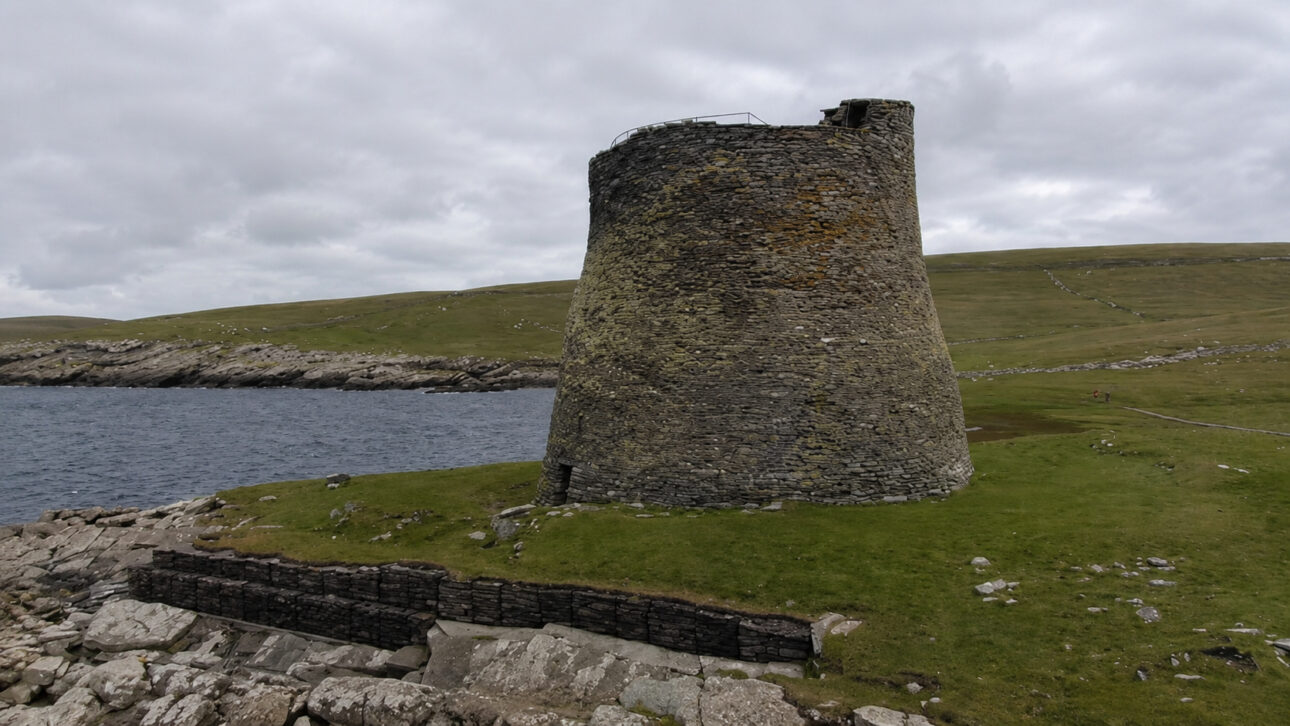
Historic Environment Scotland, the public body for Scottish historical heritage, records that the Mousa Broch is considered the best-preserved broch in Scotland. This preservation helps to better observe how the structure was designed.
The construction does not depend solely on its age to attract attention. It also impresses because it combines technique, location, and resilience in a single stone monument.
The mystery about the true function of the tower still raises questions
Even with the structure preserved, the exact function of the brochs is still not fully determined. These constructions may have served for housing, protection, prestige, or gathering, but the interpretation depends on the study of each location.
In the case of the Mousa Broch, the height and circular shape raise natural doubts. Could the tower have been used only as a shelter? Could it show the power of a group? It could also serve more than one function at the same time.
This mystery helps explain the fascination with the construction. The monument does not provide all the answers. It forces archaeologists and visitors to look at the stones and imagine how those communities lived.
The main question is simple: why would someone build such a laborious tower on a remote island? The answer still involves hypotheses, and that is precisely what makes the Mousa Broch so intriguing.
Why a construction without concrete and steel remains relevant today
The Mousa Broch shows that an ancient work can teach a lot about adapting to the environment. The tower was made with local stones, without mortar, in a shape that helped maintain stability.
This does not mean that ancient constructions replace modern engineering. The point is different. The tower shows that durability also depends on understanding the place, the weight of the materials, and the right way to assemble the structure.
In a world accustomed to concrete, steel, and machines, a tower made of dry stone seems almost impossible. However, it still stands and helps remind us that technique is not just modern technology.
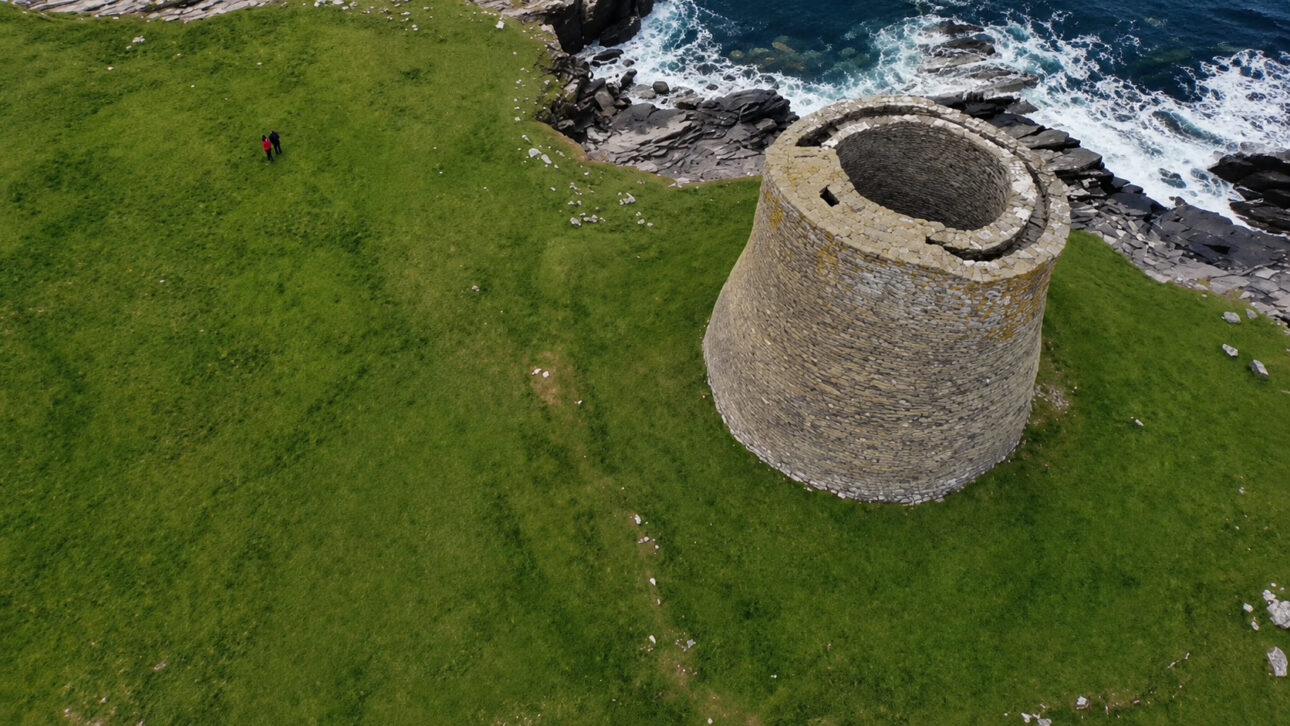
The strength of the Mousa Broch lies in this combination. It is ancient, isolated, tall for its time, and made with a solution that seems simple but requires enormous mastery of stone construction.
A stone tower that has endured more than 2,000 years without revealing all its secrets
The Mousa Broch remains one of the most remarkable ancient constructions in Scotland. With about 13 meters in height, an estimated origin around 300 B.C., and stones fitted without mortar, the tower combines ancient engineering and archaeological mystery.
The remote island, the harsh climate, and the preservation of the structure make the monument even more curious. It is not just an ancient ruin, but proof of how past communities managed to build intelligently using simple resources.
What catches your attention the most about this tower: the age, the height, the mortarless technique, or the mystery about its function? Comment and share with those who love ancient constructions that still defy easy explanations.




Be the first to react!