






 6 min of reading
  0 comments


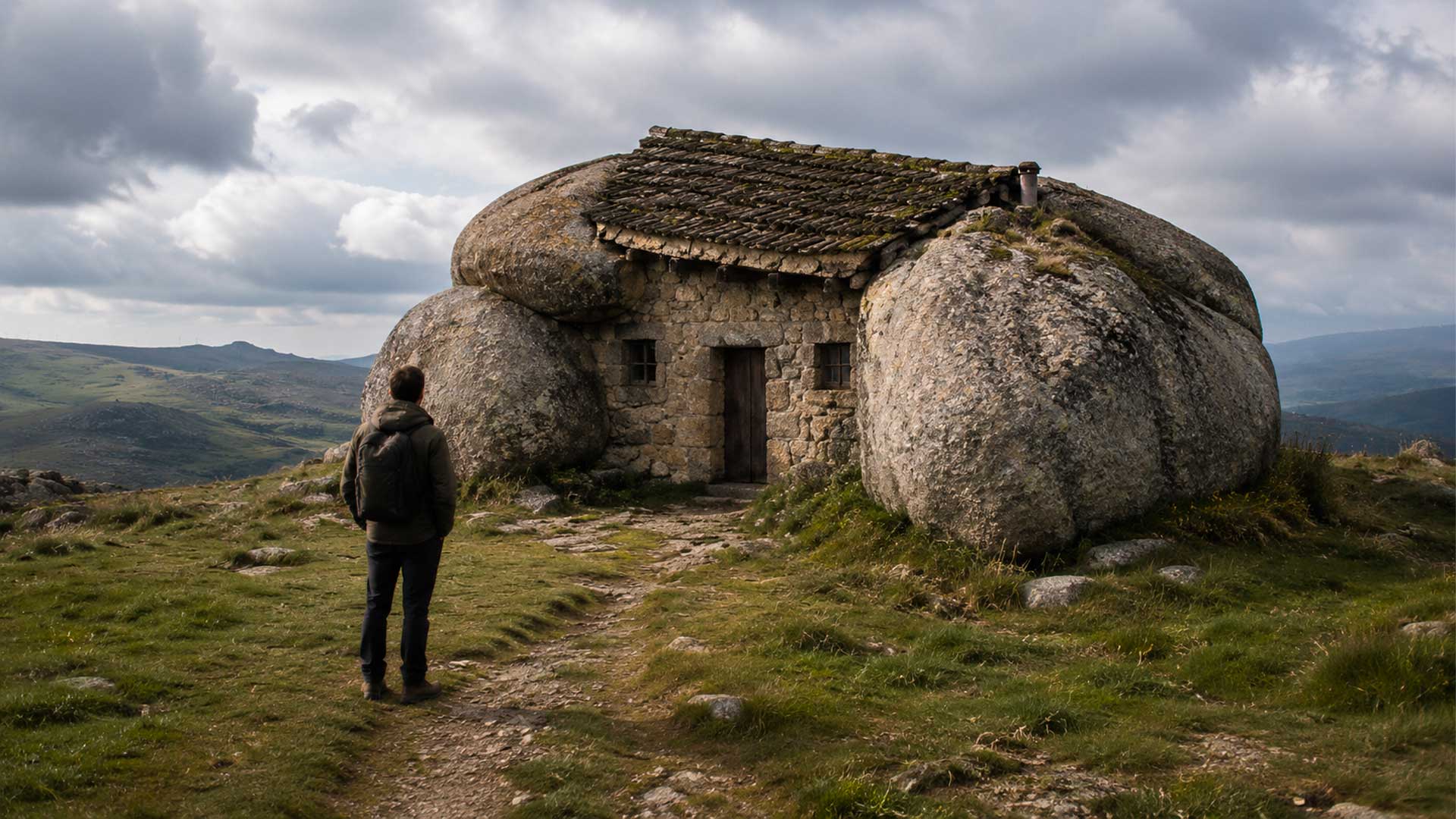
Built in 1974 in the Serras de Fafe, the Casa do Penedo uses natural granite blocks as part of its structure and attracts visitors with its rustic architecture, isolation, and contrast with modern tourism
A house built between four enormous granite rocks, in the north of Portugal, has once again drawn attention for a rare characteristic in times of smart homes, automation, and electrical dependency. The Casa do Penedo, located in the Serras de Fafe, was inaugurated on October 13, 1974, and has become one of the most curious examples of architecture integrated into the landscape.
The property does not attract attention for its size, luxury, or modern equipment. What surprises is precisely the opposite: the construction uses monumental rocks as part of its own structure, maintains an almost camouflaged appearance in the mountain, and preserves a proposal of a family refuge connected to nature.
According to information from the official site of Casa do Penedo, the construction is located in the Union of Parishes of Várzea Cova and Moreira do Rei, in the municipality of Fafe, in the Northern Region of Portugal. The name comes from the fact that the house was built between four large rocks, which are part of the property’s structure.
-
Stone tower in Scotland is over 2,000 years old, about 13 meters high, was built without mortar on a remote island, and still intrigues archaeologists about its true function.

-
Far beyond the melting ice in the Arctic, a study reveals that carbon hidden in deep layers of permafrost may escape sooner than expected and turn frozen soils into a new source of CO₂.

-
63 years ago, a Soviet worker left the factory, entered Vostok 6 alone, and became the first woman in space, but the achievement still highlights the slow opening of missions to women.
-
Brazilian students may be expelled from Portugal: Parliament closes the last door for regularization without a visa, threatening thousands of students and affecting the largest foreign community in Portuguese schools.



Today, the small stone house has ceased to be just a local curiosity and has started to attract travelers, photographers, and those interested in rustic architecture. The contrast between the simplicity of the construction and its international fame helps explain why the place has become known as one of the strangest houses in the world.
Casa do Penedo uses four granite rocks as natural walls

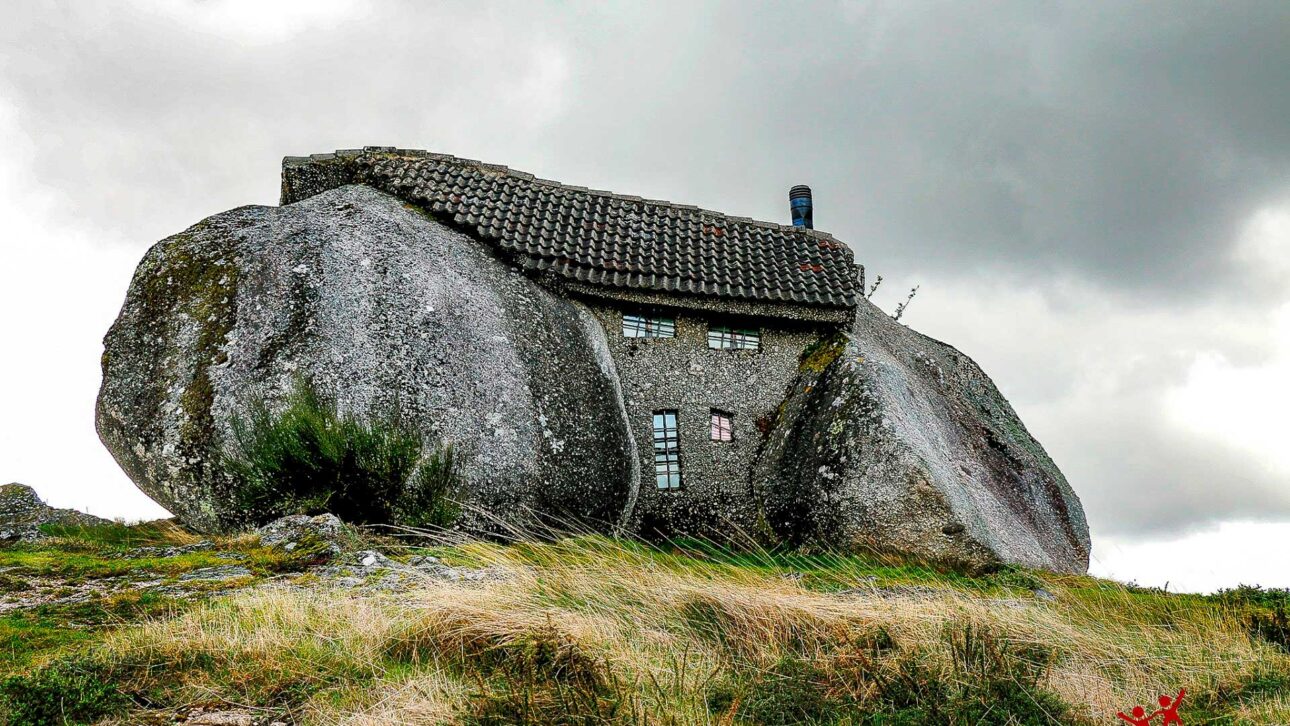
The main characteristic of Casa do Penedo is the way the construction takes advantage of the natural elements of the terrain. Instead of removing the granite blocks, the project incorporated the rocks, transforming what would be an obstacle into part of the foundation, walls, and visual identity of the house.
This solution gives the property an unusual appearance, as if the house had grown out of the mountain itself. The gaps between the stones were filled with bonding materials, while doors, windows, and roofing complete the habitation in a simple and functional way.
According to information from Eixo Atlântico, an entity that gathers tourist resources from the region, the house was designed to integrate with the landscape and serve as a family shelter. The same source points out that the location is in a wind farm area, with access through the zone associated with the Fafe Lameirinha section, known for its connection to rally racing.
This location creates a visual irony that often catches the attention of visitors. On one side, a rustic house associated with isolation and low consumption. On the other, modern wind turbines marking the mountainous landscape.
Without electricity, interior preserves the atmosphere of a family refuge
The Casa do Penedo is often described as a dwelling without conventional electrical installation, something that reinforces the idea of a retreat away from urban life. Instead of relying on technological comfort, the project maintains an atmosphere of simplicity, silence, and direct contact with the mountain environment.
Visitor reports indicate that the interior is small but cleverly utilized. The arrangement of the furniture needs to respect the irregular limits of the rocks, which makes each corner different from a common house.
According to the travel blog Alma de Viajante, which recorded a visit to the site, the interior preserves rustic elements, wooden furniture, and a second floor with small rooms. The publication also highlights that, despite the absence of electricity, the house retains its function as a family refuge and does not seem devoid of use.
This detail helps to dispel an exaggerated interpretation of the property. Casa do Penedo is not a high-standard sustainable mansion, nor a technological experience of ecological architecture. It is, above all, an unusual holiday home, built with simple solutions and marked by adaptation to the terrain.
Therefore, the fame of the place comes less from sophistication and more from authenticity. In an era when many constructions try to appear natural, Casa do Penedo stands out for truly being molded around already existing natural elements.
Tourism transformed isolated retreat into a point of visitation
What began as a family shelter ended up becoming a tourist attraction. The appearance of the house, often compared to cartoon constructions, made the property circulate in reports, travel blogs, and social networks, increasing the curiosity of visitors from various parts of the world.
This growth in fame also brought challenges. Private homes that become tourist spots often face problems such as invasion of privacy, excess of curious visitors, and pressure on natural areas. In the case of Casa do Penedo, visitation started to be organized with rules and control.
The official site currently informs the existence of guided tours, with an indicated price of 7 euros, as well as experiences upon request. Since schedules and conditions may change, it is ideal for visitors to confirm availability before heading up the mountain.
The visit should not be treated as a common urban outing. The region is mountainous, access may involve dirt roads, and the weather can change rapidly, especially during periods of fog, wind, or rain.
Rustic architecture draws attention by questioning the excess of comfort
The Casa do Penedo gained relevance because it poses a simple question: how much modern comfort is really necessary for a house to be livable? The construction shows that a dwelling can be functional without following the standard of straight lines, conventional walls, and industrial finishes.
This point does not mean that living without electricity is a practical solution for everyone. The property was created as a retreat, not as a universal model of urban housing. Still, it fuels debates about consumption, tourism, vernacular architecture, and landscape preservation.
The house also aligns with a trend of interest in constructions more integrated with the environment. Instead of erasing the marks of the terrain, the project embraced the irregularity of the stones as part of the identity of the work.
In practice, it is precisely this imperfection that makes the place memorable. The asymmetrical shape, natural walls, and contrast with the open landscape create an image that is hard to forget.
Region of Fafe reinforces the tourist value beyond the stone house
The Casa do Penedo is not isolated only in the architectural sense. It is part of a mountainous territory associated with trails, viewpoints, nature tourism, and the rally tradition in Fafe, one of the region’s sports trademarks.
For those visiting northern Portugal, the location can serve as a stopover on a broader itinerary. The proximity to mountainous landscapes and areas of strong winds enhances the experience of a less urban and more connected to the Portuguese countryside setting.
Even so, the visit requires responsibility. As it is a construction with emotional and tourist value, respecting the access rules, property, and the surrounding environment is an essential part of the experience.
The Casa do Penedo became famous precisely for preserving an unusual relationship between architecture and nature. If the excess of visitors compromises this relationship, what enchants today may become just another scene exploited by social networks.
Does worldwide fame help preserve and value a unique building, or does it transform an old family refuge into an attraction consumed by tourists? Leave your comment and say if you would visit a house without electricity in the middle of the mountains or if this has already crossed the line of curious tourism.






Be the first to react!