






 Portuguese
  Spanish


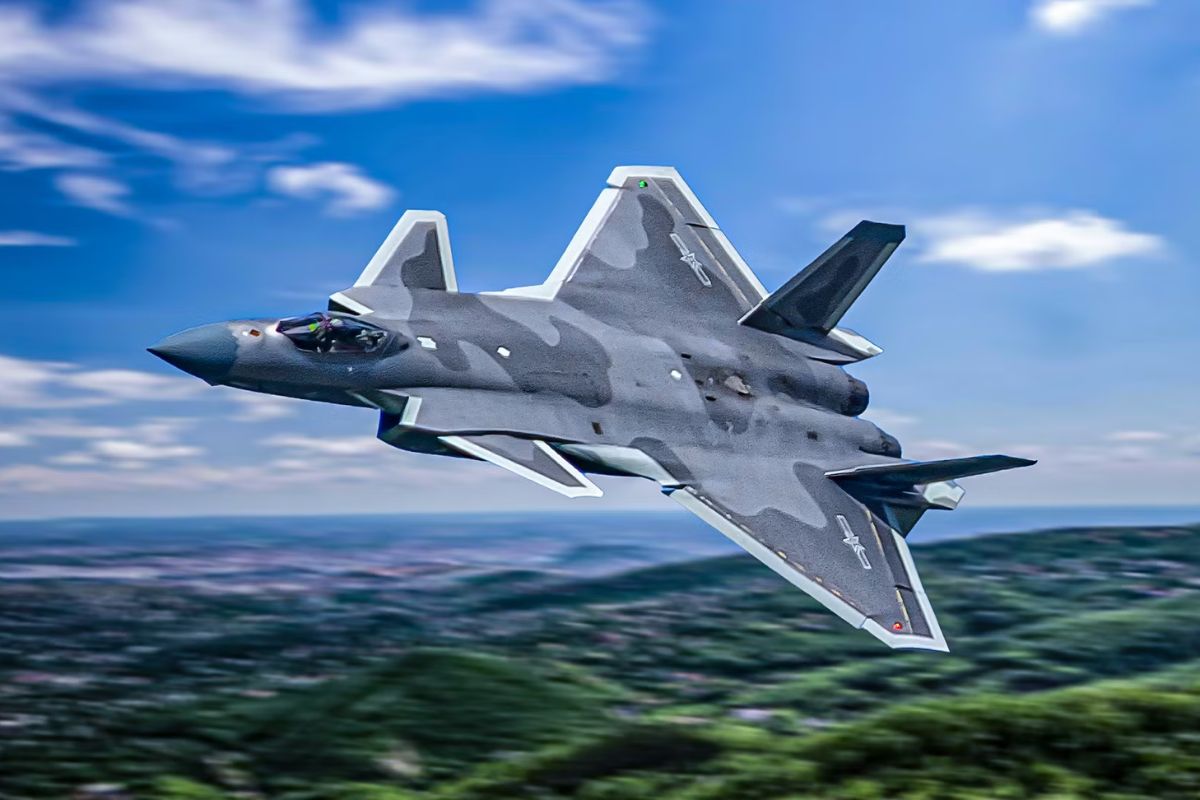
Beijing Reports Reconnaissance Flight in Area Monitored by Japan, South Korea and the USA; Allies Do Not Confirm Incident
The China claimed that a J-20 stealth fighter from the People’s Liberation Army Air Force flew over the Tsushima Strait — between Japan and South Korea — without being detected by radars or defensive systems in the region. The claim was made in a broadcast from the state-run CCTV, featuring images of the jet in operation, and reported by outlets such as South China Morning Post and National Security Journal.
The flight was said to have been conducted by the First Fighter Brigade, a pioneering unit in the use of the Chengdu J‑20 “Mighty Dragon”, as part of a series of reconnaissance patrols that would also include the area around Taiwan and the Bashi Channel. However, no allied country has confirmed the incursion — which raises doubts about the veracity and strategic purpose of the announcement.
What Is Known About the J‑20 Mission in the Tsushima Strait?
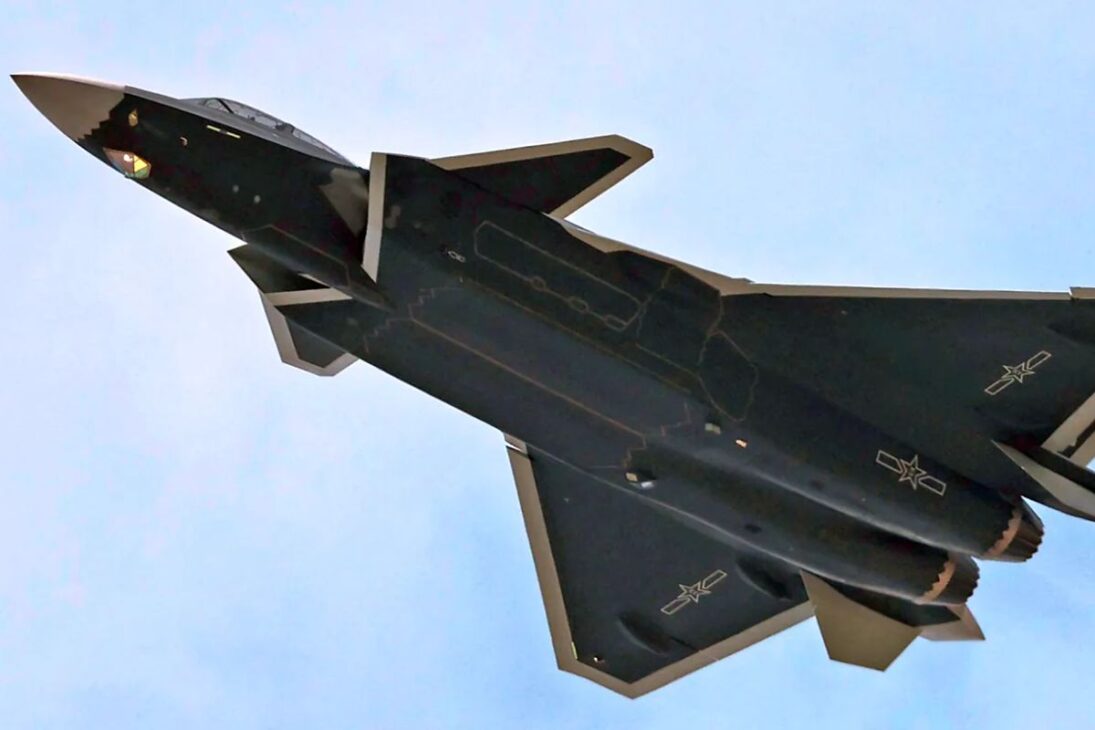
According to Chinese media, the flight occurred without the activation of air defense systems from Japan, South Korea or the USA — countries that operate sophisticated defenses in the region, including THAAD radars, Patriot batteries, and ships equipped with the Aegis system.
-
Trump Unveils $400 Million Boeing 747 Donated by Qatar as Temporary Air Force One Amid Boeing Delays, Sparking Debate on National Security, Costs, and Foreign Influence

-
Chinese Company Unveils Robotic Toilet That Comes to You, Featuring Lidar Sensors, Voice Command, Bidet, Hot Air Drying, UV Light, and Self-Cleaning Waste Disposal
-
Rotterdam Develops Floodable Square to Absorb Nearly 2 Million Liters of Rainwater, Doubling as Sports, Theater, and Leisure Space When Dry to Combat Urban Flooding
-
U.S. National Park Deploys Robotic Birds Near Wyoming Airport to Protect Endangered Species: Dancing and Sound-Emitting Replicas Aim to Lure Real Birds to a 100-Acre Restored Area Away from Runways After 32 Aircraft-Related Deaths




The operation was said to be aimed at testing the stealth capabilities of the aircraft in one of the most monitored air corridors in the world. If the flight truly went unnoticed, it would be a demonstration of the tactical advantage of Chinese stealth technology in a high-intensity conflict environment.
Did the Allies Confirm the Episode?
No. No Western government has officially confirmed any unidentified activity in the airspace near the Tsushima Strait in recent days. The absence of public recognition generates speculation: could this be a real action, deliberately ignored for diplomatic reasons? Or is it strategic propaganda by Beijing?
Defense experts warn that the absence of an alert does not prove that the fighter was invisible to radars — only that it was neither intercepted nor made public. This ambiguity is common in disputes over technological superiority between powers.
What Is the Chengdu J‑20 and Why Does It Concern the West?
The J‑20 is the first stealth fighter developed outside the USA to enter operational service. With a design similar to the American F‑22, it combines low radar signature, supercruise, advanced sensors, and long-range attack capability.
Since 2021, China has been expanding its fleet. It is estimated that twelve Air Force brigades already operate the J‑20, with a forecast of reaching 400 units by the end of 2025 — which could make the country the largest operator of stealth fighters in the world, surpassing the USA in number, although not necessarily in quality.
What Changes with the New J‑20S Version?
The CCTV report also highlighted the introduction of the J‑20S variant, which has two seats. Although China has never officially detailed its capabilities, analysts believe the second pilot serves as a mission tactical operator, capable of controlling “loyal wingman” type drones — paving the way for AI-coordinated aerial operations and network warfare.
This evolution makes the J‑20 not only an attack platform but an advanced airborne command center, with the potential to alter the strategic balance in regions such as the Indo-Pacific.
What Is the Geopolitical Context of the Disclosure?
China has been increasing its military actions around Taiwan, in the South China Sea, and in the straits connecting Japan to the Korean Peninsula. The disclosure of the J‑20 flight occurs amid escalating joint exercises between the USA, Japan, and South Korea, and may aim to:
- Test the allies’ reaction without escalating confrontation
- Demonstrate air penetration capability
- Reinforce the image of technological superiority to the domestic audience
Even without external confirmation, the maneuver increases pressure in the region and demands tactical and diplomatic responses from the involved countries.
Do you believe that China really managed to fly a stealth fighter without being detected? Or do you consider the announcement part of a military propaganda strategy? Leave your analysis in the comments — the aerial balance in Asia may be changing before our eyes.


-

-

-

3 people reacted to this.