






 Portuguese
  Spanish
  3 min of reading
  0 comments


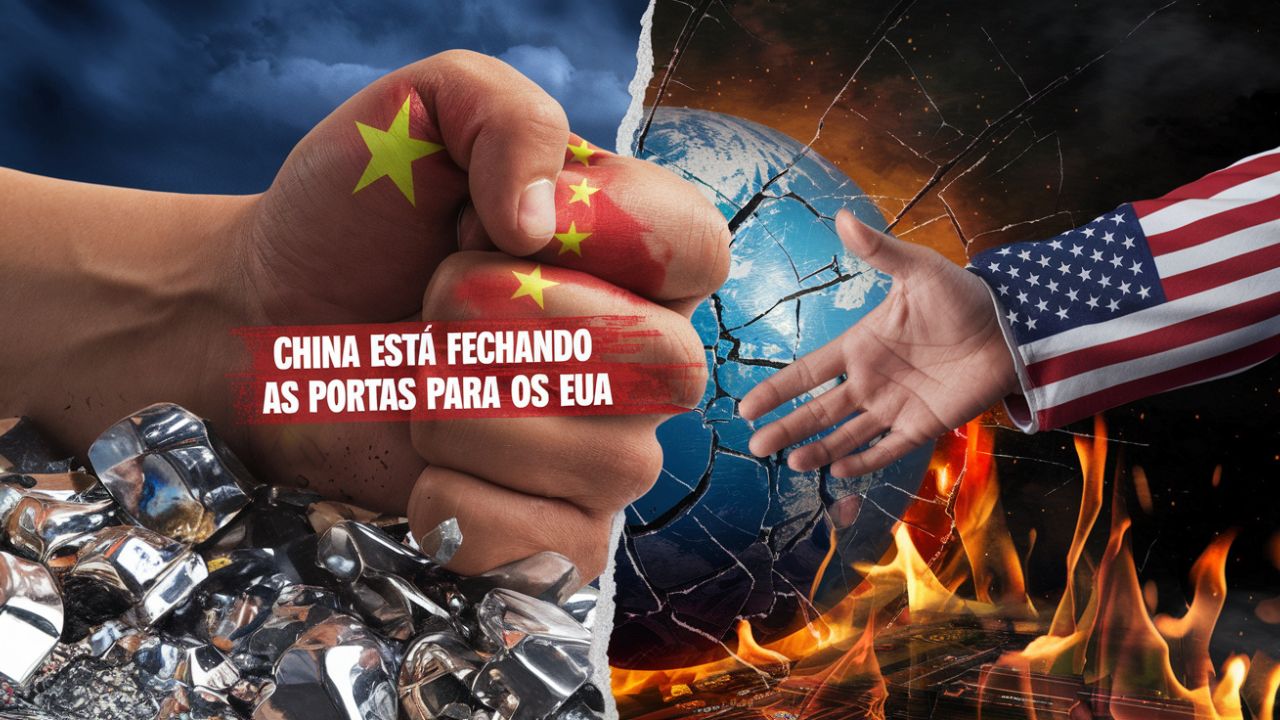
Ban Prohibits Critical Minerals Such as Gallium, Germanium, and Antimony, Essential for Semiconductors and Advanced Technologies; China Dominates 90% of the Global Market and Intensifies Trade Tensions with the USA.
The recent ban on exports of critical minerals by China to the United States has raised a global alarm. This decision marks a new chapter in the trade tensions between the two largest economies in the world and highlights the strategic importance of these resources. But what is really at stake? And how does this impact the geopolitical balance?
What Are Critical Minerals and Why Are They Important?
Critical minerals, such as gallium, germanium, and antimony, are essential materials for the production of advanced technologies, such as semiconductors, batteries, and optical devices. These resources are called “critical” due to their relevance in economic and national security, as well as their scarcity in supply chains outside of China.
In the USA, China’s dominance in the production of these minerals is seen as a strategic vulnerability. After all, relying on a single supplier during times of trade tensions is like walking through a minefield—one wrong move can have a devastating impact.
-
Brazilian Joins Homeownership Consortium, Faces Decade of Dual Payments Totaling $141,000, Surpassing Traditional Mortgage

-
Land Rover to Halt Production in July, Putting 371 Jobs at Risk, as Chinese Automaker Negotiates to Convert Factory to 100,000 Vehicles Annually by 2027

-
Mexican Pest Threatens U.S. Cattle Herds at Historic Lows, Potentially Boosting Brazilian Beef Exports as Burger Prices Soar

-
Brazilian Freight Bill Progresses in Congress with $5,000 Minimum Wage, 70% Advance Payment, and Fines Up to $1 Million, as Agriculture and Industry Warn of Rising Costs and Legal Uncertainty


Beijing’s Decision: A Strategic Response?
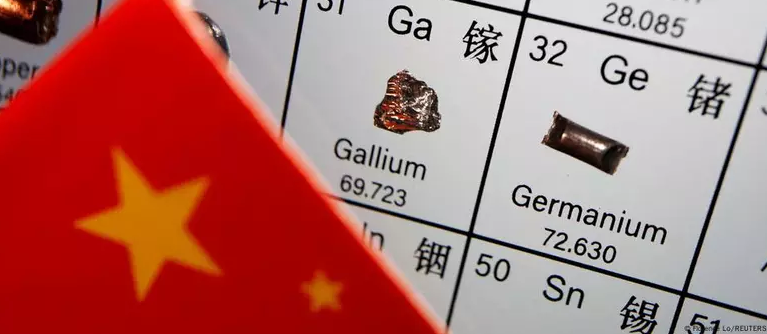
Beijing has banned the export of gallium, germanium, and antimony, as well as graphite, widely used in electric vehicle batteries. These materials are crucial for high-tech and defense industries, making the measure even more significant.
Although China has not openly stated its motivations, experts suggest that the move is a response to the restrictions imposed by the USA on semiconductor technologies. Beijing seems to be using these minerals as a “trump card” in its trade strategy.
The Global Impact of the Measure
With the ban, global companies face challenges in maintaining semiconductor production, essential in electronics and vehicles. The shortage of critical minerals may trigger increased costs and a slowdown in technological innovation.
Governments and companies around the world are racing against time to find alternative suppliers. Canada, Germany, and Japan are already being explored as viable options, but establishing a robust supply chain outside of China will take years.
USA and Allies: Reactions and Strategies
The USA and its allies have intensified efforts to diversify suppliers. Initiatives such as the “Critical Minerals Partnership” aim to create a more resilient market less dependent on the Chinese monopoly.
The West is heavily investing in mining and processing projects. For instance, in the southwest of Montana, the presence of gallium has been confirmed, marking a significant step towards mineral independence.
The Future of Trade Relations Between the Two Powers
The restrictions could lead to an escalation in trade tensions or even an “economic decoupling” between the countries. The impact will be felt globally, especially in technology and defense markets.
Meanwhile, cautious cooperation may be a way out. Establishing clear trade rules and investing in innovation to reduce dependence on critical minerals are strategies that could avoid a prolonged crisis.
The Chinese ban on critical minerals is a wake-up call for the importance of diversifying supply chains and strengthening international partnerships. As the USA and allies work to reduce dependence on China, the world faces a race against time to balance economic power and technological innovation.





Be the first to react!