Portuguese
  Spanish


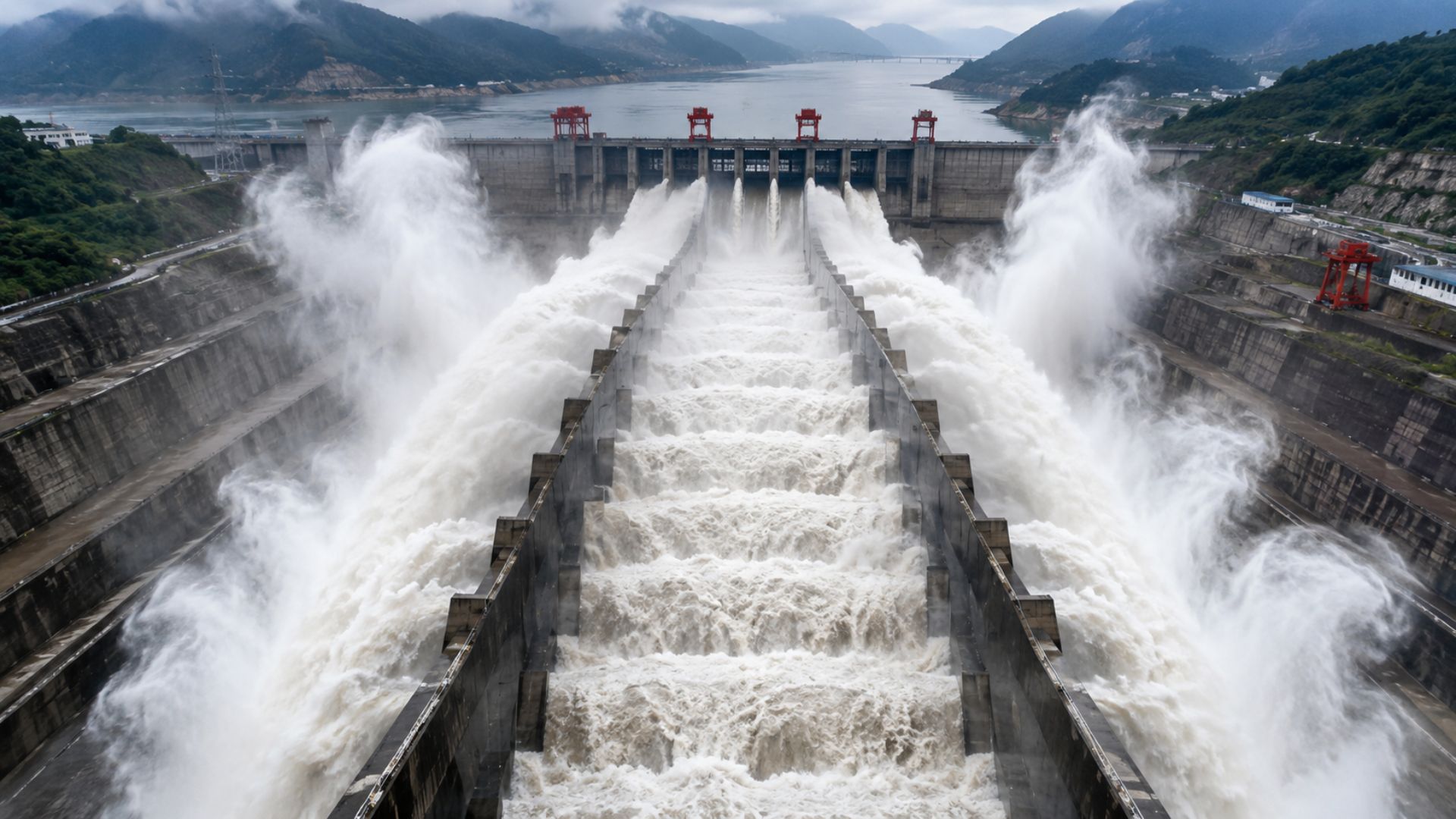

The ceremony took place on June 8, 2026, and the system of five cascading locks is expected to take about 9.3 years. With it, China aims to increase the dam’s capacity to 336 million tons per year and release larger ships currently trapped in a bottleneck.
China has begun the construction of a gigantic water staircase at the world’s largest hydroelectric dam, the Three Gorges Dam. According to the report by the portal interestingengineering, the project is a new lock system that is expected to nearly double the cargo capacity along the Yangtze River. The inauguration ceremony took place on June 8, 2026, and the project is valued at $11.4 billion, approximately R$ 62 billion.
According to the material, the system is described as a “water staircase” or “water elevator,” consisting of five sequential locks. The construction is expected to take 112 months, about 9.3 years, and will increase the dam’s annual capacity to 336 million tons, nearly double the current amount. The project is part of China’s 15th Five-Year Plan, valid from 2026 to 2030.
The water staircase that China will build
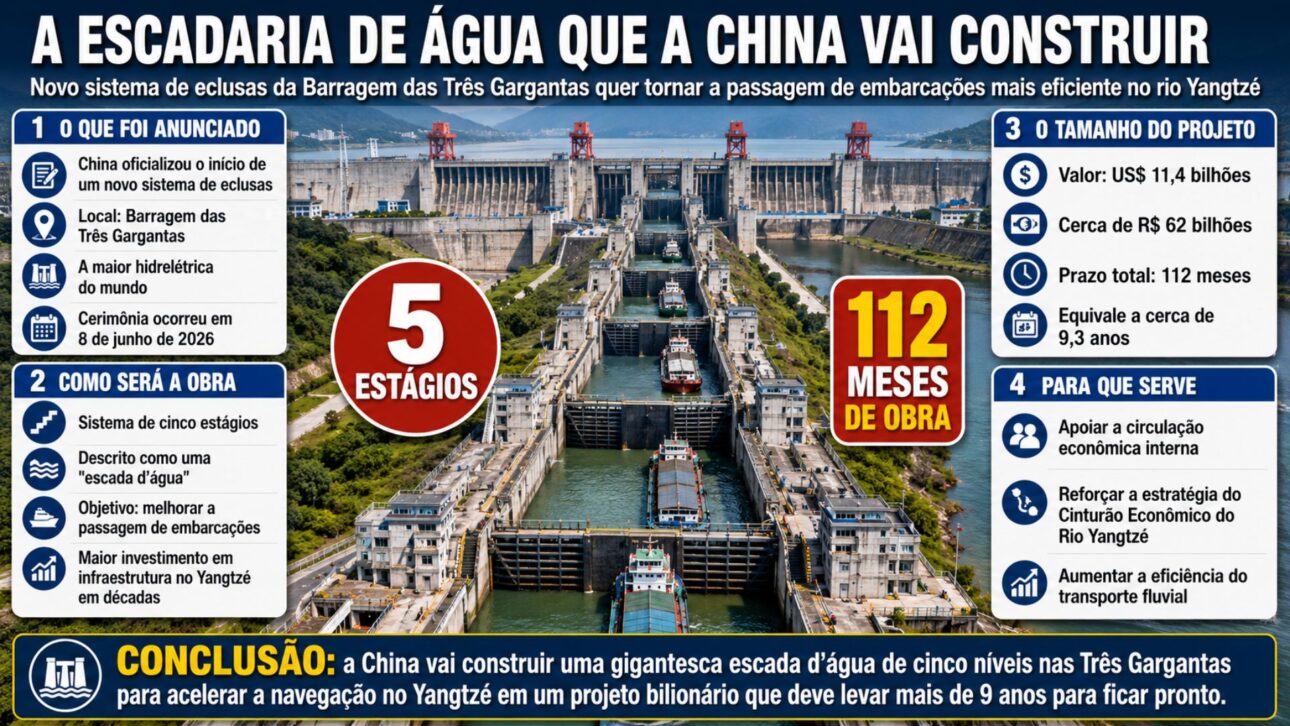
China has officially started a new and gigantic lock system at the Three Gorges Dam, the world’s largest hydroelectric plant. According to the report by the portal interestingengineering, the ceremony took place on June 8, 2026, and the project is considered the largest infrastructure investment in the third-largest river on the planet in decades. Valued at $11.4 billion, approximately R$ 62 billion, it includes a five-stage system, described as a water staircase.
-
Tired of Seeing Homelessness, New Westminster in Canada to Open Region’s First Tiny Home Village: 30 Container Homes with Central Kitchen, Meals, and Facilities

-
Brazil’s Santa Catarina Port Drives 770 Tons of Steel Piles into the Sea, Reaches Midpoint of $100 Million Project to Dock Two Ships Simultaneously by October
-
Expanded Polystyrene Gains Ground as a Lightweight Alternative to Traditional Masonry in Construction
-
Abandoned Brazilian Coastal Stadium, Once Hosting Major Soccer Matches, to Be Demolished for $10 Million NASCAR-Inspired Racetrack


The construction will be long, with a total duration of 112 months, or about 9.3 years. According to Liu Weiping, president of the Three Gorges Group, which operates the dam and the future locks, the project should “support internal economic circulation” and the Yangtze River Economic Belt development strategy. The stated goal is to make vessel passage more efficient.
How the system will almost double the load on the Yangtze River
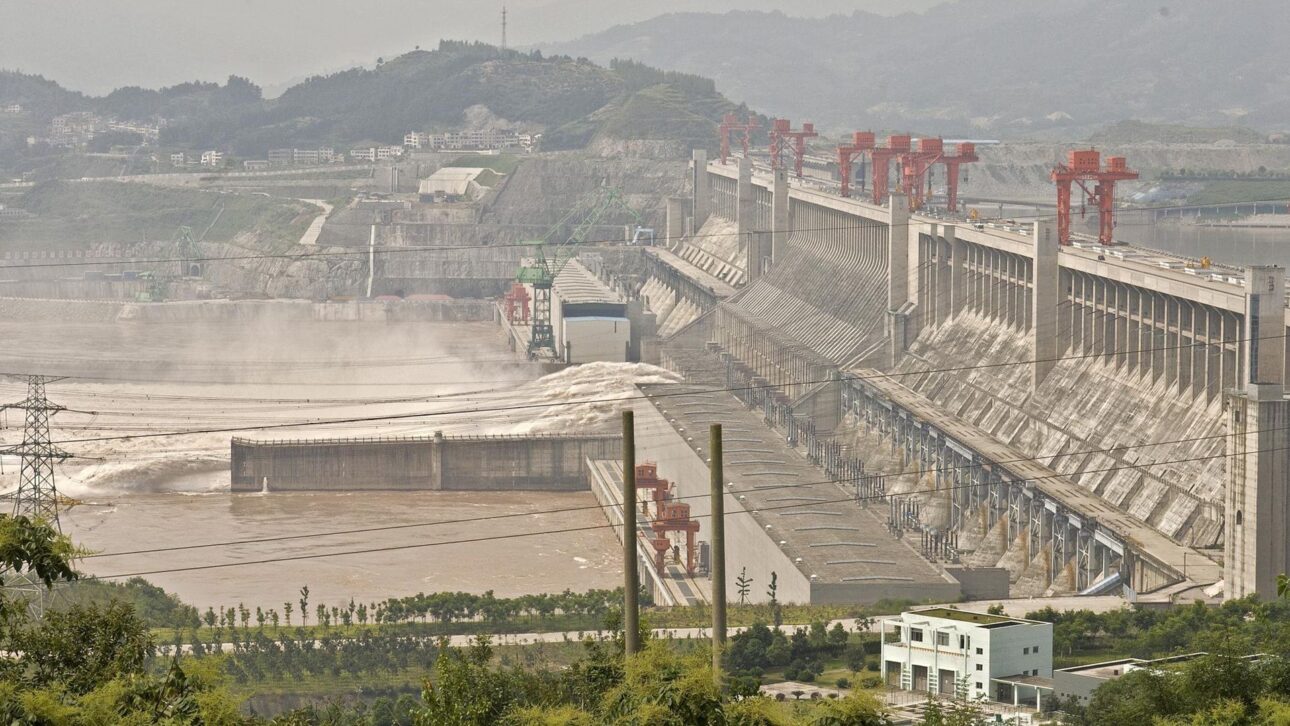
The heart of the project is a 6,680-meter-long bidirectional lock channel, with five consecutive stages. According to the material, the system will allow 10,000-ton class ships to pass through the dam more quickly and efficiently than today. According to the South China Morning Post, the initiative also includes wider access channels upstream and downstream, as well as new navigation facilities.
When completed, the work will increase the dam’s annual cargo capacity to 336 million tons, almost double the current amount. The goal, according to the report, is to reduce transportation costs and increase logistical efficiency along the Yangtze River Economic Belt. For China, the stretch is strategic for the flow of goods.
Why the bottleneck became a problem
The Yangtze River Economic Belt is described as the backbone of China’s economy. According to the material, the corridor generates more than 40% of the country’s economic output, covers 11 provinces and municipalities, and supports almost 50% of the population. The river has become increasingly important for the transport of inputs, industrial components, and finished products between the coast and the interior.
The problem is that the current structure has not kept up with the growth in demand. According to the report, the cargo volume exceeded the designed capacity of the locks, of 100 million tons, for the first time in 2011, and reached 173 million tons in 2025. Representatives from the Ministry of Transport stated that the old locks and the ship lift “have become a bottleneck.”
The limits and the size of the challenge


Despite the impressive scale, China’s bet has caveats worth considering. The first is time, as the work is expected to take about 9.3 years, meaning relief from the bottleneck will only come at the end of the next decade, while demand continues to grow. The second is the cost, at US$ 11.4 billion, one of the largest investments in the river in decades.
There is also the fact that the project is addressing a problem that has existed for a long time. According to the report, the current locks exceeded the planned capacity back in 2011, and the project is the largest infrastructure effort on the Yangtze since the dam began operating in 2003. Included in the 15th Five-Year Plan, the expansion is part of a larger strategy, but it will still take almost a decade to deliver results.
China’s new water staircase shows the scale of the challenge of keeping the Yangtze River navigable in the face of a continuously growing economy. If it meets the schedule and budget, the project could unlock one of the world’s main logistical corridors, even though the full effects will only be seen in almost ten years. For now, it paints a picture of a country betting heavily on river infrastructure.
And you, do you think it's worth investing more than $11 billion and almost a decade in such a project, or are there more urgent priorities? Share your opinion, respecting different views on the subject.