Portuguese
  Spanish


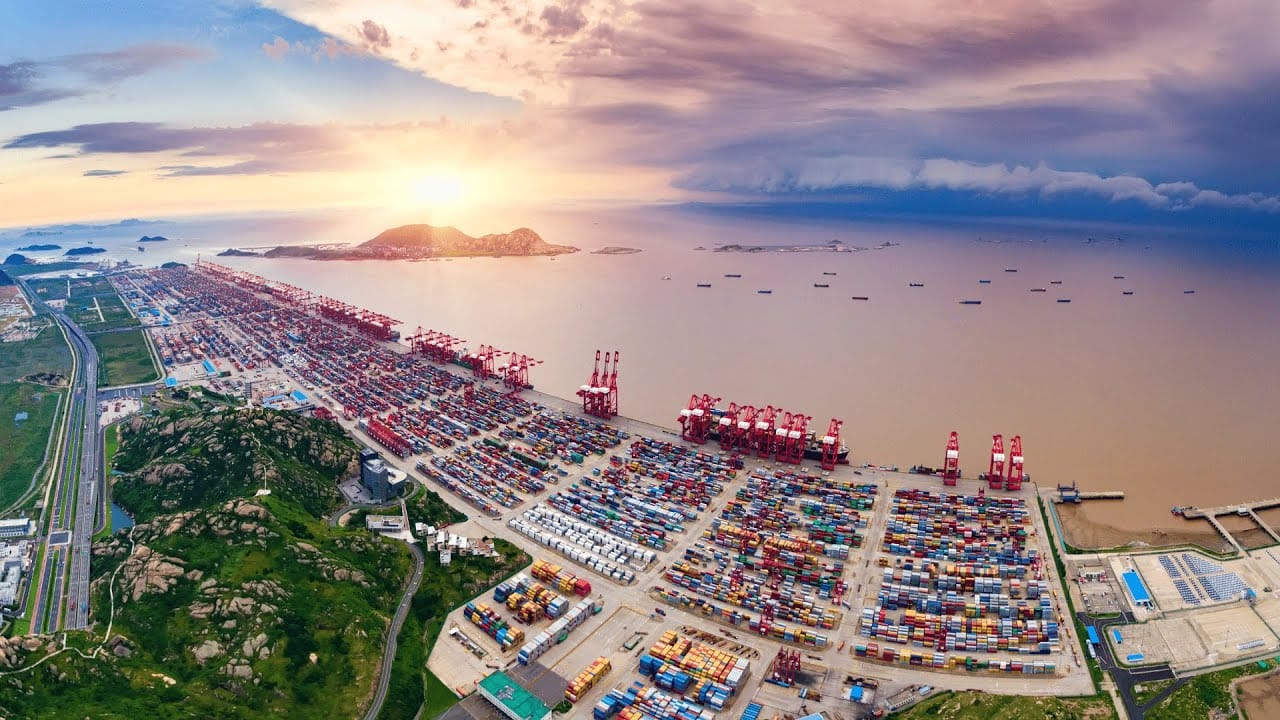

Discover the Largest Port in the World, Located in China. Founded in 1950, the Port Has Received Billion-Dollar Investments and Promises to Expand Even More.
In the waters of the East China Sea, covering an area of over 3,000 square kilometers, lies the largest port in the world, the heart where the lifeblood of international trade circulates. Serving as a testament to the power of human engineering, the Shanghai port is equipped with the most advanced cargo handling technology and defies scale by redefining what is possible at the intersection of Science Technology and human will.
Largest Port in the World Transports 800 Million Tons of Cargo Per Year

This is not just an ordinary port; it is the busiest port in the world, a city in itself, where tons of goods from all corners of the globe converge before being dispatched to their destinations.
The Shanghai port is one of the busiest and most important ports in the world, located on the east coast of China in the Yangtze River Delta, where the river flows into the East China Sea.
-
U.S. City Builds Tiny Home Village on Water Company Land to House 136 Homeless People: Inside the Social Housing Units

-
Woman Turns Shipping Container into Home, Embraces Rural Life to Cut Monthly Expenses to Just Over $330
-
France Revamps 530 Social Housing Units with Large Balconies and Glass Facades Without Demolishing Existing Buildings

-
Facing high rent, couple transforms parents’ garage into a fully functional apartment, creating a complete home at a fraction of the market cost.




It is the largest container port in the world, handling more than 43 million containers per year, equivalent to 800 million tons of cargo. The Shanghai port consists of various navigation areas and gigantic port terminals, and these areas are connected by bridges and tunnels that form the largest port in the world.
The entire port extends over a total area of 3,619 hectares, which is approximately 36.19 km². The construction project for the port in China that we know today started in the 1950s, and its construction was carried out in different phases over the years.
The first phase of construction began in 1950 with the building of the first pier in the Baoshan district. Construction of this pier was completed in 1952, and the remainder of the structure was finished in 1978.
The Largest Port in the World Has Employed and Employs Thousands of Workers
The project for the largest port in the world in China cost about 1.1 million yuan, approximately 1 million and 254 thousand Brazilian reais. The work was funded by the Chinese government, which received help from local and foreign construction companies. During this period, the port was expanded from about 1 square kilometer to 3.9 square kilometers.
At the time, the port had the capacity to handle around 3.5 million tons of cargo per year and employed about 200 workers. Various equipment was also constructed, including a lot of steel and concrete, and dredging of the Yangtze River to allow larger ships to dock, the installation of more modern cranes, and new construction methods.
About 10,000 workers were employed during the construction of the first phase of the Shanghai port, and approximately 90,000 tons of steel and 1.2 million tons of concrete were used during the process. The second phase of construction for the Shanghai port began in the 1980s, named the modernization phase when the port was expanded with another pier that cost about 80 million yuan, over 113 million Brazilian reais. By then, the project had already received R$ 30 billion in investment.
The Future of the Largest Port in the World
The port located in China has a very promising future, as the country continues to grow and become increasingly important on the global stage.
The port expansion project is ongoing, with plans for the construction of new terminals and expansion beyond the existing ones. Moreover, the port is investing in cutting-edge technology to improve operational efficiency, including the use of Artificial Intelligence and automation.
In terms of benefits, the Shanghai port plays a crucial role in the Chinese economy, providing a gateway for Chinese products in the Global Market and a connection for international supply chains. The modernization and expansion of the port also have a positive impact on the local economy, creating jobs and business opportunities for the community.