





 Portuguese
  English
  Spanish
  4 min of reading
  0 comments


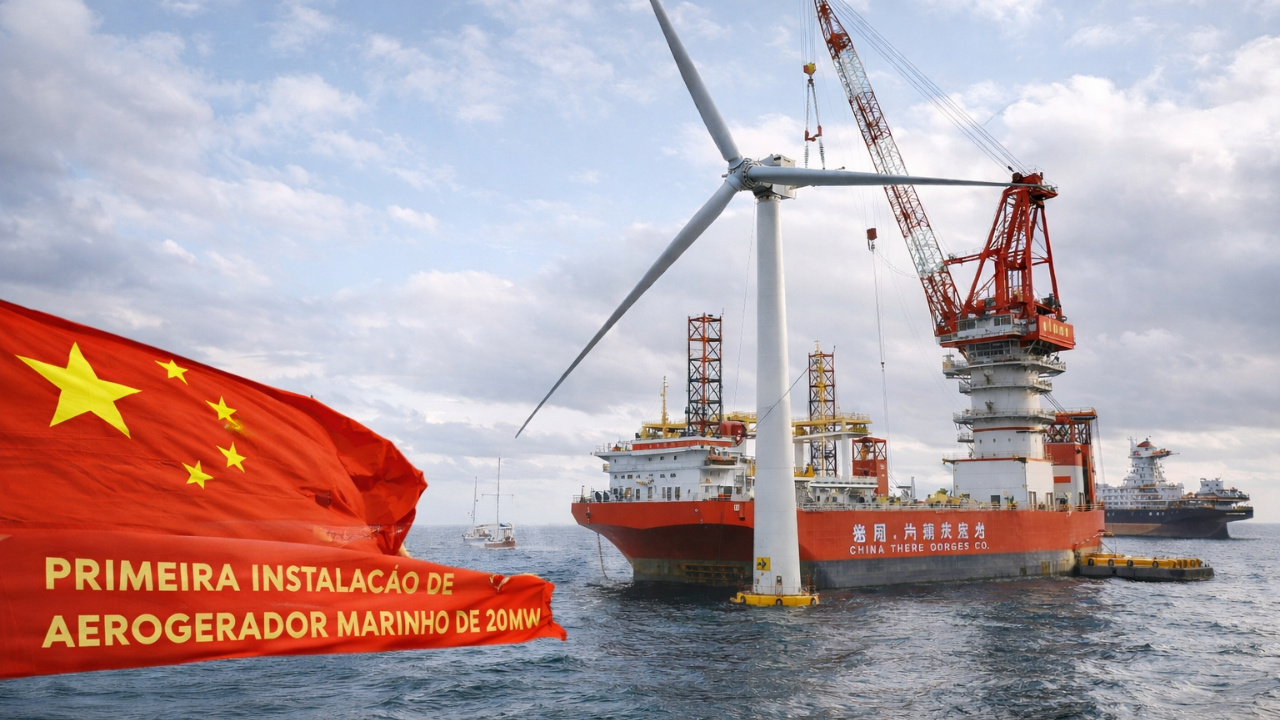
Wind Power Gains Unprecedented Scale with China’s Installation of the World’s First 20 MW Offshore Wind Turbine Capable of Powering Thousands of Homes and Reducing Emissions.
Offshore wind energy is experiencing a turning point in the international landscape. While the United States signals a slowdown by suspending licenses for maritime projects, China moves in the opposite direction, accelerating investments in large offshore structures.
At the end of 2025, the Asian country installed the world’s first 20 megawatt offshore wind turbine, consolidating a new technological level for the sector.
This move occurs amid global debates on energy security, energy transition, and industrial competitiveness, repositioning offshore wind energy as one of the central pillars of large-scale electricity production.
-
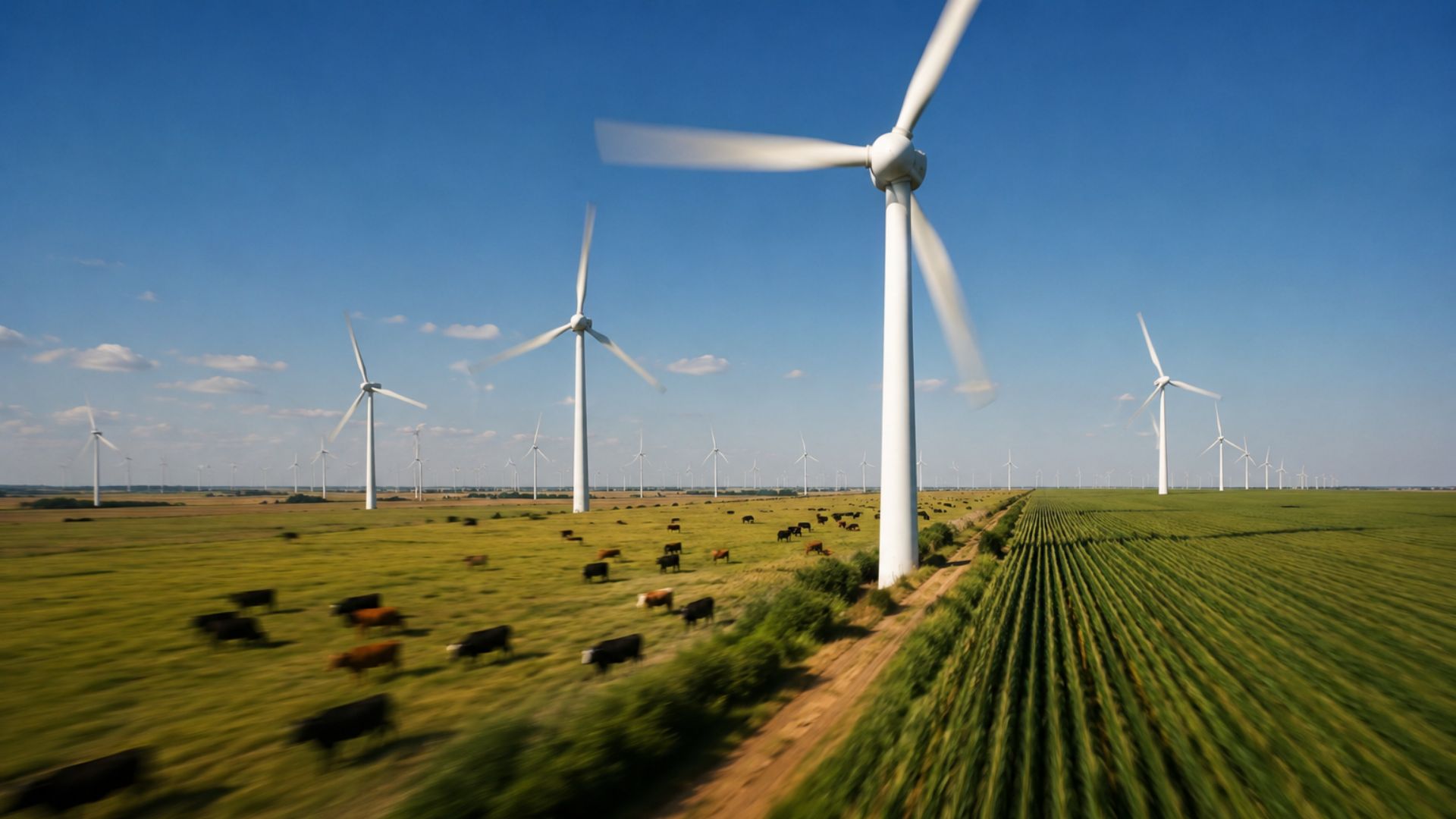
Taller than the Statue of Liberty, thousands of wind turbines are being planted in the middle of U.S. fields, creating two-story farms where corn and soybeans grow below while the wind turns into electricity above.

-
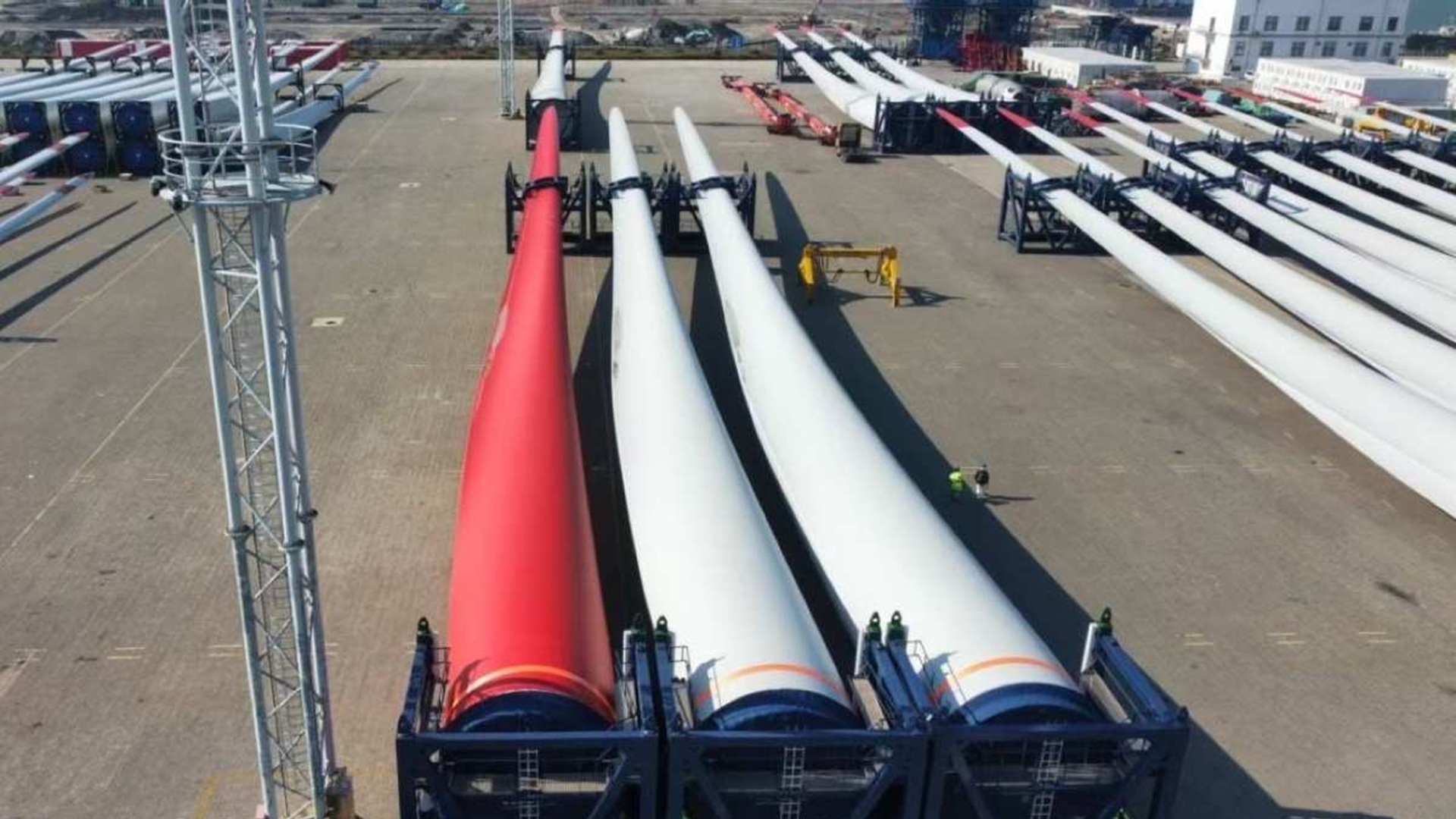
Dongfang breaks world record and manufactures 26 MW wind turbine in China with 137-meter blades that spin so slowly they appear stationary on the horizon.

-
Dutch wind farms attempt to innovate with red blade on turbines
-
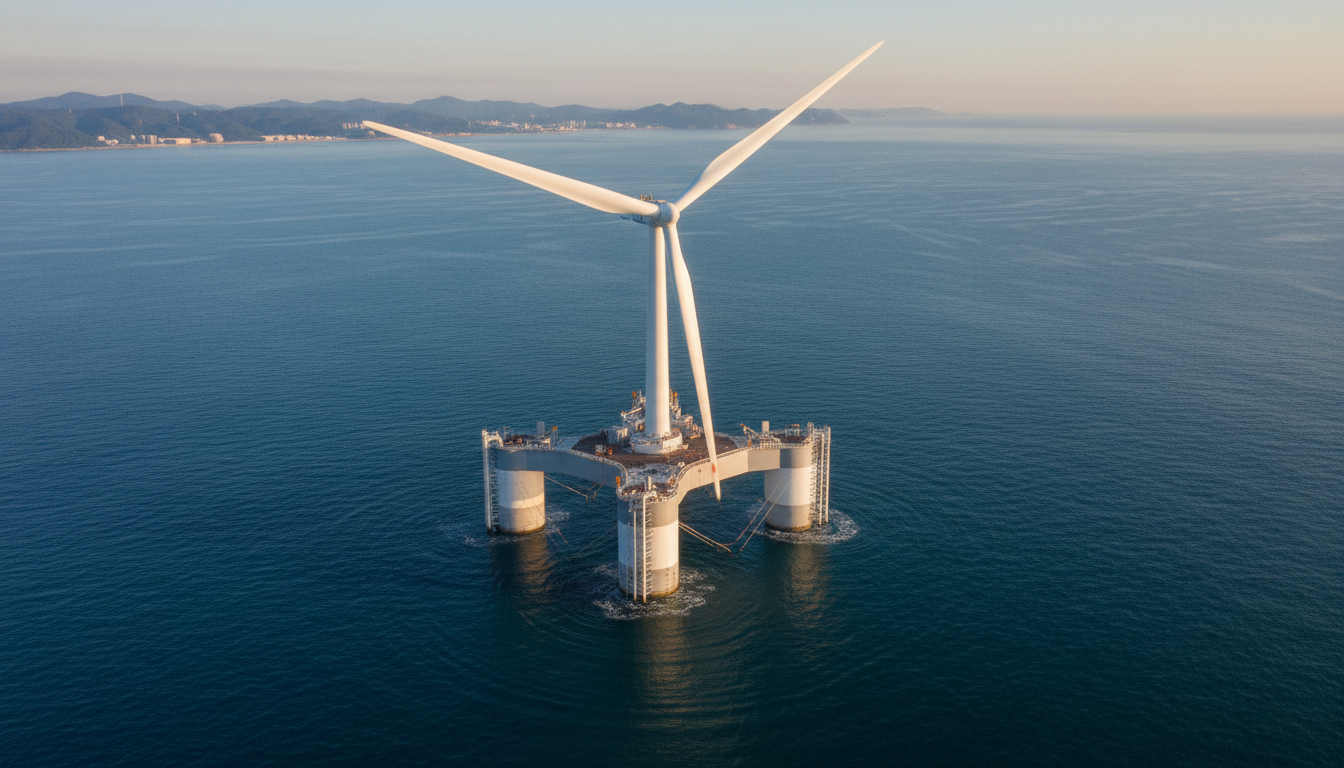
China installs the world’s largest floating wind turbine offshore with a 252-meter rotor and a swept area equivalent to 7 football fields.

20 MW Turbine Redefines the Limits of Wind Power at Sea
The new wind turbine was developed by China Three Gorges Co. and installed off the coast of Fujian province, a region known for its harsh maritime conditions. The turbine impresses with its dimensions. It features three blades, each 147 meters long, sweeping an area equivalent to about ten football fields.
The rotor is positioned 174 meters above sea level. This height allows for capturing stronger and more consistent winds, significantly increasing the efficiency of offshore wind power generation.
The annual production capacity exceeds 80 million kilowatt-hours. This volume is sufficient to meet the electric consumption of approximately 44,000 homes per year, without occupying land areas and with a direct impact on reducing emissions.
Installation in Deep Waters Requires Precision Engineering
The site chosen for the installation is over 30 kilometers from the coast. Additionally, the area is exposed to seasonal monsoons, intense waves, and extremely limited weather windows. In this context, each stage of the operation required detailed planning and precise execution.
To facilitate the assembly, a state-of-the-art installation vessel was employed, capable of lifting up to 2,000 tons. The equipment allows for movements controlled with millimeter precision, which is essential in large-scale offshore operations.
The blades were lifted individually to their final height before being attached to the central hub. Any misstep could result in significant delays or elevated operational risks, highlighting the complexity involved in deploying large-scale offshore wind energy.
Wind Power with Domestic Technology and Lower Structural Costs
One of the strategic points of the project lies in the use of components produced entirely in China. This decision reduces dependence on international supply chains and strengthens the local wind energy industry.
Moreover, the wind turbine features a lighter structural design than the industry average. The weight reduction exceeds 20% per installed megawatt, which has a direct impact on the overall costs of the project.
Lighter structures require less complex underwater foundations. Consequently, there is less consumption of steel and concrete, reduced installation time, and lowered logistical costs. In offshore wind energy projects, where infrastructure represents a significant portion of the investment, this factor is considered decisive for economic viability.
Industrial Scale Amplifies Positive Environmental Impact
The new offshore wind turbine also stands out for its environmental gains. One single unit can replace approximately 24,000 tons of coal per year. Furthermore, it prevents the emission of about 64,000 tons of carbon dioxide annually.
These numbers reinforce the scale logic adopted by the sector. Larger wind turbines enable more energy generation with fewer installed units. This reduces the amount of underwater cables, decreases maintenance needs, and limits human exposure to hostile marine environments.
Thus, offshore wind energy advances not through technological demonstration, but through systemic gains in efficiency and sustainability.
Geopolitical Contrast Marks the Advancement of Wind Power
The Chinese advancement occurs at a contrasting moment with the United States. At the end of 2025, the U.S. administration, under President Donald Trump, announced the suspension of licenses for five offshore wind energy projects.
This move reinforces strategic differences between the two largest economies in the world. While one side slows investments in the sector, the other bets on large-scale projects, proprietary technology, and industrial consolidation.
In this scenario, the installation of the world’s first 20 MW offshore wind turbine signals a structural change in the global wind energy market. The trend points to increasingly larger turbines capable of reducing costs per installed megawatt and accelerating energy transition on an industrial scale.







-

1 person reacted to this.