Portuguese
  Spanish


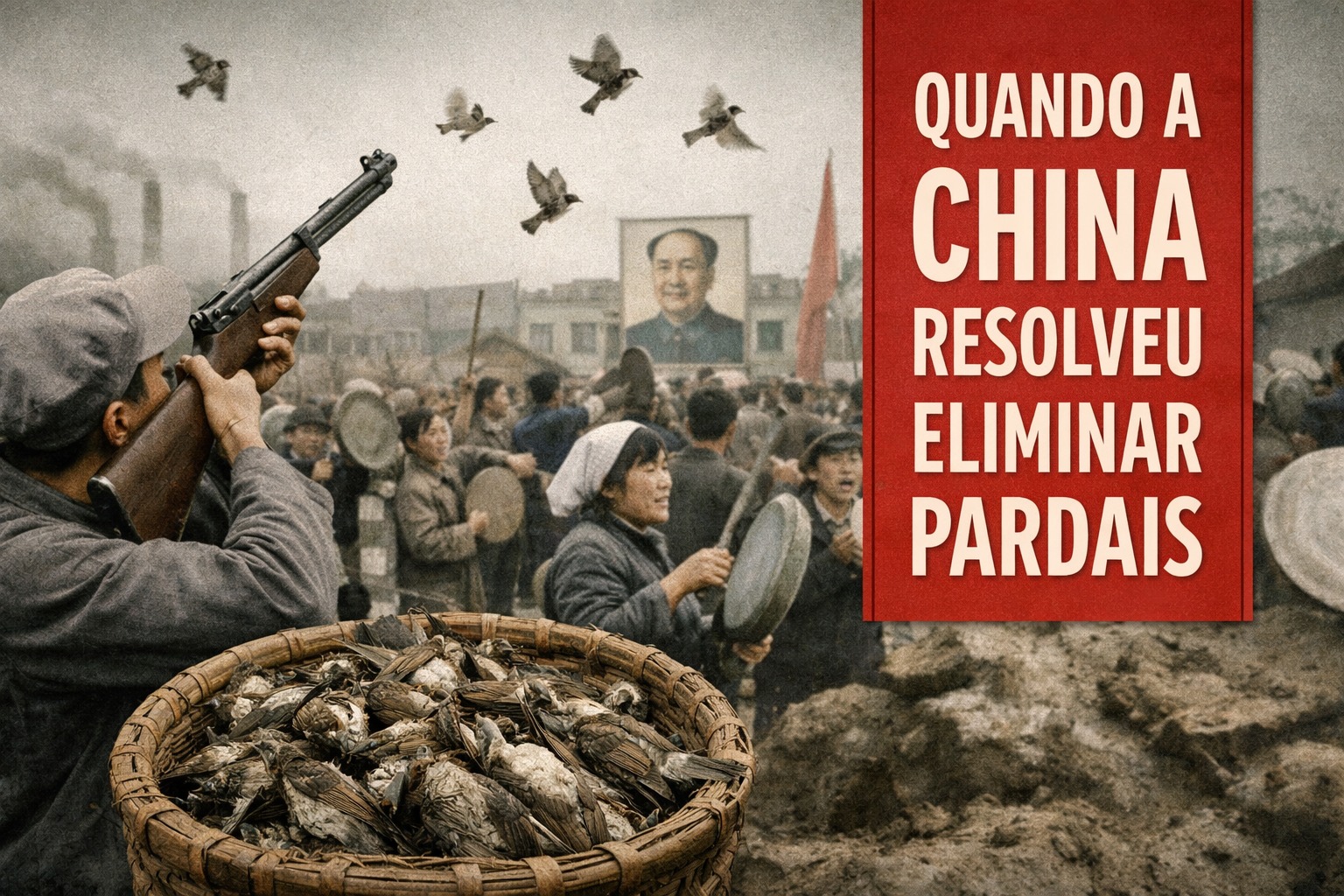


Program Launched by Mao Tse-Tung Integrated Sanitation, Economy, and Popular Mobilization, Eliminated Billions of Birds, Disrupted Ecosystems, Aggravated Agricultural Pests, and Contributed Directly to the Great Chinese Famine
The Mao Tse-Tung launched, in 1958, the Great Leap Forward, a state program aimed at rapidly industrializing China and increasing its prosperity, triggering massive campaigns that affected the environment and national food security.
Integrated Sanitary Campaign into the Economic Project
One of the actions was the Four Pests Campaign, known as the Great Sparrow Campaign, integrated into Tse-Tung’s political project to reorganize the economy and society.
The government spread the idea that rats, flies, mosquitoes, and sparrows transmitted diseases, justifying large-scale extermination public policies, with institutional support and popular mobilization.
-
Brazilian City Makes Remarkable Leap, Becomes 4th Wealthiest in the Country with GDP of R$ 134.1 Billion

-
Controversial 6-day Workweek Elimination in Brazil Faces Economic Criticism Over Productivity Claims

-
Itaú to Refund Customers After 14 Years of Unauthorized Credit Card Charges; Agreement Includes No Interest or Adjustments, Deadline by 2028, with Potential Impact of Up to $6.5 Billion

-
Brazilian Company Grows from Bartering Soap for Food to Producing 30 Million Units Monthly, Challenges Global Giants with $100 Million Revenue and Expands into Premium Cosmetics



In addition to the sanitary discourse, rural producers complained about the loss of grains caused by birds, estimating that a sparrow consumed about 4 kilograms per year, harming agricultural yields.
The strategy promised to increase production, aligning with the goal of accelerating growth, but ignored basic ecological effects, generating decisions based on simplified and politically convenient calculations.


Popular Mobilization and Extermination Methods
In 1960, citizens were encouraged to participate actively, using pots, pans, and drums to prevent landings, leading sparrows to exhaustion and progressive death.
When this did not work, they resorted to shooting, destroying nests, and breaking eggs, drastically increasing the number of birds killed across the territory.
As collaborators of the state plan, participants received rewards and official recognition, which reinforced collective engagement and accelerated the elimination of approximately 1 billion birds.
Environmental Imbalance and Productive Collapse
The elimination of sparrows produced a severe environmental imbalance, aggravating damage already associated with deforestation and excessive pesticide use promoted by the developmental project.
Without natural predators, locusts and caterpillars multiplied rapidly, destroying crops and compromising harvests essential for the survival of the Chinese population.
The direct consequence was widespread famine, an episode known as the Great Chinese Famine, which resulted in the deaths of between 20 to 50 million people.
Late Attempts at Correction
In the face of the disaster, the government tried to repair the damage by importing birds from the Soviet Union to contain agricultural pests that had become uncontrollable.
However, the measure was too late and insufficient, unable to reverse the human, ecological, and productive losses accumulated throughout the campaign and the initial political objective.
The episode remains a historical precedent of public policies that disregard environmental interdependencies, highlighting how centralized decisions can produce irreversible effects on entire societies.
With information from Aventuras na História.