Portuguese
  Spanish


Solar panels manufactured in excess in China drove down prices and pressured Chinese manufacturers in 2025 and 2026. With 1,000 GW of annual capacity, modules below cost and tariff reaction, solar energy became an industrial crisis, while cheap clean energy exposed coordination failures between governments and the market.
Chinese solar panels became too abundant for global demand, creating an industrial crisis within the very sector that helped make clean energy cheaper. According to an analysis published by Xataka, China reached an annual production capacity of 1,000 GW after years of accelerated investment.
According to information published by Xataka, the problem involves Chinese solar energy manufacturers, global supply chains, governments that raised tariff barriers, and consumers who could benefit from cheaper modules. The scenario worsened between 2025 and early 2026, when below-cost prices, bankruptcies, and excess inventory began to expose the limit of expansion.
China manufactured more solar panels than the world can use
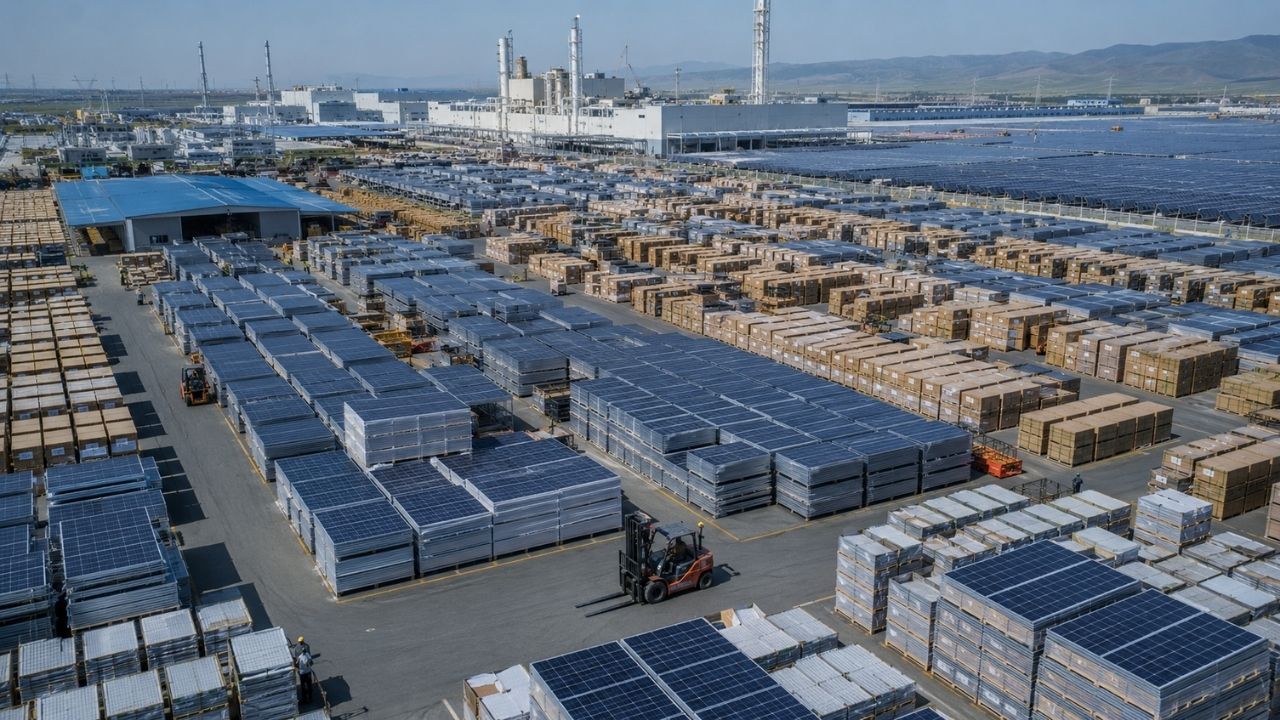
The Chinese expansion in solar energy reached a scale difficult to absorb. After a strong advance in investments since 2020, the country’s companies reached a production capacity of 1,000 GW of solar panels per year, according to the data cited in the analysis.
-
The Lithium Triangle in the Americas Will Determine the Future of Electric Batteries — and Brazil Is Late to the Game

-
China Reclaims Supercomputer Crown with LineShine, Surpassing US’s El Capitan by 20% Without GPUs, Despite High Energy Consumption
-
Injured Amazon River Dolphin Rescued by Local Community and Real-Life “Aquaman” in Brazil’s Tocantins River

-
Spanish Startup Develops Europe’s Densest Solid-State Battery at 402 Wh/kg


For comparison, global demand in 2023 was 451 GW, according to Energy News mentioned by Xataka. In the same year, Chinese production of solar cells reached 588 GW, already above the volume the international market could absorb.
The result was a paradox: the technology became cheap, but the industry suffered. Instead of just accelerating the energy transition, the excess created inventories, a sharp drop in prices, and pressure on manufacturers.
This situation highlights an important difference between productive capacity and actual use. Producing solar panels on a historical scale does not automatically resolve network, storage, installation, financing, and trade policy bottlenecks.
Below-cost pricing sparked a war among manufacturers
The crisis worsened when modules began to be sold below production cost. According to data from EnkiAI cited in the analysis, the price of a solar module fell to about $0.10 per watt, below the estimated $0.16 per watt for more advanced TOPCon modules.
This type of drop may seem advantageous for buyers, but it destroys margins within the production chain. When many companies sell below cost to survive, the entire sector enters destructive competition.
More than 40 Chinese manufacturers went bankrupt, were acquired, or ceased to be publicly traded, according to the survey cited by Xataka. Among the largest surviving companies, one-third of the workforce is said to have been laid off.
JinkoSolar, identified as one of the largest global suppliers, reported a 29% drop in revenue, an 86% decline in gross profit, and a net loss of 4.45 billion yuan in 2025. This data illustrates how even industry leaders were affected.
Solar panels became the symbol of energy that’s too cheap
The case of solar panels is not the same as a common crisis in steel, cement, or other industrial products. Solar energy is a central technology for decarbonization, the result of decades of research, scale, and productive advancement.
Therefore, the surplus has a greater impact than a simple commercial dispute. The world gained access to cheap clean energy on an unprecedented scale but failed to turn this opportunity into coordinated deployment.
The analysis cites economist Adam Tooze, in a column in the Financial Times, to reinforce this contradiction: the clean energy that seemed distant at the time of the Paris Agreement became technically available, but some factories began facing shutdowns and losses.
The problem is not just in the manufacturing capacity. It is also in the ability to install, connect, store, finance, and distribute this generation in electrical grids prepared to handle much larger volumes of renewable energy.
Chinese dominance in the solar chain increased global conflict
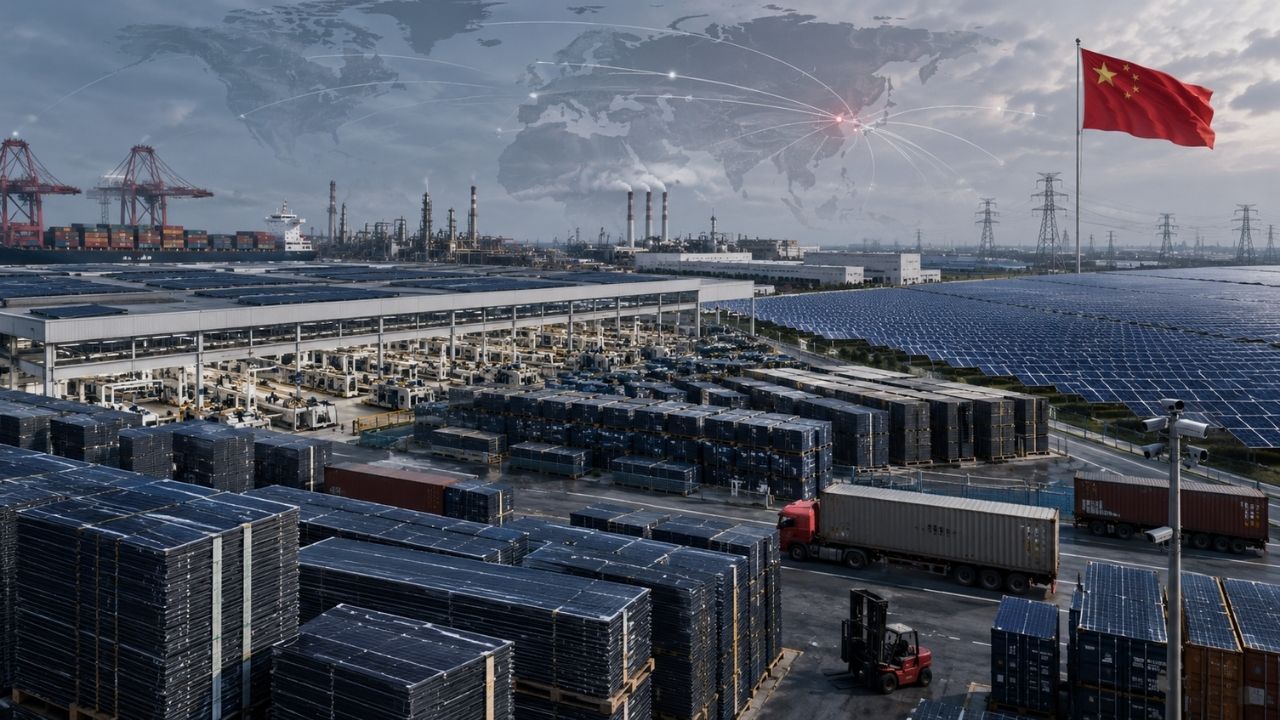
China controls more than 80% of the global solar energy production chain, according to data cited in the analysis. This concentration involves modules, cells, components, and critical manufacturing stages.
By the end of 2025, the country’s operational module capacity exceeded 900 GW. The five largest Chinese manufacturers control more than 50% of the market, while LONGi Green Energy shipped more than 45 GW in 2025.
This dominance made solar energy cheaper, but also increased global dependence on the Chinese industry. For countries seeking their own industrial security, the surplus of Chinese solar panels has become an economic and strategic challenge.
The Made in China 2025 plan appears as part of this movement. Beijing has moved from acting solely as a low-cost factory to seeking leadership in core technologies for the energy future.
Tariff barriers limited a historic opportunity
Instead of fully taking advantage of the price drop to accelerate solar panel installation, many countries responded with tariff barriers. The justification usually involves protecting local industry, economic security, and trade disputes.
However, this reaction also increases the cost of the energy transition for consumers and companies. When the world blocks part of the cheaper supply, clean energy arrives more slowly and at a higher cost.
The analysis points out that American tariffs did not create a domestic solar industry equivalent to China’s. Instead, they raised the cost of panels for U.S. consumers, while China continued exporting to other markets.
This conflict summarizes the current dilemma. Countries want cheap clean energy, but also want to reduce dependence on a production chain dominated by a single nation. The two goals do not always advance together.
Beijing tries to organize the sector after the excess
The crisis led the Chinese government to seek measures to contain the price war. Among the proposed measures are capacity controls, minimum indicative prices, mergers, acquisitions, and intellectual property protection.
More than 30 manufacturers even supported a pact to stabilize prices and reduce supply. However, six months later, according to the analysis, production continued to rise, installations increased, and losses persisted.
The attempt to organize the sector shows that China’s own productive success has gotten out of control. The country created a gigantic industry, but now needs to prevent internal competition from destroying companies, jobs, and technological capacity.
There was also a proposal for large manufacturers to jointly invest in the purchase and closure of less efficient facilities. The idea would be to reduce productive excess and stop the price decline, but this type of adjustment tends to be slow and painful.
Prices may rise even while remaining historically low
The period of extremely cheap modules may not last at the same pace. According to projections cited in the analysis, Chinese modules may rise between 10% and 20% by 2026 due to adjustments in overproduction and new logistical pressures.
Wood Mackenzie also forecasts an additional increase of 9%, according to the text. Even with this rise, prices would still remain low in historical terms, only moving away from the extreme level caused by below-cost competition.
This means that the window for very cheap solar energy may be narrowing. The question is whether the world will be able to take advantage of the still low prices before sector consolidation reduces the surplus supply.
The decisive variable for 2027 will be how the surplus will be resolved. The market may undergo orderly consolidation, with planned closure of less efficient factories, or face new commercial and financial disruptions.
China also installed solar panels beyond the grid’s capacity
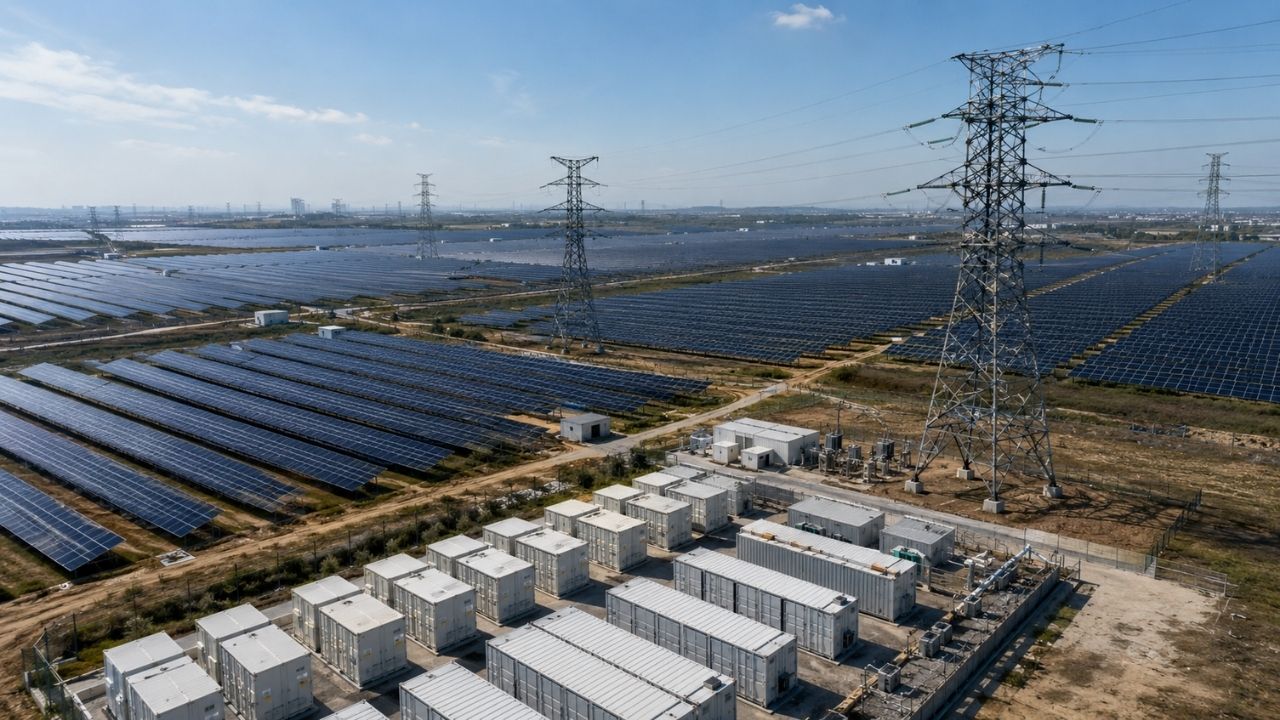
The excess is not only apparent in industrial production. China also installed so many solar panels that, in some regions, it generates more energy than it can store or transmit efficiently.
The grid and storage infrastructure did not keep pace with installations. Thus, part of the clean energy generated may be wasted due to lack of distribution, storage capacity, or market incentives.
Provincial regulations requiring batteries in solar projects did not fully solve the problem, according to the analysis, because many systems were underutilized due to inadequate incentives in the electricity market.
This is the paradox within the paradox. China has an excess of solar panels, abundant clean energy, and cheap technology, yet it still faces physical and regulatory bottlenecks to transform all this into useful electricity at the right time.
Quality became a concern in the race for lower prices
The price war also raised questions about quality. The analysis points out that some manufacturers have started to cut back on testing and materials to survive in a market with compressed margins.
This risk is relevant because solar panels need to operate for decades. A module that is too cheap can become expensive if it loses performance earlier than expected or fails to meet long-term guarantees.
The sector is already discussing the possibility of products installed today showing inferior performance in the coming years. This concern can affect investors, consumers, and companies that depend on technical predictability.
The consolidation of the market will also be decisive for guarantees. If manufacturers go bankrupt or disappear, customers may have difficulty accessing assistance, replacement, or commitments made at the time of sale.
Cheap solar energy exposes a failure of global coordination
The Chinese case shows that abundant technology is not enough to solve the energy transition. It requires a network, storage, commercial rules, financing, planning, and political capacity to transform surplus into useful installation.
The OECD, cited in the analysis, indicates that the solar industry is one of the most subsidized sectors in the world. At the same time, these subsidies helped provoke one of the largest cost reductions ever seen in renewable technology.
The real debate is not just whether China subsidized solar panels, but what the world did with this cheap supply. The global response was fragmented: some tried to buy, some imposed tariffs, some protected their industry, and some failed to install quickly enough.
The crisis reveals a failure of coordination. While the Chinese industry produced at scale, the rest of the world did not create agile mechanisms to absorb, install, and integrate this energy in a planned way.
Climate opportunity may become more expensive and slower
Solar energy is not expected to disappear as a sector. Chinese companies remain large, efficient, and present in almost all markets, while cheaper batteries are beginning to be integrated into solar systems to provide grid stability.
China itself has greatly expanded its installed capacity. According to data cited in the analysis, the country surpassed 1,230 GW of installed solar capacity in February 2026, with an annual growth of 33.2%.
Even so, the transition may become more expensive and more chaotic than it could have been. The abundance of solar panels offered a rare opportunity to accelerate installations, reduce emissions, and lower electricity costs on a global scale.
If the consolidation is organized, the sector may emerge smaller, more stable, and still competitive. If it is chaotic, the world may lose manufacturers, warranties, jobs, and part of the capacity that made clean energy so cheap.
Solar panels show the paradox of abundance
The Chinese solar panel crisis reveals an uncomfortable question: what happens when the world finally manages to produce cheap clean energy on a large scale, but cannot use this supply at the same speed?
On one hand, China created an industry capable of manufacturing more modules than the global demand can absorb. On the other hand, tariffs, limited networks, inventories, bankruptcies, and geopolitical disputes have prevented this surplus from becoming a faster energy transition.
The paradox is that clean energy has become too cheap for part of the industry to survive, but it is still not accessible enough to reach all the places that need it. This contradiction may mark 2026 as a decisive year for the sector.
And you, do you think the world should take advantage of China’s cheap solar panels to accelerate the energy transition or protect local industries even if it makes clean energy more expensive? Leave your opinion in the comments.