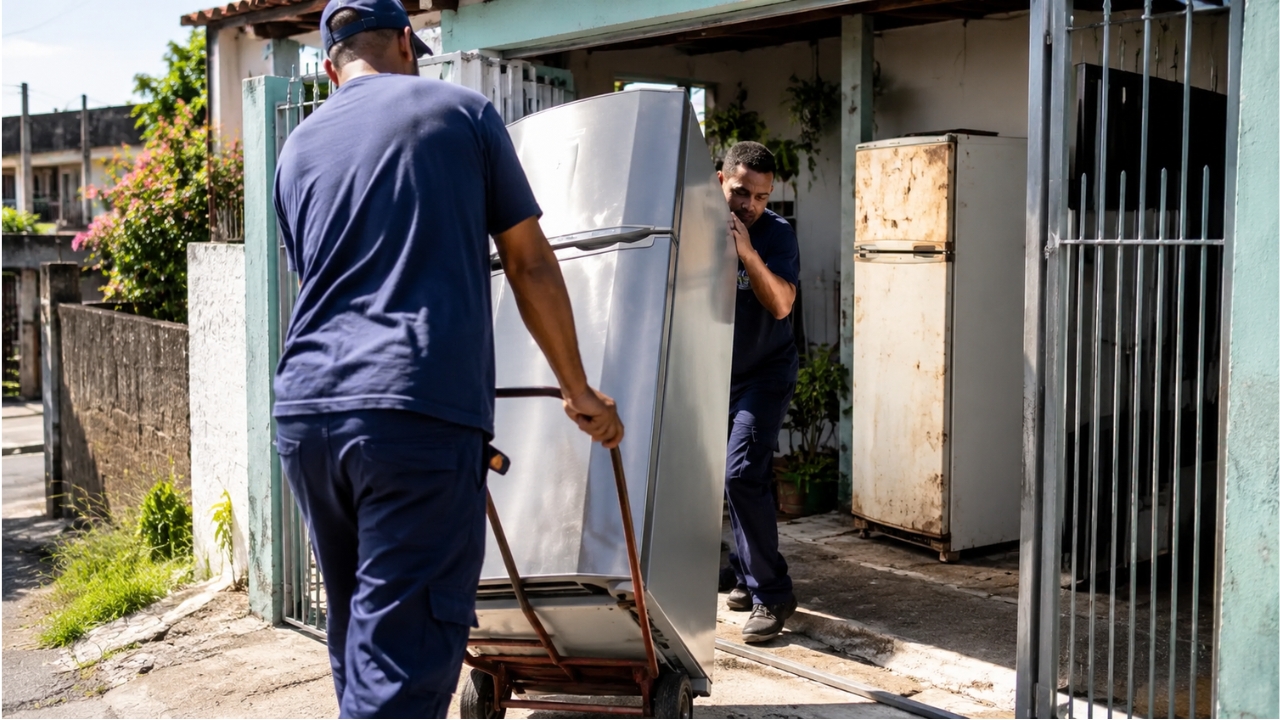

The Trocou, Economizou project by Copel encourages residential consumers in Paraná to replace old refrigerators with more efficient models, offering a discount on purchase, collection of the used equipment, and exchange of old bulbs for LED.
A Copel program is turning a common household appliance into a central point of savings within homes in Paraná. The Trocou, Economizou project encourages residential customers to replace old refrigerators with more efficient models, offering a discount on purchase and mandatory collection of the used equipment.
The initiative was relaunched on August 21, 2025, according to the Government of Paraná, with a stock of 20,000 refrigerators. By January 8, 2026, the official update reported that more than 16,000 homes in Paraná had already been visited for replacement.
The number is striking because it shows that the problem is not just the electricity bill. It also appears in the kitchen, in old appliances, often running for years, consuming energy every day, and going unnoticed in the household routine.
-
World’s Fastest Tractor, the JCB Fastrac Two, Hits Nearly 247.5 km/h with Over 1,000 Horsepower

-
At 86, mountaineer Carlos Soria becomes the oldest person ever to summit an 8,000-meter peak, reaching the top of Manaslu in Nepal.

-
Brazil Secures Spot in International Mathematical Olympiad as Students Excel in One of the World’s Most Competitive Selections, Highlighting Growth in STEM Education Among Young Talents
-
June 2026 Heatwave in France Depletes “Blanc de Meudon” as Residents Use Chalk Powder to Cool Homes by 3 to 7°C Without Air Conditioning



Copel’s discount is not a donation and depends on the delivery of the old refrigerator
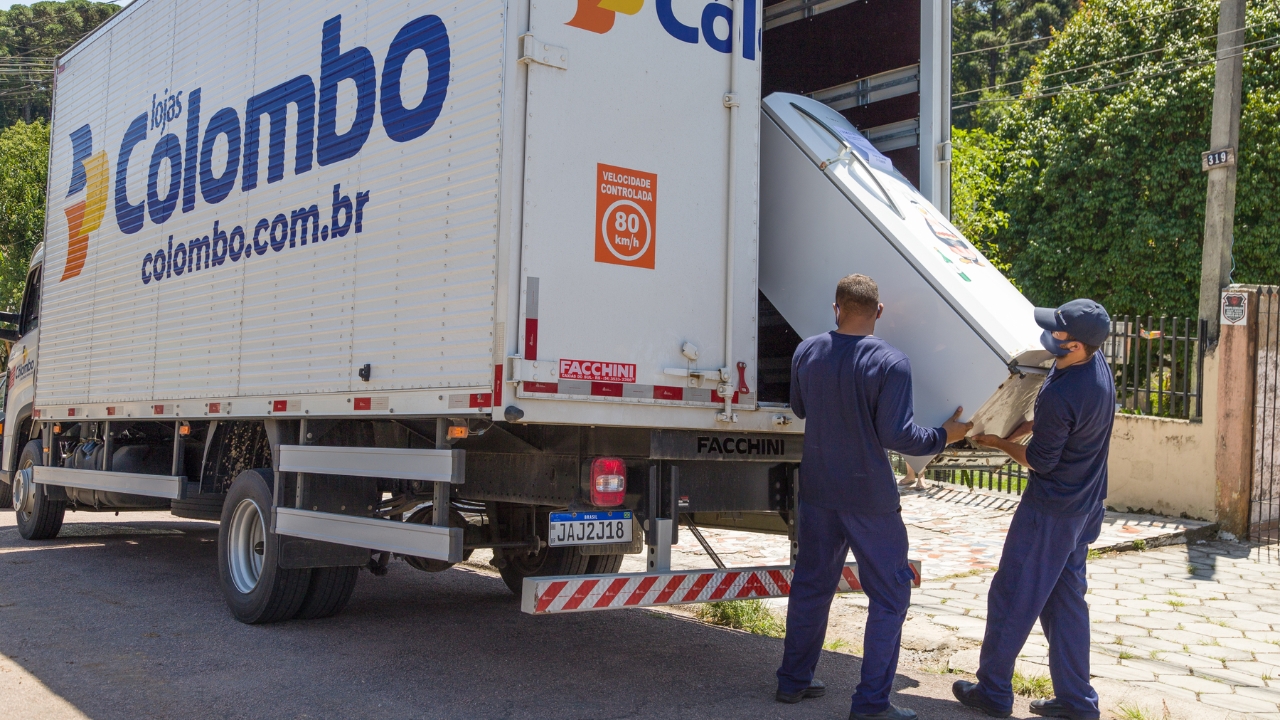
The Trocou, Economizou functions as an incentive program for purchasing more efficient refrigerators. Copel states that the discount is a bonus funded by the company, but participation depends on meeting specific rules.
The consumer must be the holder of a residential consumer unit served by Copel and have their energy bills up to date. They must also deliver an old, functioning refrigerator, at least 5 years old, at the time they receive the new equipment.
The purchase must be made at physical units of Lojas Colombo in Paraná or through the telesales 0800 642 4242, according to Copel’s official page. The delivery of the new product can occur up to 90 days after purchase.
This rule is important because the goal is not just to sell a new appliance. The program aims to remove old appliances from circulation, precisely those that tend to consume more energy and continue to weigh on the bill month after month.
Stock started with 20,000 refrigerators and there were still units available in January
According to data released by the Government of Paraná, the current edition of the program started with 20,000 refrigerators available. As of the January 2026 update, more than 16,000 units had already been delivered or were linked to visits made to homes in Paraná.
At that time, about 2,000 refrigerators were in the process of being delivered and approximately 1,700 were still available. Copel’s own page lists models from brands like Consul, LG, and Electrolux, with different capacities and versions.
Among the officially reported products are refrigerators of 300 liters, 375 liters, and 480 liters. The program’s page also shows that some models were already sold out, indicating strong demand for the benefit.
There is also a technical rule about the type of refrigerator delivered. In general, the old equipment needs to have the same number of doors as the new one. The exception cited by Copel involves the LG 375-liter two-door model, with a thousand units intended for exchange for used one-door refrigerators.
Beyond the refrigerator, consumer exchanges four old bulbs and receives LED
The program also includes an additional exchange within the home. The customer needs to deliver four functioning old bulbs and receives a kit with four 8 W LED bulbs.
According to Copel, the bulbs delivered can be fluorescent with a minimum of 16 W, incandescent, or halogen with a minimum of 40 W. Thus, the action expands the focus from the refrigerator to another point of everyday consumption.
The practical effect is simple to understand. The house not only exchanges a large appliance but also replaces old bulbs with more efficient technology, within an initiative that combines household savings, conscious consumption, and reverse logistics.
The collected refrigerators should not return to common use. Copel informs that the equipment is sent for environmentally correct disposal, with waste recovery through reverse logistics.
Refrigerator can represent up to 31% of residential consumption


The weight of the refrigerator on the energy bill helps explain why this type of program attracts attention. According to information released by Copel and the Government of Paraná, the average consumption of Paraná households was 191 kWh in the last 12 months.
Within this total, refrigerators can represent from 8% to 31% of residential consumption, depending on the house’s configuration, the appliance model, and the way it is used. This means that an old appliance can occupy a significant portion of the monthly energy without the consumer clearly noticing.
This point turns the exchange into a matter of public utility. For many families, the appliance continues to cool and seems to fulfill its function. But, behind the closed door, there may be high, silent, and constant consumption.
The National Electric Energy Agency, Aneel, appears in the context because the project is part of Copel’s Energy Efficiency Program, regulated by the agency. The purpose of this type of initiative is to reduce waste, encourage efficient use of electricity, and generate benefits for the electrical system.
Case of resident with 22-year-old refrigerator shows the size of the challenge
Among the officially released examples is that of Maria Alves Feitosa de Alencar, a 91-year-old resident of the northern zone of Londrina. She exchanged a refrigerator with 22 years of use for a new model within the Trocou, Economizou program.
The case helps to show the real dimension of the program. In many homes, the old refrigerator is not seen as a problem because it continues to work. The expense appears diluted in the electricity bill, month after month, without causing the same visual impact as a broken appliance.
The institutional speech also reinforces this path. The president of Copel, Daniel Slaviero, argued that modernizing appliances benefits families and society by reducing waste. Meanwhile, José Arthuro Teodoro, supervisor of Copel’s Energy Efficiency Program, highlighted that renewing thousands of devices contributes to more efficient energy use.
In the end, Trocou, Economizou goes beyond a promotion to buy a refrigerator. It reveals how a basic household item can carry years of invisible consumption, and how an energy efficiency policy can transform a domestic exchange into savings, proper disposal, and relief for the electrical system.