Portuguese
  Spanish


The aircraft carrier Liaoning conducted military training in the Western Pacific under Japanese surveillance, according to China Daily, on June 9, 2026. Beijing denied a specific target, while Tokyo monitored vessels, location, and air sorties, turning the exercise into a new sign of tension between China and Japan in the sensitive monitored Asian region.
The Chinese aircraft carrier Liaoning returned to the spotlight in the Western Pacific after a round of training closely monitored by Japan. According to a China Daily publication updated on June 9, 2026, Beijing stated that the task group’s activities were not directed at any specific country or entity.
The episode gained regional significance because Japanese authorities monitored and released information about the fleet, including the number of vessels, training area, and movement of embarked aircraft. In the reported theme, the training is associated with about 170 takeoffs and landings and the fleet’s passage approximately 590 km from Miyakojima, a sensitive point for Japanese surveillance.
Liaoning’s training was treated by Beijing as a planned activity
The aircraft carrier Liaoning is part of a Chinese task group that, according to China’s Ministry of Defense, was conducting training in relevant waters of the Western Pacific. The statement was made by Zhang Xiaogang, the ministry’s spokesperson, during an online briefing.
-
Ayatollah Ali Khamenei’s Funeral Draws 15 to 20 Million in Tehran, Calls for Revenge Against Trump After Joint Israel-U.S. Attack

-
U.S. Establishes Permanent Embassy in Jerusalem, Reigniting International Debate Over Israel’s Capital
-
The world has nearly 12,000 nuclear warheads, with the majority held by the United States and Russia; see the figures for China, France, and the United Kingdom.

-
Venezuela Faces UN Alert for Hunger, Disease, and Service Collapse After Earthquakes Cause Nearly 2,000 Deaths and $6.7 Billion in Damages


According to the Chinese position, the operation’s objective was to enhance combat capabilities in distant sea training. Beijing sought to frame the movement as a planned military activity, not as an action directed against a specific country.
Japan monitored the fleet and maintained alert over the movement
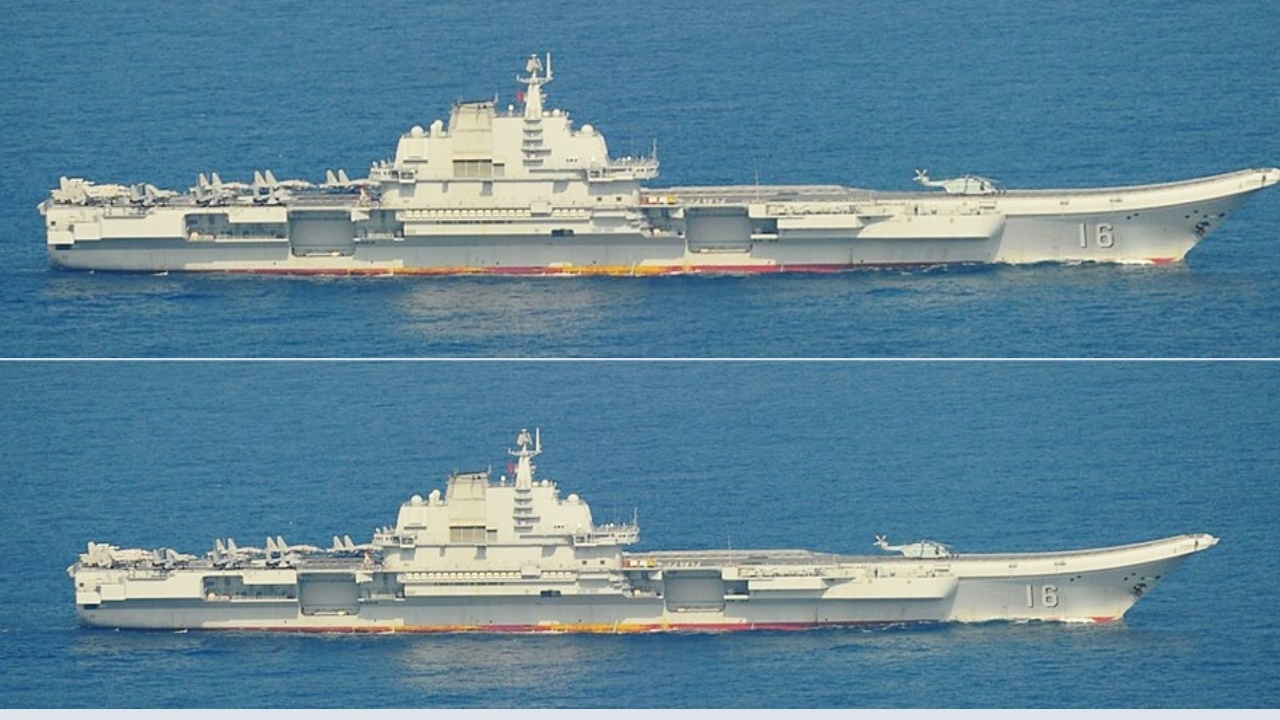
Japan, in turn, monitored the movements of the Liaoning task group and released details about the training. The Chinese source reports that the Japanese Ministry of Defense communicated data such as the number of ships, location of activities, and sorties carried out by embarked aircraft.
Japanese surveillance became a central part of the repercussion because the deployment occurred in a region of high strategic sensitivity. When an aircraft carrier operates in the Western Pacific, each movement tends to be interpreted also for the political and military impact it can generate on neighboring countries.
Beijing denies specific target and criticizes Japanese disclosure
Zhang Xiaogang stated that the operation did not target any country or entity. The statement sought to reduce the interpretation that the training was a direct military message to Japan or another regional actor.
At the same time, the spokesperson criticized Japanese surveillance actions and the constant disclosure of information about the task group. For Beijing, Tokyo would be amplifying the political interpretation of Chinese activity and fueling tensions in public opinion.
Western Pacific has returned to focus military attention
The Western Pacific is a strategic area for China, Japan, and other regional actors. The presence of a Chinese aircraft carrier in this region, especially in distant sea training, naturally increases the interest of governments and military analysts.
In the case of the Liaoning, the relevance also comes from the symbolism. The ship is one of the main elements of Chinese naval projection, and its exercises outside coastal areas show the attempt to expand operational experience in more distant waters.
Miyakojima reinforces the sensitivity of Japanese monitoring
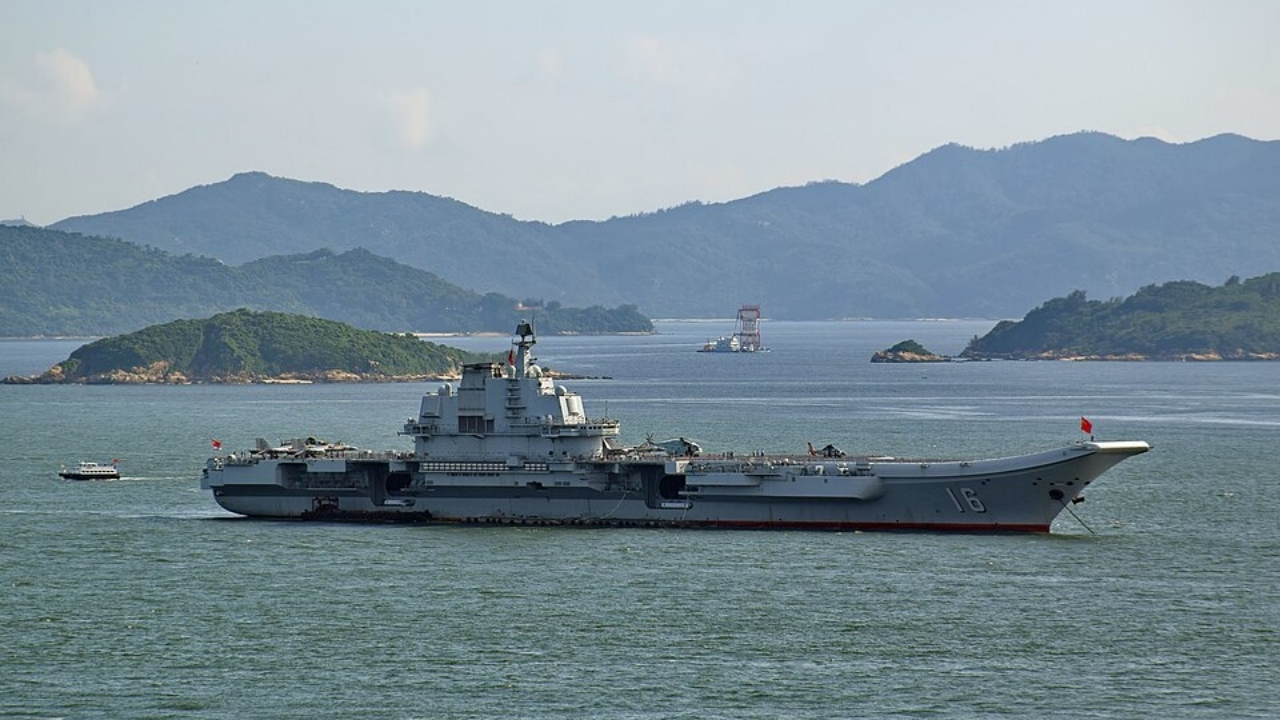
The reference to the fleet’s passage about 590 km from Miyakojima increases the geographical weight of the episode. The data appears in a statement from the Joint Staff of the Ministry of Defense of Japan, which also reported having observed approximately 170 takeoffs and landings of fighter jets and helicopters embarked on the Liaoning between May 26 and 28, 2026.
The publication of China Daily records the Chinese reaction to Japanese monitoring. According to the Chinese state vehicle, Beijing stated that the Liaoning task group’s training in the Western Pacific did not target any specific country and criticized the surveillance operations carried out by Japan during the exercises.
About 170 air operations expand the reading of robust exercise
The reported theme associates the training with about 170 takeoffs and landings, a number that suggests intense air activity from the aircraft carrier. In such operations, embarked sorties are observed because they indicate training pace, coordination between ship and aircraft, and the ability to maintain continuous activity.
The sent Chinese source does not directly report this total but mentions that Japan monitored and disclosed the number of embarked aircraft sorties. Therefore, the data should be read as part of the regional surveillance context, not as a statement made by the Chinese spokesperson in the main text.
Narrative dispute also entered the center of the case
Besides the military movement, the episode involves a narrative dispute. For China, the Liaoning aircraft carrier’s training is part of a legitimate operation conducted according to the plan. For Japan, the fleet’s monitoring appears as a surveillance and alert measure in the face of Chinese activity.
This difference in interpretation is important because it shows that the exercise’s impact goes beyond the ships. In tense regions, how each government communicates a military movement can influence the public and diplomatic perception of the episode.
Training reinforces debate on Chinese naval presence
The Liaoning’s activity reignites discussions about the advancement of Chinese naval presence in the Western Pacific. China claims it conducts training to strengthen operational capabilities, while neighboring countries observe the increase in deployments, exercises, and military presence.
In this environment, the aircraft carrier becomes more than a combat platform. It also functions as a symbol of power, reach, and projection capability, factors that help explain why Japanese surveillance was so highlighted.
Regional alert does not mean confrontation, but requires attention
So far, the source sent does not report confrontation, direct incident, or formal change of military status between China and Japan. What exists is a Chinese training, Japanese surveillance, and divergent public statements about the meaning of the operation.
The regional alert, therefore, lies in the strategic reading of the episode, not in a confirmation of attack or immediate threat. The movement of the Liaoning aircraft carrier shows how military exercises in sensitive areas can quickly gain diplomatic dimension.
Case shows how a naval exercise can become a geopolitical signal
The operation of the Liaoning in the Western Pacific highlights how military trainings are observed on multiple layers. For Beijing, it is about enhancing capabilities in distant seas. For Tokyo, it is a movement that needs to be monitored closely.
The case also shows that regional tension does not depend solely on what the ships do, but on where they pass, how many operations they perform, and how governments communicate these movements. In a scenario of constant surveillance, even a planned exercise can become a geopolitical message.
Do you think the presence of a Chinese aircraft carrier in the Western Pacific should be seen as a common military exercise or as a sign of regional pressure? Leave your opinion in the comments.