Portuguese
  Spanish


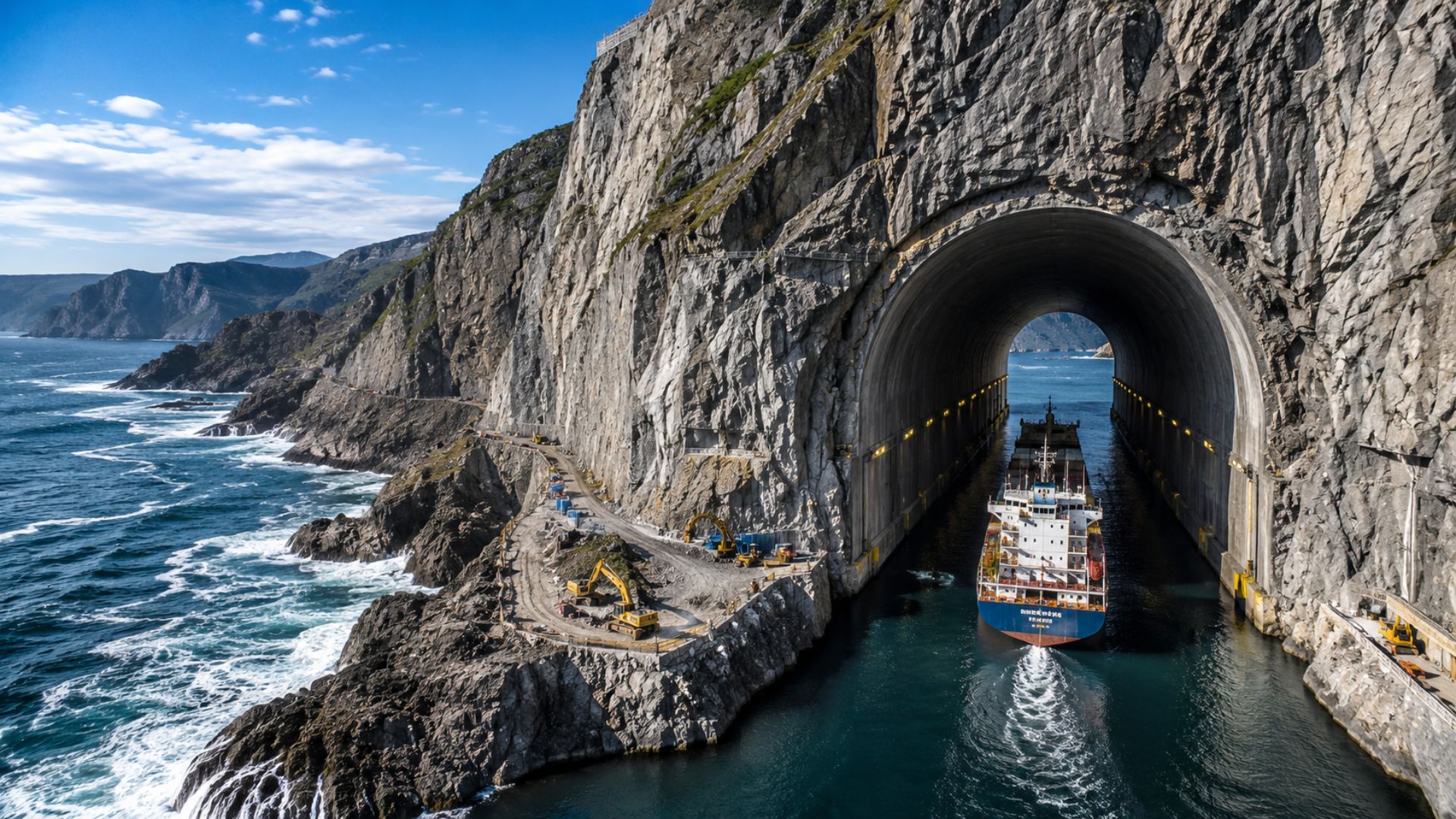


The maritime tunnel would cut through the Stad peninsula and remove cruises and cargo ships from open sea, and up to 81% of local traffic could use the passage. However, the project was suspended in May due to a cost of NOK 8.6 billion and depends on a parliamentary vote scheduled for June 19.
Norway is preparing to build the Stad Ship Tunnel, the world’s first full-scale maritime tunnel, an open passage inside a mountain for ships to escape the most dangerous stretch of its coast, with more than 3 million cubic meters of rock to be excavated. The dimensions and data of the project come from the Norwegian Coastal Administration, Kystverket, while the construction schedule depends on a decision by the country’s Parliament, the Storting.
Advocated for over a century by engineers and sailors, the project is not yet a finalized decision. The project was suspended in May 2026 by the government of Jonas Gahr Støre after the estimated cost jumped from about NOK 5 billion in 2024 to NOK 8.6 billion. In early June, center and left-wing parties reached an agreement to include funding in the revised national budget, with a final vote scheduled for June 19, according to information released by NSC, and if approved, construction will begin in early 2027 and is expected to be completed by 2031.
Why the Stadhavet stretch is so dangerous
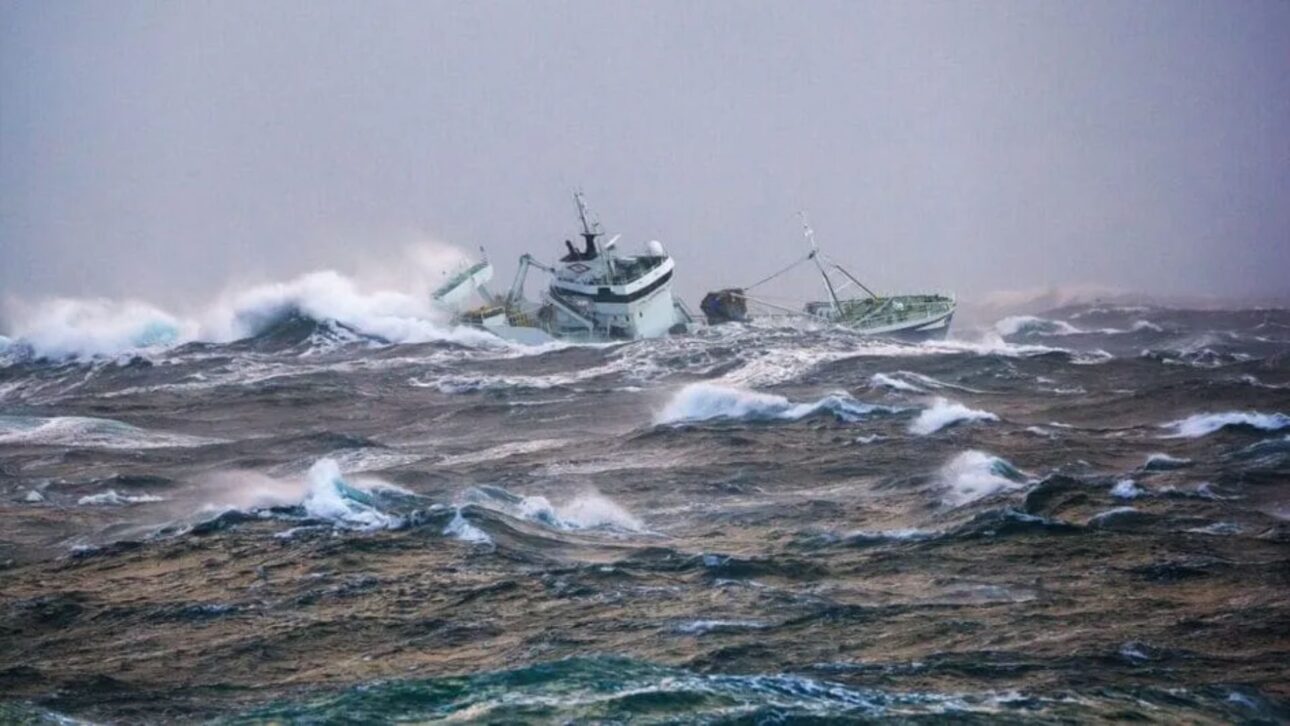
The sea in front of the Stad peninsula is considered the most treacherous part of Norwegian coastal navigation. Without nearby islands to serve as a natural barrier, the Stadhavet stretch in the west of the country is fully exposed to storms, strong winds, and waves coming from multiple directions at once. It is precisely this exposure that the maritime tunnel aims to eliminate.
-
Denmark Constructs World’s Largest Immersed Tunnel to Connect with Germany, Sinking 217-Meter Concrete Sections in the Baltic Sea

-
Low-Cost Concrete Panel House Goes Viral: Investor Reveals Prefabricated Kit Structure for Around $1,500, Assembled in 30 Days, with Plans for Rental and Resale Income

-
Polymeric Mortar Revolutionizes Brazilian Construction with Efficient, Clean Application and Uniform Finish

-
Biologist Builds 160m² Dream Home in Brazil for $32,000 Using Eco-Friendly Bricks, Achieving 67% Savings Through Smart Planning and Simple Solutions



The numbers help measure the size of the risk. The Kråkenes lighthouse, near Stad, records more than 100 stormy days per year, and the combination of ocean currents with the underwater topography generates the so-called cross sea, with very high waves coming from different points, especially dangerous for vessels. The adverse conditions can last for days and force ships to wait or change course, and since 1900, more than 30 people have died in accidents in the region, according to official records, in addition to dozens of ships wrecked during and after World War II.
What the Stad Maritime Tunnel Will Be
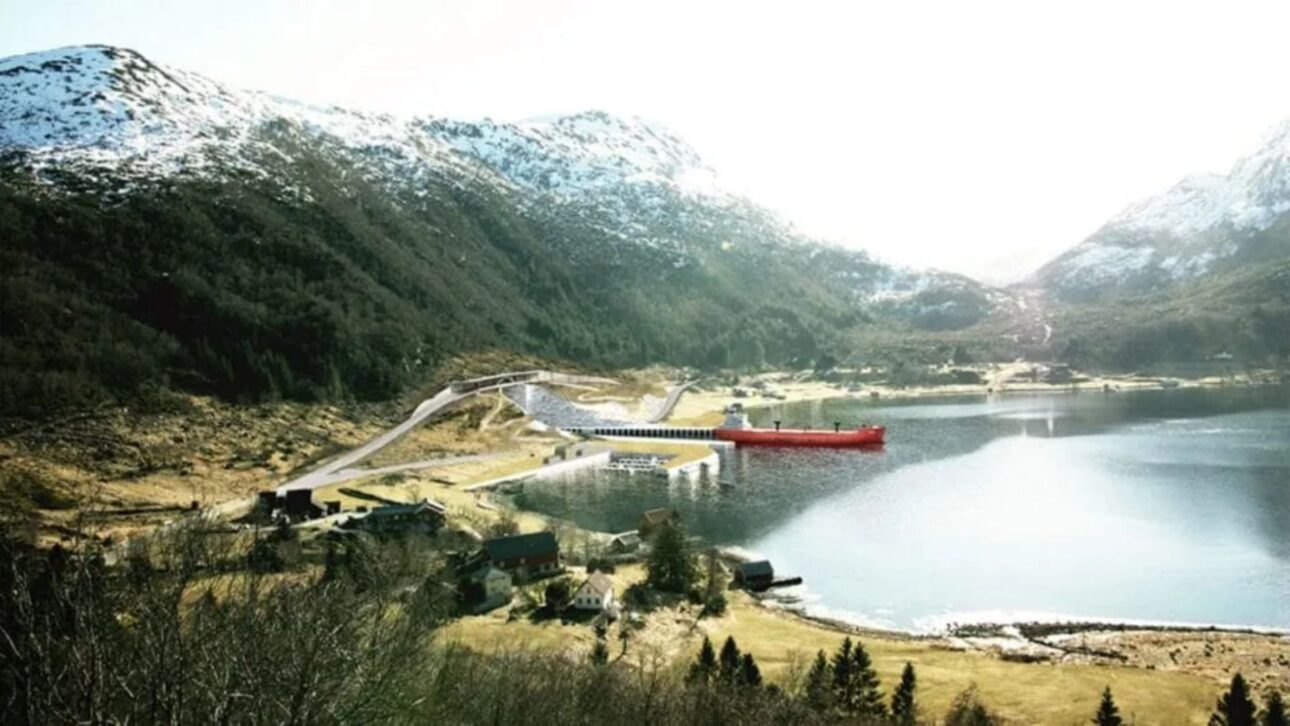
The Stad Ship Tunnel crosses the peninsula from side to side, connecting the sea from one end to the other. The idea is to create an underground passage from sea to sea that allows vessels to completely avoid the dangerous stretch of Stadhavet. According to Kystverket’s official dimensions, the maritime tunnel will be 1,700 meters in the main section, or 2,200 meters with the entire approach structure, in addition to 49 to 50 meters of internal height, 36 meters of width, and sufficient depth for ships with a draft of up to 12 meters.
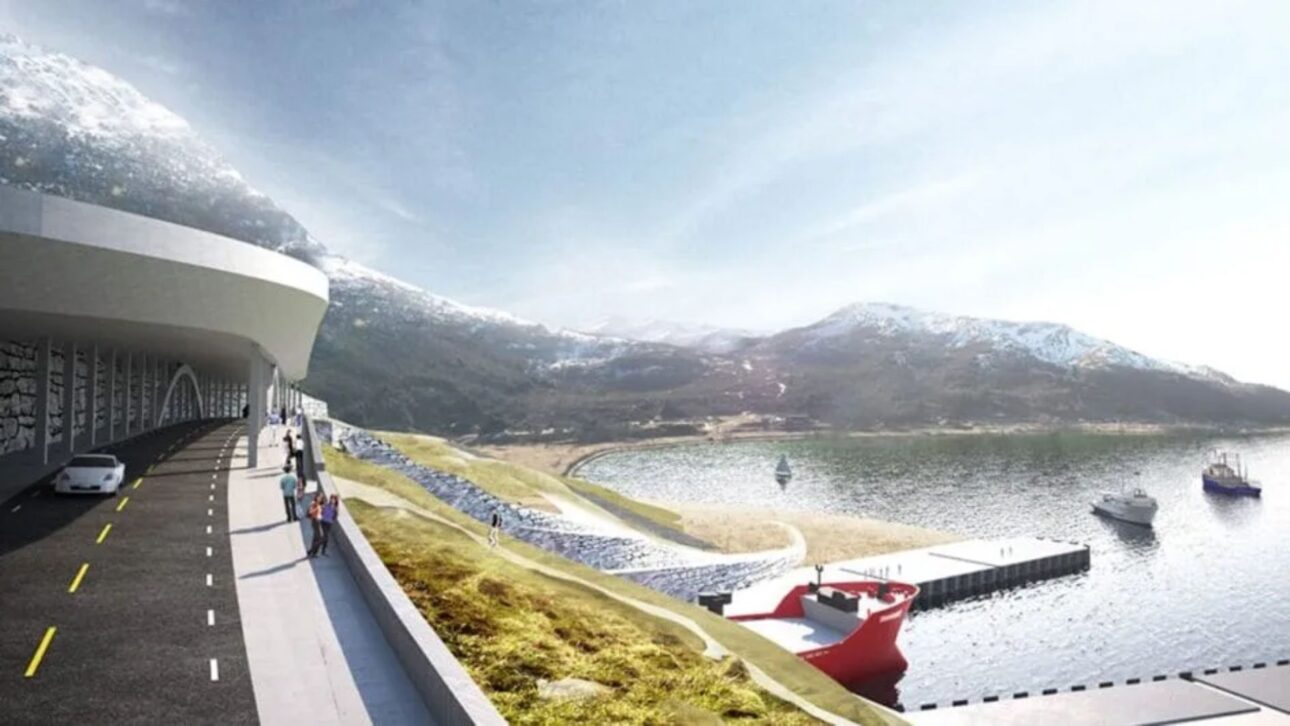
The excavation has industrial proportions. About 3 million cubic meters of rock will be removed, equivalent to 5.4 million cubic meters of dismantled material, transported in approximately 750,000 truckloads. The internal measures accommodate the ships of Hurtigruten and Havila, the two main coastal cruise lines in Norway, which carry passengers and cargo on the traditional route between Bergen and Kirkenes, and about 81% of the current maritime traffic in the region will be able to use the passage.
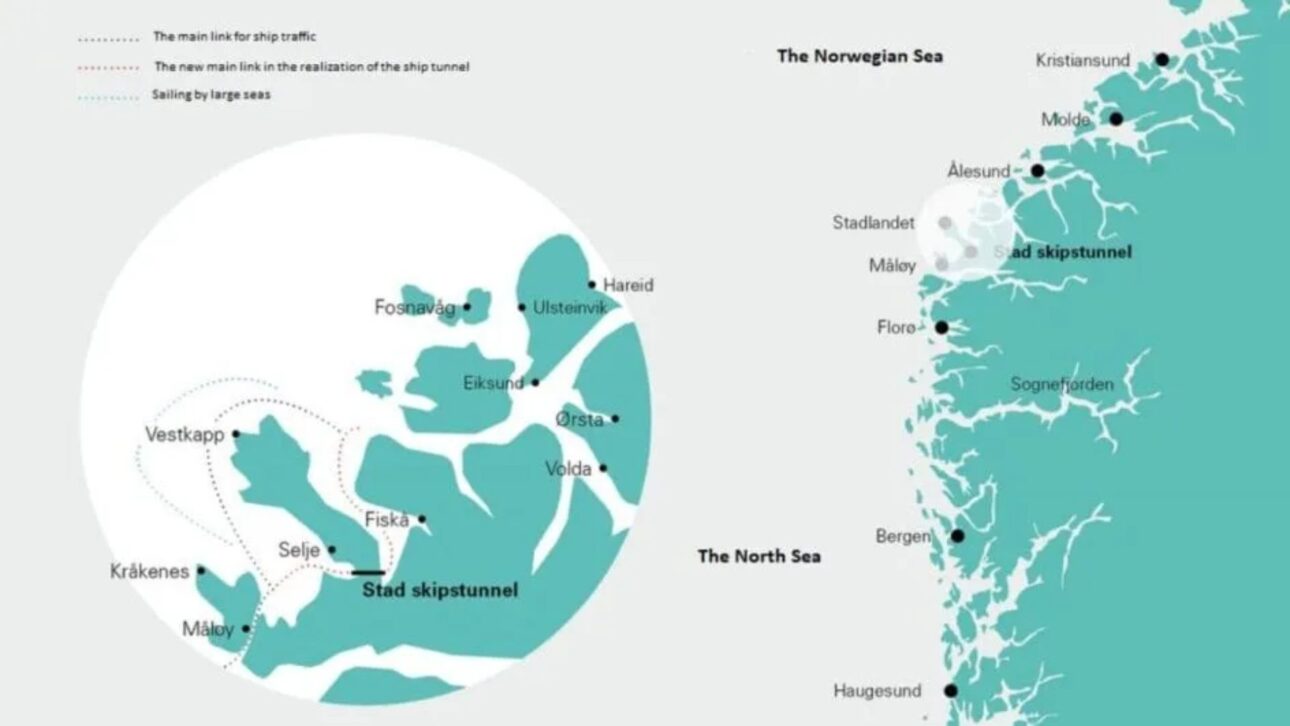
How Navigation Inside the Mountain Will Work
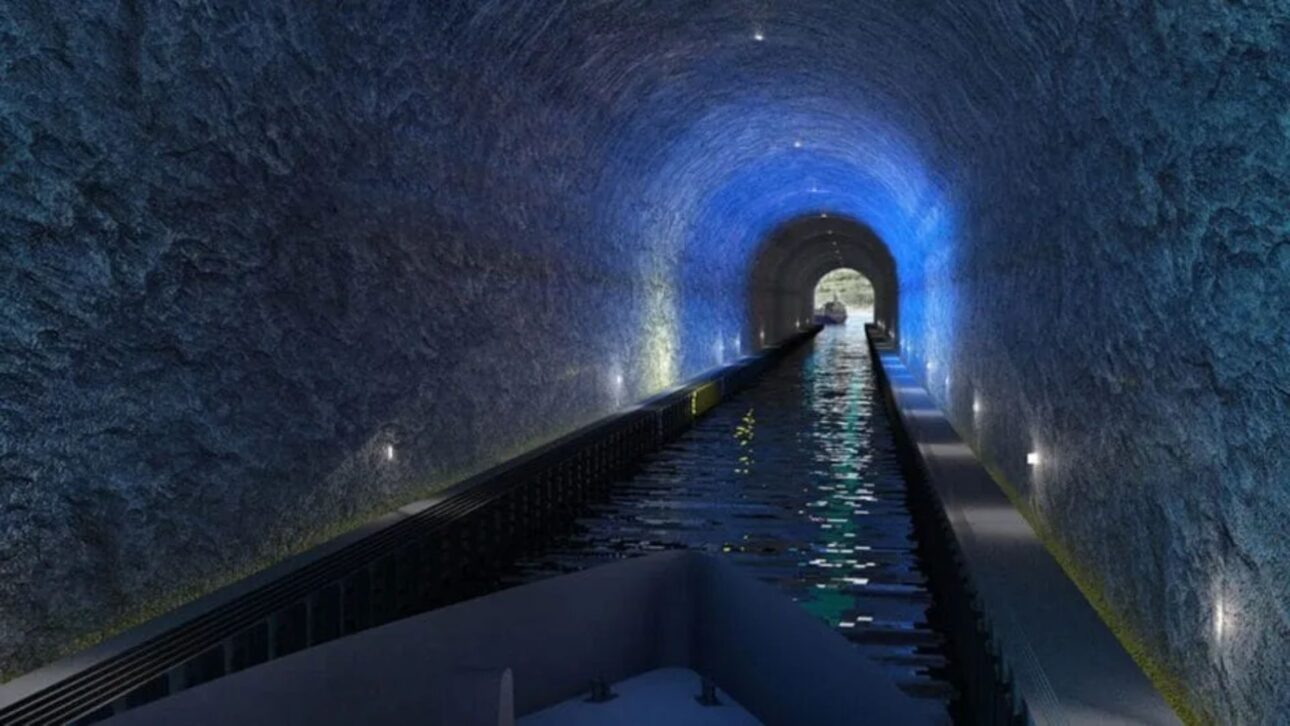
The operation will be conducted like air traffic control, but for the sea. The control center will be located in the municipality of Fedje, in western Norway, and each vessel will receive a passage time, similar to landing and takeoff slots at airports. The crossing through the maritime tunnel will be free, with no toll, prioritizing commercial traffic, especially the Hurtigruten and Havila cruises, while recreational boats and smaller vessels will use alternative times.
The flow will be one-way, with times alternating between directions. The speed will be limited to about 15 km/h, or 8 knots, for larger ships, and the average crossing time will be approximately 10 minutes. This short interval will replace hours of exposure to the Stadhavet sea, one of the most dangerous in Europe, with the mountain serving as a shelter instead of the open sea.
Costs, suspension, and the vote that decides the project
The biggest obstacle of the project is not technical, but financial. Advocated for over a hundred years, the maritime tunnel was suspended in May 2026 by the government of Jonas Gahr Støre after the cost estimate rose from about NOK 5 billion in 2024 to NOK 8.6 billion. The increase in value is at the center of the debate on whether to proceed with the construction.
The resumption depends on a decision by Parliament scheduled for mid-June. At the beginning of the month, the center and left parties of the Storting reached an agreement to include the funding in the revised national budget, and the final vote is scheduled for June 19. If approved as expected, construction will begin in early 2027 and should be completed around 2031, but until the vote, the future of the passage remains open.
If realized, the Stad Ship Tunnel will be the first full-scale maritime tunnel in the world, with 1,700 meters and about 3 million cubic meters of rock excavated from the Stad peninsula for ships to cross a mountain in about 10 minutes. The passage would remove vessels from the Stadhavet stretch, where more than 30 people have died since 1900, and could accommodate about 81% of the region’s traffic.
The project, however, was suspended in May due to a cost that reached NOK 8.6 billion and will only proceed if Parliament approves the funding in the June 19 vote, paving the way for construction expected to begin in 2027 and end in 2031.
And you, do you think a maritime tunnel inside a mountain is worth the billion-dollar investment, or would the money be better spent on other maritime safety solutions? Share your opinion and exchange ideas with other readers about major engineering projects, respecting different viewpoints.